What is Ease? (Or How to Choose the Size you Want)

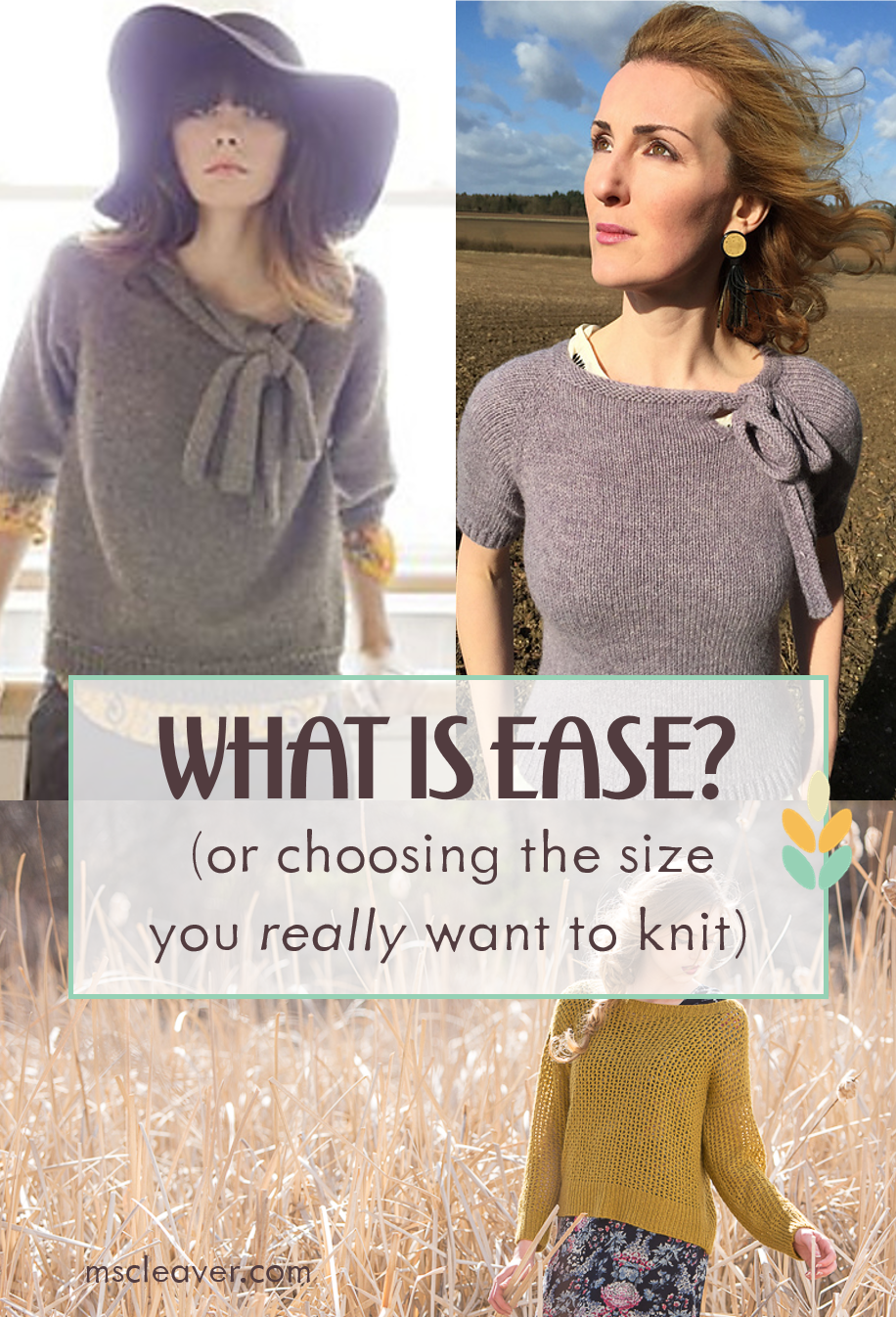
What is Ease.png

What is Ease?

In a lot of knitting patterns for garments you'll find something that looks like this:

Sizes 41 1/2 (44 1/2, 47 1/2, 50 1/2, 53 1/2, 57)" bust circumference; shown in size 41 1/2", modeled with 8 1/2" of positive ease

If your pattern includes this, fantastic!

If it also includes something like intended to be worn with 8-10" positive ease, even better!

These two bits of information are going to be very helpful in choosing a size. 

Ease is all about Fit and Style

When I first started knitting, I thought you just picked the size closest to your bust measurement and went from there. That's certainly an option, but it probably won't get you the best fit. 

When I design a garment, I think about two things related to fit (well more than that obviously, but stick with me here) - wearing ease and design ease. Every body has measurements. These measurements are the basic starting point for a good fit, but then as a designer, I add extra fabric to those measurements for ease of movement and style.
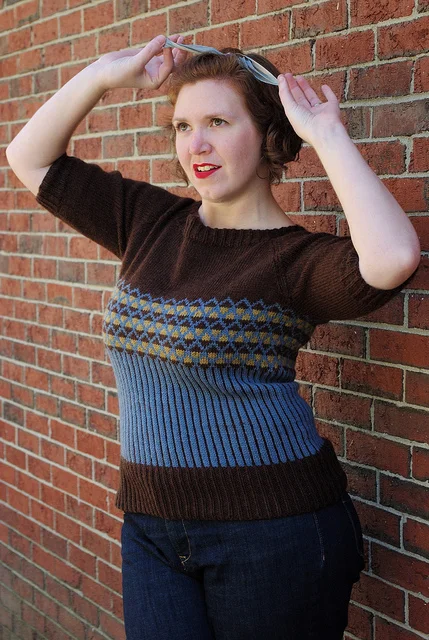
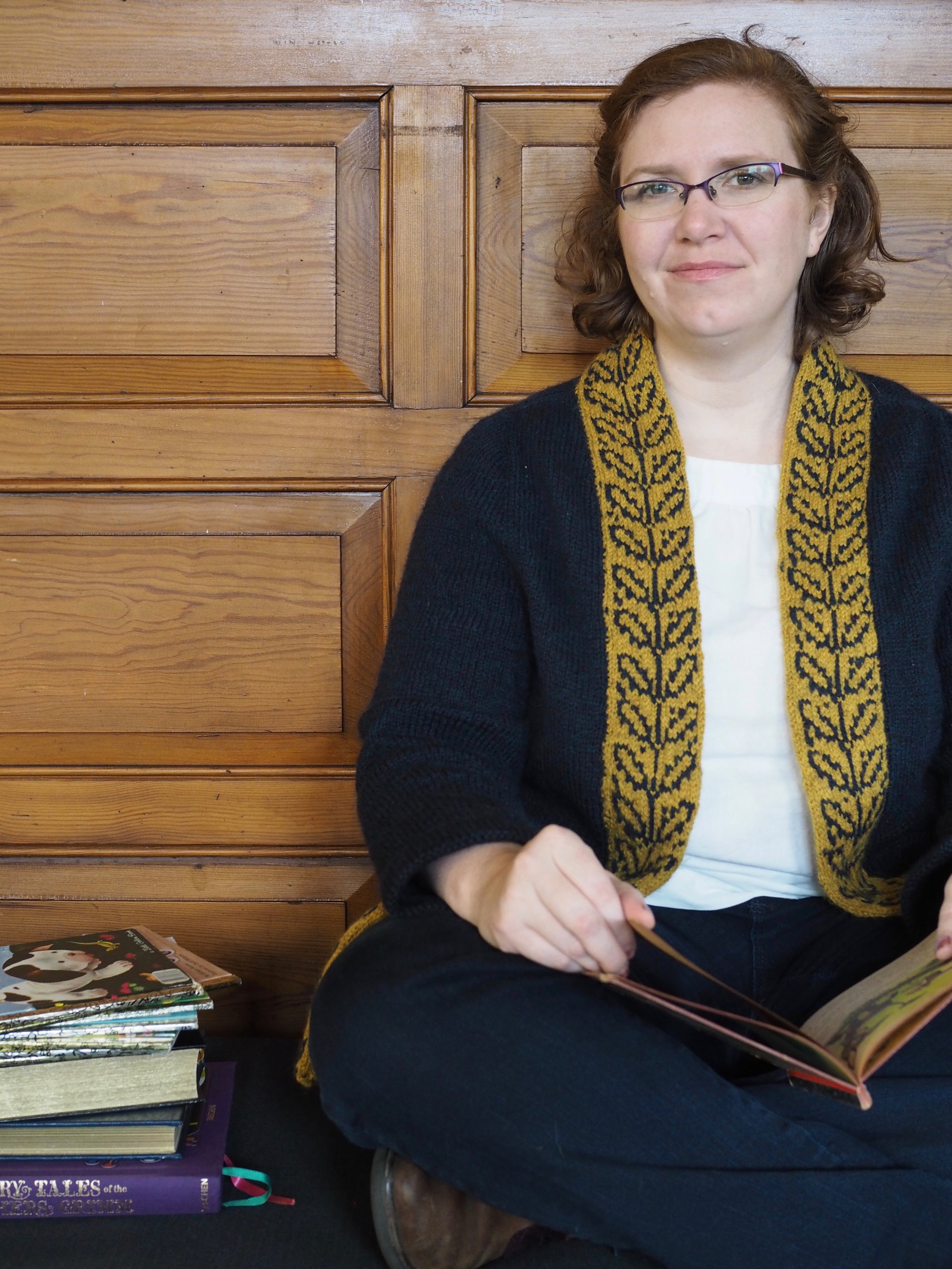
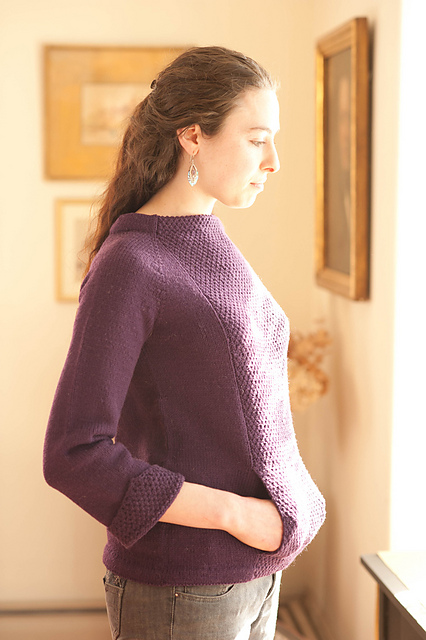
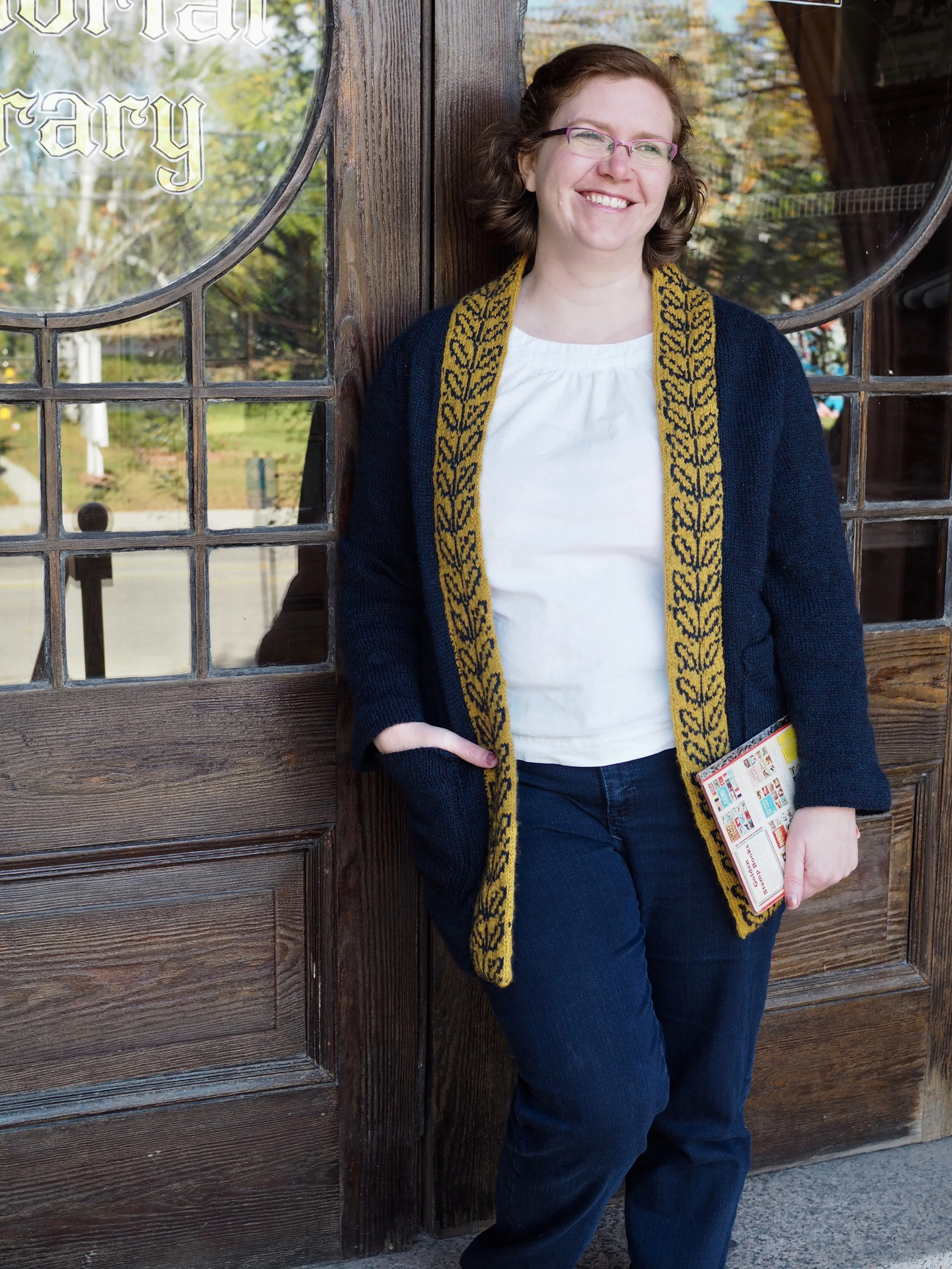
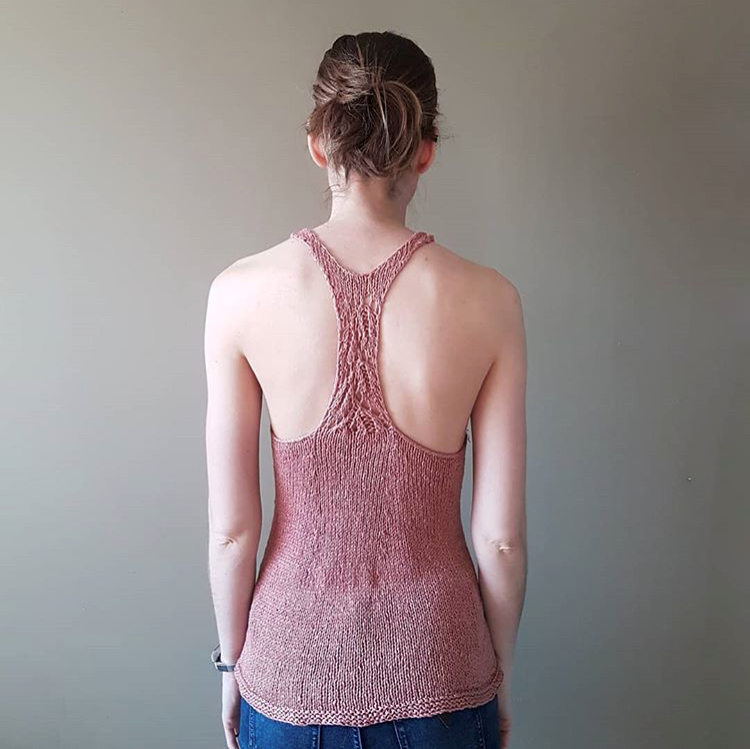
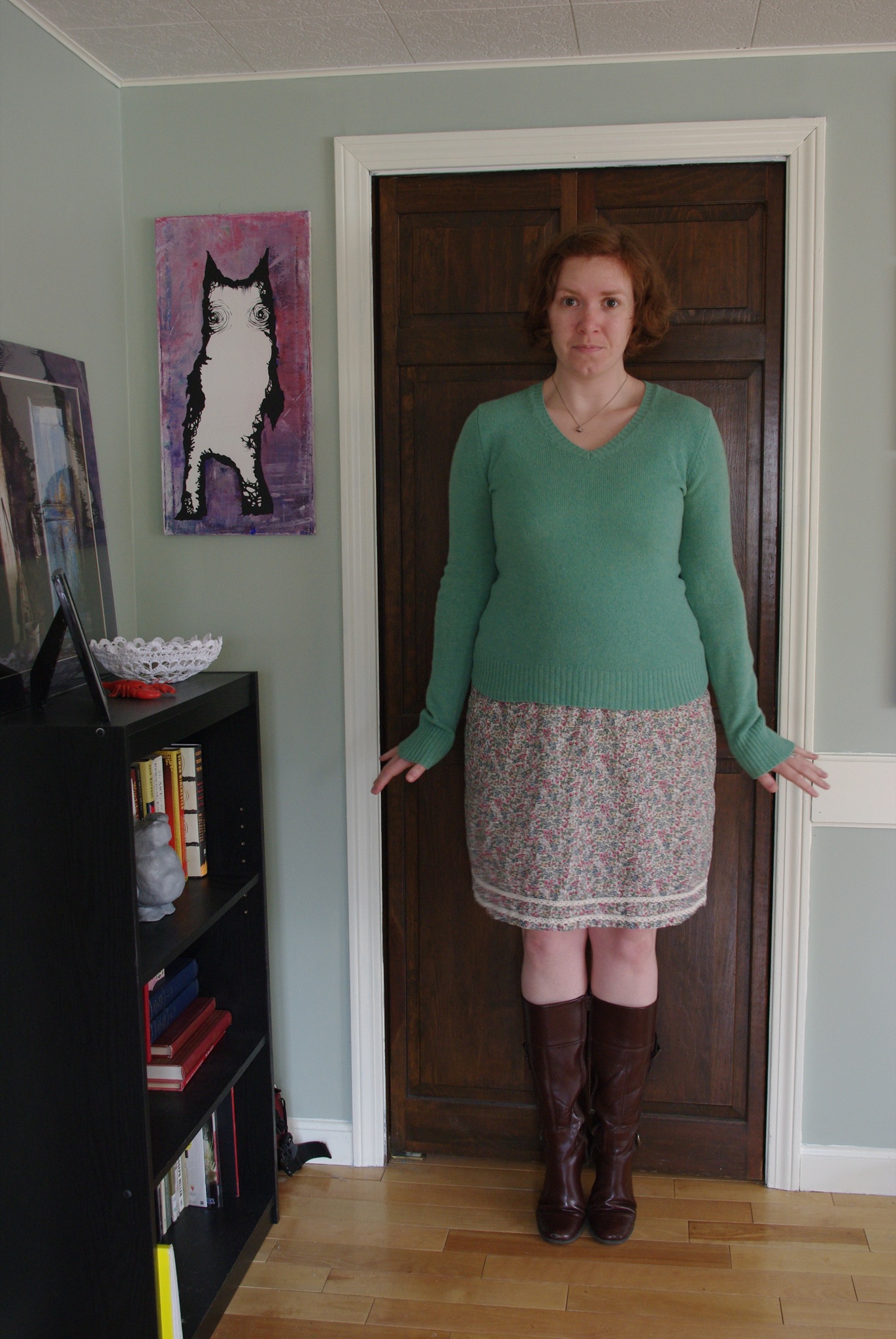
Oakdale, designed by me, with zero ease
Oakdale, designed by me, with zero ease

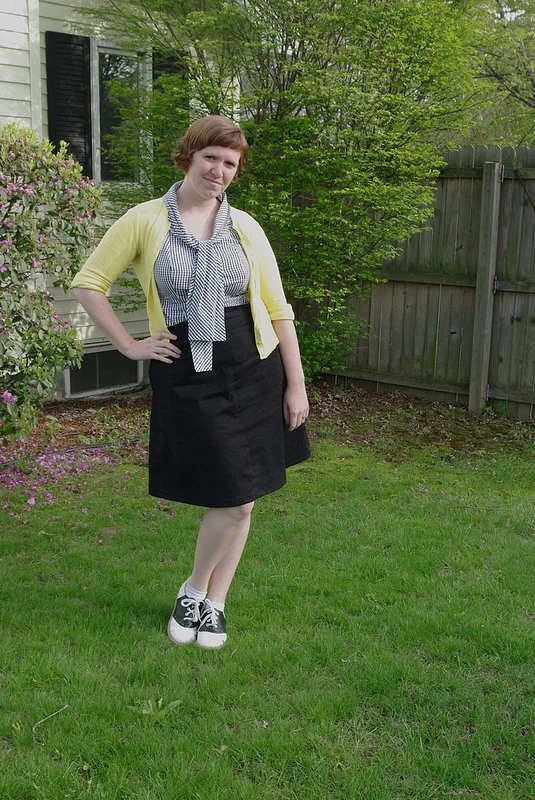
Demonstrating Negative Ease

Demonstrating Negative Ease

Positive Versus Negative Ease

Positive ease means that the garment measurements are larger than your actual measurements. For example, a 40" sweater on a 38" bust has two inches of positive ease. A 37" sweater on that same 38" bust would have 1" of negative ease. A 38" sweater on a 38" bust would have no or zero ease.

Wearing Ease 

Wearing ease contributes to ease of movement. Think of cutting out a piece of sturdy paper to your exact bust measurement and taping it on. Now try taking a deep chest breath, or bending over to pick something up, or reaching forward. We move a lot and moving requires ease, or a little bit of extra space to allow for that movement.

Now a piece of paper is stiff and inflexible, woven fabrics can be fairly rigid too, which is why wearing ease is more important in woven garments. Fortunately knitted fabric has a bit more give, it stretches as you move, so you can get away with little, no, or even negative ease, depending on the flexibility of your knitted fabric. So that super snug, ribbed Lana Turner-esque sweater? The fabric has a lot of give, so you can still breathe, hooray!

But just because you don't necessary need wearing ease in the bust, doesn't mean that you wouldn't want in other places, like the sleeve and  armhole. Because we all like to lift our arms right?

Also, in general, I think that unless you're reinforcing your buttonbands, you want cardigans to have some positive ease so you don't have button-band gappage. (Because nobody wants that)

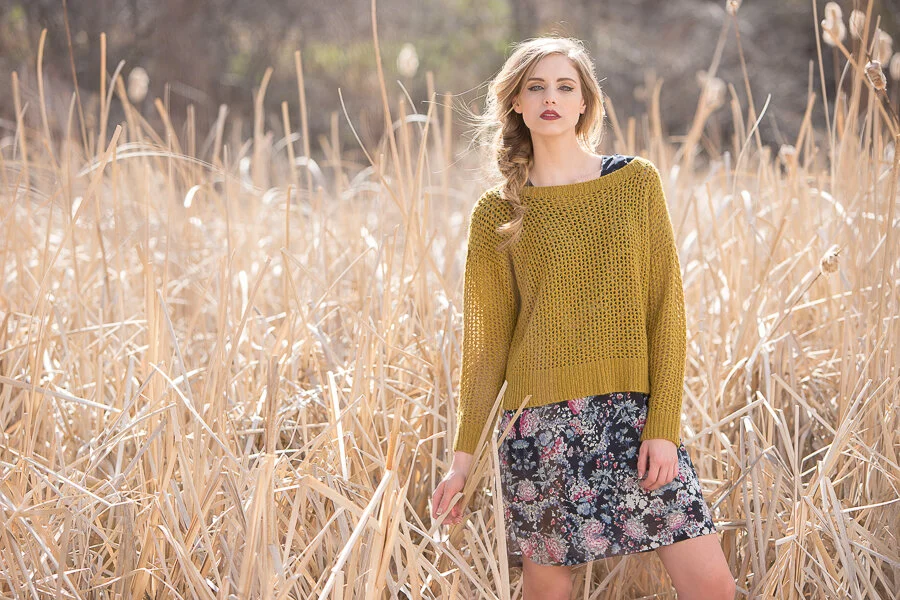
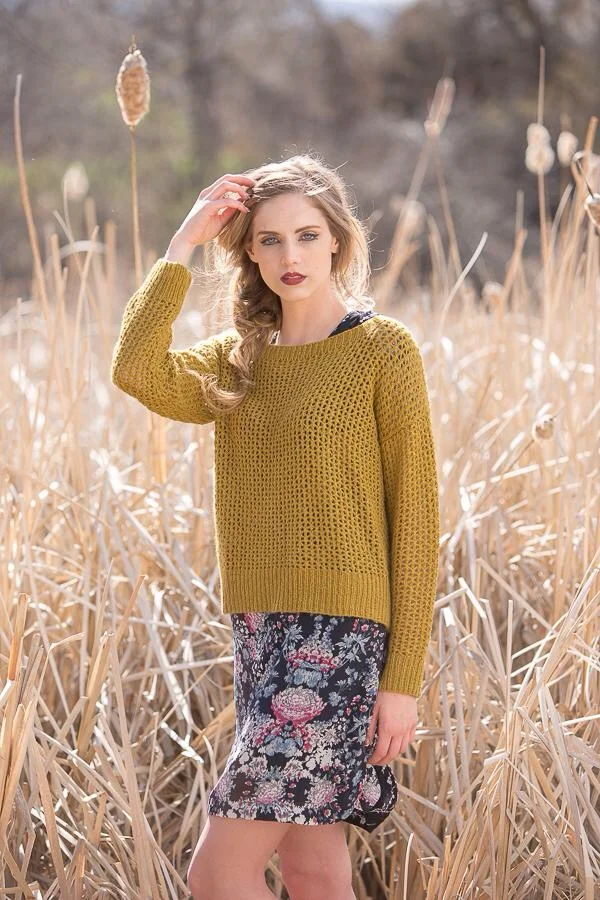
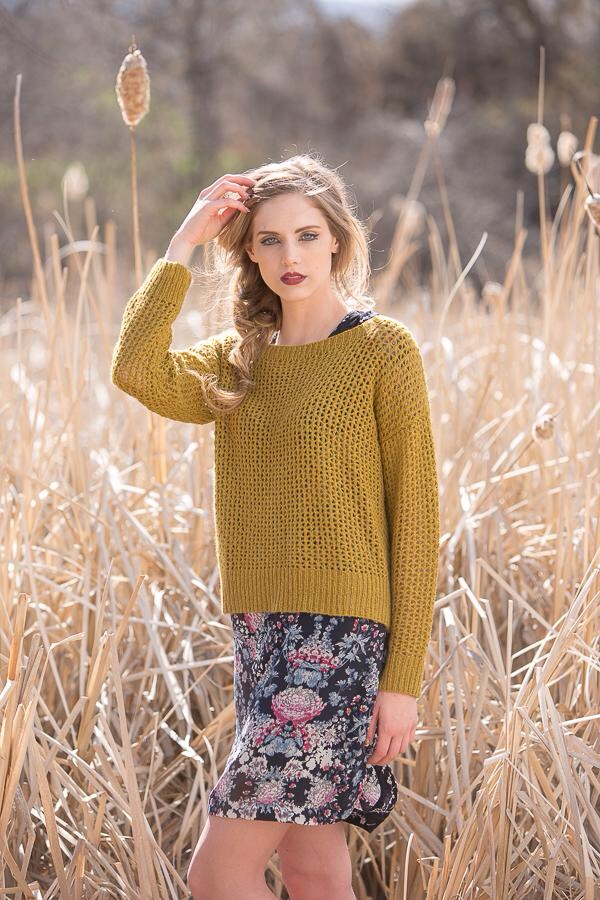
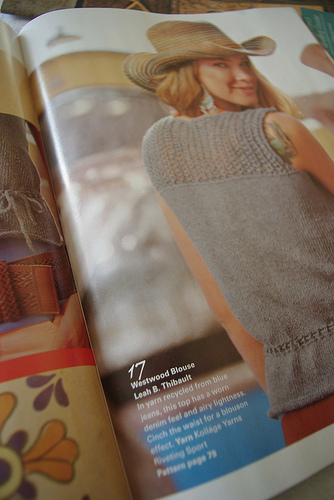
Cormac with 8 1/2" of positive ease

Cormac with 8 1/2" of positive ease

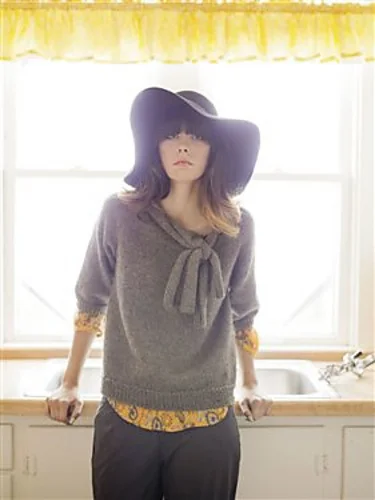
Toulouse with several inches of positive ease as modeled in Knitscene

Toulouse with several inches of positive ease as modeled in Knitscene

Toulouse with slight positive ease as knitted by Orlaflo

Toulouse with slight positive ease as knitted by Orlaflo

Design Ease

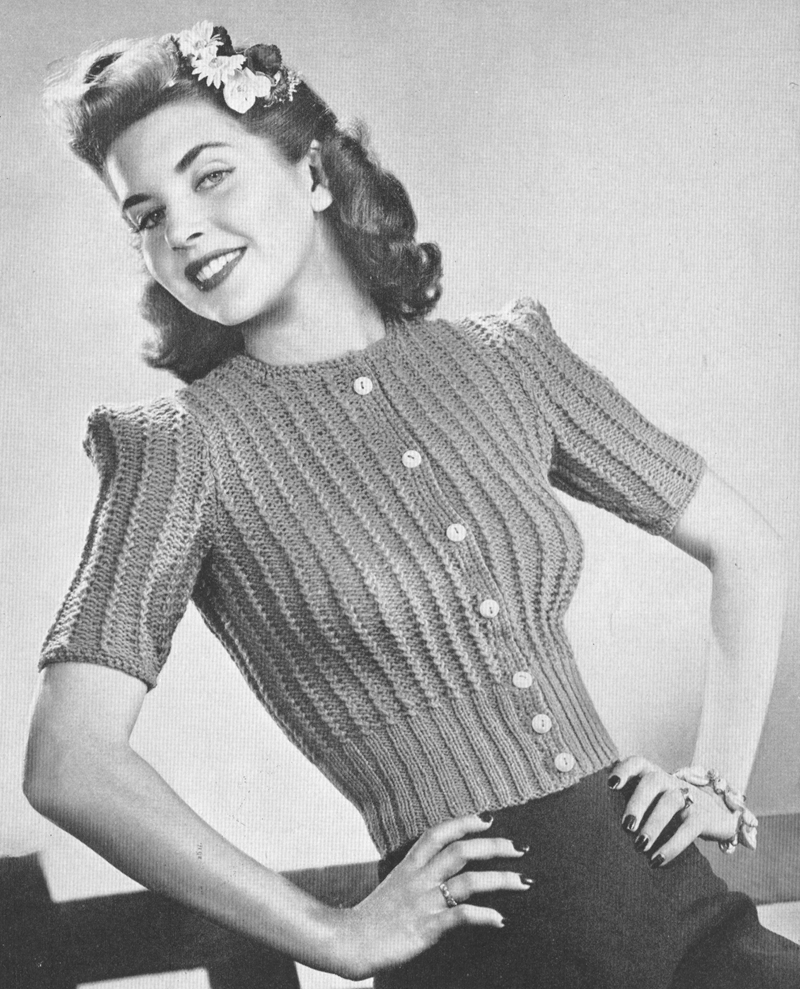
If wearing ease is about how you move, design ease is about how you look. Fashion goes back on forth a lot on what silhouette is in. In the 1940's, like the photo about, the snug "sweater girl" look was the thing, and they used zero or negative design ease to achieve it. Nowadays, we sport a much more relaxed look, and to create it you need to add design ease on top of the wearing ease.

I recommend about 8" of ease for the Cormac sweater. Clearly you don't need 8 extra inches of fabric around your bust to move,  so this is largely design ease. If you want your sweater to look similar to the one in the mag, you're going to need to choose a size somewhere 6-10 inches larger than your bust measurement. The smaller your bust, the less ease you'd need proportionally than larger bust, i.e. a 32" bust would be fine closer to 6" extra, while a 42" bust would want closer to 9 or 10"  

For a good look at how ease can change the final look, check out the 200+ examples of the Toulouse pullover.  In the magazine it was styled with a great deal of positive ease, which result in a slouchy/boho look, but many knitters have chosen to knit it much closer to their actual measurements with very little positive ease, like the example from Orlaflo on the right.  Both options are equally "right," depending on what you want the final look to be.

One note of caution: if a pattern indicates a "to be worn with xx inches of ease" it usually means that the underlying body measurements used to design the piece are that many inches smaller. For example, if I design a 40" sweater to be worn with 4" of positive ease, it means that when I do my baseline calculations for that sweater I'm starting with the standard measurements that go with a 36" bust, so if you chose to do less ease or more ease than suggested it may not fit as well in the shoulders or arms. 

In Conclusion

With these two types of ease in mind, and good pattern information, you can confidently choose a size that will get you the finished fit you desire!

Cormac and Toulouse Photos courtesy of Knitscene/Harper Point


Introducing: Hemingway

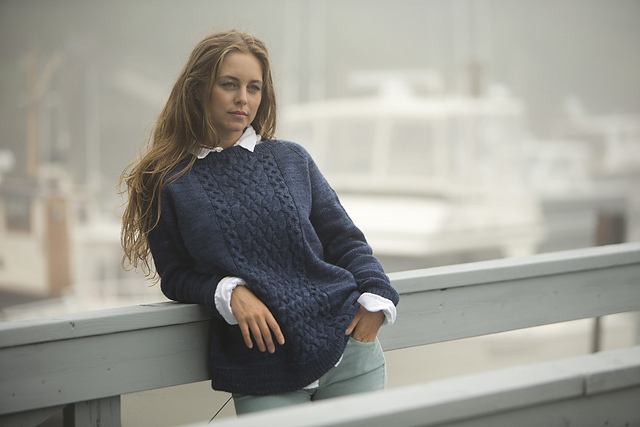
Hemingway designed by Leah B. Thibault for Twist Collective

It's August, but that doesn't mean its not sweater season at Ms. Cleaver Creations!

Hot on the heels of the Cormac release, I'm pleased to present, not one, but two new sweaters - Hemingway: Men's and Women's. Or as I call them, Him-ingway and Her-ingway. 

This design can be credited to power of the corkboard squares in my studio space. Sometime, a long time ago (before July 2012 at least), I had the idea of trying to design a pattern that used knit and purl stitches to make a plaid fabric. I was pretty happy with the way the swatch turned out, but I never quite figured out what to do with it. So it stayed pinned there on my corkboard for ages.  

Then I started playing around with a simple, pieced shawl-collar men's pullover. And thought, hey, that plaid thing just might work! The folks at Twist Collective seemed to agree, so much so that they asked to do a women's version too. I panicked briefly, said yes, and then started looking for my first ever sample knitter. 

The main differences between the two are that the women's has waist shaping and is generally shorter in the body, sleeves, and armhole depth, as well as narrower in the shoulders. The men's is straight through the waist (easy to lengthen for the extra-tall fellas) and has a slightly wider collar and ribbing. Both are worked in pieces and seams, with the shawl collar that is picked up and worked after seaming. 

The sample yarn used for both sweaters is Valley Yarn's Northhampton, which I really enjoyed knitting (the men's sweater) with. It's just a super solid 100% wool yarn. I just kep thinking, yeah - this is wool. Its not too itchy, but it's not so soft that you think it won't hold up in a few years and it comes in some really pretty heathered shades. 

If you knit this one up, I'd recommend choosing a size with 2+ inches of positive ease for the best fit. In the photos above the women's has about 4"/10 cm of positive ease and the men's has 2.5"/6 cm positive ease. Not sure what I mean when I'm talking about ease? Check back later this week for a post all about it!

Hemingway is now available for sale through Twist Collective. You can buy each pattern individually for $7.00 USD or get both for $10.00. You can also find the pattern on Ravelry.

All modeled photos courtesy of Twist Collective/Crissy Jarvis. 


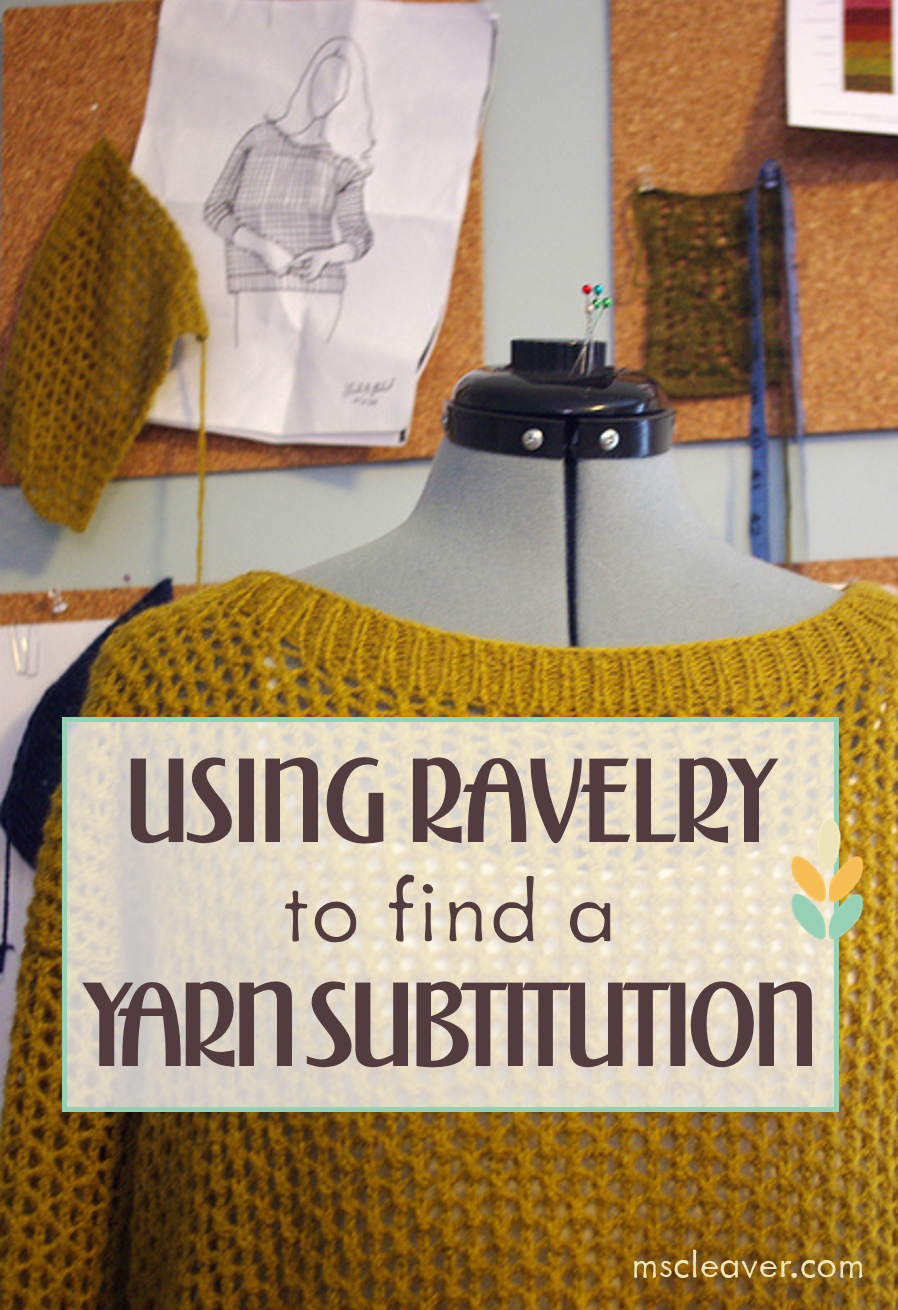
Using Ravelry to Find a Yarn Substitution

Using Ravelry to find a Yarn Substitution.png

As a designer, my most frequently asked questions is "why is your gauge so weird?" (A: Everyone is different, and I generally prefer densely knitted fabric?), but the second most frequently asked question is do you think X pattern will work in Y yarn? 

The answer? Probably.

The best way to figure out if a yarn substitution will work is to swatch it out and give it a try.

But that's not always practical.

No Need to Fear Substituting Yarn

There's a good chance that the sample itself was done in a substitute yarn. About 50%+ of the time I do editorial designs (for magazines, books, etc.) the yarn I submitted my design swatches in is not the yarn that's used in the final design.

Sometimes I'll go out and buy something if I'm looking for something specific or need a different color, but  I usually do my design swatches from my stash, which mostly contains a lot of leftovers from previous designs. Sometimes, I'm attached to the yarn I send the design swatch in on, sometimes I'm not, but if it's for editorial purposes, it's best not to get attached because it's likely that its going to change. I'd also advise that if you're designing for magazines that your design isn't yarn-dependent for the same reason.

I'm not an editor, so I don't know how the final yarns are chosen, but I imagine it's a combination of trying to have variety,  relationships with yarn companies, desired color stories, etc. 

Cormac is a bit of an oddity in that the sample in the magazine was knit in the exact yarn I submitted with in the exact color I used.  But some of that was because the submission call specifically called for using chainette-style yarn, and there's not a huge number of those on the market, and I specifically did buy yarn for swatching.

How to Choose a Substitute Yarn (if you don't have something in your stash) - Option #1

Maybe you're allergic to alpaca or the suggested yarn is too expensive, or you want something more attuned to your climate, or it doesn't come in a color you like - there are dozens of reasons to choose a substitute yarn and hundreds of choices to sub. How do you narrow it down?

For now, I'm going to assume you generally want your finished sweater to look more or less like the sample (we'll talk more drastic changes later)

Here's where the Ravelry database is going to be a huge help. 

Finding A Yarn Substitution - Ms. Cleaver Chronicles

Step #1 - Look at the suggested yarn page on Ravelry (or on the manufacturers site). Even if you know you don't want to use it. What are it's basic qualities? 

 For Shibui Knit's Maai the basics are this - DK weight, 70% alpaca/30% merino.  So it's mostly alpaca, which is fairly drapey and has a bit of a halo/fuzz factor. The chainette construction makes it  light and "springy" per the description.  Looking at the design, the need for drapey is high - otherwise it would be pretty stiff and boxy, the fuzz factor is less evident. The pattern calls for size 8 needles, which is fairly big for DK, and the pattern is open, so that'll provide some drape there too. 

So to replace it, we're looking for a drapey DK weight yarn. 

Alpaca is drapey, so is silk, bamboo, tencel, and linen. But there's the springy factor too. So you might want a firmer fiber like a bit of wool or hemp or cotton in there to help the sweater holds it's shape a little. Something like the 70/30 blend of the original or up to a 50/50 mix of drapey/firm. 

Using Ravelry to Find a Yarn Substitution - Ms. Cleaver Chronicles

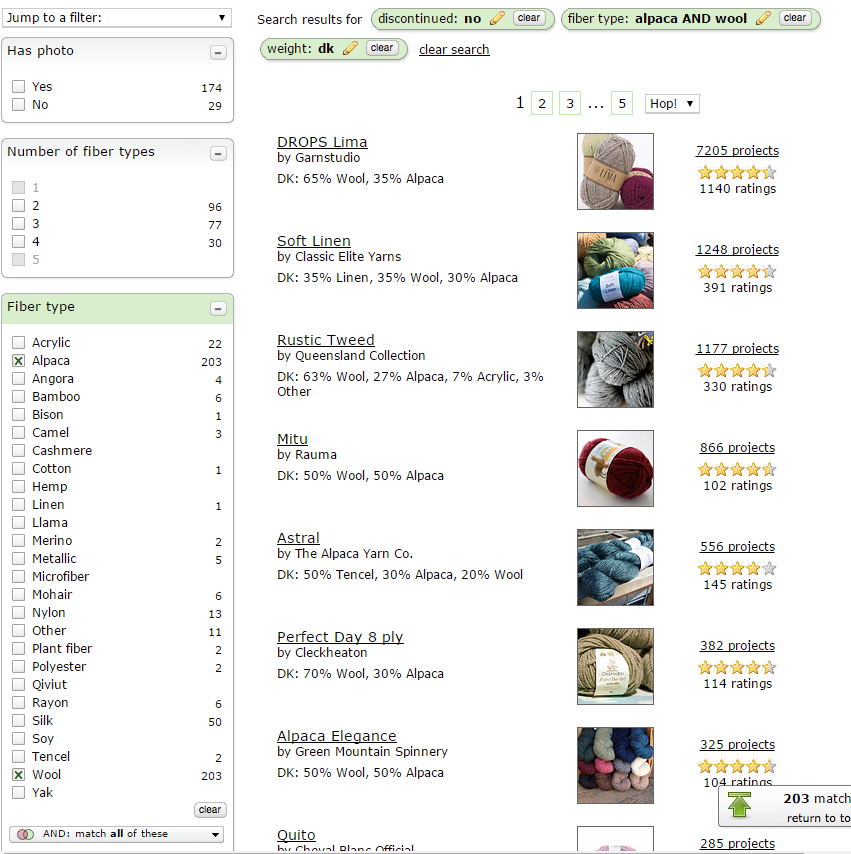
Step #2 - Back to Ravelry, this time  to the advanced yarn search page. To start off I'm going to looks for the following criteria - Not discontinued, dk weight, contains alpaca and wool. This is going to be the closest to the Maai, without being Maai. 

We've got 203 matches there alone.  Let's look at some of our top-provided options. 

Drops Lima - 65% wool/35% alpaca - this could work, but it's a little heavy on the wool side. 

Classic Elite's Soft Linen - 35% Linen, 35% Wool, 30% Alpaca. That's 65% drapey (linen/alpaca). Looking pretty good here. The linen could help make it an even more transitional piece.

Queensland Collection Rustic Tweed - 63% Wool, 27% Alpaca, 7% Acrylic, 3% Other. Again heavy on the wool. It's also rustic and tweedy, which is a bit style shift. 

The Alpaca Yarn Co's Astral -   50% Tencel, 30% Alpaca, 20% Wool. That's 80% drape, so super drapey. It also looks hand-dyed, which could mean alternating skeins in lace. 

Berroco's Fiora - 40% Cotton, 30% Rayon, 15% Alpaca, 5% Wool. 45% firm/ 45% drape (not sure what the missing 10% is). Could work, be a solid choice for a more summery version, but keep in mind that that is a high percentage of cotton, which is heavier than most other fibers. 

What if you look at Cormac and think - forget fall, that'd be better as an awesome beach pullover for the summer? Then you could search for a linen/cotton  or cotton/bamboo blend (drapey/firm) or something similar. 

How to Choose a Substitute Yarn (if you don't have something in your stash) - Option #2

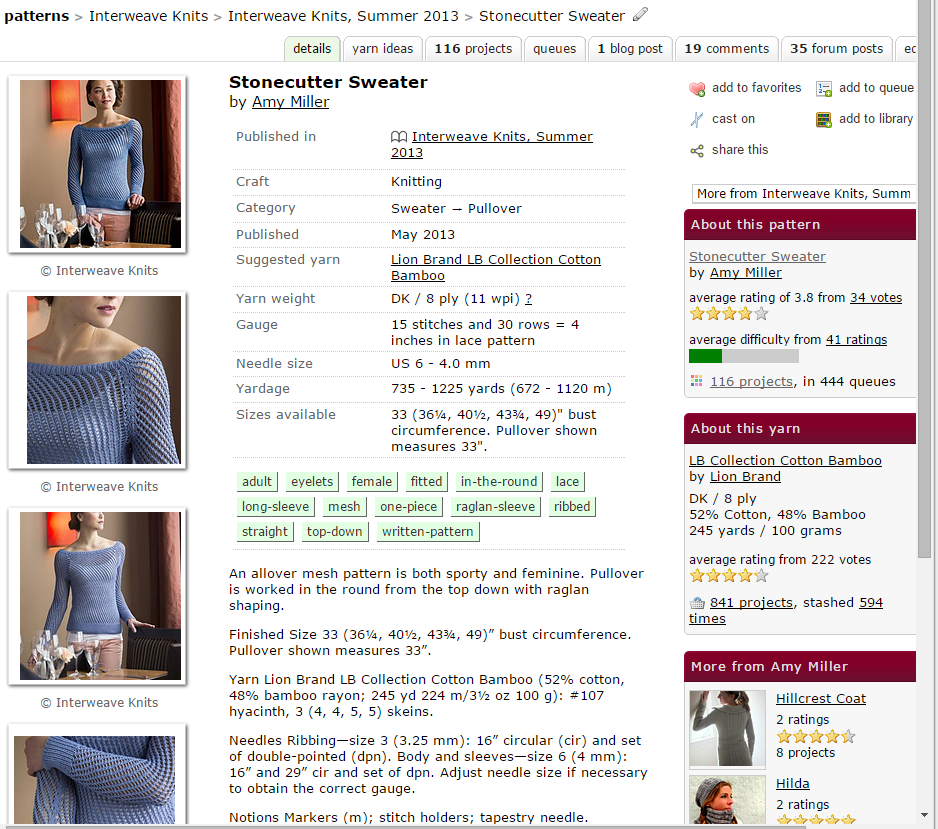
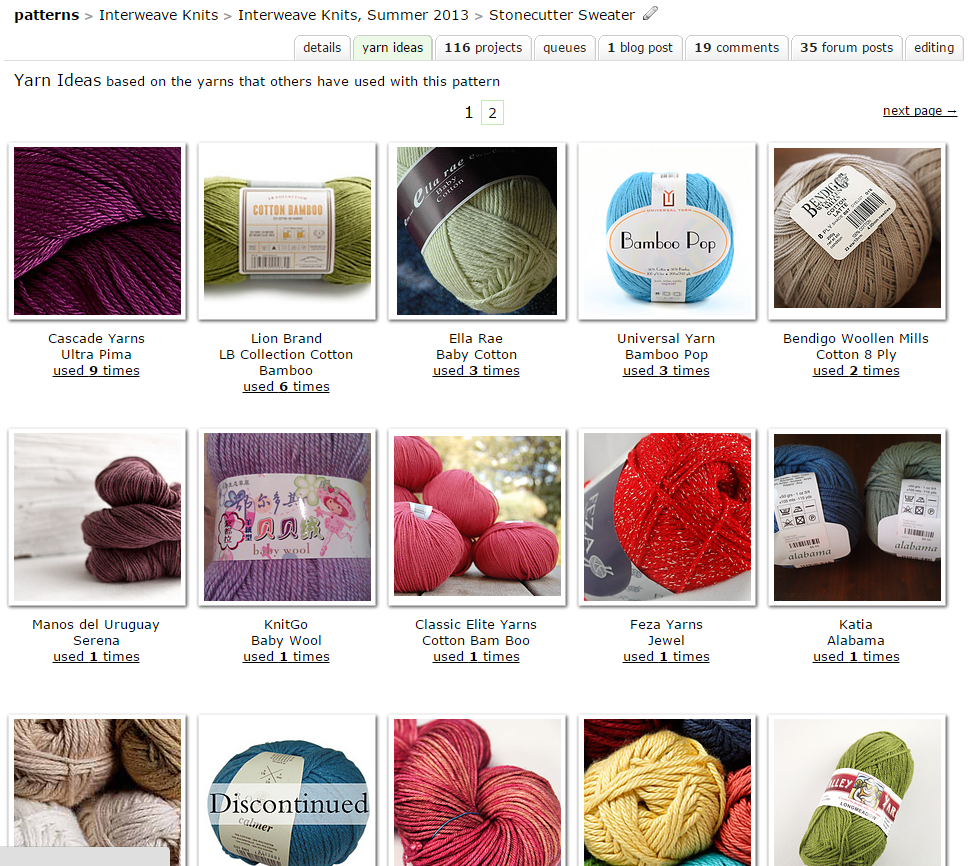
Alternatively, if scrolling through pictures of yarn isn't your thing, you can do a project based-search. In this case we'll search for similar patterns (DK weight, lace, pullover) and see what other people knit them out of.  There's a lot of options, but most of them aren't as open as Cormac, but Amy Miller's Stonecutter Sweater has a good number of similarities (there's nothing new under the sun, right?)

Using Ravelry to Find a Yarn Substitution - Ms. Cleaver Chronicles

The original Stonecutter was knit in Lion Brand Cotton Bamboo, so that could be a good choice too. But wait, there's more! Stonecutter has been around for a while, and over 100 people have knit it and if you click the little "yarn ideas" tab, it'll show the most popularly used yarn subs and you have another 2 pages of yarn to choose from (back to the scrolling through little photos of yarn, sorry). 

Already Have a Yarn in Mind?

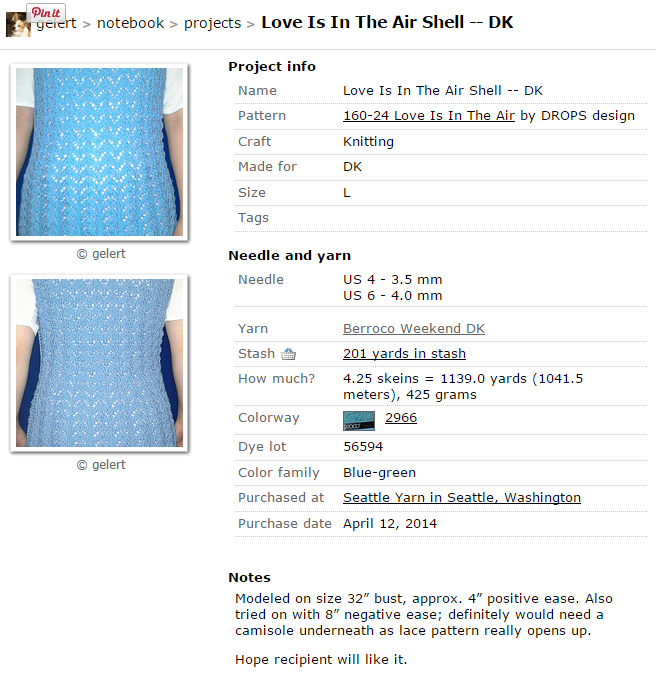
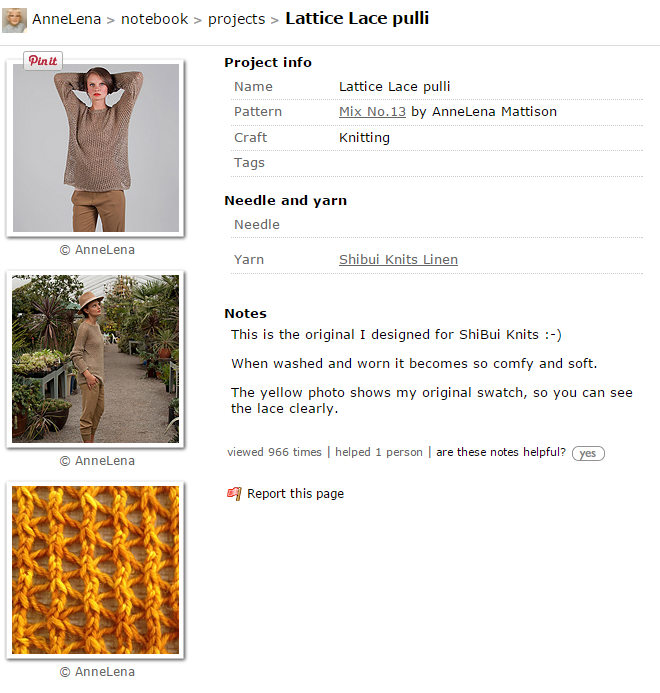
Maybe you've got something in your stash your'e itching to use up. I've had a few message in my inbox regarding more summer-specific yarn subs for this project, specifically: Berroco Weekend DK, and Shibui Linen. 

Using Ravelry to Find a Yarn Substitution - Ms. Cleaver Chronicles

My first stop when considering a specific yarn substitution is to look at projects on ravelry that have been knit up in the yarn that have some similarities to the project I’m trying to do. In this case, a lace garment of some kind. For the left we have an example for the Weekend DK and one for the Shibui Linen on the right

This can give you a good hint of what the fabric would look like. Both of them seem to work in lace pretty well, though I will note the following two things - the yarn is held double in the lace project and that cotton and acrylic don’t block open as well as animal fibers (though linen blocks fairly well). However there appear to be some well-blocked lace projects in Weekend DK, (Also the sample wasn’t aggressively blocked).

In Conclusion

While I specifically designed the Cormac Sweater with Shibui Maai in mind, and tried to take advantage of the specific qualities of that yarn,  it doesn't mean you have to use it! The great thing about knitting is you can make it your own and you have hundreds of options to choose from that will work. 


Raspberry Picking


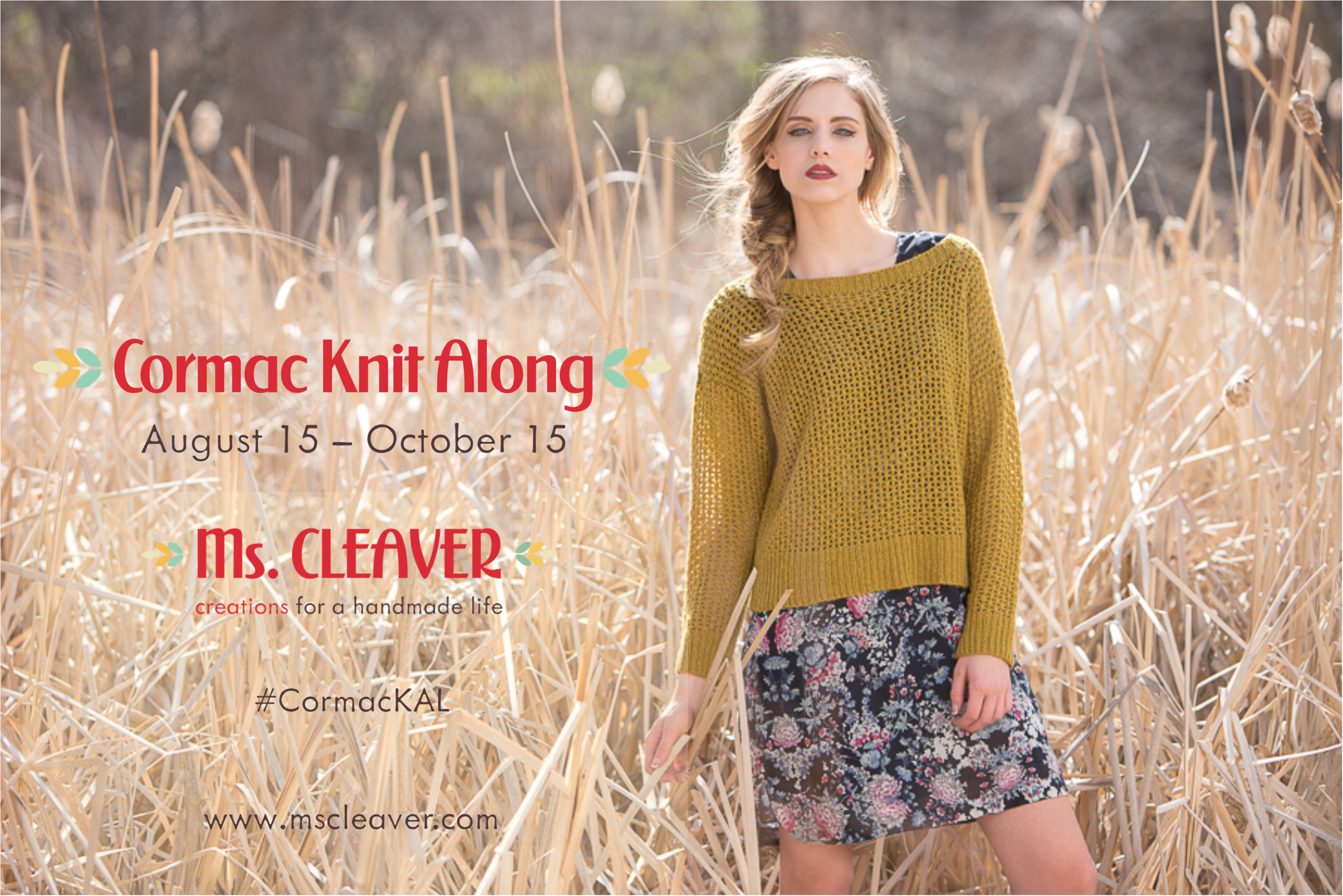
Announcing the Cormac Knit Along!

Cormac KAL

I'm so excited to announce that I'm hosting my first knit along!

The fall issue of Knitscene is  out on newsstands now and in it, my Cormac Sweater. I'm super pleased with how this design turned out, and now that I have my own Ravelry Group - I thought it would be a good candidate for a knit along.  

Like the design? Join us - you end up with a finished sweater and could win a fabulous prize pack! 

How It Works

  1. Join the Knit Along Thread on Ravelry.  (Don't have a Ravelry account? It's free to join!)
  2. Start knitting the Cormac Sweater from the Fall 2015 Issue of Knitscene magazine sometime between August 15 and October 15 (or start early! NBD)..
  3. Have fun and share what you're knitting! Comment in the Ravelry thread and share photos on social media with the hashtag #CormacKAL
  4. Anyone with a FO (Finished Object) or (WIP) in the thread as of October 15, 2015 (midnight EST), is eligible to win prizes!

The cast-on part doesn't officially start until August 15, but before then I'll be posting about choosing a size and yarn substitutions to help you get ready. 

You can also bookmark the official knit along page, where I'll be aggregating all the knit along stuff. 

I hope you'll join in!

Photos Courtesy of Knitscene/Harper Point


Summer Groove

Willard Beach Panorama
Eating Peas
Happy Harvest
Plum Tomatoes on the Vine
Willard Beach
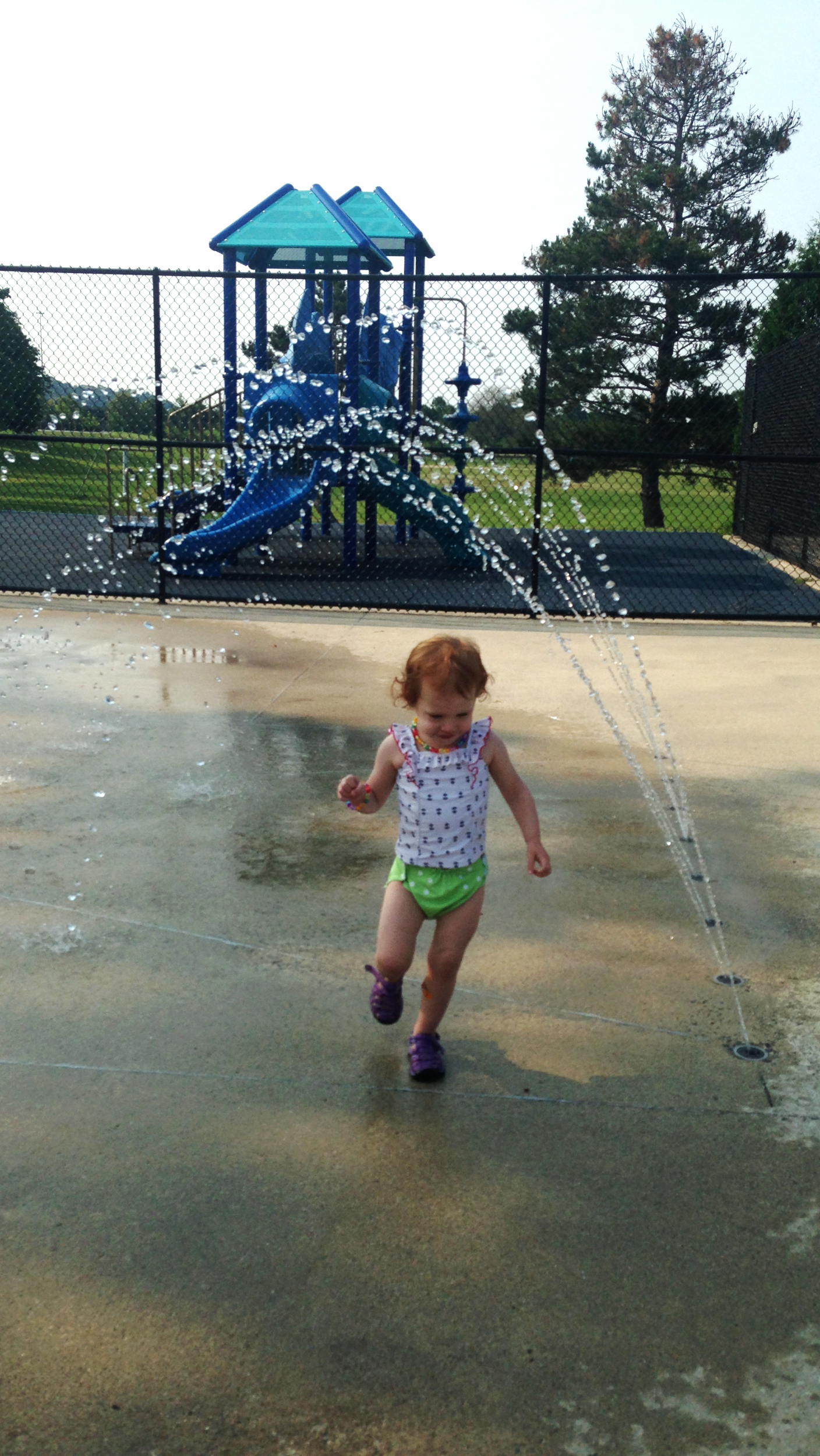
Splash Pad
Splash Pad
Splash Pad
Splash Pad
Bouquet
Ballet Class
Ballet Class
Being Mice
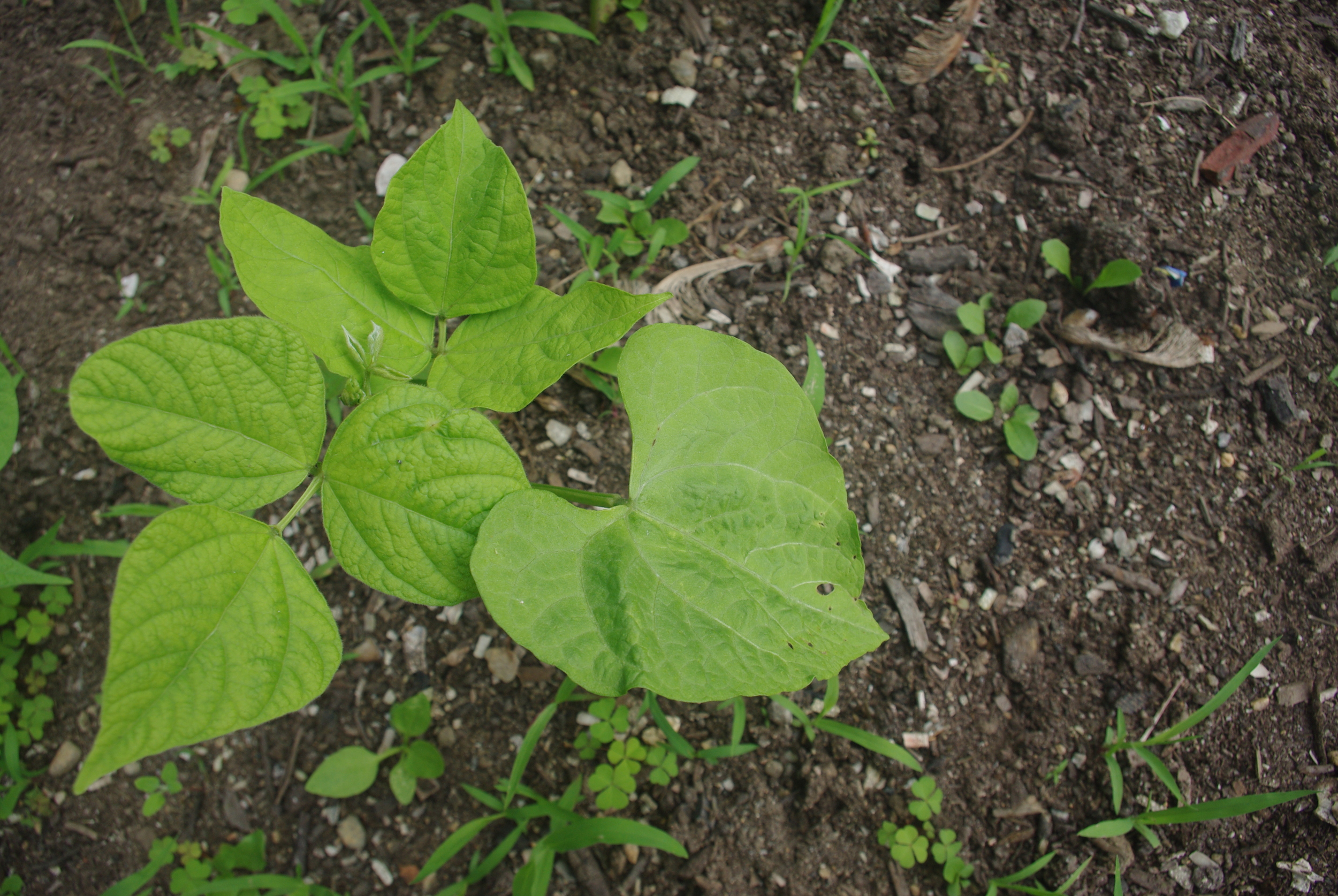
Bush Beans
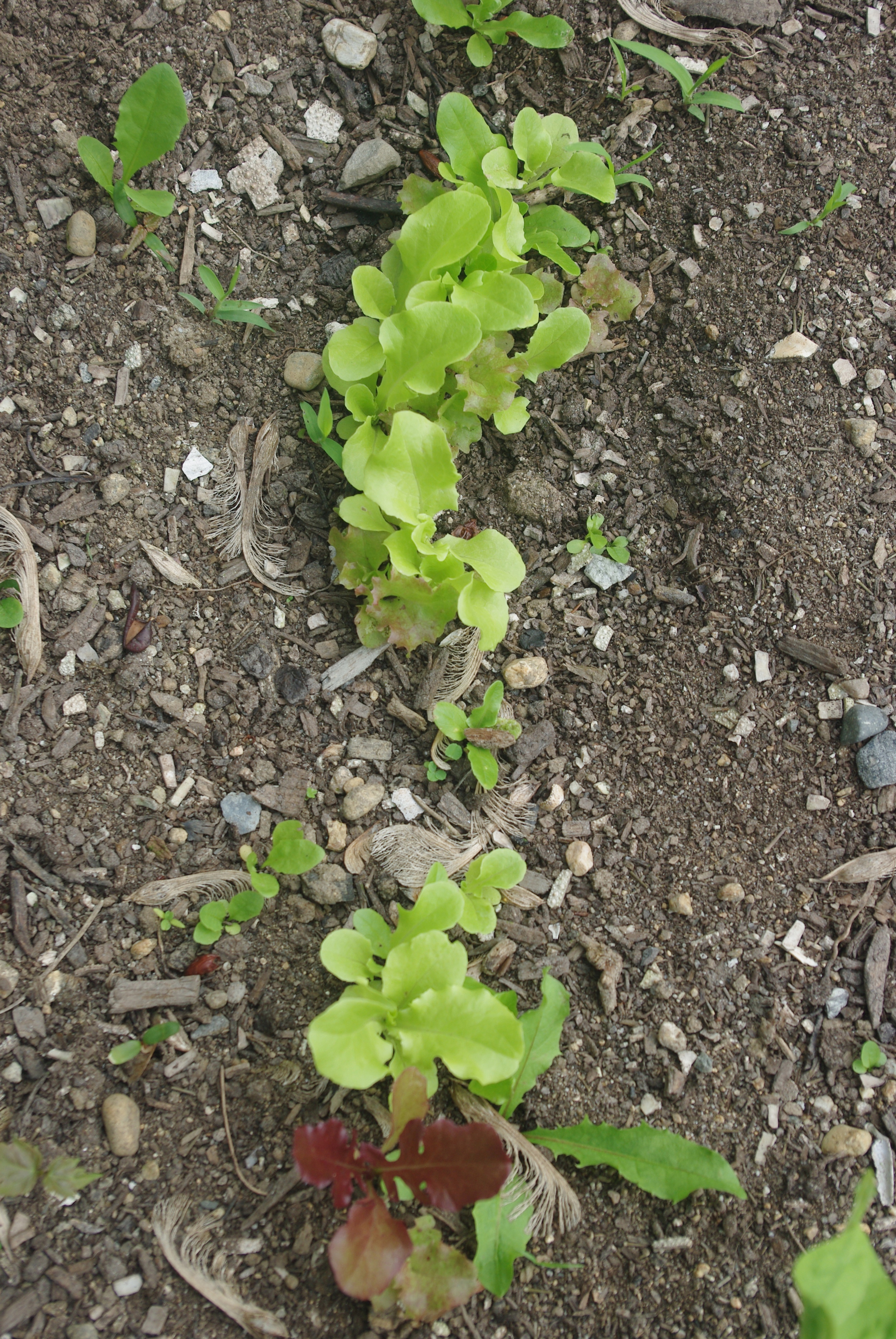
Baby Lettuce
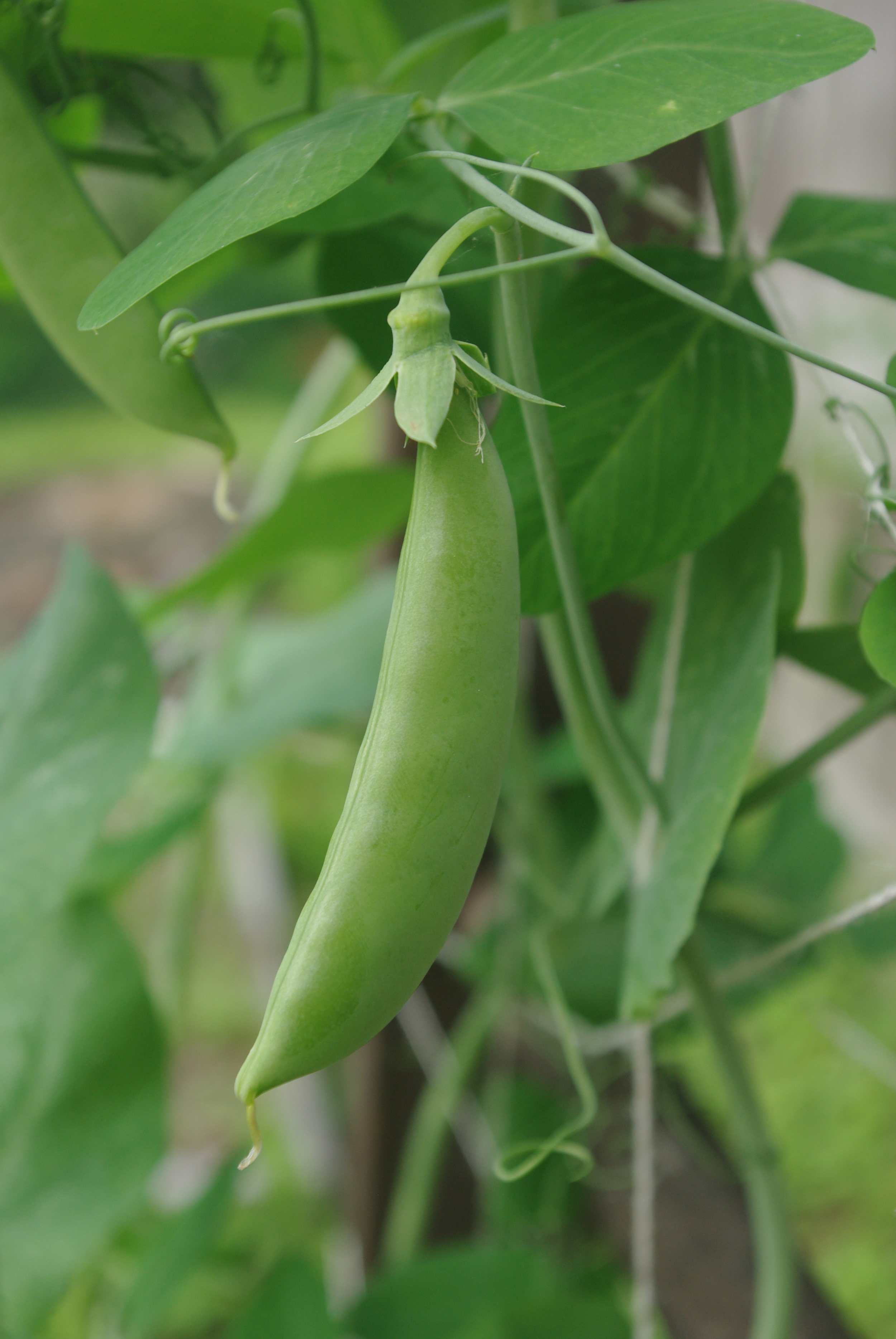
Sugar Snap Peas

It's mid July and we're settling into that summer groove. The kind of groove that makes me want to wear a swimsuit under my clothes all day and listen to nothing but oldies. Hot, humid days require that we pull out the kiddie pool or sprinkler in the afternoons, and if we have more time, a trip to the splash pad or beach may be required. 

It seems like there are five choices of what to do every weekend. This week we chose the free "Discover Ballet" class at Portland Ballet. Mr. Cleaver and I both got in on the action, and it was loads of fun, though I think Little Miss Cleaver is still a bit away from actually taking classes on her own.

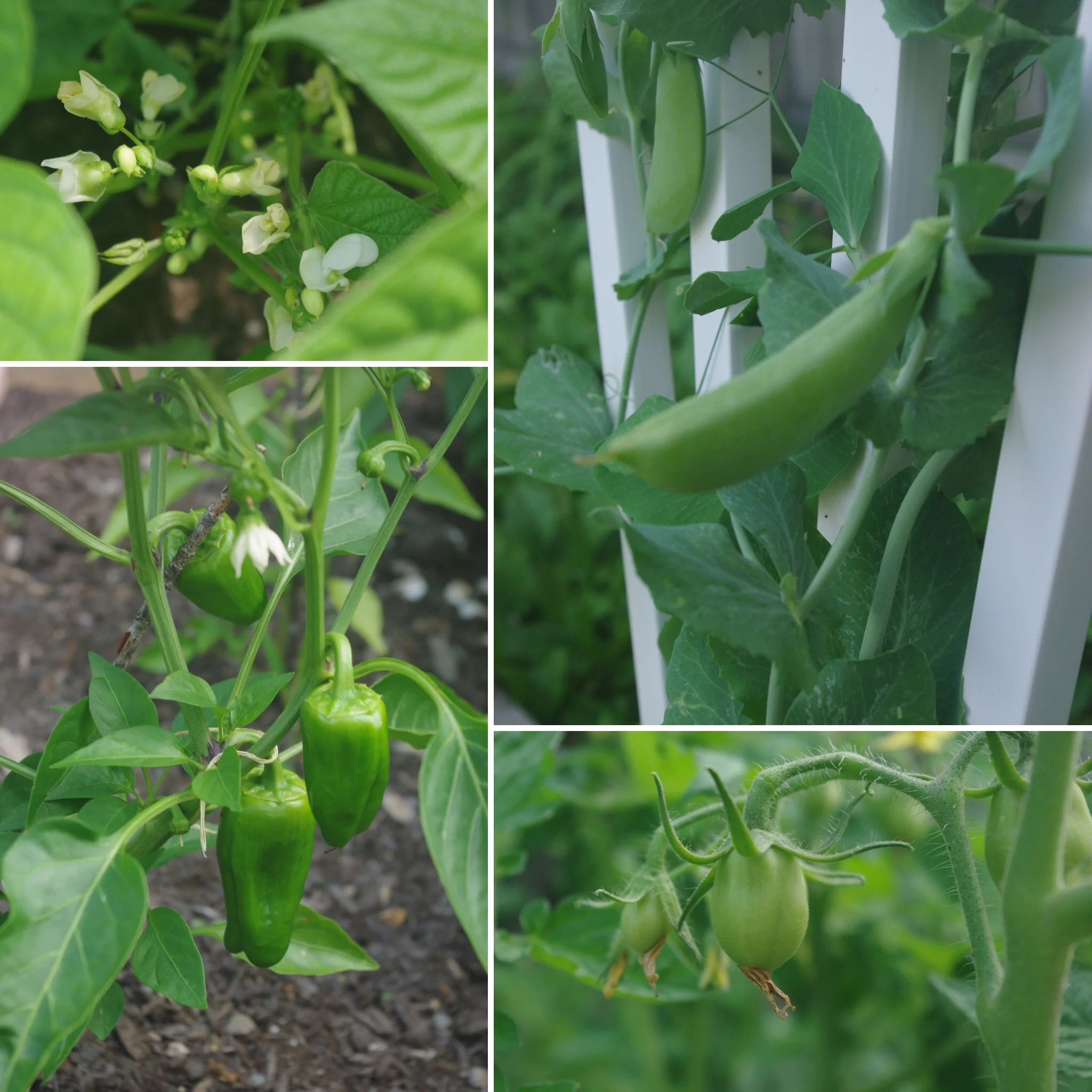
The garden is hitting it's groove too. We've been harvesting a handful of sugar snap peas every few days, the tomatoes are getting bigger, the lettuce is growing, the bush beans are flowering, and our first blueberries have started to turn blue. We had fresh pesto for our pasta. last night.  It's a good time to be outside. 


On Ethical Fashion and Bra-Making

Fair warning, here there be (non-modeled) underwear. But first, a story. Well two stories.

One of the great things about maintaining a blog (fairly) consistently over nearly 8 years, is that you can conveniently provide a time stamp for when you said something you've totally just contradicted yourself on.

In this case, it was April 30, 2008

"You see, I have this *crazy* idea about slowly crafting an entire wardrobe - except t-shirts and underwear, because I'm not that crazy."
-Me in 2008

Clearly, I am that crazy now. Because I've started making my own underthings, and it's awesome and I'm kinda obsessing about it right now. 

But how did I get from 2008 to here?  A lot of it has to do with how the sewing blogosphere has really embraced lingerie-sewing and indie designers are coming out with great really make-able patterns. But for me it really comes down to story #2, which is something I've (perhaps surprisingly) not talked about on the blog as of yet.

You see, what it really boils down to is that in January 2014, I bought a pair of grey corduroy pants on clearance for $2.98. I know that there are lower costs of living, and loss leaders, and economies of scale. I also know that to sew a pair of pants, even assembly-line fashion, takes some time. And I knew that there was no way you could pay someone a fair wage and sell their product for $3. 

I'm sure the company sold those pants at a loss. They were on clearance and a online-only extra long size (which I hemmed in about 5 minutes). I bought the pants and I wear them a TON in the fall and winter. There's nothing wrong with the pants, I quite like them, but for some reason at that moment, I realized that thanks to my ability to sew and sufficient disposable income to make choices about my own clothing, I could do better.

And so, I decided that from there on out, I would make what I had time to (which is fairly limited) and was only going to purchase clothes from ethical sources.

Ethical to me means:

  • Second Hand Purchases.
  • Made under ethical working conditions, including Made in the USA (or other first-world country), Fair Trade, or other production method that provides a working wage and safe conditions to its workers. 
  • Made to last. 
  • As possible, Organic or Sustainable Materials.

In truth, the first  ten months or so of this experiment involved a lot of returns to teeny little companies trying to do the right thing. Some things just weren't my style. Some had odd or inconsistent sizing. Some didn't have quality to match to the price. Fortunately, I've found a few companies who I adore and fill in the gaps in mywardrobe when I need it. 

One thing I just haven't had much luck with was underthings. There are definitely companies out there making quality, ethical underwear and bras, but none of them seemed to fit my body just right and/or were at a price point I could handle to meet my growing need for replacements.

And that's why I finally figured I'd give sewing underthings a go. And I am sorry that I waited this long. 

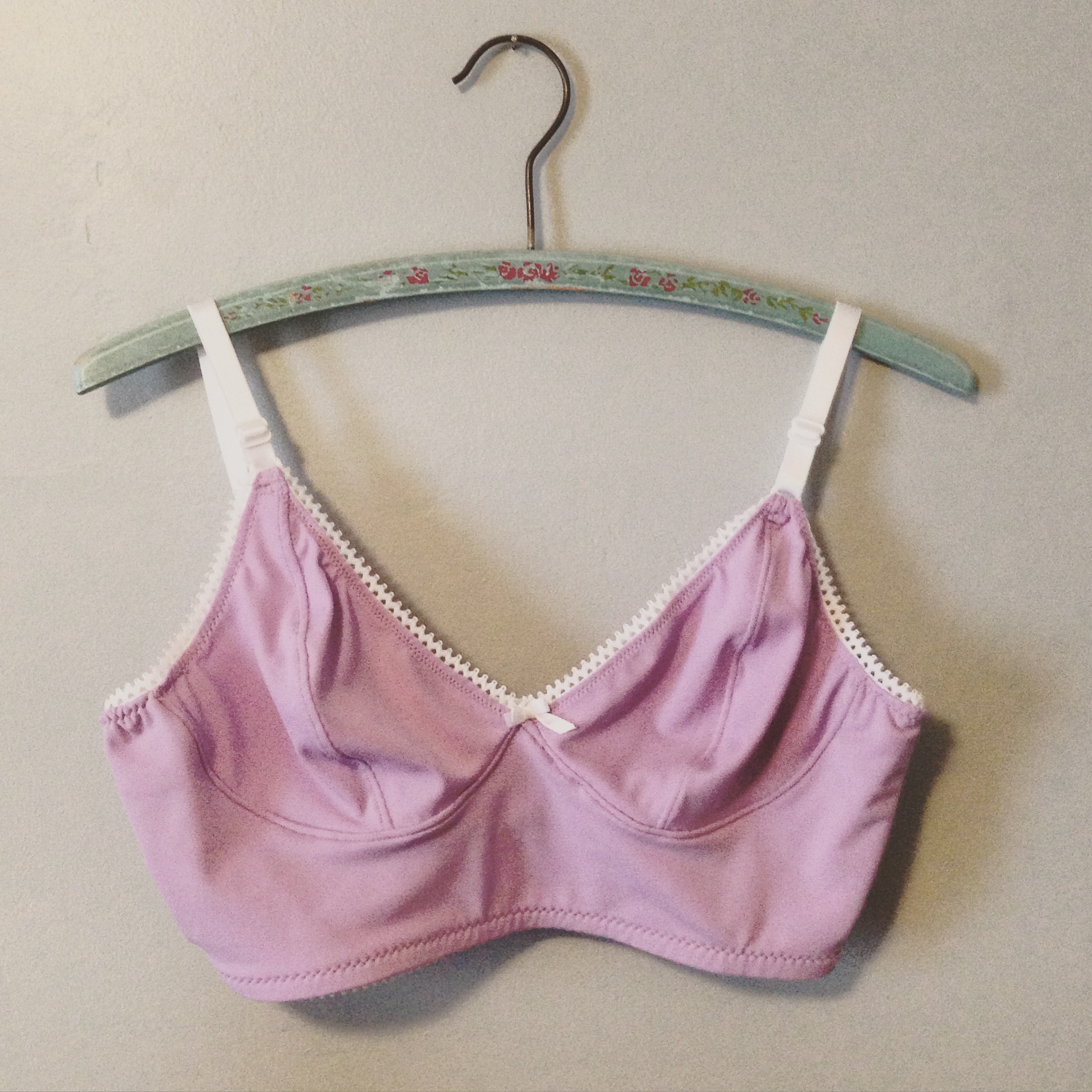
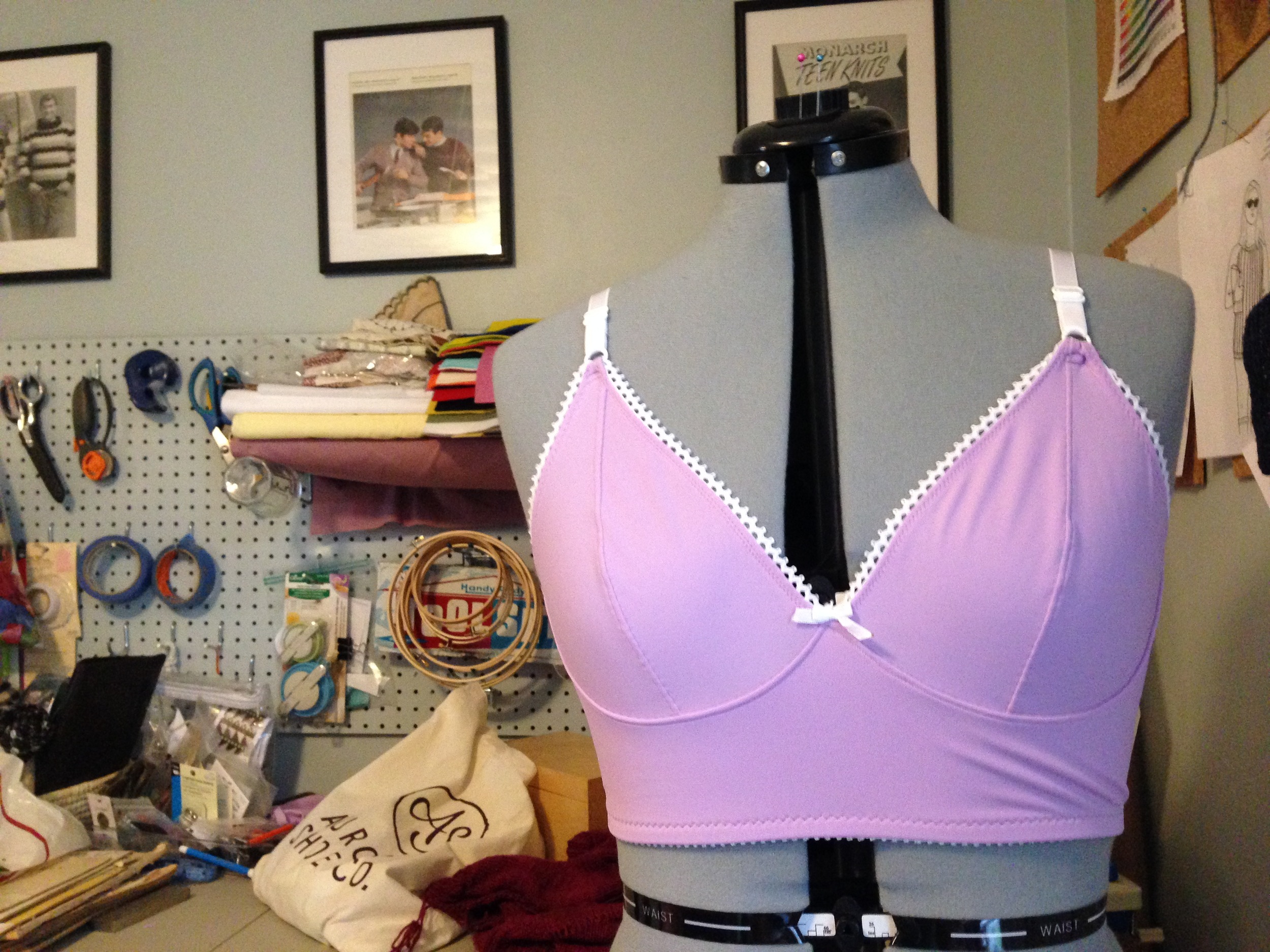
The pattern below is the very popular Watson Bra and Bikini. I made a bunch of modifications to the bikini to be more full coverage (raised the rise by ~1 and lowered the leg line by about the same), the bra I sewed as is. 

The fabric/notions/etc. for the first set all came from a kit from Grey's Fabric. The kit made it easier to get started, because most of this stuff  isn't available at my local fabric stores. I made the briefs and bra over a weekend and then the next Monday morning found myself making orders from places called Spandex House and Sew Sassy, to get more stuff to make so many more sets. So far I'm up to three pairs of undies and am sewing my second bra. It's seriously addictive and I'm eyeballing other patterns to try out (Marlborough Bra, I'm looking at you!). I'm probably going to keep going until I have a drawer full. 

Sometimes, it's good to be a little crazy.

Watson Bra made by Ms. Cleaver
Lacy Watson briefs sewn by Ms. Cleaver

4th of July Weekend

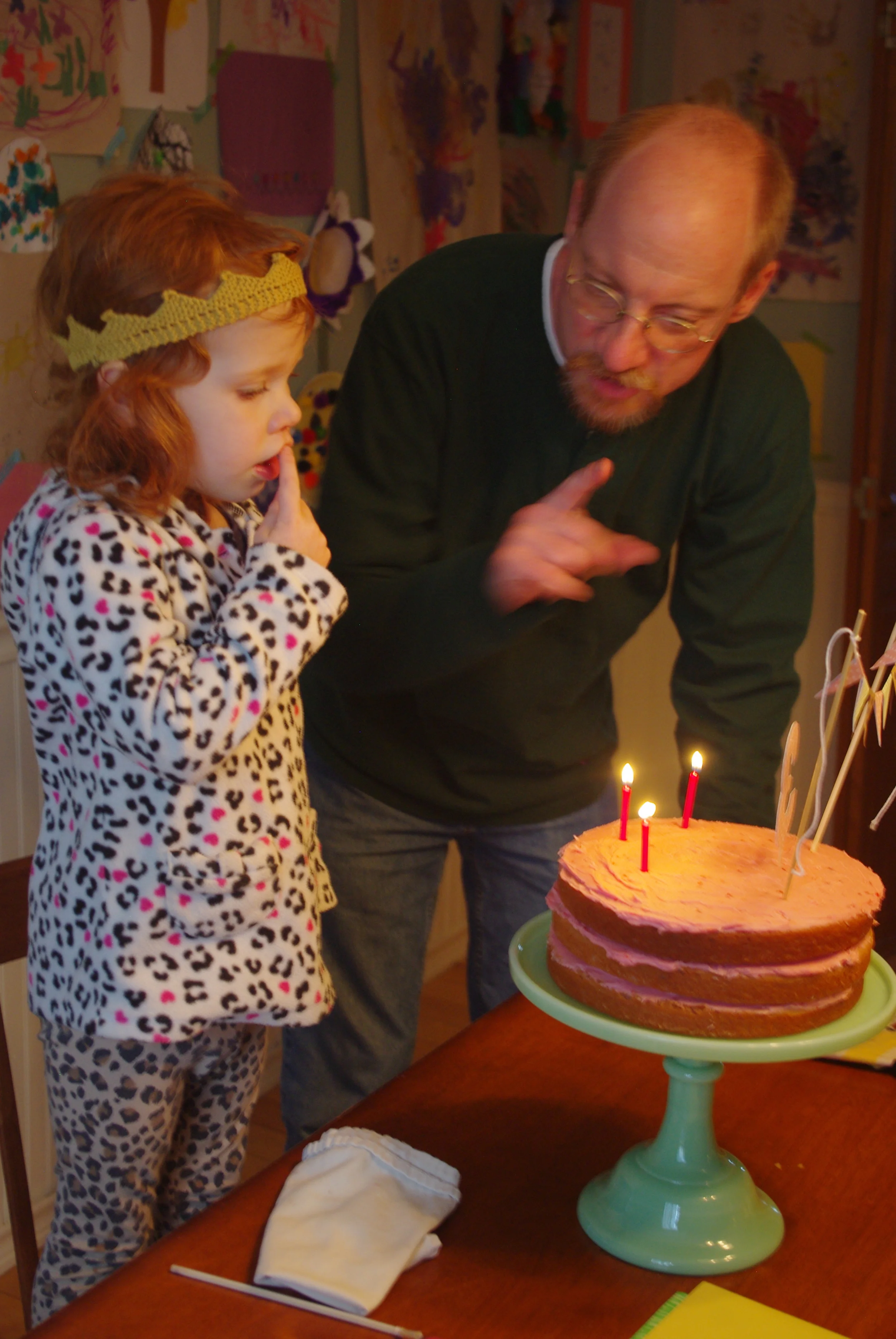
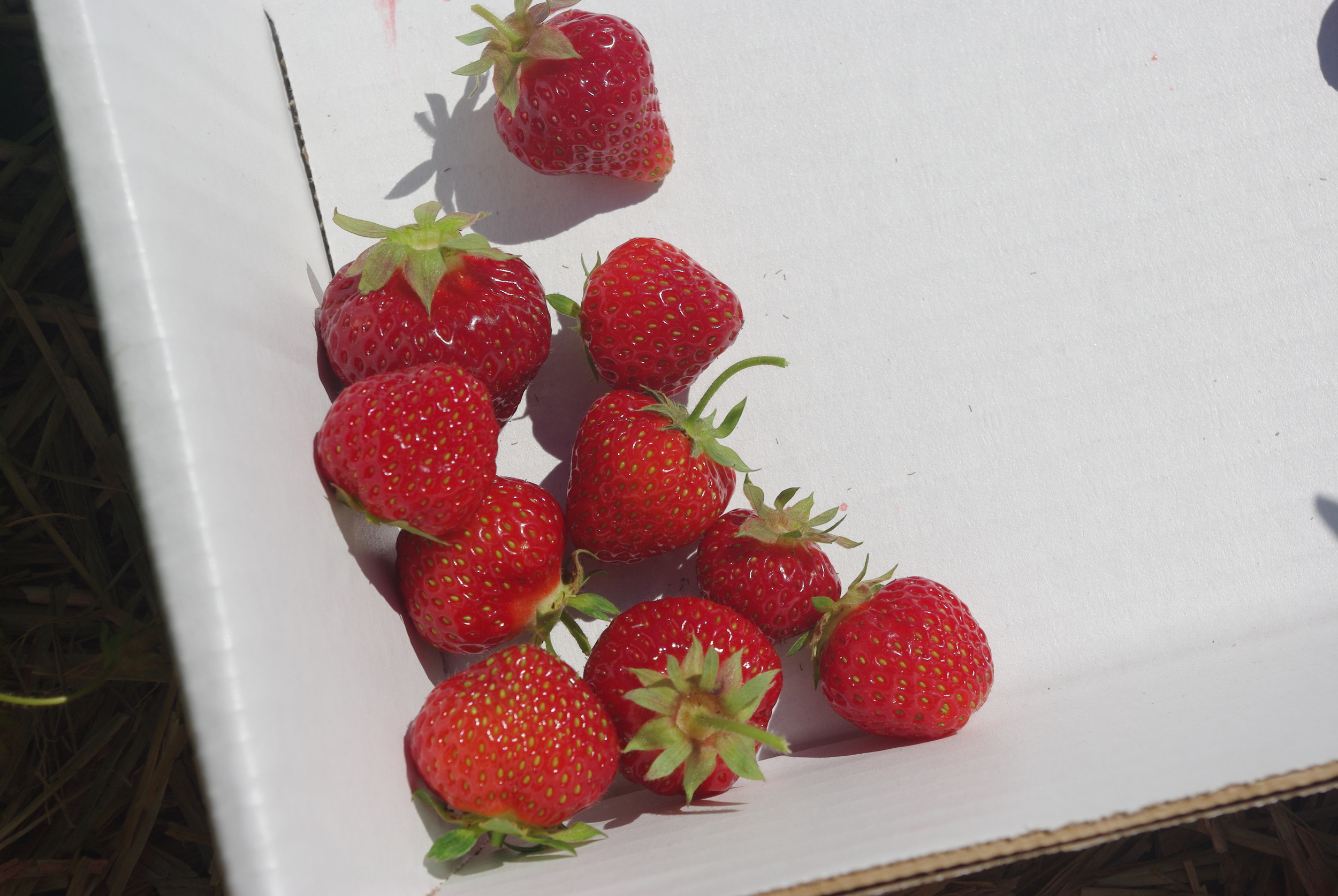
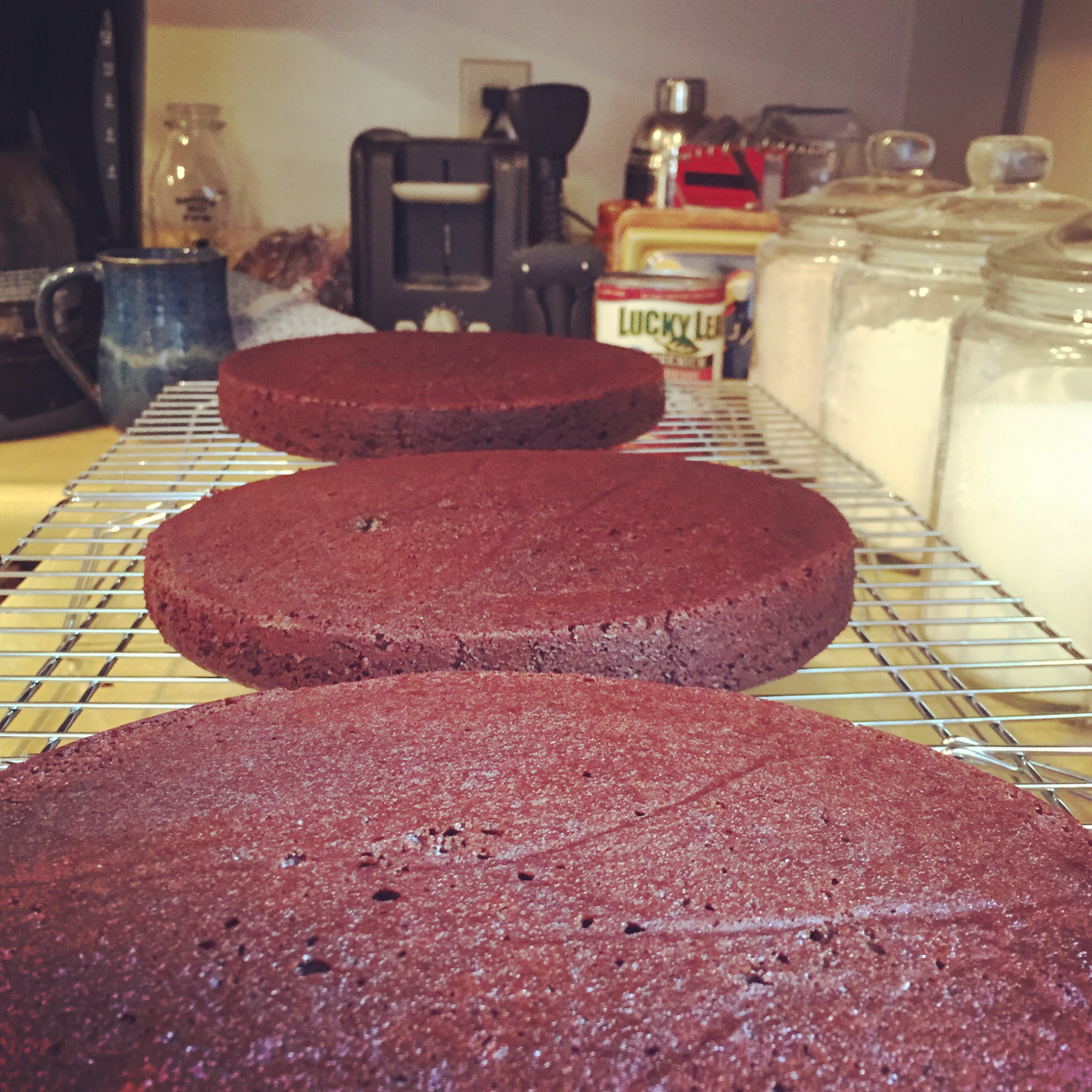
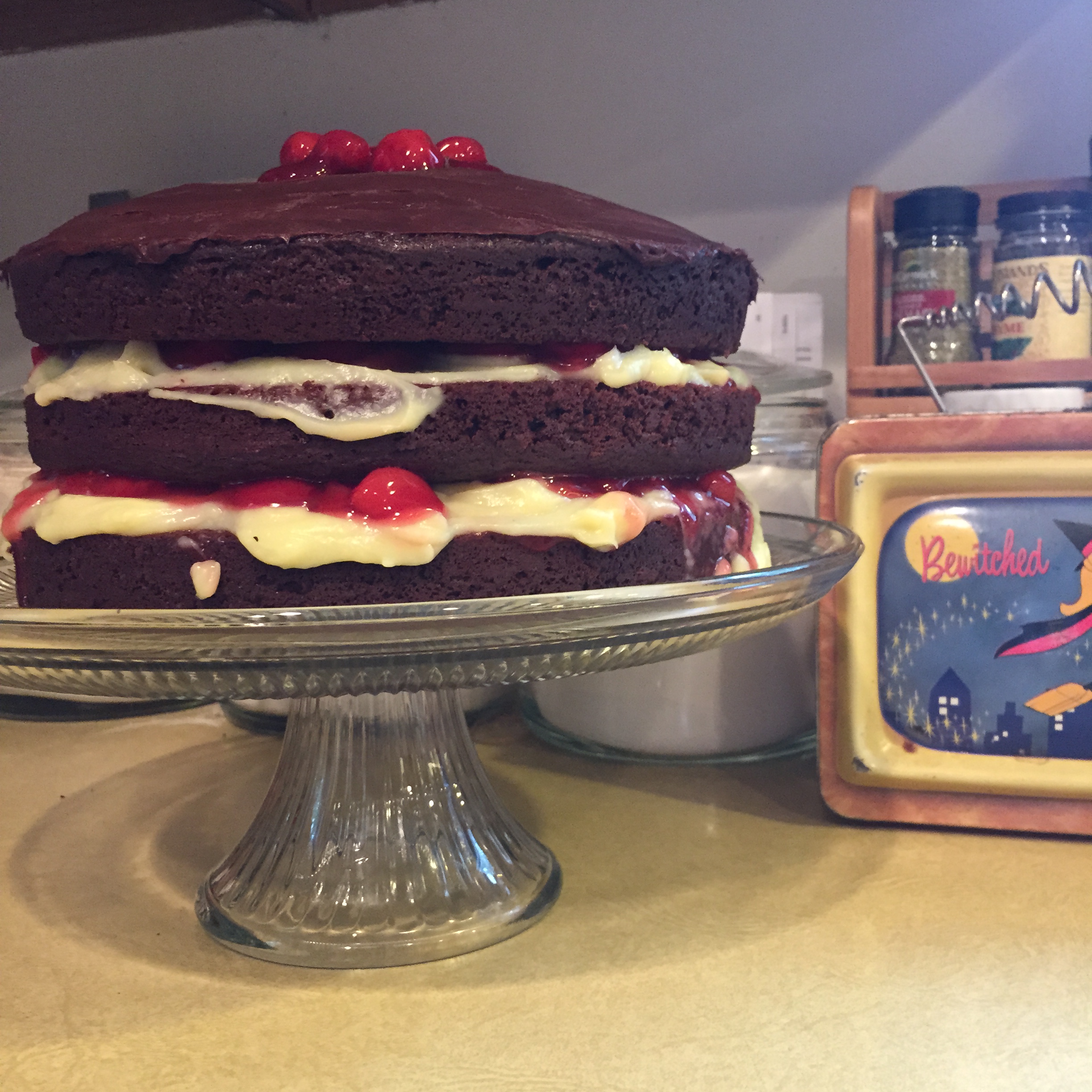
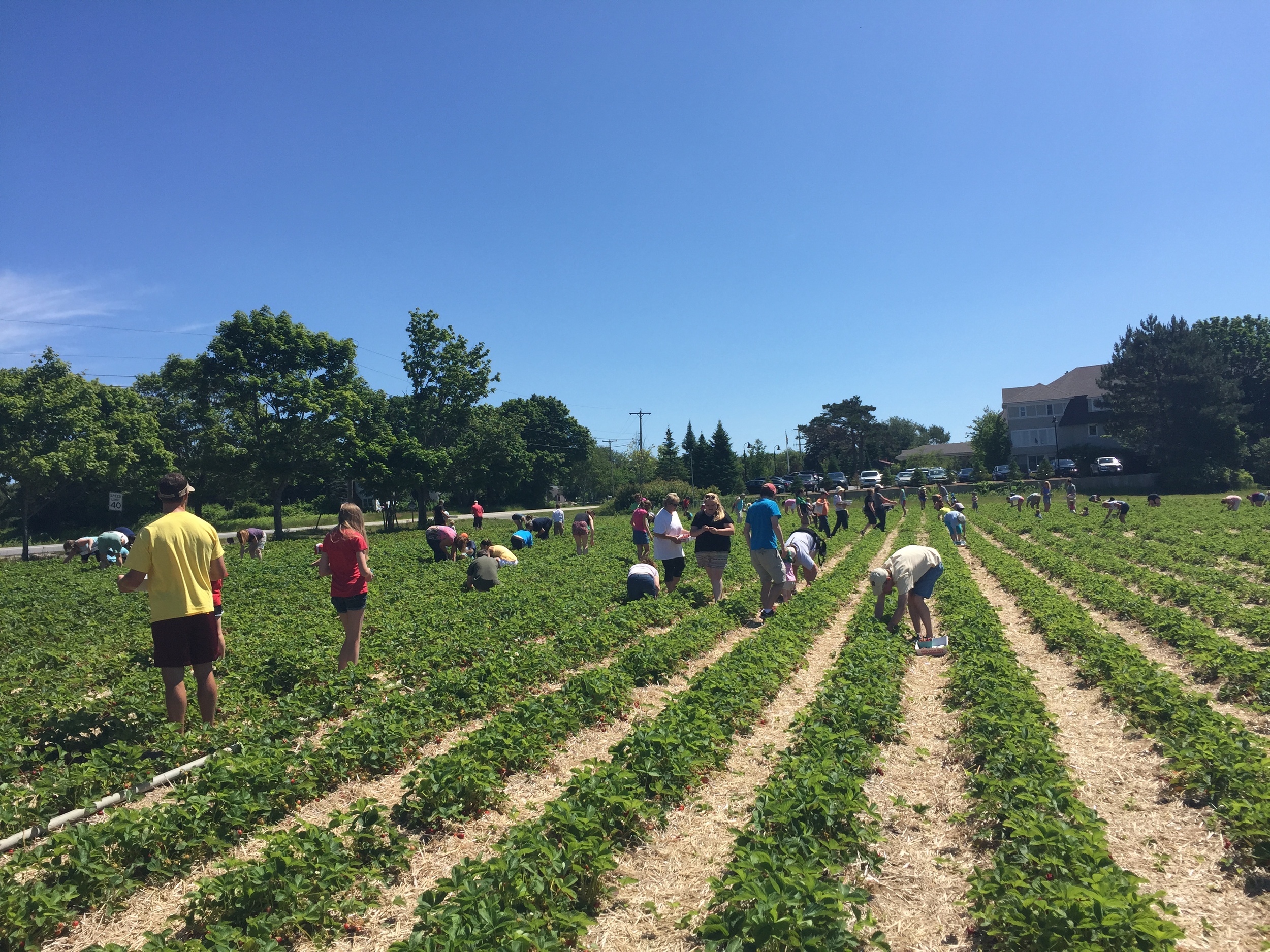
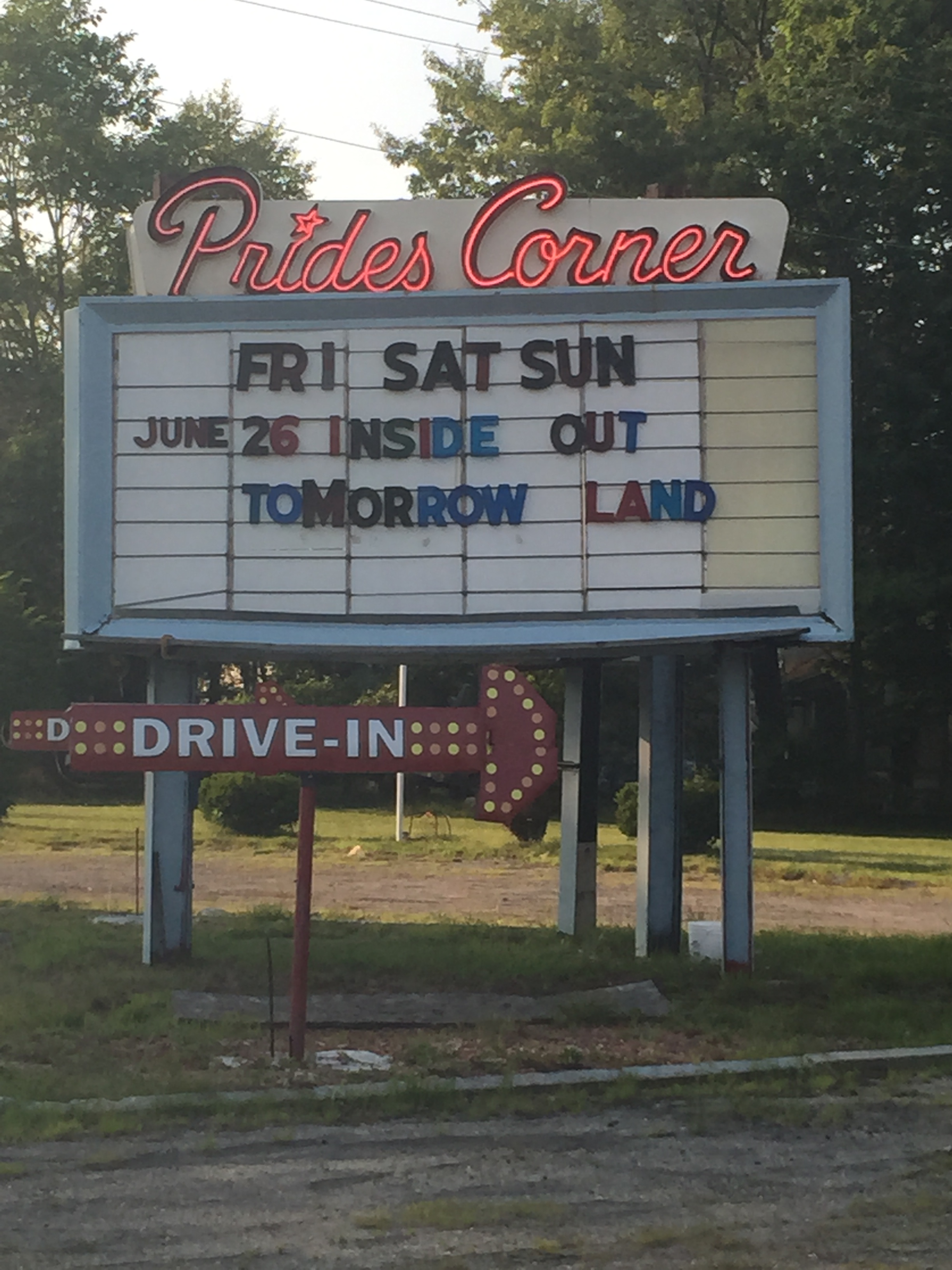
We had a wonderful, summery long 4th of July weekend. There were strawberries, birthday cake (for Mr. Cleaver) and Inside Out at the Drive-In, which LMC stayed up for the entirety of, and fireworks watching on PBS.

What are your favorite summer things to do?


Tried and True Review: A Big Bag of the Blues - Part II

A Tried & True Review, where I look back at old project and discuss how it's held up since I made it, both successes and closet rejects, in an attempt to show how my projects have stood the test of time and/or to learn from the mistakes of my yesterdays.

 I recently took a big bag of clothes, mostly handmade items, to a local consignment store and I thought, true to the spirit of the Tried and True Review, I'd take some time to share with you why I was ready to let them go. Also, if you're in the Portland (ME) area and want to grab something sewn or knitted by me, now's your chance!

There's a lot of items there, so I'm going to break it into two parts. Here is  Part II (Part I here). 

Cookie Monster Cardigan

The Original: Cookie Monster Cardigan

Made/Age:  July 2012, 3 years old.

Update: Accepted for Consignment.

Fit:  It's just too big in the bust. I kept it around because I was pregnant at the time and though it would fit well later in the pregnancy, but it never did. Because it was that big. It looks okay in the photos, but I always felt like I was swimming in it. 

Style/Materials: Cookie Monster Blue Berrocco Vintage. Because it's a superwash wool/acrylic blend I couldn't even shrink it to fit. 

Construction: This sweater had it going wrong from the get go. I recalculated the yoke increases from the pattern, because as originally written it made the sleeve have weird "wings". It looked like a circular yoke construction, but all the increases were centered over the sleeves. I restarted the yoke again and finished the sweater, but I didn't have the heart to knit it again, when it was too big.

Final Verdict: When in doubt, rip it out. 

Vogue 8184 by Ms. Cleaver

The Original: 4th of July Dress

Made/Age:  July 2010, 5 years old.

Update: Rejected from Consignment.

Fit:  The fit is fine (I think), the truth is I just didn't wear it all that much. I have another rather similar blue sundress (that I got at the consignment store oddly enough), that I preferred to wear. I can't really pin down why, but this one just never seemed as flattering.  I didn't need two, so off this one went.

Style/Materials: Quilting cotton. 

Construction: I added horsehair braid to the hem which was fun, but maybe made it a bit too costumey?

Final Verdict: This is another go with your gut one. There's no reason not to like it , but because I don't, there's no reason to hang onto it either.

Burdastyle Alexis by Ms. Cleaver

The Original: Alexis Skirt

Made/Age:  December 2008, 7.5 years old.

Update: Accepted for Consignment

Fit:  This one always falls under my pencil skirt sewing deficiency. It sits too low on the waist to be flattering. 

Style/Materials: Some vintage brocade. Fabric was beautiful, but I find it harder to wear lighter colored items on bottom. Also it has a kangaroo pock on the  front, which makes it pooch out weirdly.

Construction: I seem to recall it being quite well made, but it was early in my sewing career, so it probably was less so. 

Final Verdict: I need to take a class on making a pencil skirt or something. it is my sewing waterloo. 

The Original Ms. Cleaver Photo from 2007!
The Walkway Dress

Bonus: The Walkaway Dress

Made: Sometime between 1998-2001

Update: Accepted for Consignment

Fit: To finish up, the bottom dress in that pile is actually one my mother made for me in high school. The photo on the left is from 2004 and may be one of the last times I wore it (for my original Ms. Cleaver portrait at that!) . The dress is actually pretty flattering on, but is generally impossible to wear due to the narrowness of the front skirt panel. One stiff breeze and you have an embarrassing situation on your hands. Also, the quilting cotton print made it look like it belonged on a preschool teacher. 

Final Verdict: If you can't wear something without fear of repeatedly exposing your underwear, you probably shouldn't wear it. 


Introducing the Cormac Sweater

Cormac Sweater by Leah B. Thibault, KnitScene Fall 2015
Cormac Sweater by Leah B. Thibault for Knitscene Fall 2015

More often than not, I'm a "come up with a design idea and try to find the right yarn" kind of designer, but in the case of the Cormac Sweater in the new Fall Knitscene? Completely the other way around. 

Knitscene had put out a call for submissions back in October for items featuring chainette-style yarn. Something, I'll admit to never having used before, but my curiosity piqued, I went down to my Local Yarn Store  and picked up a skein of Shibui Maai. They had a sample of it knitted up at the shop, a super cushy garter stitch scarf. But when I got the yarn home and began knitting with it, cushy didn't feel right to me. It was so springy and light, that I wanted to push it even further in that direction, the yarn screamed out "make me lace!" And so I did. 

A simple 4 stitch/4 row lace pattern was quickly decided upon and knit up on larger than usual (for me, anyway) needles. All air and lace and drape, but like eiderdown, the loftiness and halo of Maai fill in the gaps, meaning Cormac is a sweater that is both lacey and warmer than you'd think.

I wanted the fabric to be center stage, but also knew that the drapiness of the fabric could make fancy shaping a bit of a bear, so a boxy construction, with drop-shoulder sleeves made the most sense.  It seemed like something one of those impossibly chic girls would wear for a morning at the cafe, hair in a messy bun, oversized latte with foam art and a paperback novel near at hand. Easy to pull on and as comfortable as a sweatshirt, but a whole lot prettier. 

Because of the minimal shaping and the larger needles and the simple lace, Cormac is also a pretty quick knit. If I had to make one change, I'll probably make the sleeve cuffs a bit snugger and/or the sleeve a tad bit shorter, but when I had seamed the whole thing together and hung it on my mannequin, I thought - yes, that is just what I wanted it to be. 

Cormac, along with a number of other gorgeous designs like Annie Watt's Oddity Scarf, Nadya Stalling's Couturier Jacket and Courtney Spainhower's Caldwell Pullover, are available in the Fall 2015 issue of Knitscene, currently available digitally, and on newsstands on July 14th. In the meantime you can queue or favorite it up on Ravelry.

Do you have a favorite design in this issue? Have you ever worked with chainette yarn? Does your yarn ever get demanding with you like the Maai was with me? 

You can see some of my previous Knitscene designs here or on Ravelry

All Photos: Courtesy of Knitscene/Harper Point Photography