Maine Handmade Fair

Maine Handmade.jpeg

Virtual Maine Handmade Fair Tomorrow!

December 05, 2019

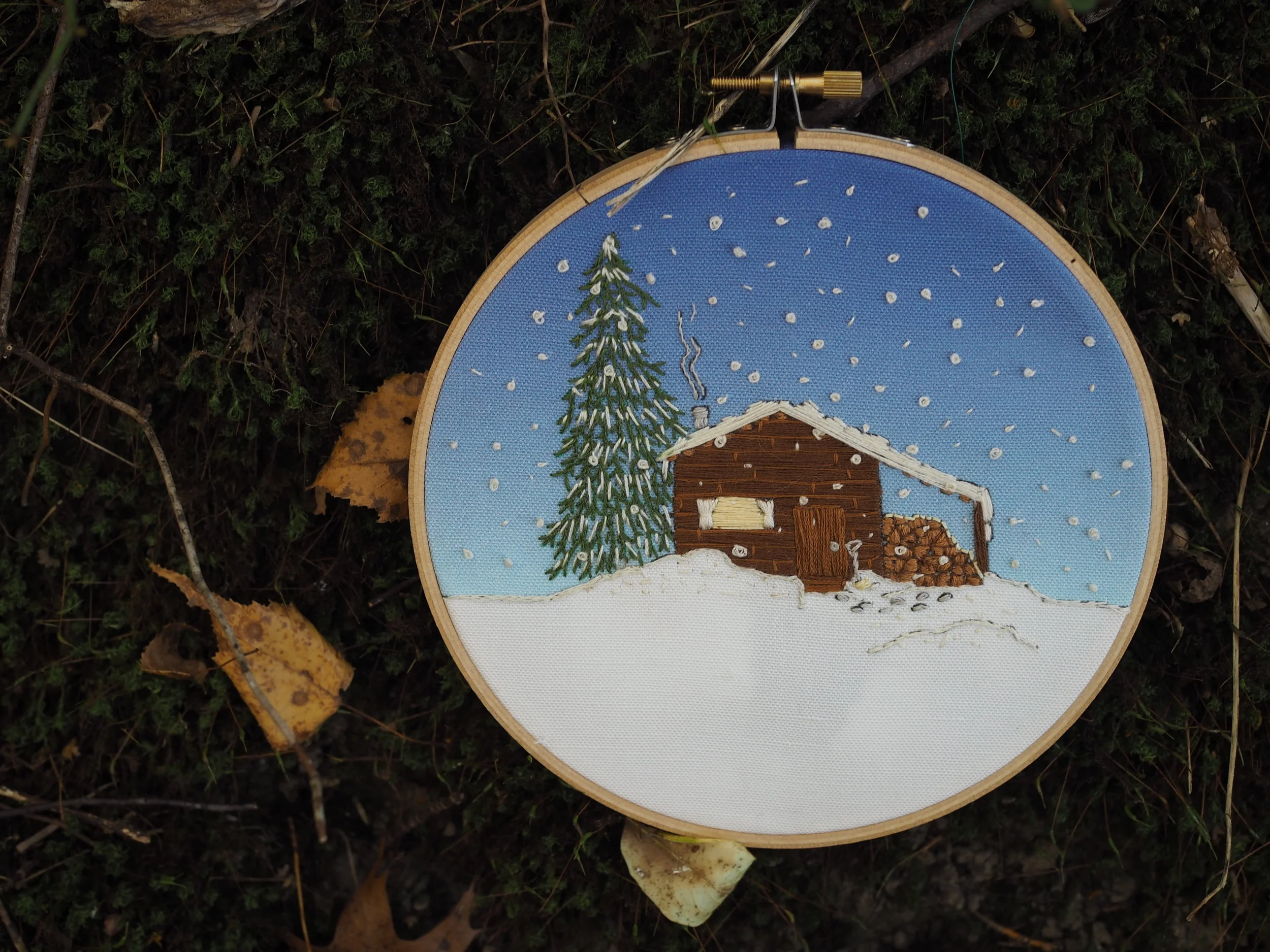
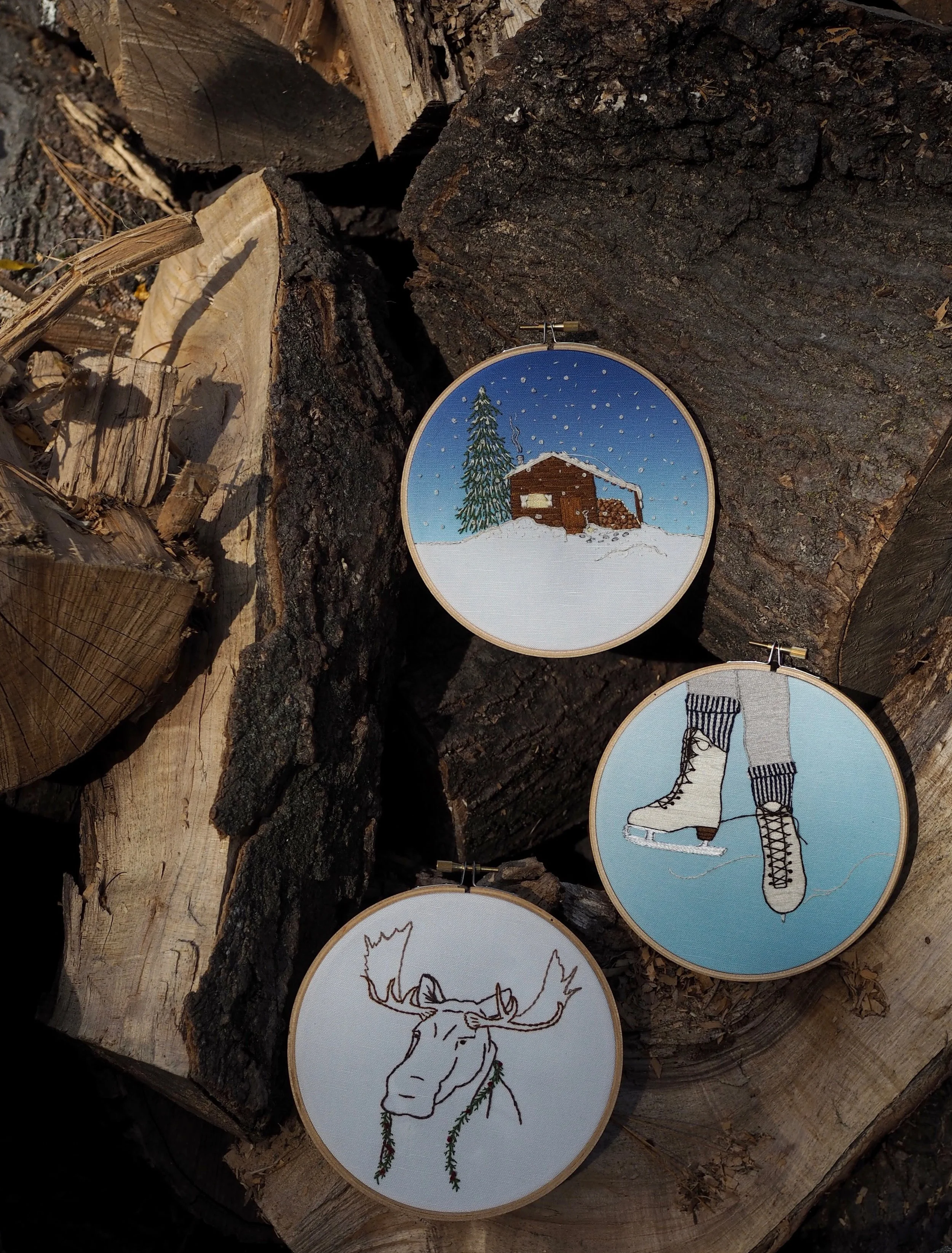
I’m co-hosting a virtual craft fair featuring 22 talented Maine makers. Friday, December 6th starting at 10 am we'll be sharing our handmade work, as well as some special discounts, peeks inside of our workspaces, and creative processes. We are a group of 22 different artists and artisans representing a wide range of handmade products and processes and different areas of Maine's creative community. 

What's a Virtual Handmade Fair?

It's a group of artists and makers getting together to share their work - just like a regular craft fair. Instead of meeting up in person, we're meeting up online and inviting you to join us on Friday, December 6th, starting at 10 AM to say hello, see our handmade work, and find some special discounts on handmade holiday gifts. We think it'll be a fun way to see new work, meet new makers, support and create connections within this creative community.

Organized by Eliza Jane Curtis of Morris & Essex and Leah B. Thibault of Ms. Cleaver - Creations for a Handmade Life, this event includes 22 Maine makers: 

Please join us tomorrow morning, RIGHT HERE on Instagram, starting at 10 am we'll be sharing our handmade work together, as well as some special discounts, peeks at our studio and creative process, maybe some live video greetings, we'll see - each artist gets to choose what they want to share, so it'll be a bit of a surprise, and I think it'll be fun! Can't wait to see you there.
Golden State

The year after I graduated college, I drove cross country with my high school best friend (highly recommended) from California to Maine in 2.5 days (the timeline is less recommended, but I had a scheduling crunch). During our journey, one of the things we decided we wanted to do was learn the nickname of every state we passed through - the road signs made it clear that Utah was the “Beehive State”, we asked a waitress in Wyoming to learn it was the “Cowboy State.” We passed though the “Hawkeye State” (Iowa) , the “Keystone State” (Pennsylvania), the” Empire State” (New York) and the “Bay State” (Massachusetts), among others before finally arriving in The Pine Tree State (Maine), but the land I left behind in 2005 was the “Golden State.”

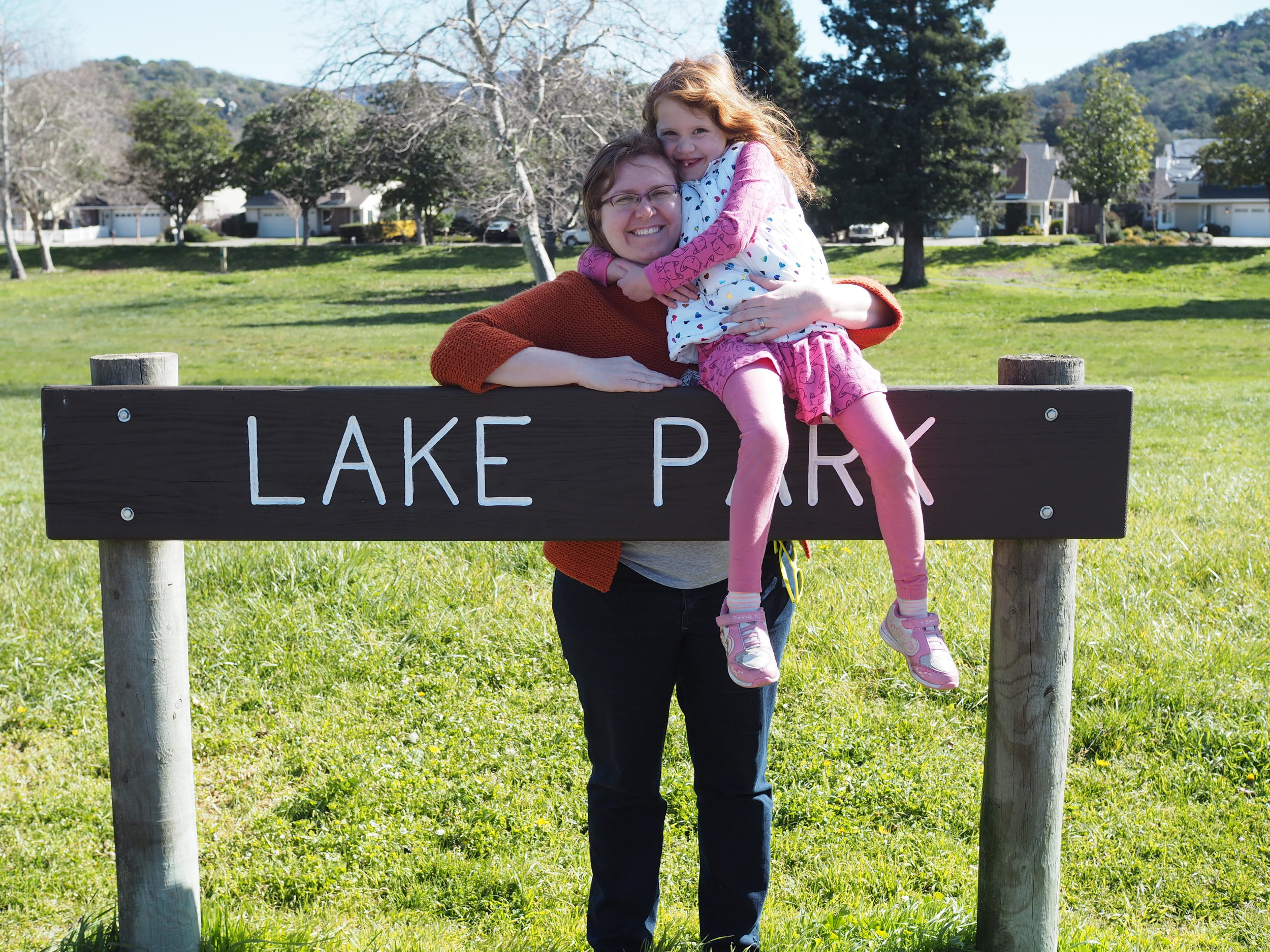
Since moving out east, I’ve been a regular visitor to California about ever other year, but I’ve been thinking a lot more about California recently. 2019 marks the year that I’ve lived outside of California longer than I’ve lived in it. It’s the 15 year anniversary of my father’s death. It’s the year I went out to show Little Miss Cleaver my hometown for the first time and to see my mother for what is likely the last. I came back from my most recent trip with two shoeboxes full of family photos. I’m feeling a little nostalgic to say the least.

So, as is only natural for a creative, I’m digging into that nostalgia and reflecting on the Golden State in my designs. Exploring bits of my person history and the history of the state at large, considering how the 31st state in the Union shaped me and shaped the country. There’s a lot to mine there (pun intended!) and honestly, a lot of emotion, so instead of trying to pull together a collection with a set deadline, I’ll be working on this project over the course of the year, releasing things as they are ready and telling the story in bits and pieces as I go.

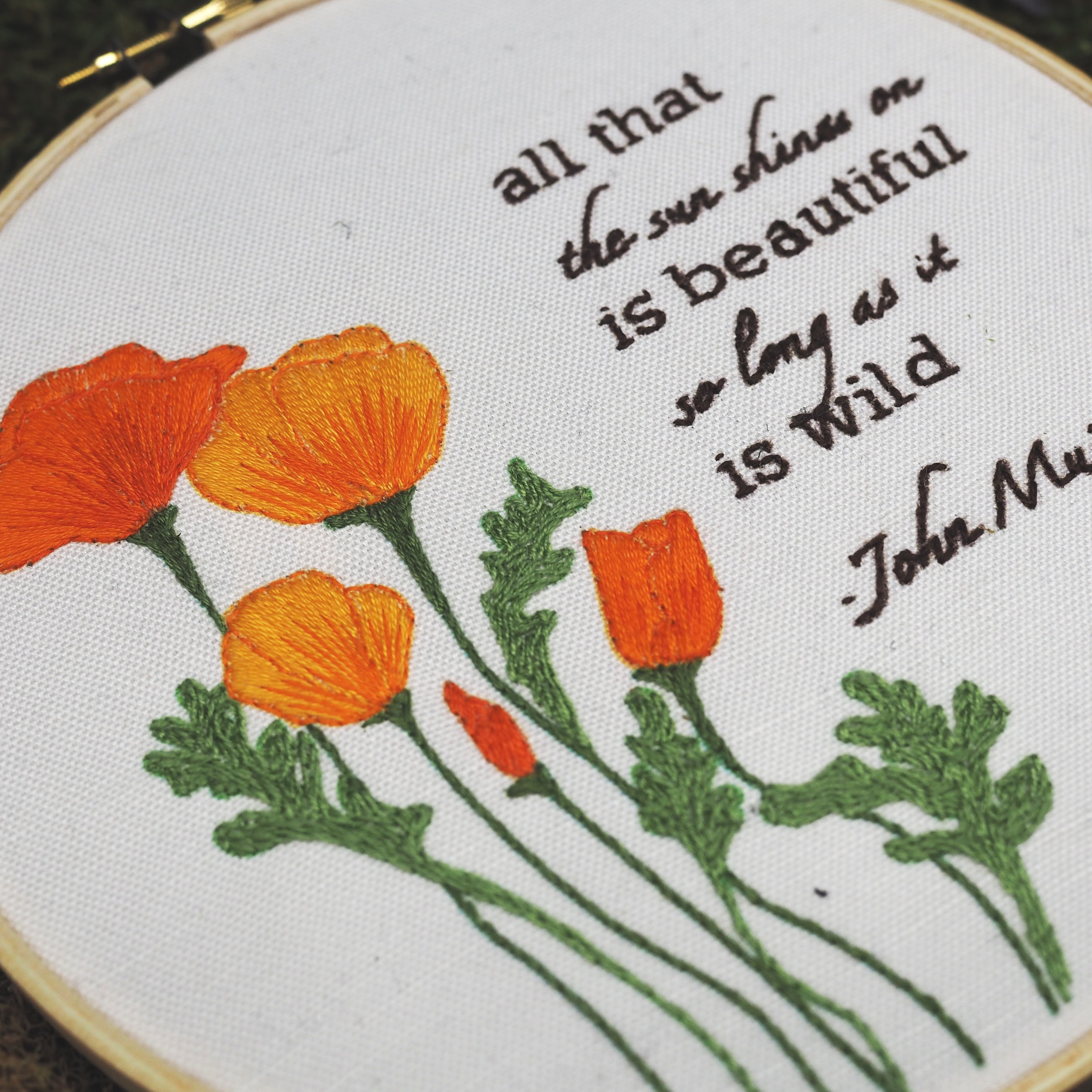
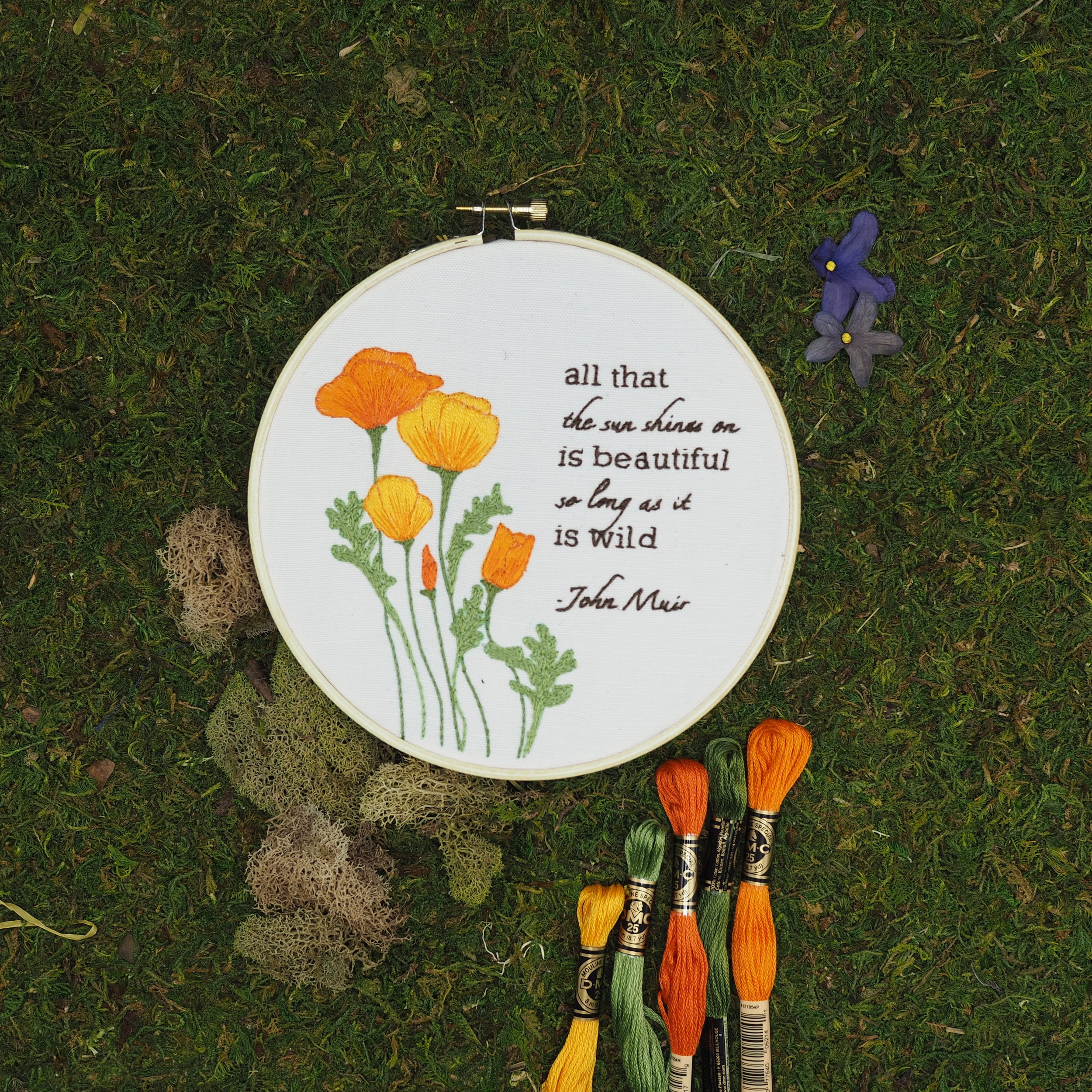
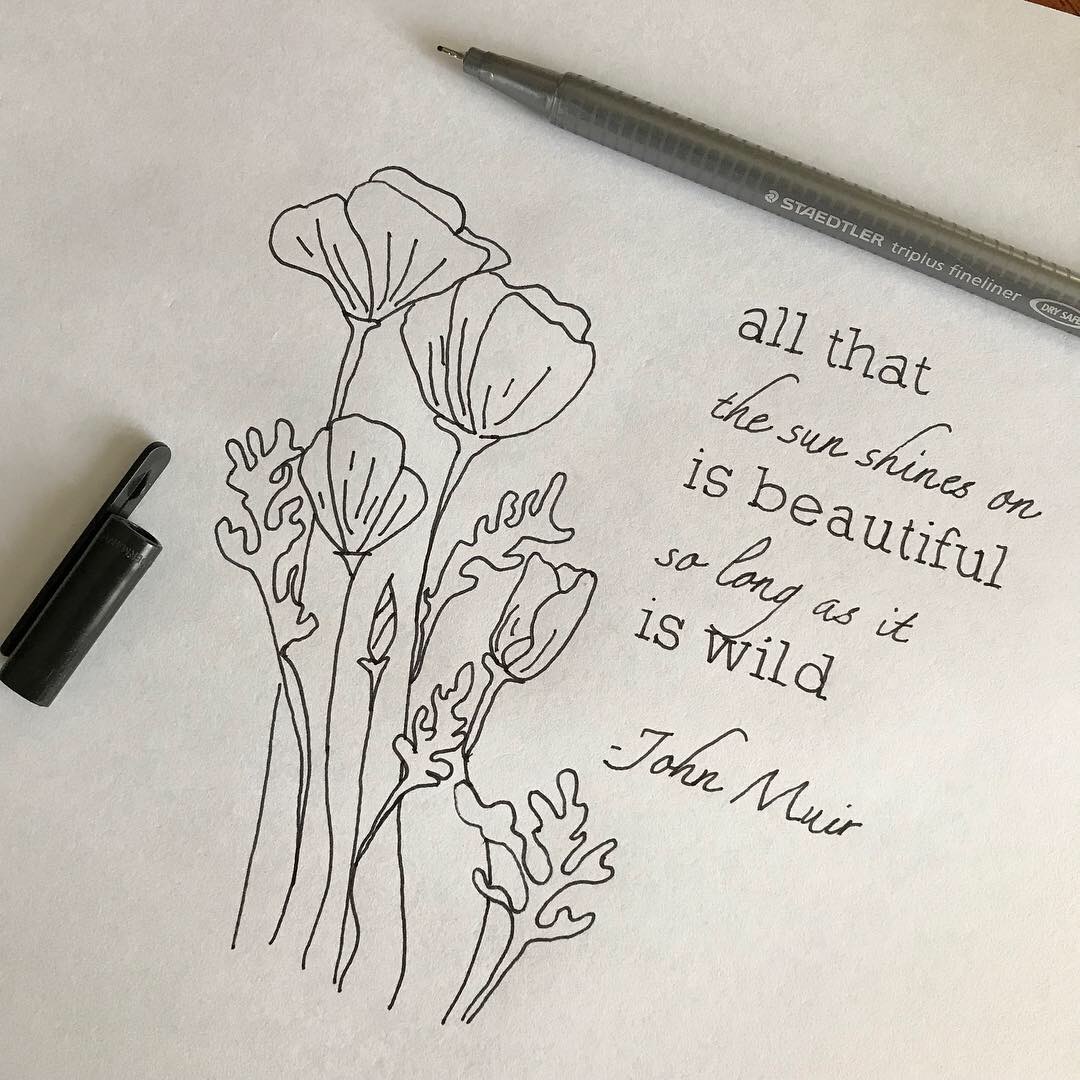
I’ll start with the first release in the collection - “All That Is Beautiful.”

When I chose to focus my next batch of designs on the Golden State, I knew that John Muir was going to show up somewhere.
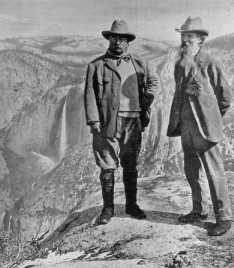
My dad and brother, both Eagle Scouts, were/are outdoorsy people with a particular love of the Sierra Nevada, so I grew up well acquainted with the legacy of Muir and once visited his homestead when my brother was doing research for a school biography project. 

For those unfamiliar with Muir, he was a Scottish-American naturalist and writer who championed preservation, was instrumental in the establishment of Yosemite National Park, and co-founded the Sierra Club. Unfortunately, Muir also prioritized natural preservation over the native people who lived in those environments and the creation of Yosemite evicted the Ahwahneechee and other portions of the Southern Sierra Miwok from their native lands. An act that was repeated with other National Parks.*

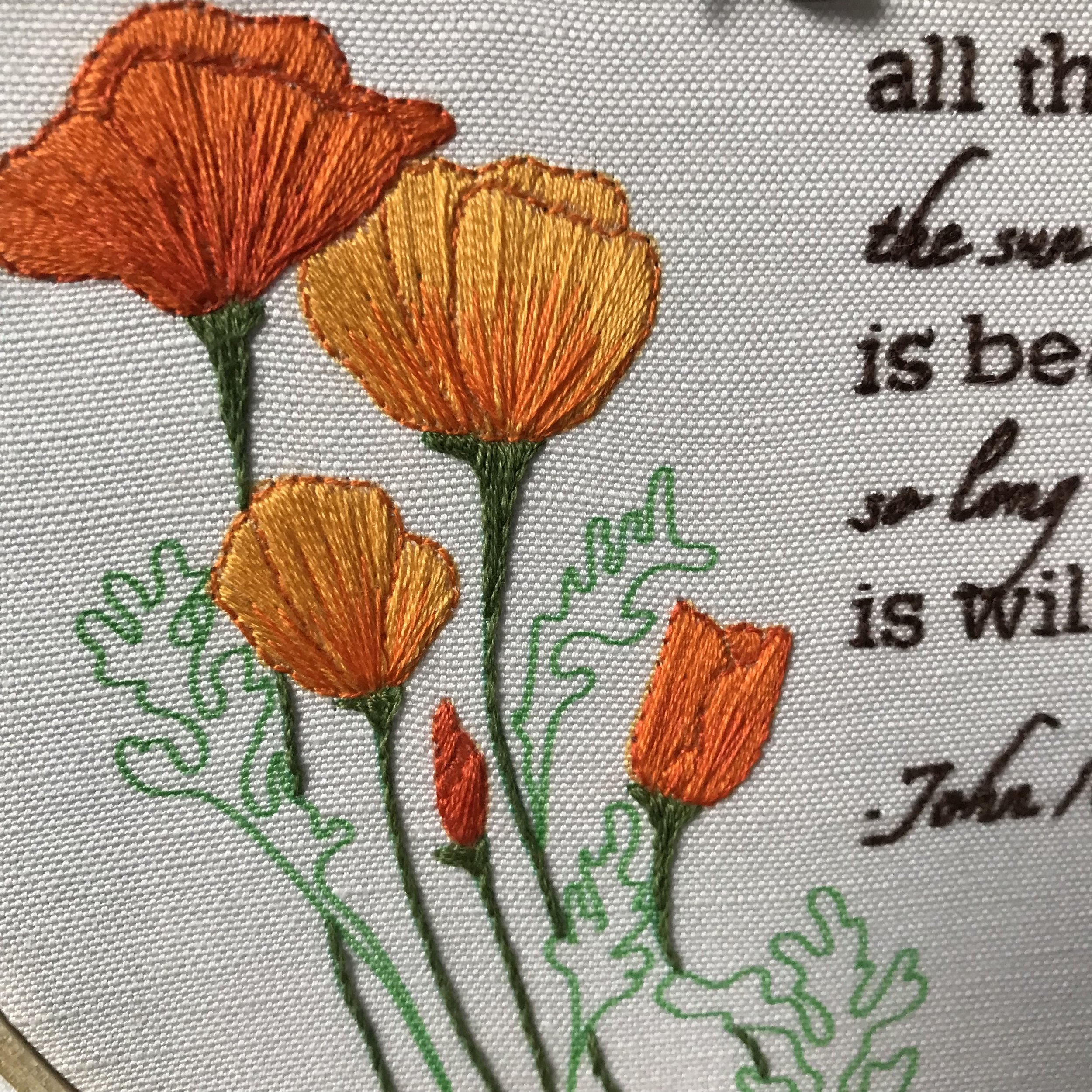
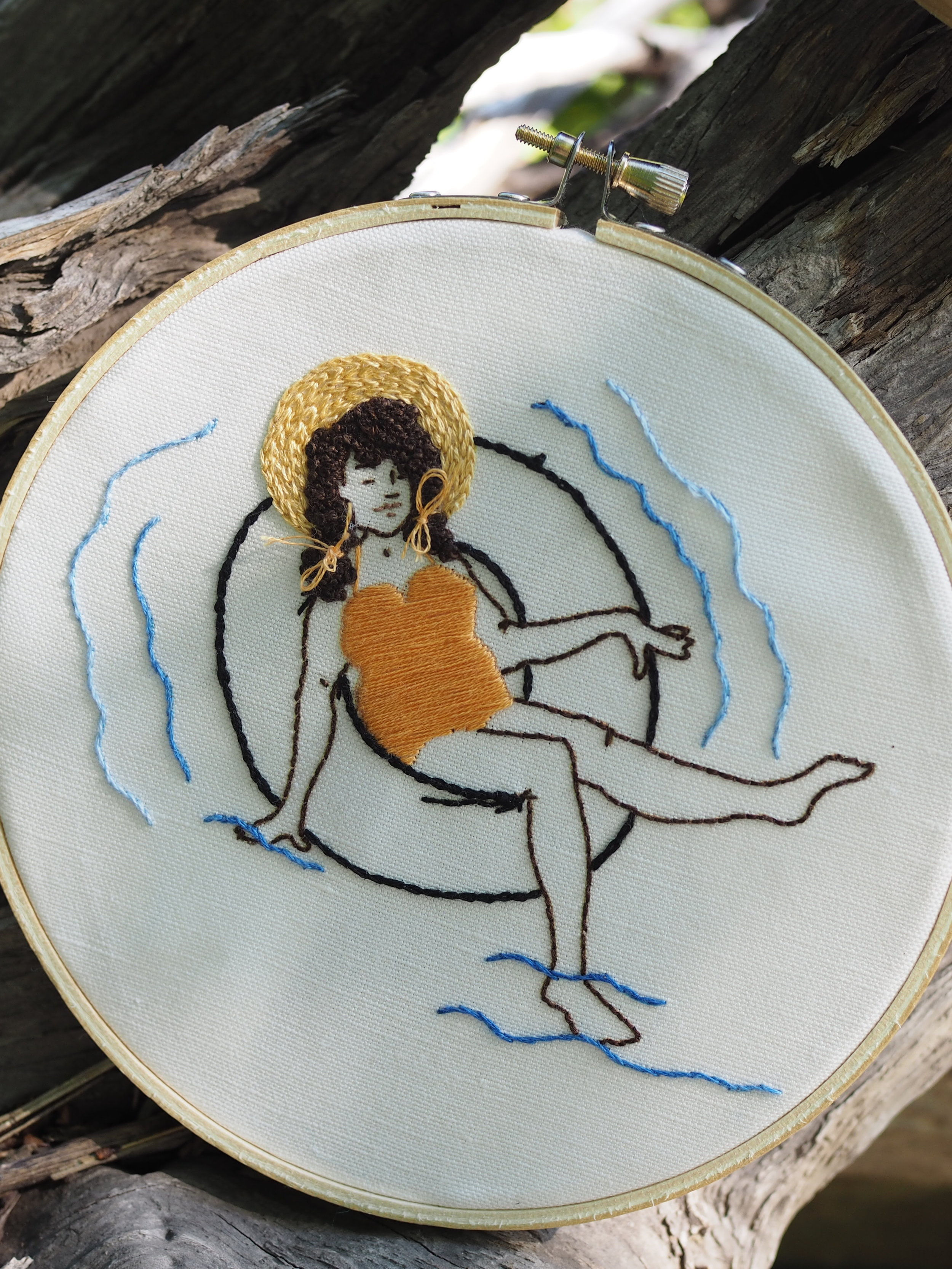
Muir was a prolific and often poetic writer, and this quote from a state promotional brochure published by the California State Board of Trade, particularly struck me in several ways. It is important to examine the full impact, both positive and negative, of the people and places we respect. I look at this quote and it serves as reminder to me that there is beauty in all nature (which I take to include all life, including human and animal), but also that we can overemphasize an unrealistic idea of “wild” - since there are very few places not impacted by humans and that not all human impact is negative. It’s part of reason I chose a brown for the text rather than a sharper black, because not everything is black and white. It was only natural to pair the text with the California Poppy - the state flower that grows wild in profusion in the state.
The design is available as a complete kit, printed panel, or PDF pattern in my shop.

As a small acknowledgement that there were many other residents of California before the Americans arrived, a minimum 15% donation of profits from any Golden State collection item will be donated to charities that support self-determination and community/economic development led by and for Native Californian and Latinx peoples, including the Seventh Generation Fund for Indigenous Peoples and the Dolores Huerta Foundation.

*For more on the Native American History of Yosemite and the displacement and erasure of Native Peoples from National Parks, check out the following resources as a starting point:
https://www.fresnobee.com/news/special-reports/yosemite-at-150/article19521750.html
https://www.collectorsweekly.com/articles/erasing-native-americans-from-national-parks/


All That Is Beautiful - Embroidery Kit
from $9.00

“All that the sun shines on is beautiful, so long as it is wild” - John Muir, "The Scenery of California," California Early History: Commercial Position: Climate: Scenery.

This design is part of the Golden State Collection, a year-long project looking at the history and beautiful of California, my home state. A minimum of 15% of all Golden State Collection profits will be donated to charities that support self-determination and community/economic development led by and for Native Californian and Latinx peoples, including the Seventh Generation Fund for Indigenous Peoples and the Dolores Huerta Foundation.

—-

With the design pre-printed on a beautiful linen-blend fabric, stitching a heirloom quality piece of embroidery is almost as simple as coloring!

Embroidery kits make great gifts (including for yourself!) and are a wonderfully meditative activity that comes with a beautiful product at the end.

Hang your finished piece right in the hoop (I’ll show you how!), frame it, or sew it into a cushion, bag or quilt.

New to embroidery? Each kit comes with a 2-page color guide to basic stitches or check out the tutorial library for tips and step-by-step instructions.

——

COMPLETE EMBROIDERY KIT

Contains everything you need to stitch a beautiful wall-hanging.

  • High-quality Linen/Cotton Fabric pre-printed with design

  • 6” wooden hoop

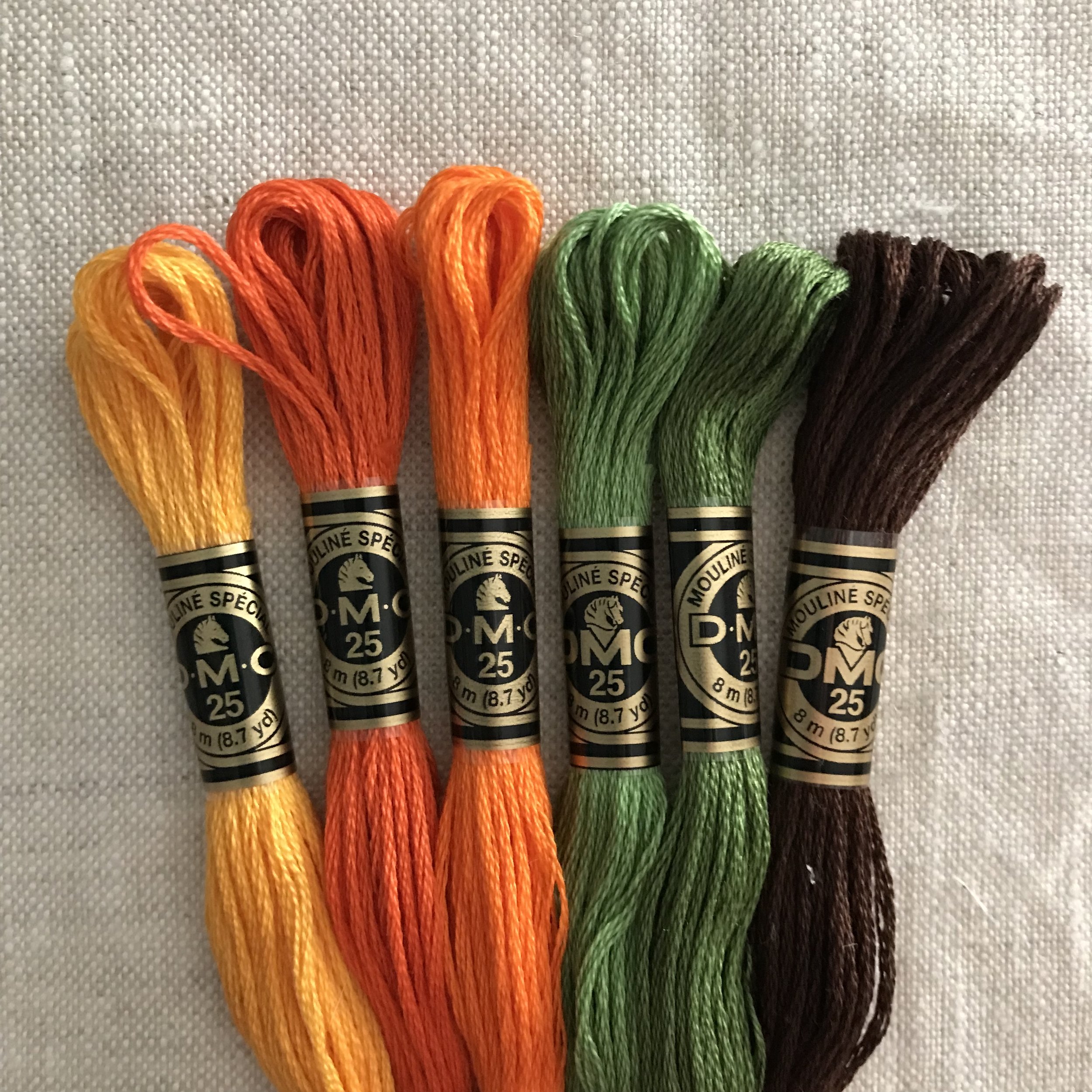
  • Lengths of DMC Embroidery Floss to complete design as shown

  • Embroidery needle

  • Guide to basic embroidery stitches (additional tutorials available at MsCleaver.com)

  • Complete kit packaged in a sturdy reusable kraft envelope suitable for gifting.

Have more floss than you know what to do with, or want to pick your own colors? Purchase the pre-printed panel only in the drop-down menu above. Also available as a PDF Pattern. 

*Materials shown are a sample only and may vary by design


Knitting Vertical Pleats and Pintucks

KnittingVerticalPleatsandTucks.jpg

It’s no secret that I learned to sew long before I learned to knit, and I still love them both, but while sewing is essentially the art of taking a flat piece of fabric and manipulating it into a 3-D structure, the magic of knitting is that you can work that structure into the very fabric itself.

The simplest example of this is knitting in the round - rather than knitting a flat piece and seaming it into a tube, you just make the tube to begin with. Similarly, increases, decreases, and short rows can be used to form curves and undulations. I love designing my stuffed animals in the round, because it forces me to think in three dimensions from stitch one. But when it comes to garments, I’ll admit to finding a bit of a thrill in translating traditional sewing techniques, like pleats and pintucks into knitted forms.

Just like with sewing, working a knitted pleat involves securing folds in the fabric. To work a horizontal pleat, like in my Bob & Wave Cowl (see bottom of post), you pick up and knit a stitch from several rows down together with every active stitch. The vertical pleat, as used to shape the hands of the Turning Leaf gloves, is worked across two rows and is a tad more involved, so I’ll walk you through the process step by step.

PA110613.jpg

Here I use the the term “tuck” to cover pintucks (which are very narrow tucks) and any other vertical pleat.

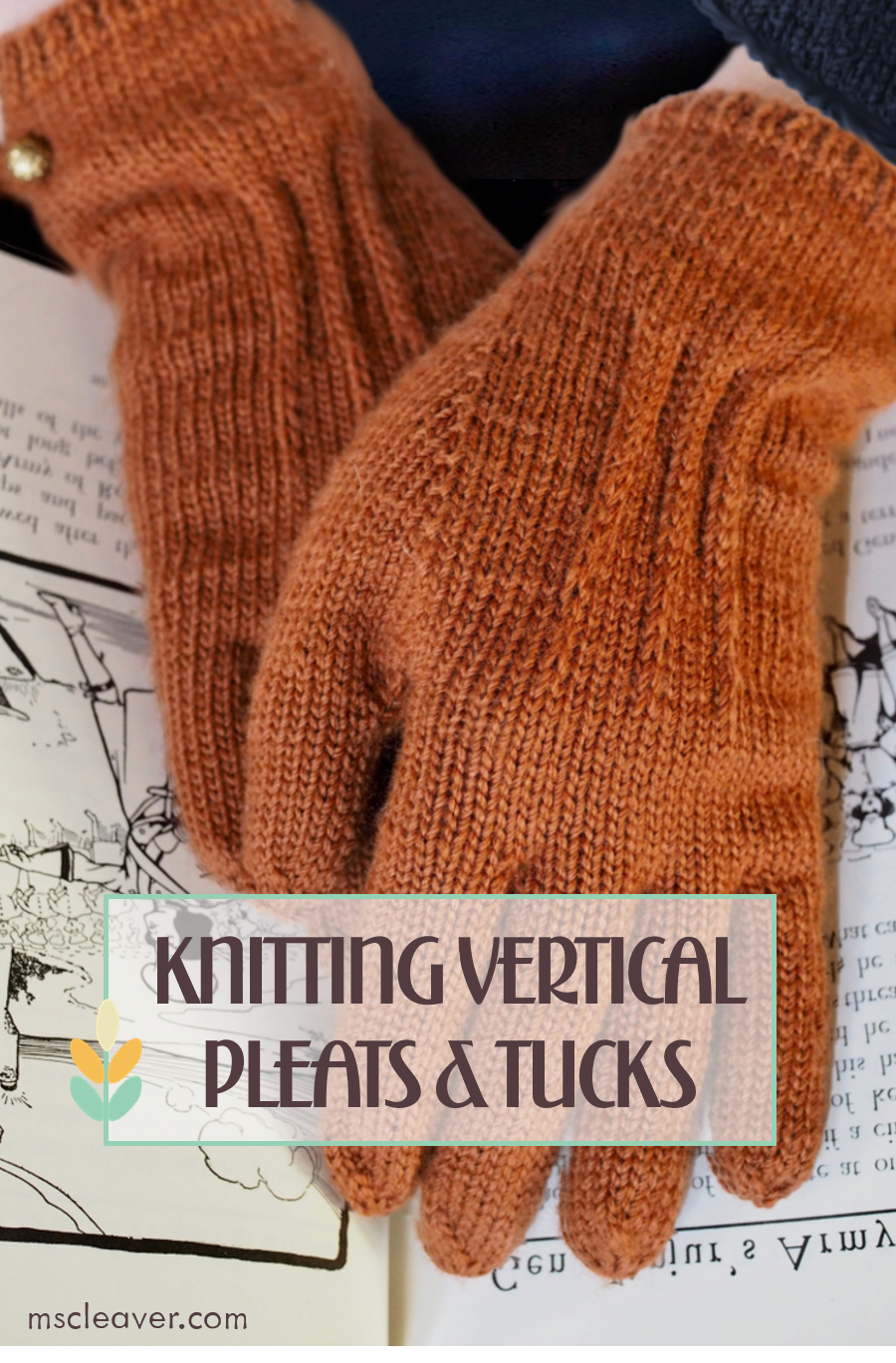
The Turning Leaf Gloves (used as an example here) have a series of three tucks across the back of the hand. The tucks start at three stitches wide near the wrist, and then decrease to a two-stitch tuck, and then one-stitch tuck just below the fingers.

I’ll be showing the three-stitch tuck throughout, but the same technique can be applied to a tuck of any width. A tuck with more stitches being folded will be more visible and decrease more fabric.

PA110620.jpg

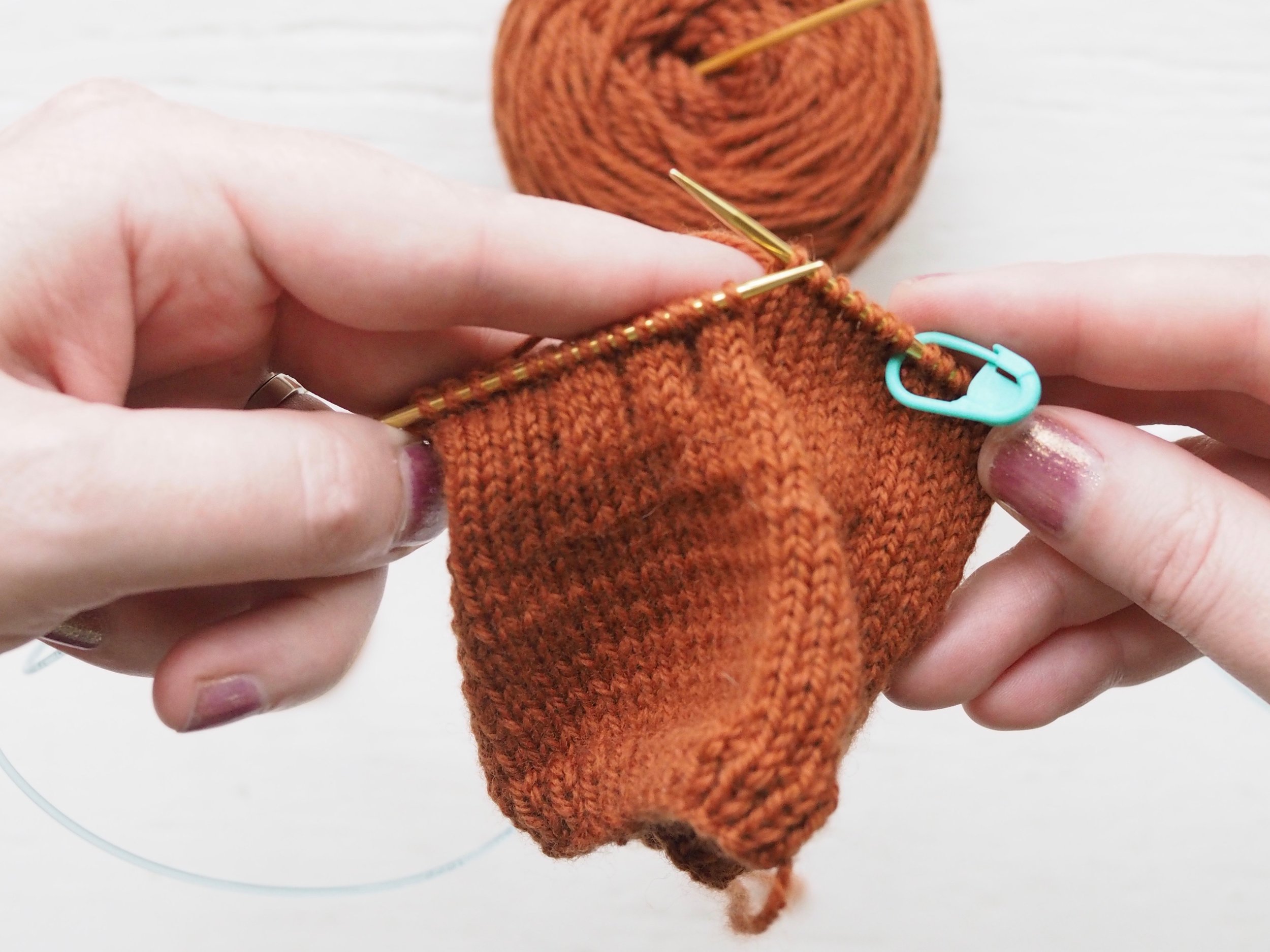
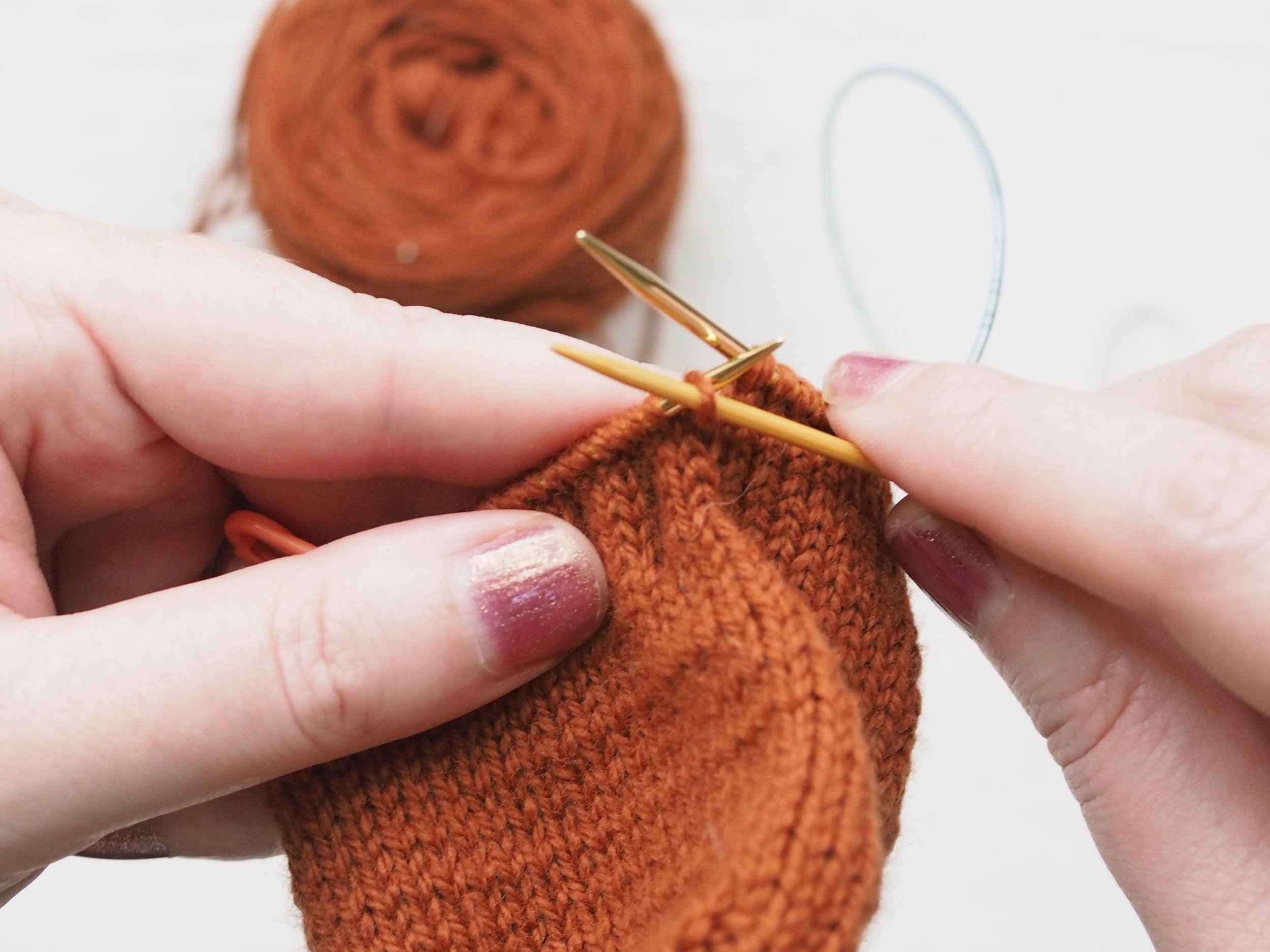
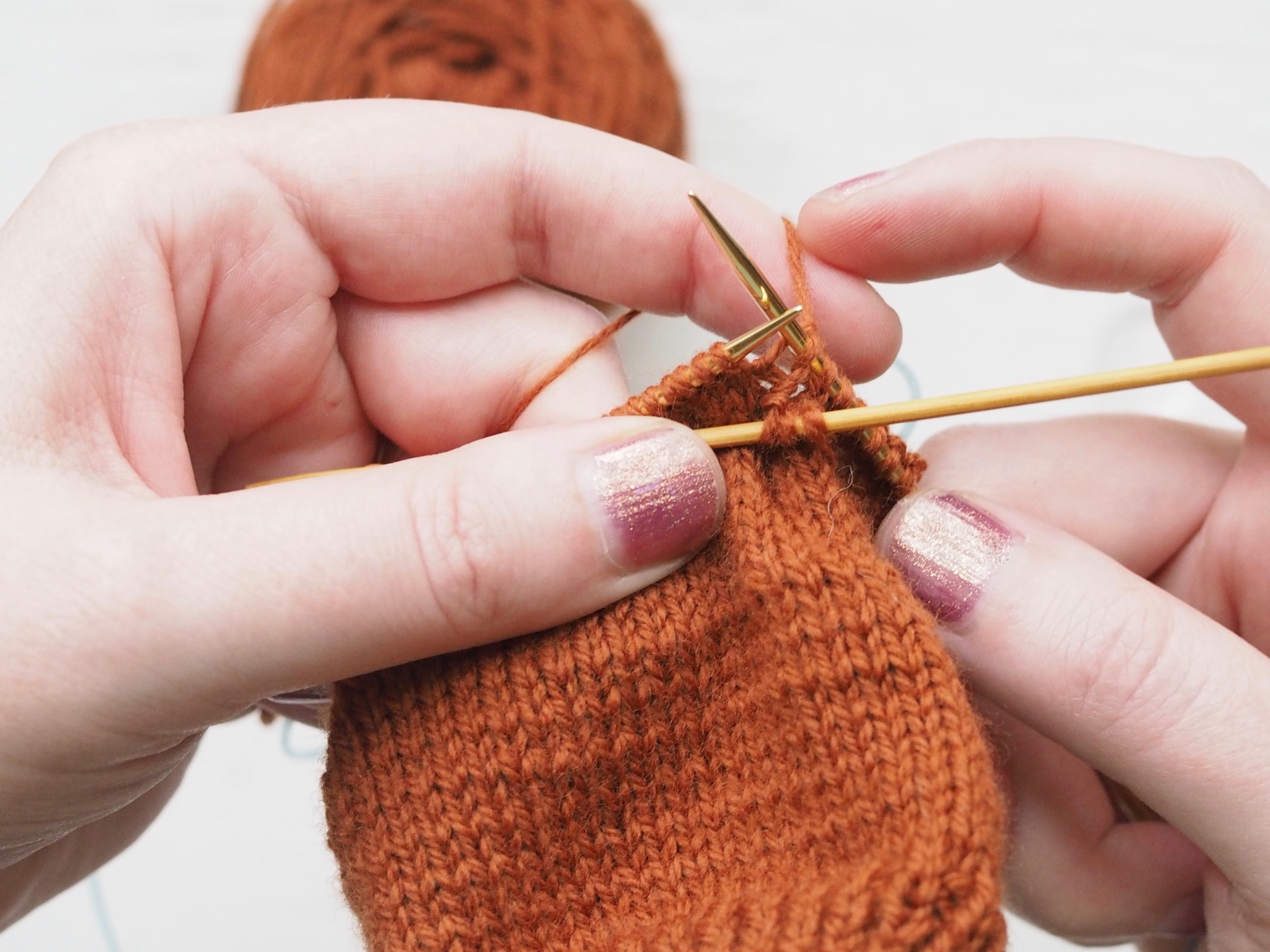
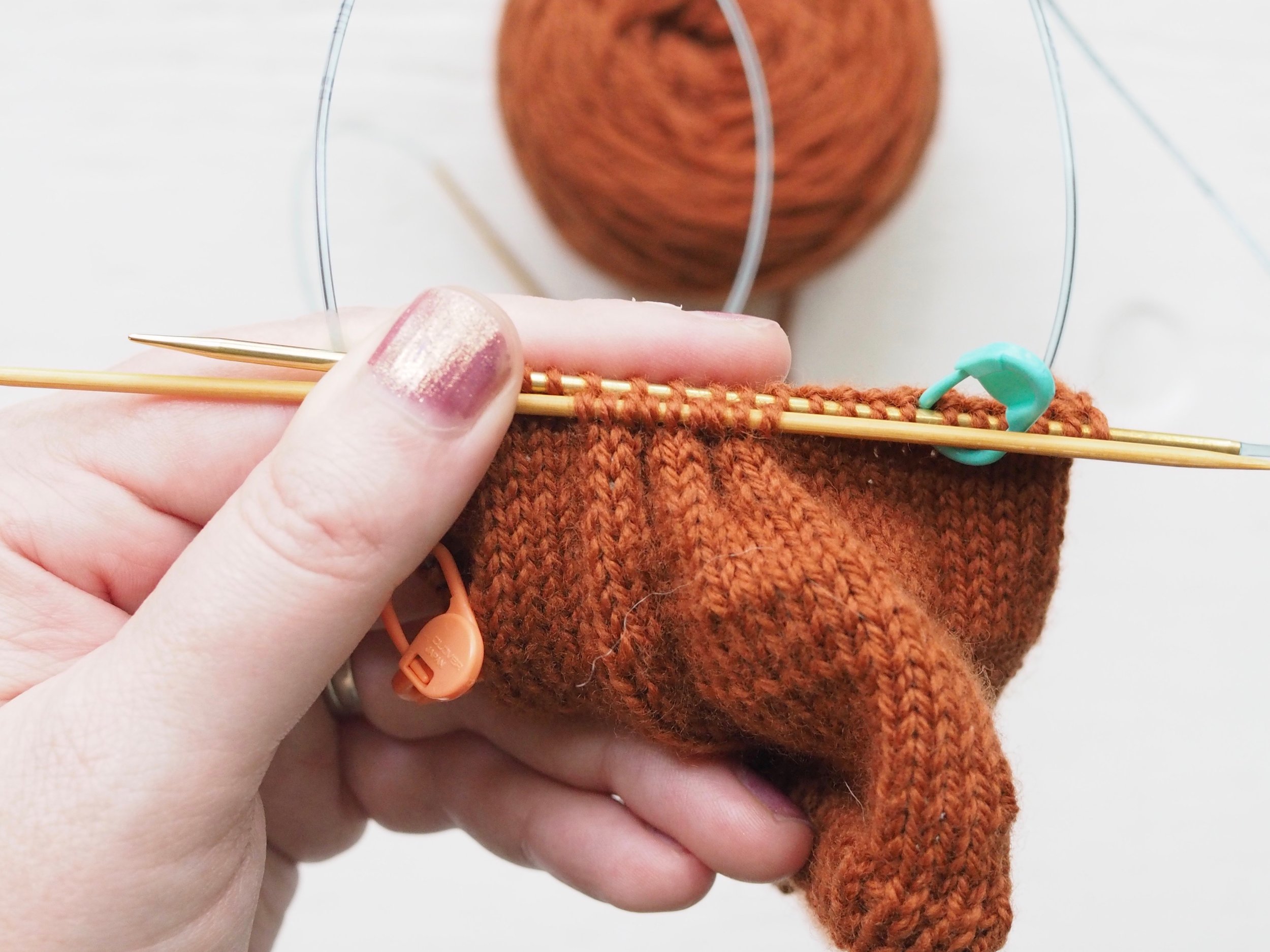
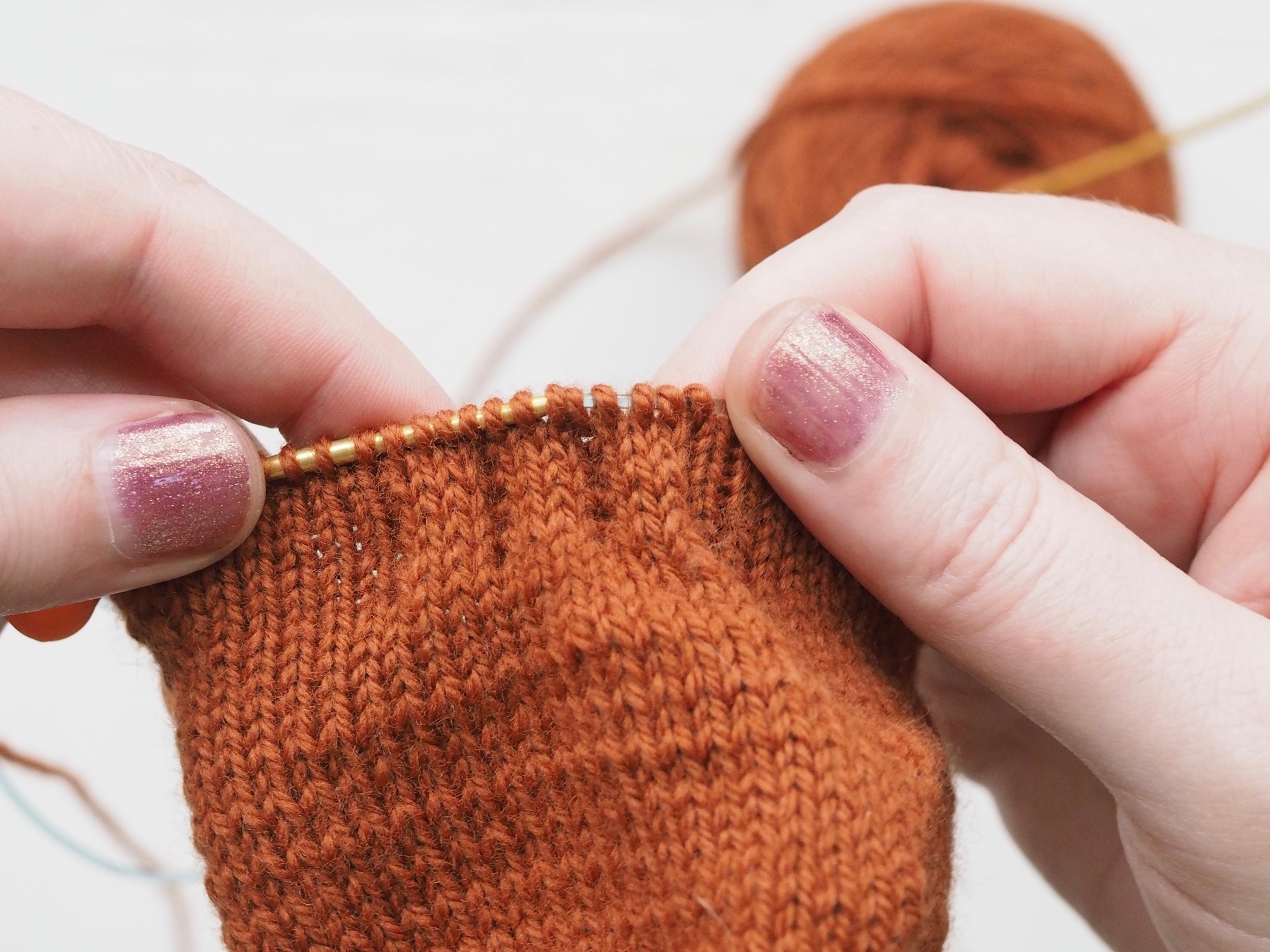
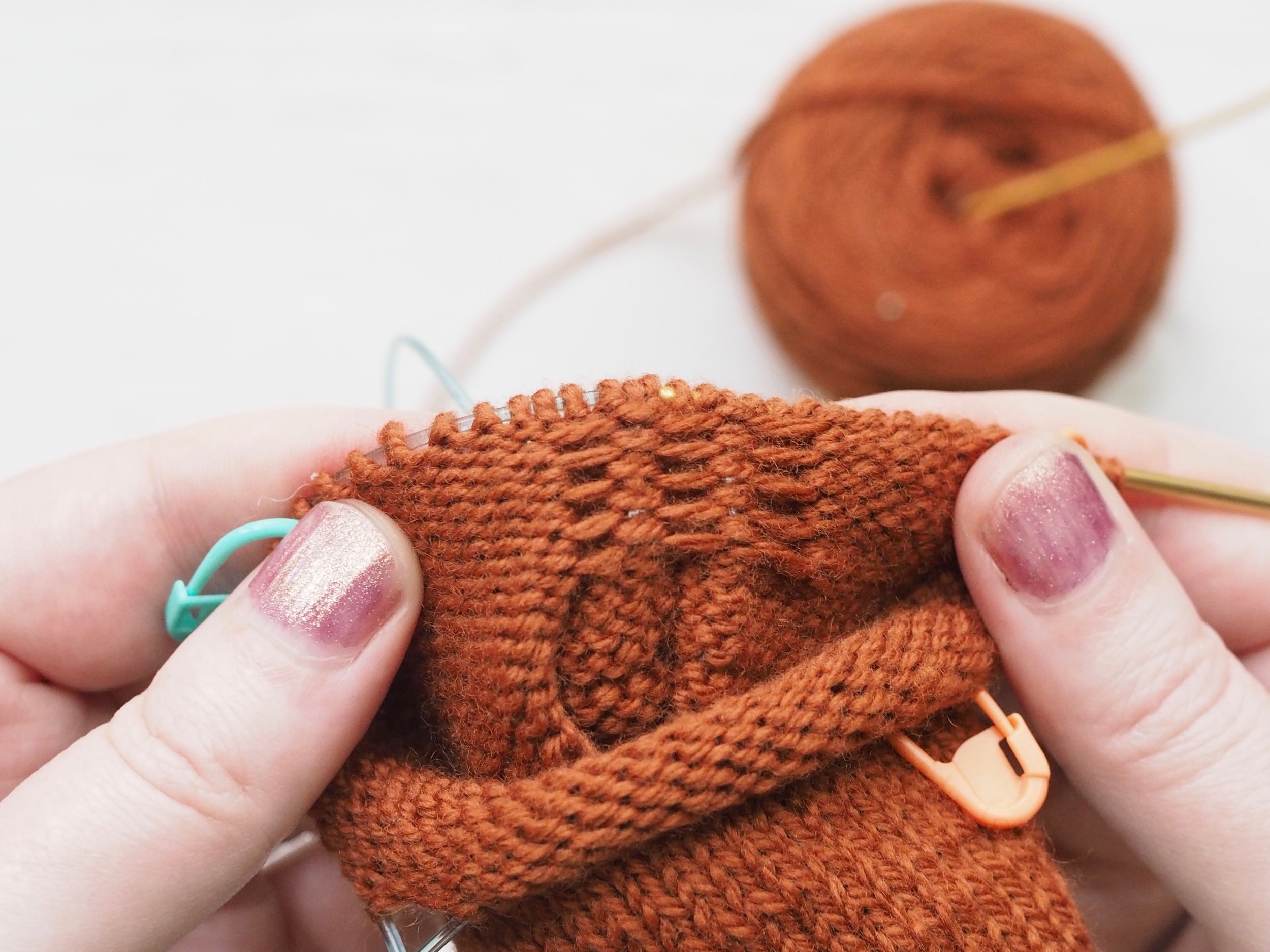
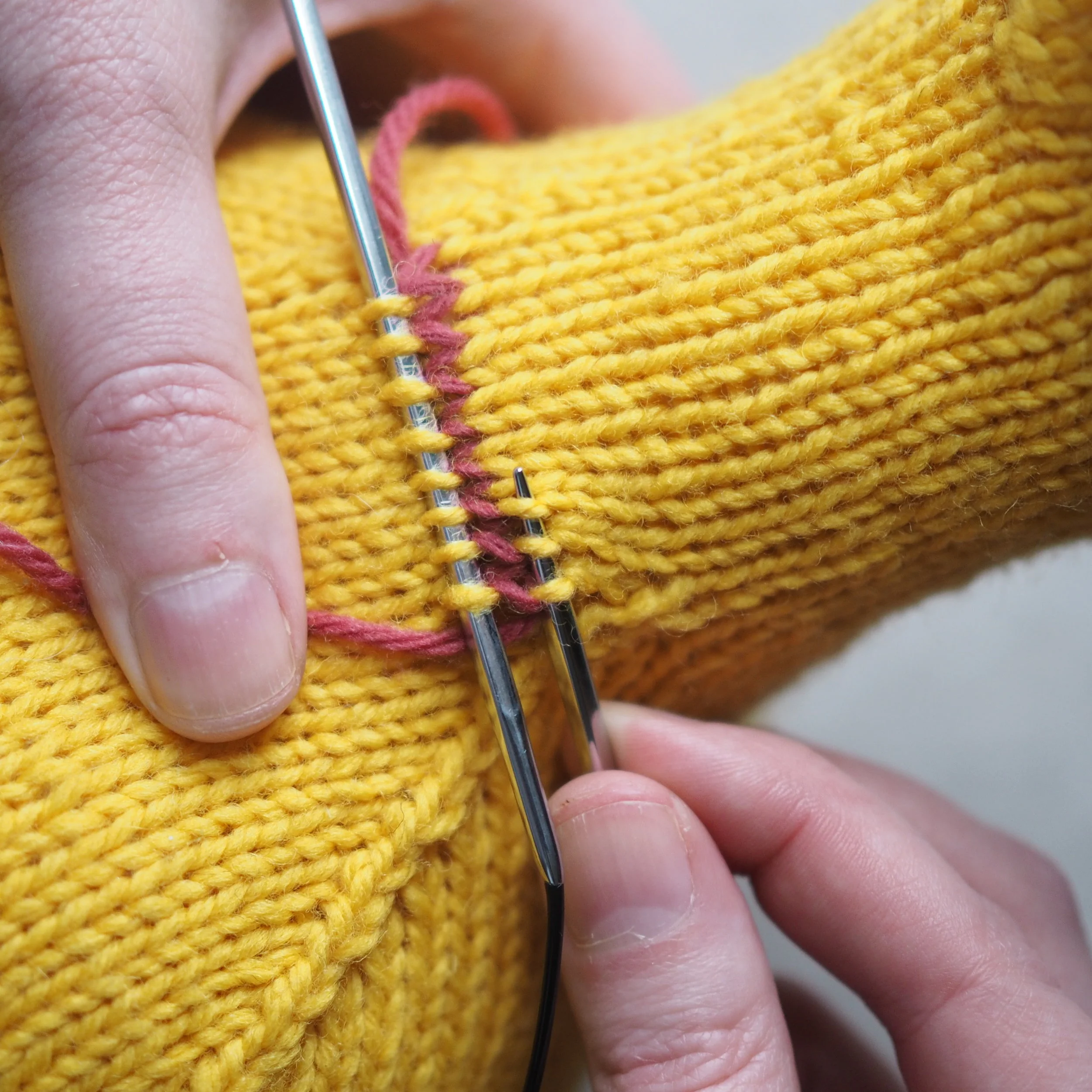
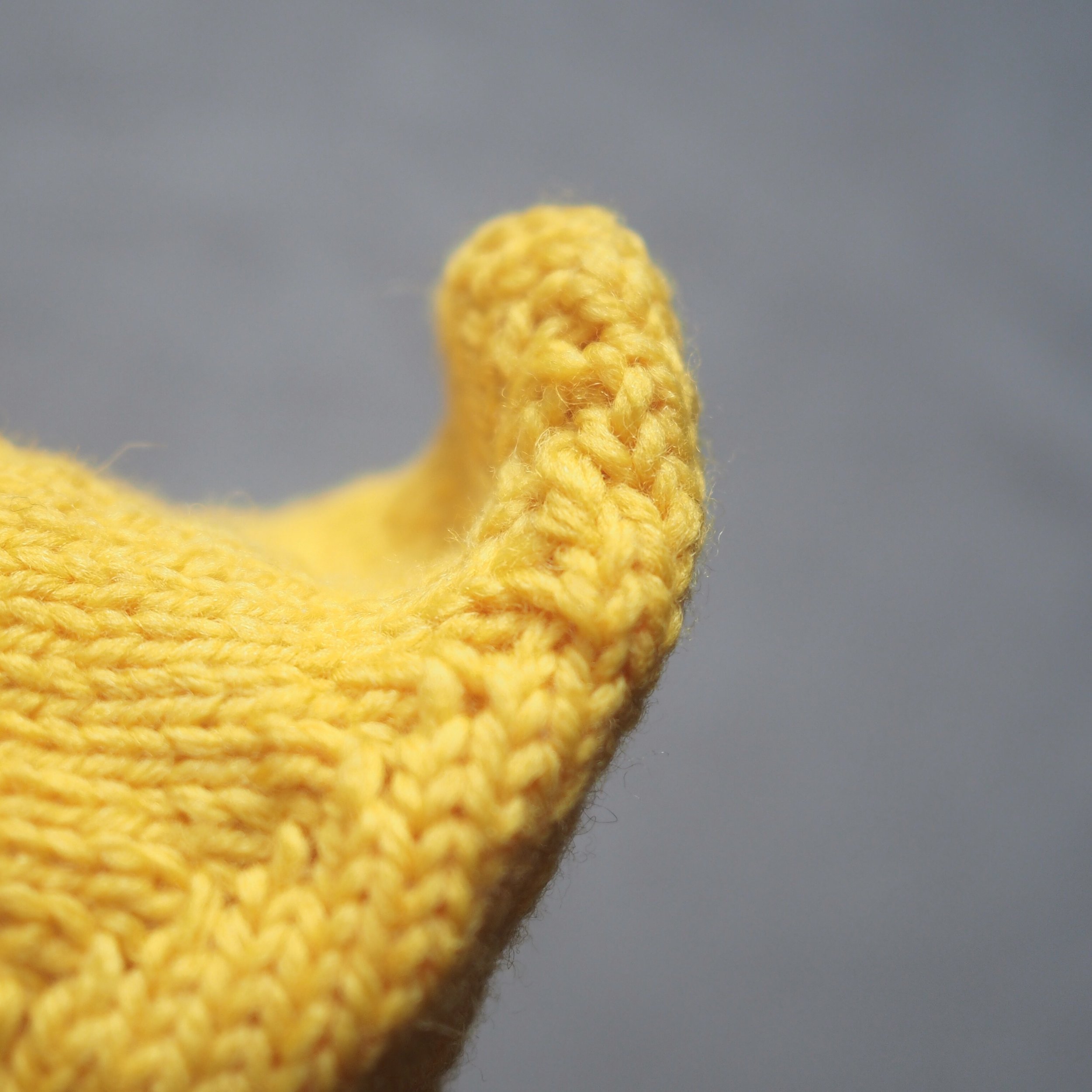
In the image above, I’ve already worked four rows of the three-stitch tuck pattern. You can see the three tucks, and the four recessed “channels” that fall on the sides of the tuck. Worked over two rows, the tucks are formed by slipping the tuck stitches on every other row and pulling the working yarn very tightly across the back, which pulls the stitches on either side of the tuck closer together, essentially folding them and holding the fold together.

ROW 1

  1. Knit to the start of your first tuck.

  2. Slip the tuck stitches (here, three stitches) on to a spare double-pointed needle or cable needle held in front of your work. [NB: if your tucks are small, you can use the same spare needle for all the tucks in a row]

  3. Tension the working yarn tightly as you work the first stitch post-tuck. The more snugly you work the stitches together on either side of the tuck, the more visible your tuck will be. Continue knitting normally until you reach the next tuck.

Repeat steps 2 and 3 until you reach the end of the tuck section.

In the example shown, the tuck section is 11 stitches wide: three tucks three stitches wide, plus one spacer stitch on either side of the center tuck. When you finish working your first row of tucks, you should have nine stitches (width of tuck x number of tucks) on your spare needle (or needles, if your tuck is very wide).

ROW 2

  1. Knit to the start of your first tuck.

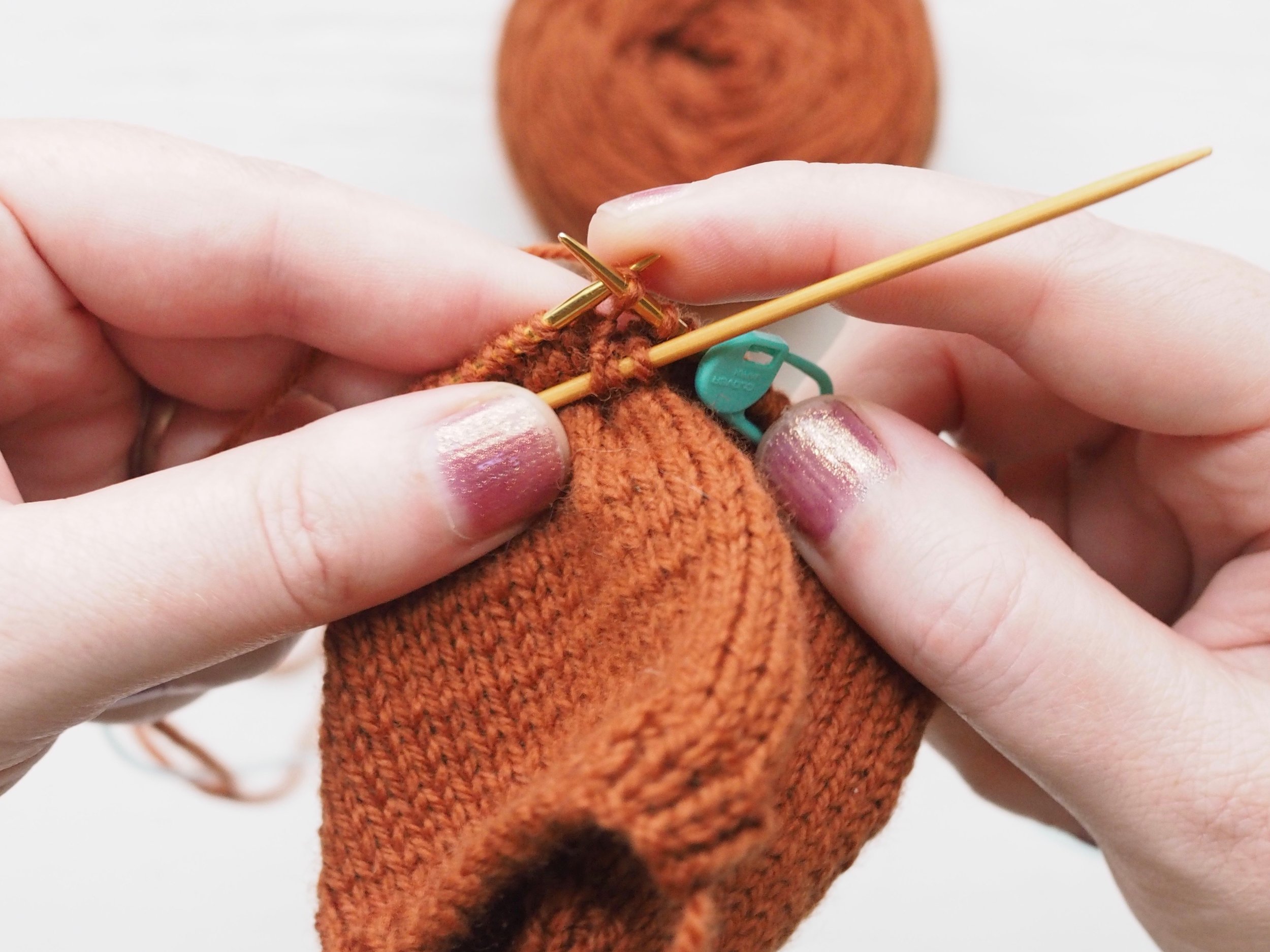
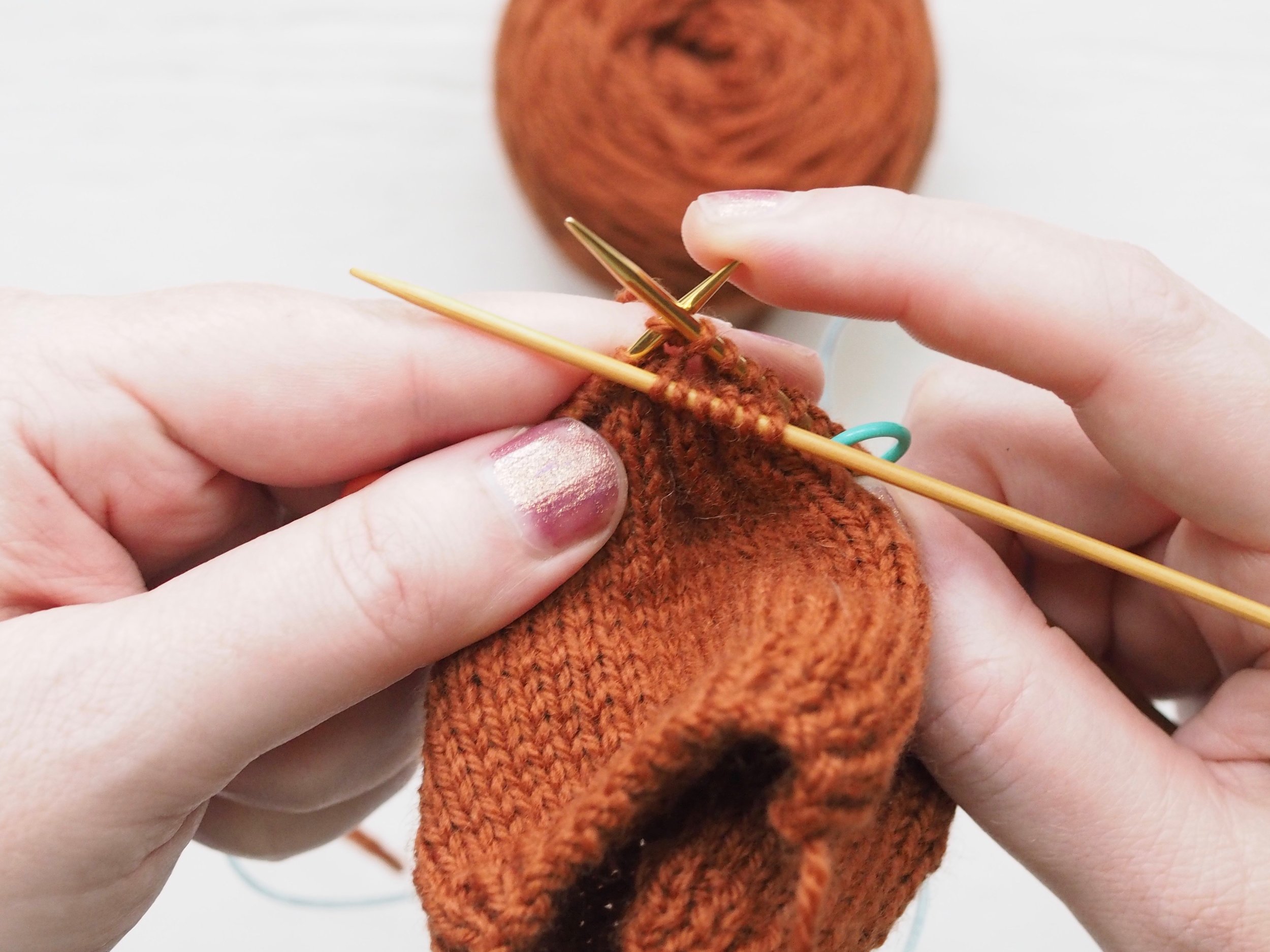
  2. Pick up and knit the tuck stitches (here, three stitches) off the spare needle.

  3. Knit normally to the next tuck.

Repeat steps 2 and 3 until all stitches are back on the main needle.

It will take a couple of rows until the tucks start to look like anything on the right side of the fabric. On the wrong side of the fabric, you should clearly see where the working yarn has held behind the slipped stitches. Try to keep that horizontal line the same length for tucks of the same width, and the short it is, the more prominent your tucks will be.


GET KNITTING!

Try out the pattern below which incorporate tucks, horizontal pleats, or smocking!

Turning Leaf Gloves - PDF Pattern
$6.00

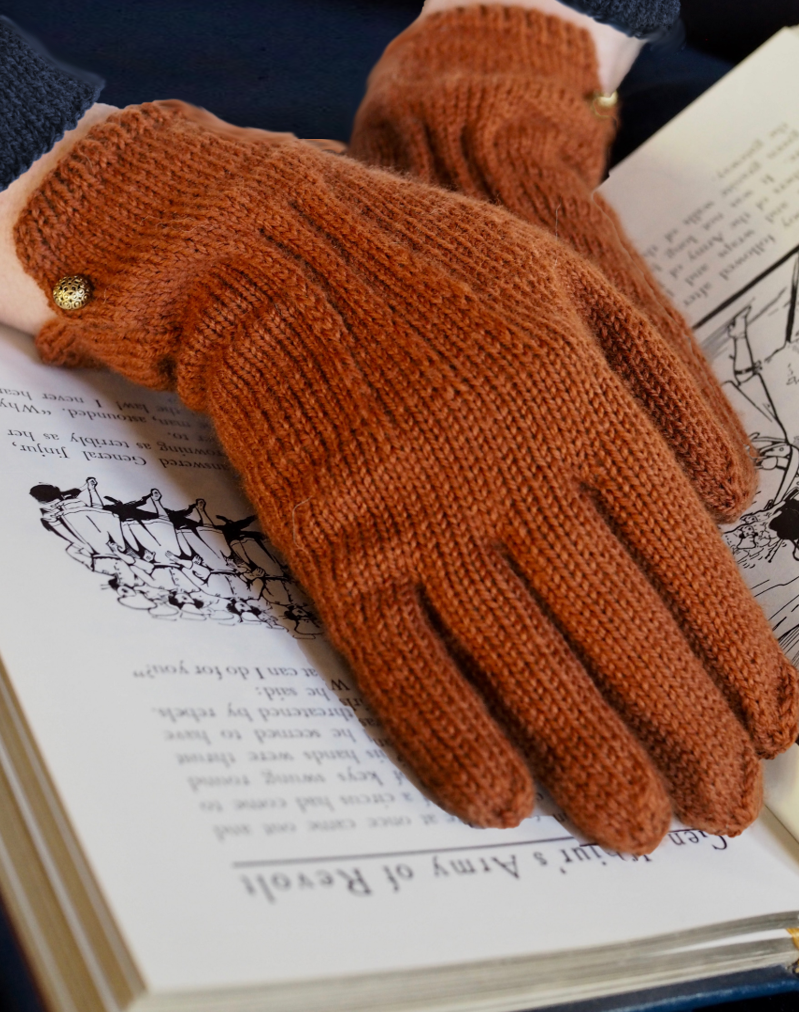
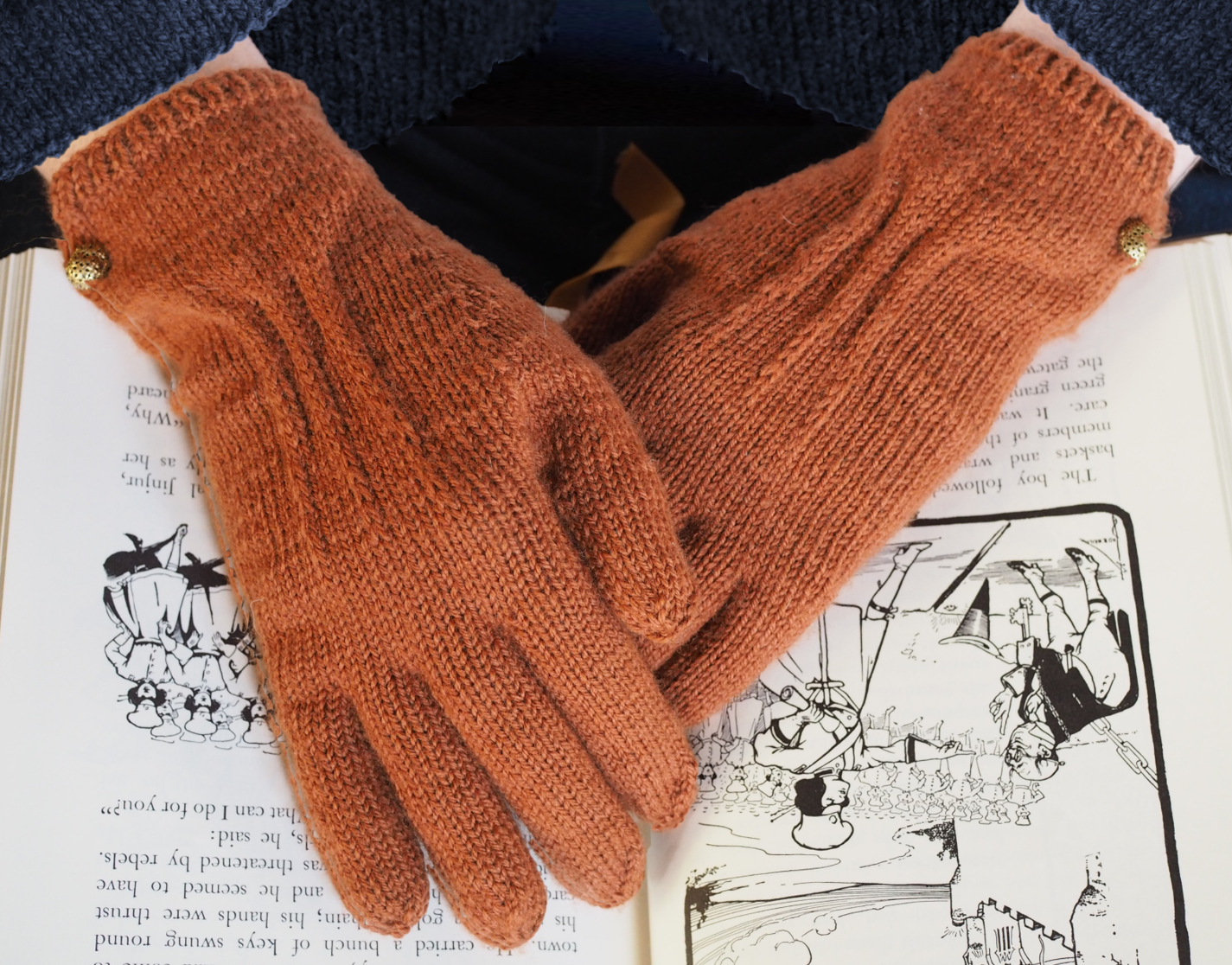
In the early days of publishing, a sheet of paper with printing on both pages/sides was commonly referred to as a leaf - a less popular usage now, but one that lives on in phrases like “to turn a new leaf, ”loose-leaf” paper, and the French word feuille. The Turning Leaf gloves were inspired by the gilded leaves of hefty leather-covered tomes (be they the Bible or The Wonderful Land of Oz), this inspiration reflected in graceful pleats that shape the hands of these vintage-style gloves.

Gloves are worked from the cuff to the fingers. The cuff is worked flat, with the hand and fingers worked in the round.

Can be purchased as bundle with the Goldenbook Cardigan.

Size

Hand Circumference: 6.75”/17 cm unstretched. Designed

to fit 7”/18 cm hand circumference.

Yarn + color(s)

1 Skein JaggerSpun Green Line 3/8 (100% Organic Wool;

332 yd/304m per 100g/3.53 oz ball) in Cinnamon

Gauge

15 sts and 20 rows = 2”/5 cm in Stockinette St.

Adjust needles as needed to match gauges.

Needles & Notions

US 2 [2.75 mm] set of dpns AND 24” circular for magic

loop (or two sets of dpns)

Stitch holder or spare yarn

2 3/8”/9mm buttons

Bob & Wave Cowl – PDF Pattern
$6.00

$4.00

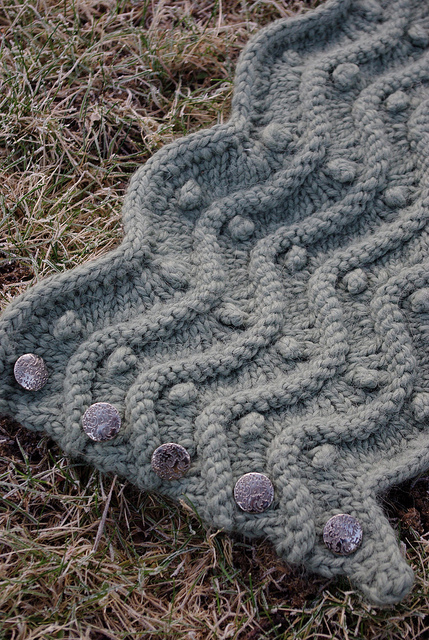
This cozy cowl features bobbles on a background of undulating waves. The cowl features an i-cord cast on and bind off. I-cord also appears as the button loops and faux i-cord is created by rows of purl stitches that are pleated horizontally to make the texture really pop. Carefully placed increases and decreases create the scalloped waving background for the bobbles and the fabric manipulation makes for a denser and warmer cowl.

  • One Size
  • 175-200 yds of Bulky weight yarn, sample shown in Misti Alpaca Chunky
  • circular or straight needle(s), US 10 - 6.0 mm
  • 16 stitches and 20 rows = 4 inches in stockinette stitch

Learn more about the Bob & Wave Cowl in the Chronicles

View it on Ravelry

Photos © Leah B. Thibault

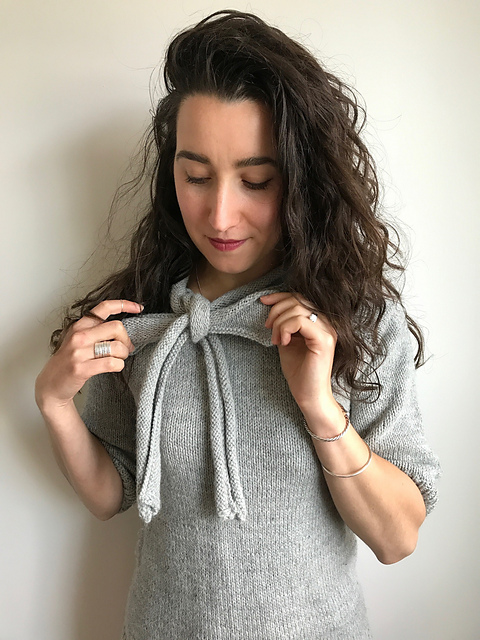
Smocked Tank - PDF Pattern
$0.00

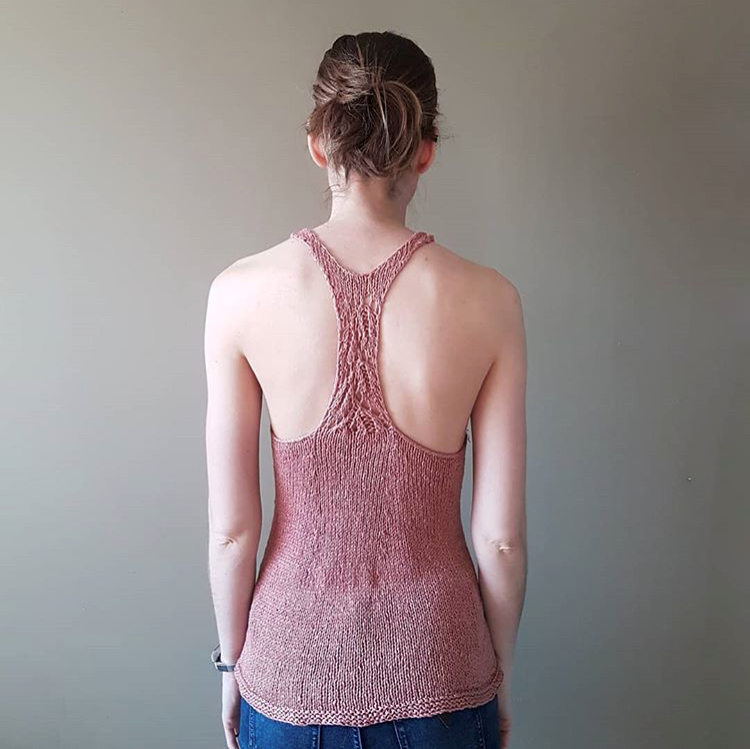
Knit in the round from the bottom up, the tank is very fitted, with curvy side shaping and is finished off with i-cord straps.

Finished Size: 
Approximately 30 (32, 34, 36, 38, 40, 42, 44, 46, 48) inches/ 77 (81, 86, 92.5, 97, 101.5, 106, 113, 117.5, 122) cm around bust. Shown in size 38 with approximately 1.5 inches/ 4 cm negative ease.

Yarn: 
455 (495, 525, 585, 620, 670, 700, 720, 765) yds worsted to aran weight yarn with a significant silk, bamboo, or rayon content for drape and sheen. Remember to check gauge.

Sample knit in Berroco Ultra Silk in 6138 Lilac; 98 yd/90 m per 50g/1.76 oz skein; 40% Wool/ 40% Nylon/20% Silk.  This yarn has been discontinued.


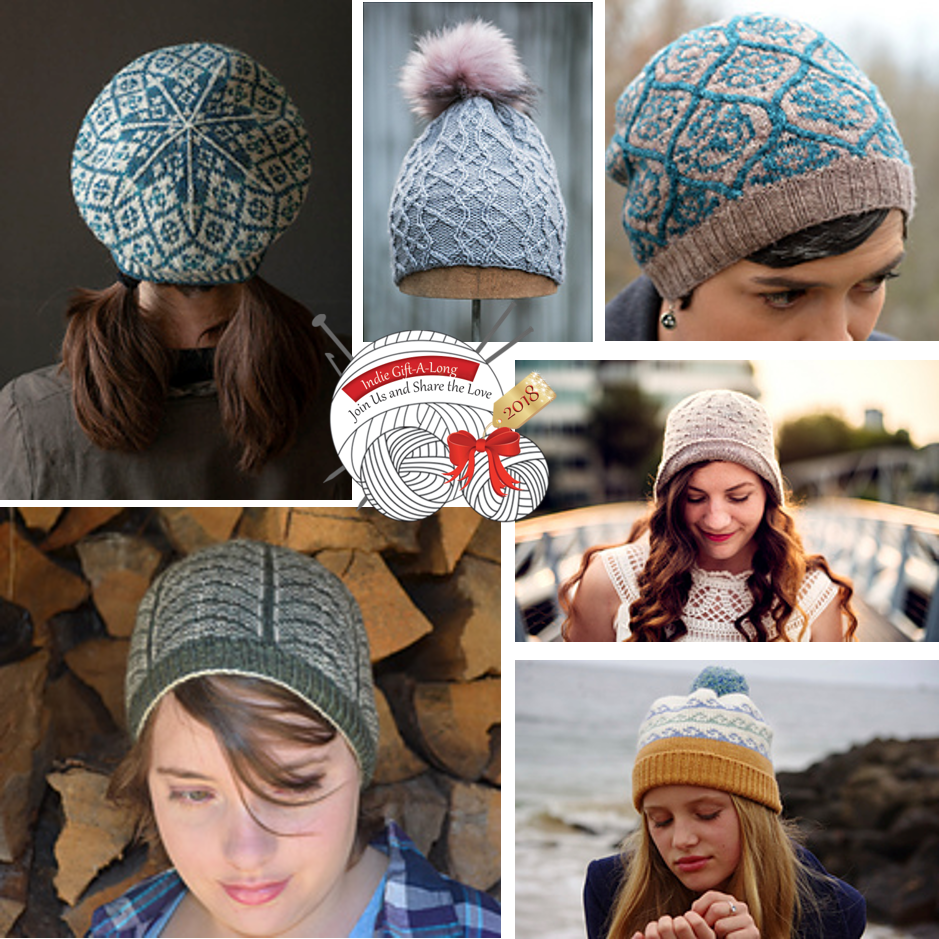
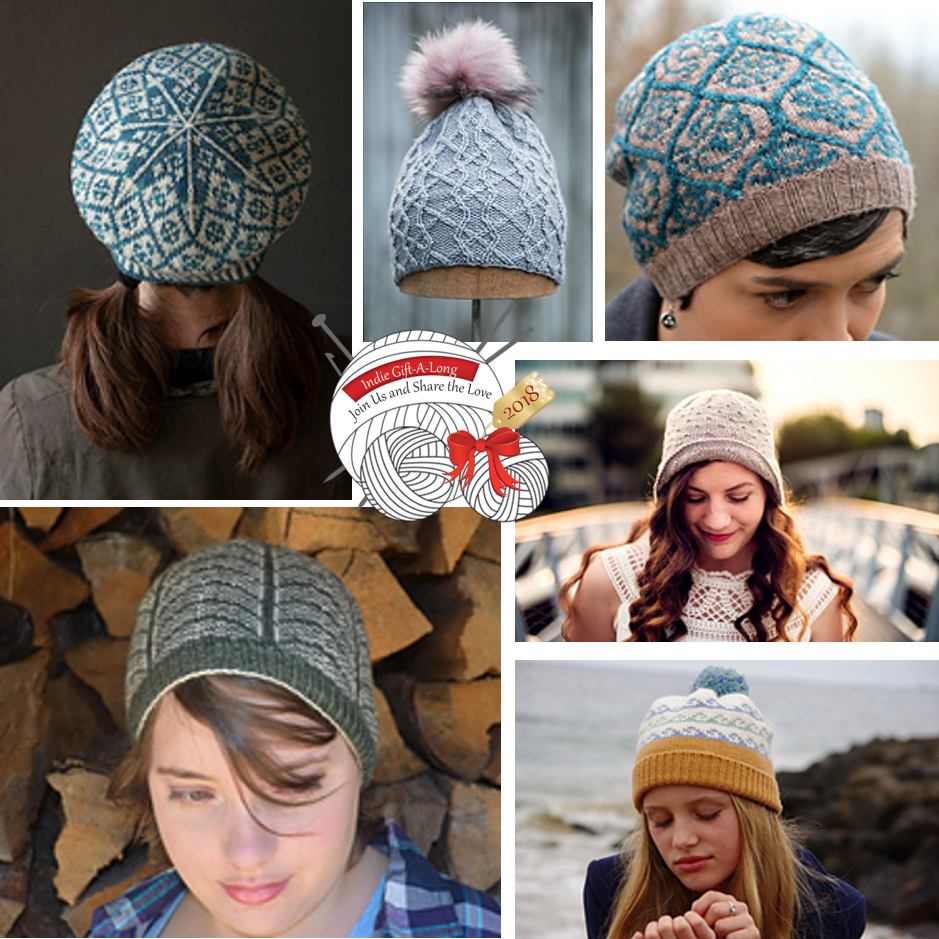
Indie Design Gift Along 2018 - My 24 Top Picks

It's Gift-Along Time again! 

Every year a growing group of independent knitwear designs band together on Ravelry to host a knit-along to kick start your holiday gift knitting! 

This year there are 349 designers from 30 countries and 6 continents, with over 20,000 patterns eligible for the giftalong's 2,000+ prizes.

From now until midnight EST on Nov 29, over 6,000 of those patterns are 25% off with the code giftalong2018

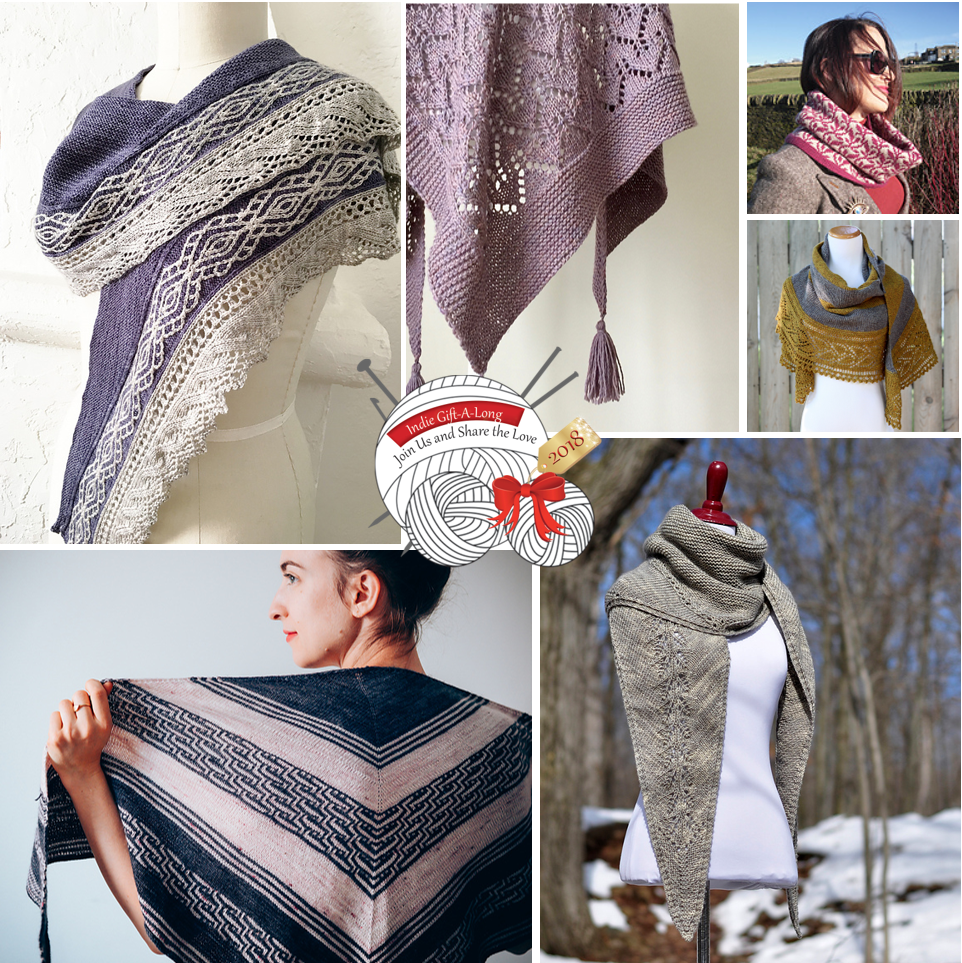
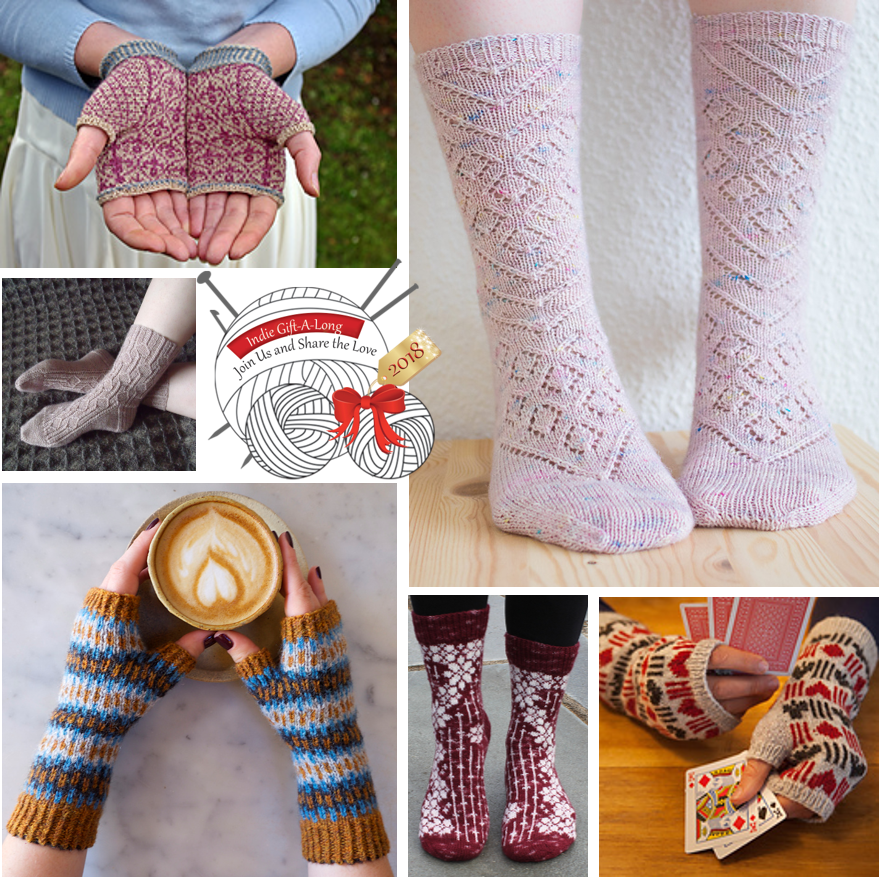
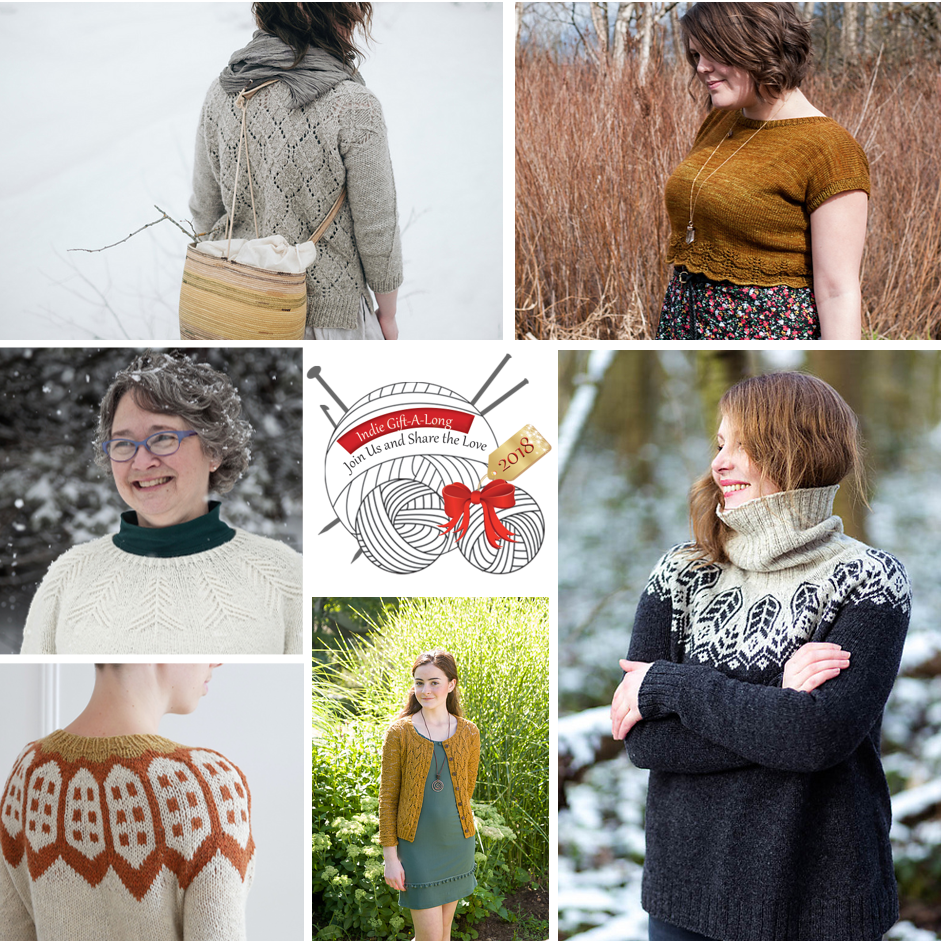
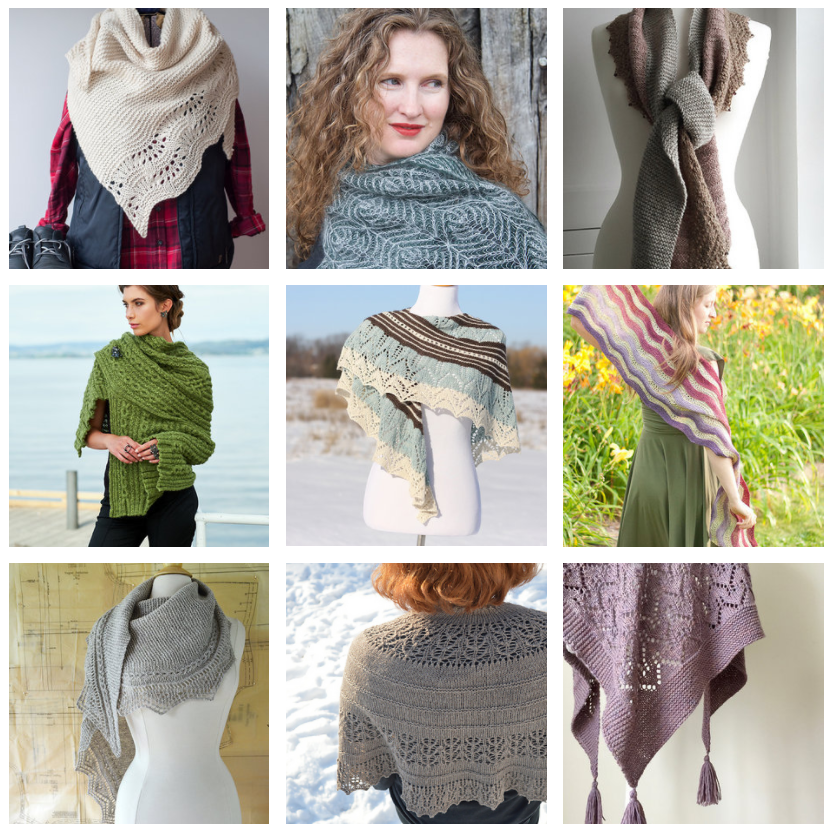
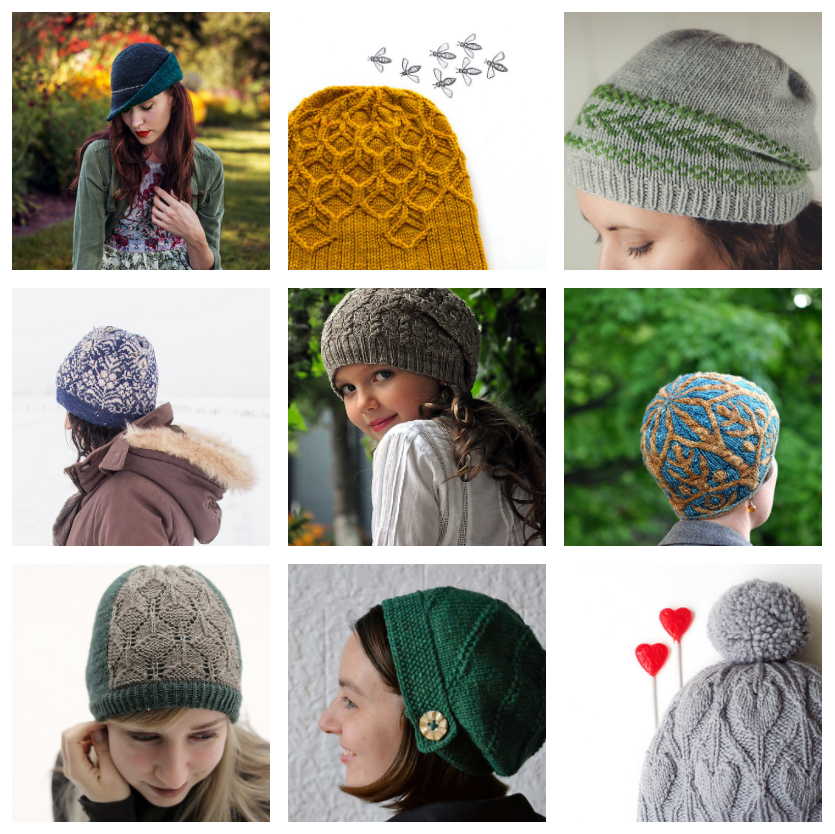
But 6,000 patterns is a lot to look through, so I thought I’d highlight some of my personal favorites from the offerings -and hopefully introduce you to some wonderful new-to-you designers..

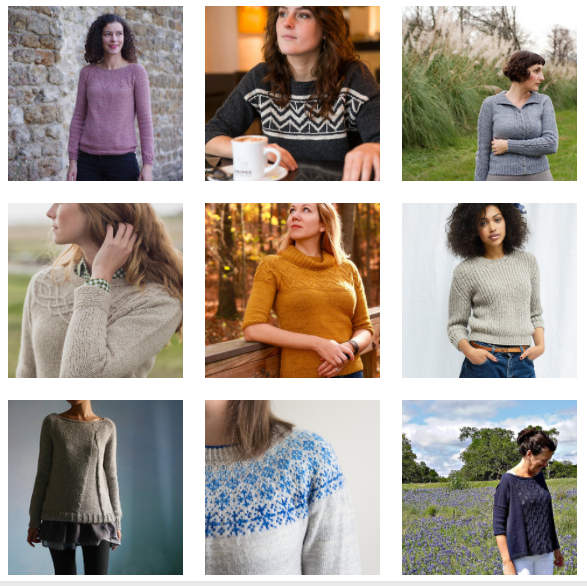
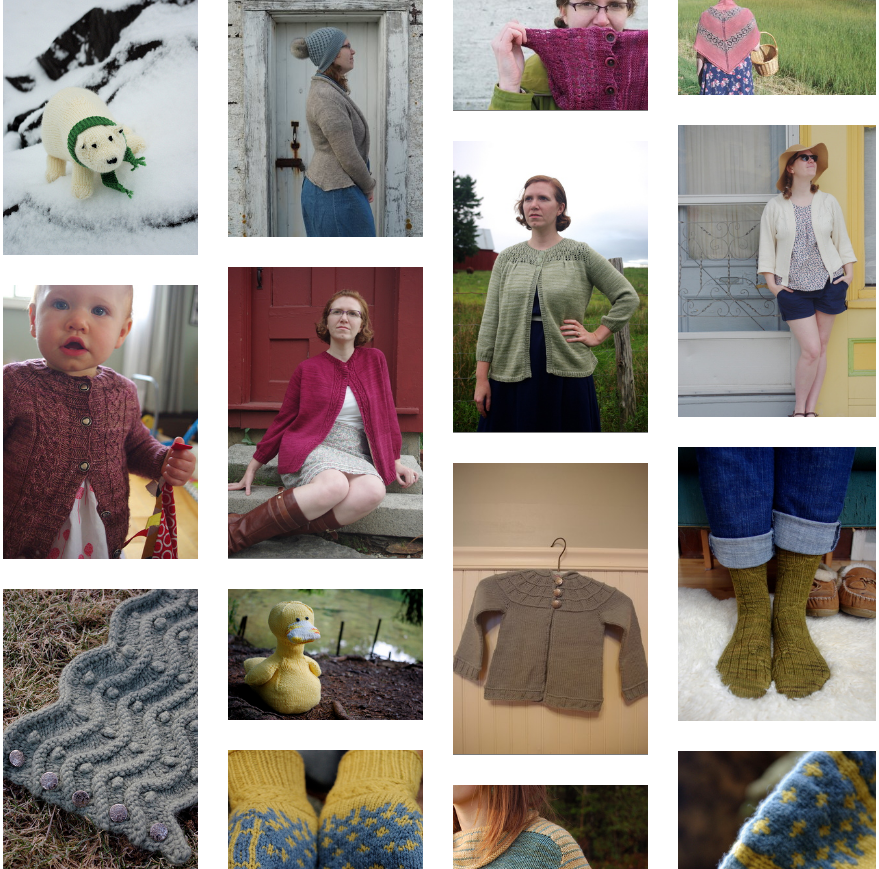
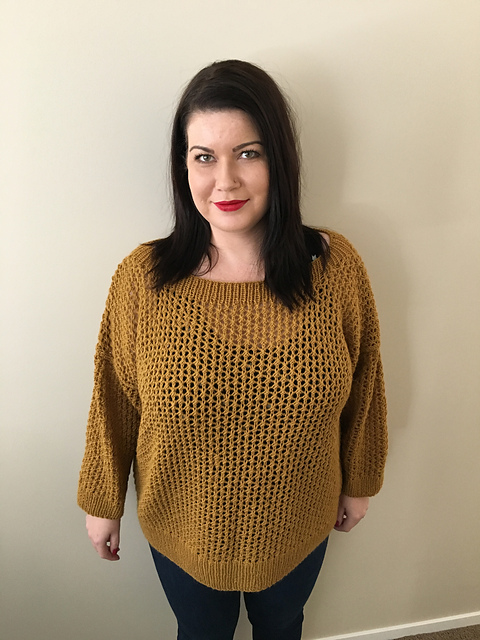
Clicking on any photo above will take you to a Ravelry bundle of my favorites where you can peruse and purchase any of the designs. (Note: not all patterns shown are on sale, but all are eligible for the KAL and prizes in the gift-along).

I've got 18 patterns in the sale,  specifically chosen for their gift-ability.  Not on Ravelry? The same patterns on MsCleaver.com are also 25% off for the same time/same code.

Happy gifting!!

Pattern Links

(all attributions for collages work clockwise from top left)

Shawls & Cowls

  1. Sand Ripples Shawl by Stephannie Tallent

  2. Chance Cove by Allison O’Mahony

  3. Trailing Leaves Cowl by Sandra Nesbitt

  4. Rugby Shawl by knottygnome crafts

  5. Shh! Wrap by Jennifer Weissman

  6. Majestic Shawl by Gabrielle Vézina

Feet & Hands

  1. Leighton House Handwarmers by Ella Austin

  2. Moving Forward by Tisserin Coquet

  3. Card Game Mitts by Knitwise Design

  4. Flower Garland - Blomsterkrans by Aud Bergo

  5. Zippertooth Mitts by Clare Lakewood

  6. Falling Petals Socks by Rachel Gibbs

Sweaters & Tops

  1. Juniper by Ash Alberg

  2. Mount Pleasant by Megan Nodecker

  3. Wild Grass by Asja Janeczek

  4. Valerian by Tonia Barry

  5. Nest Pullover by Solène Le Roux

  6. Winter Woods Pullover by Knitwise Design

Hats

  1. Midterm Tam by Virginia Sattler-Reimer

  2. Tracery by handmade by SMINÉ

  3. Bramble Birds by Sara Huntington Burch

  4. Taupe by AbbyeKnits

  5. Great Ocean Road Beanie by Georgie Nicolson

  6. CCC Hat by M K Nance


Introducing STORYTIME

Opening the Book on the Storytime Collection

My mother was an elementary school librarian, so my childhood was filled with all sorts of children's literature modern and classic. The Storytime Collection draws it’s inspiration from some of my favorite pieces of classic children's literature and might include some of your favorites too! 

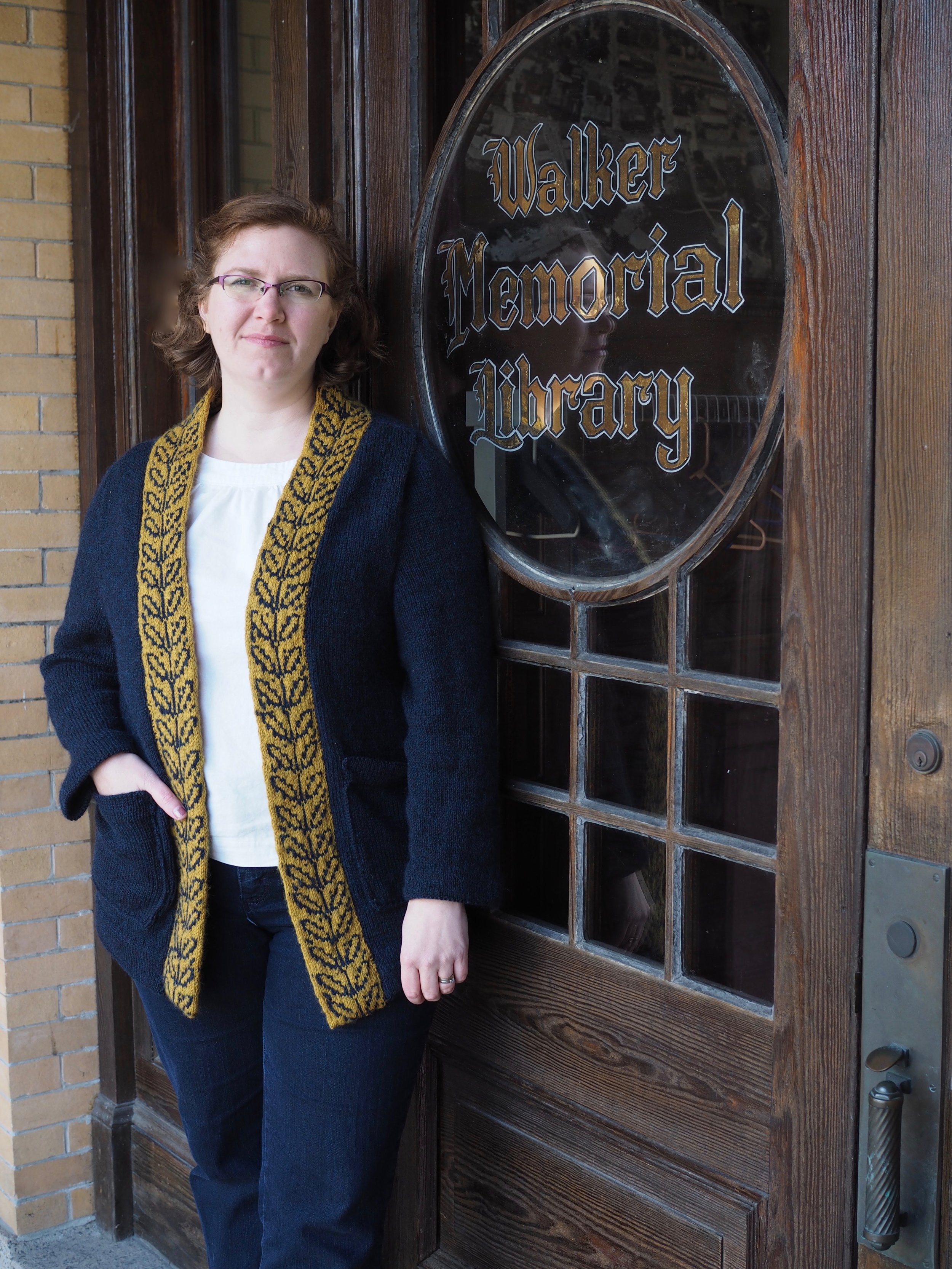
The collection, which includes a sweater, gloves, two embroidery designs and a sewing pattern, is available as kits, pattern bundles and stand-alone patterns and has projects suitable for beginners to more advanced makers.

Goldenbook Cardigan

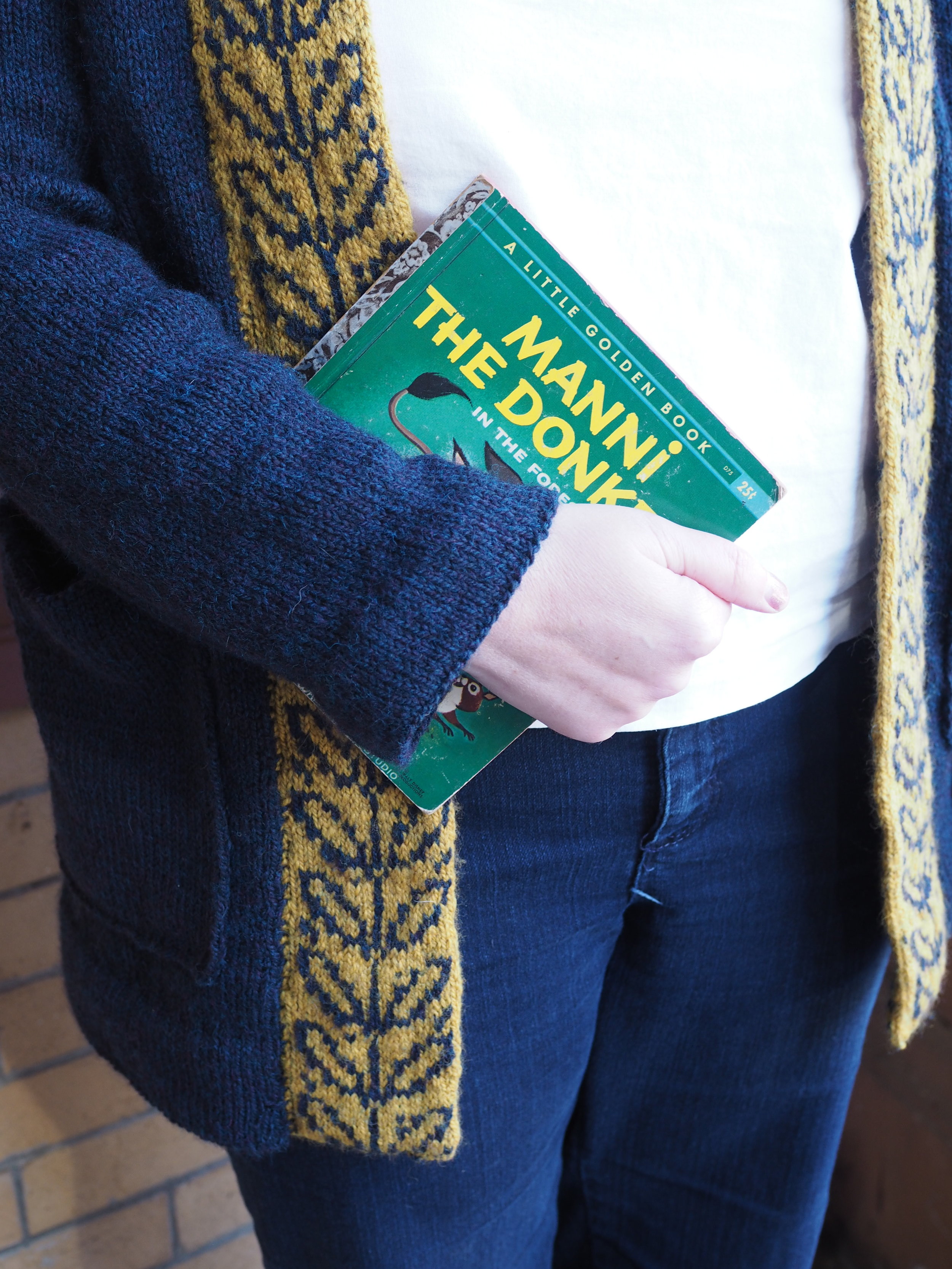
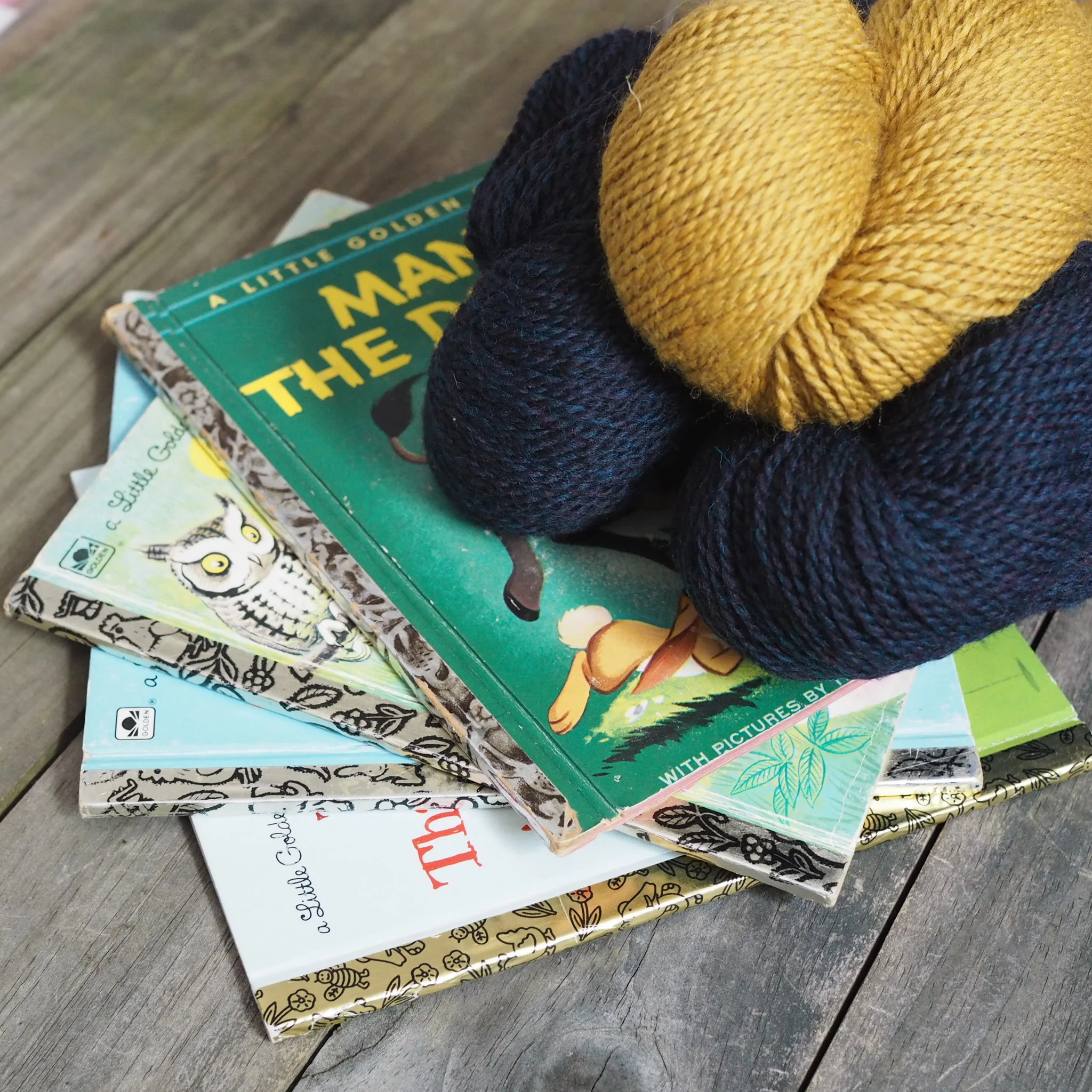
The Saggy Baggy Elephant, Tawny Scrawny Lion, Poky Little Puppy – since the first Little Golden Book was released in 1942, these titles and many more have become classics read by multiple generations.

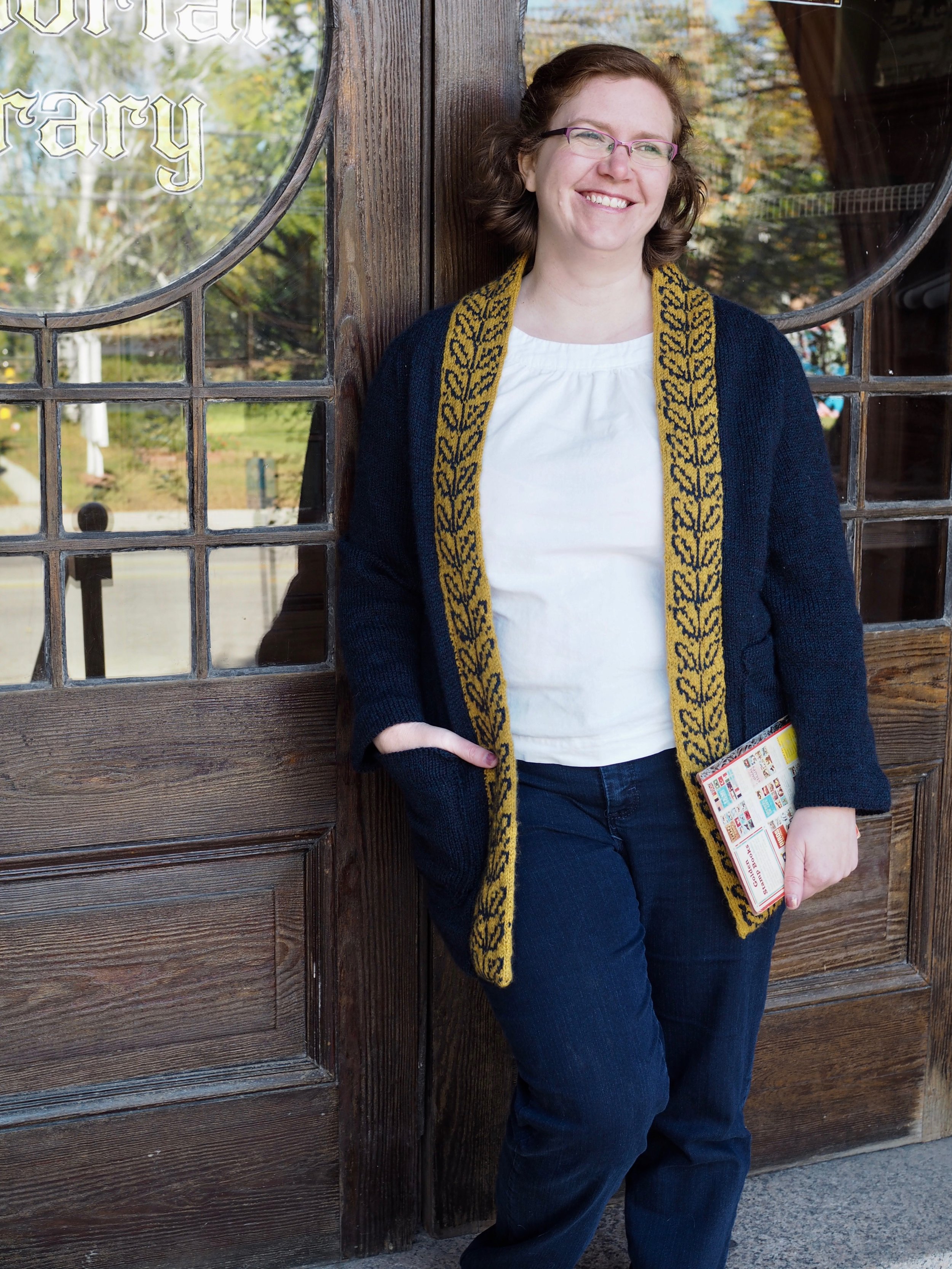
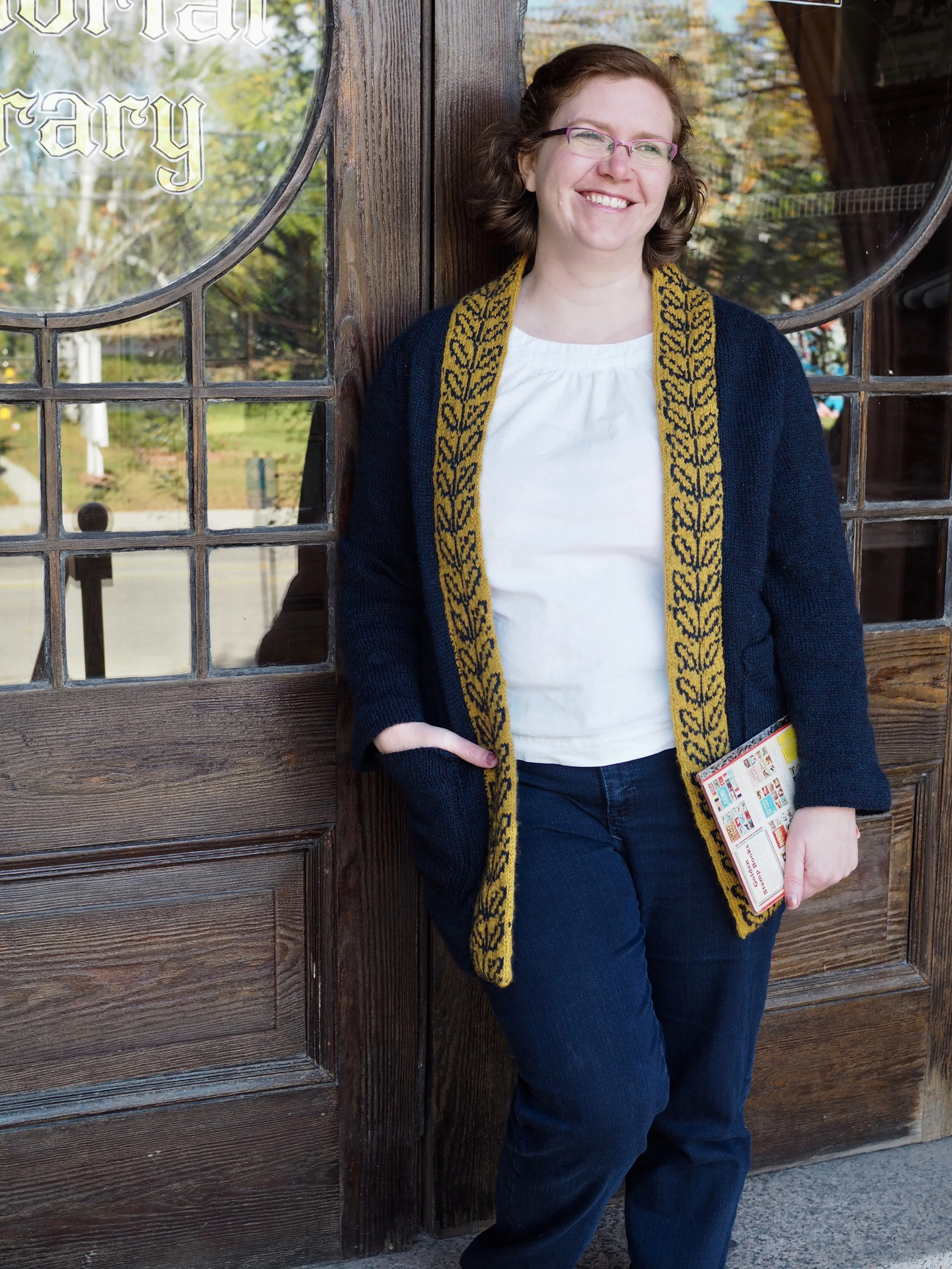
Inspired by the iconic spine of Little Golden Books, a long band of colorwork forms a statement collar on an open-front cardigan. Knit from the top-down, the pattern uses the contiguous method to form a well-fitting one-piece yoke and is finished with clean folded hems and deep pockets. The pattern is available in bust sizes up to 56.5"/143.5 cm and includes helpful fit tips throughout the pattern to get the best fit for your body. 

Can be purchased as bundle with the Turning Leaf Gloves.

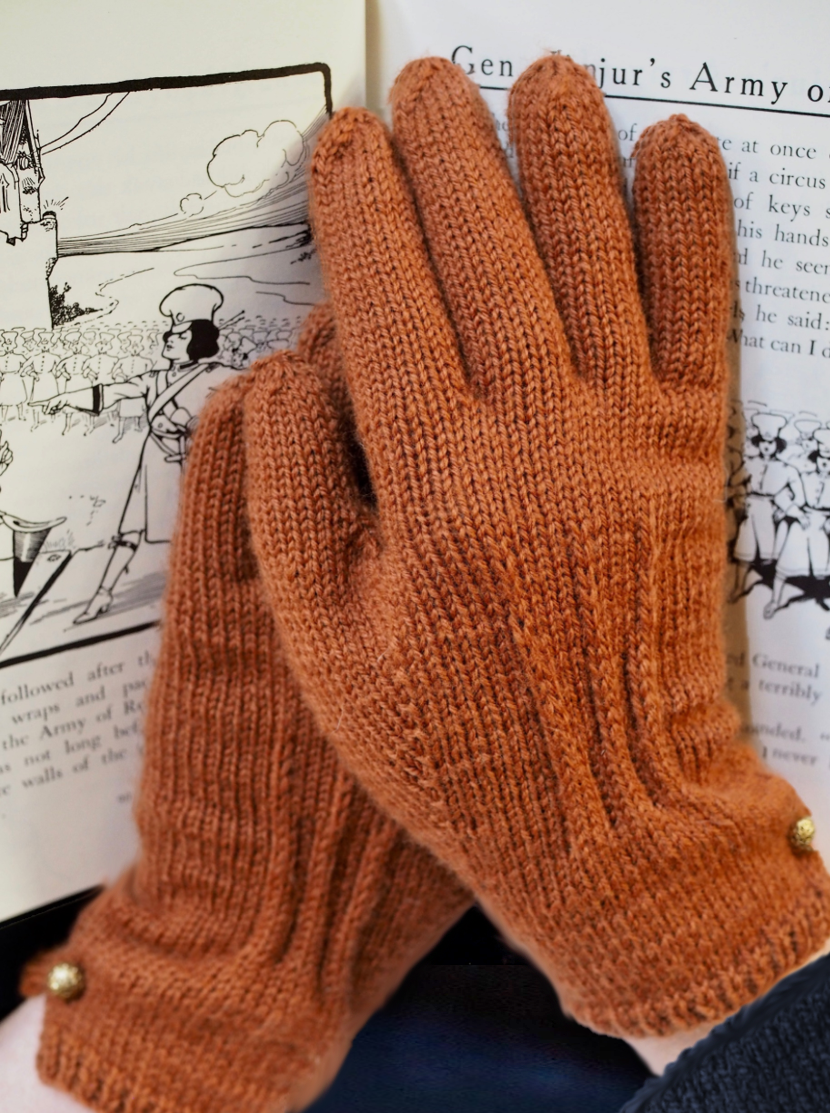
Turning Leaf Gloves

In the early days of publishing, a sheet of paper with printing on both pages/sides was commonly referred to as a leaf - a less popular usage now, but one that lives on in phrases like “to turn a new leaf, ”loose-leaf” paper, and the French word feuille. The Turning Leaf gloves were inspired by the gilded leaves of hefty leather-covered tomes (be they the Bible or The Wonderful Land of Oz), this inspiration reflected in graceful pleats that shape the hands of these vintage-style gloves.

Gloves are worked from the cuff to the fingers. The cuff is worked flat, with the hand and fingers worked in the round.

Can be purchased as bundle with the Goldenbook Cardigan.

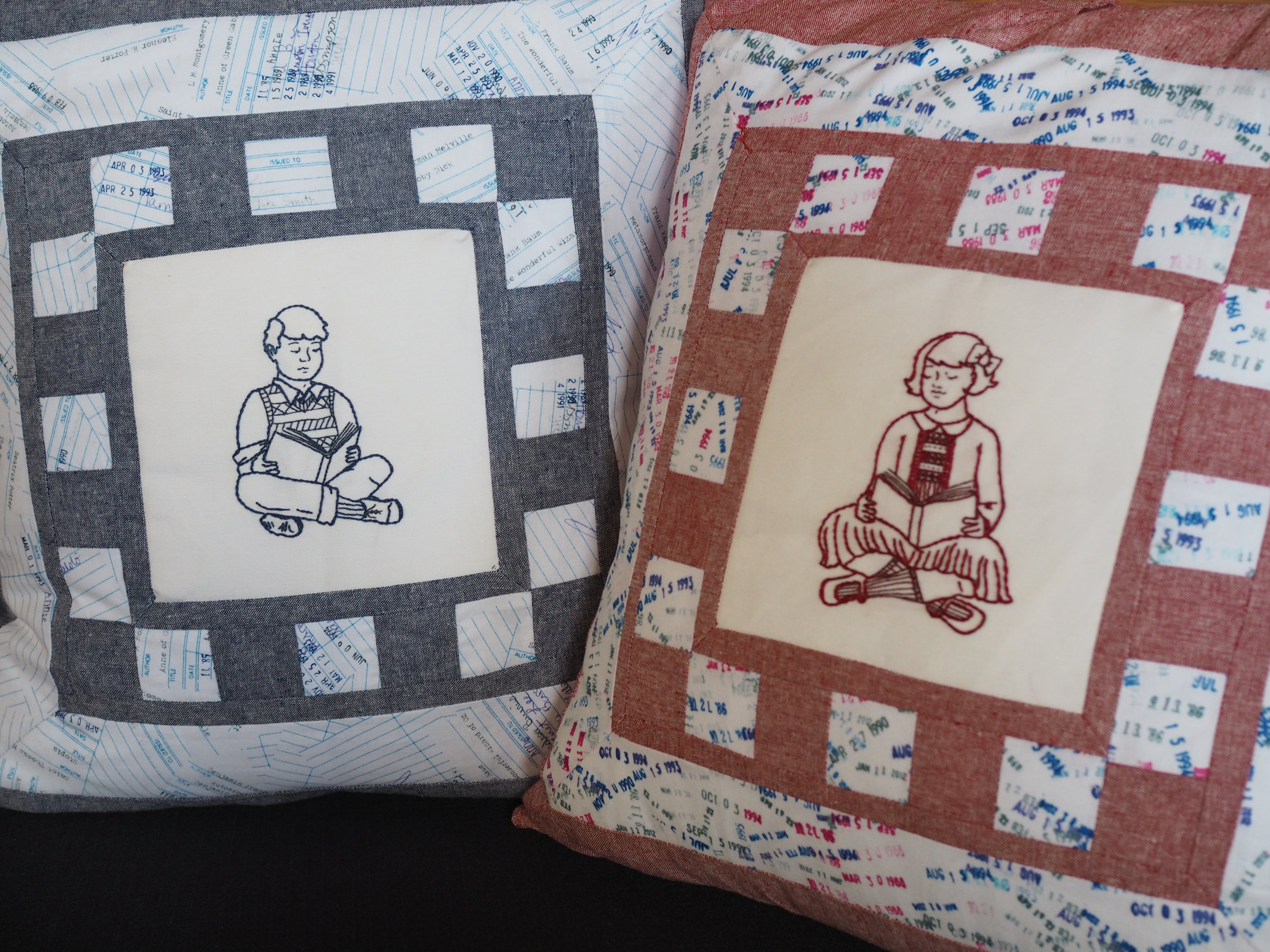
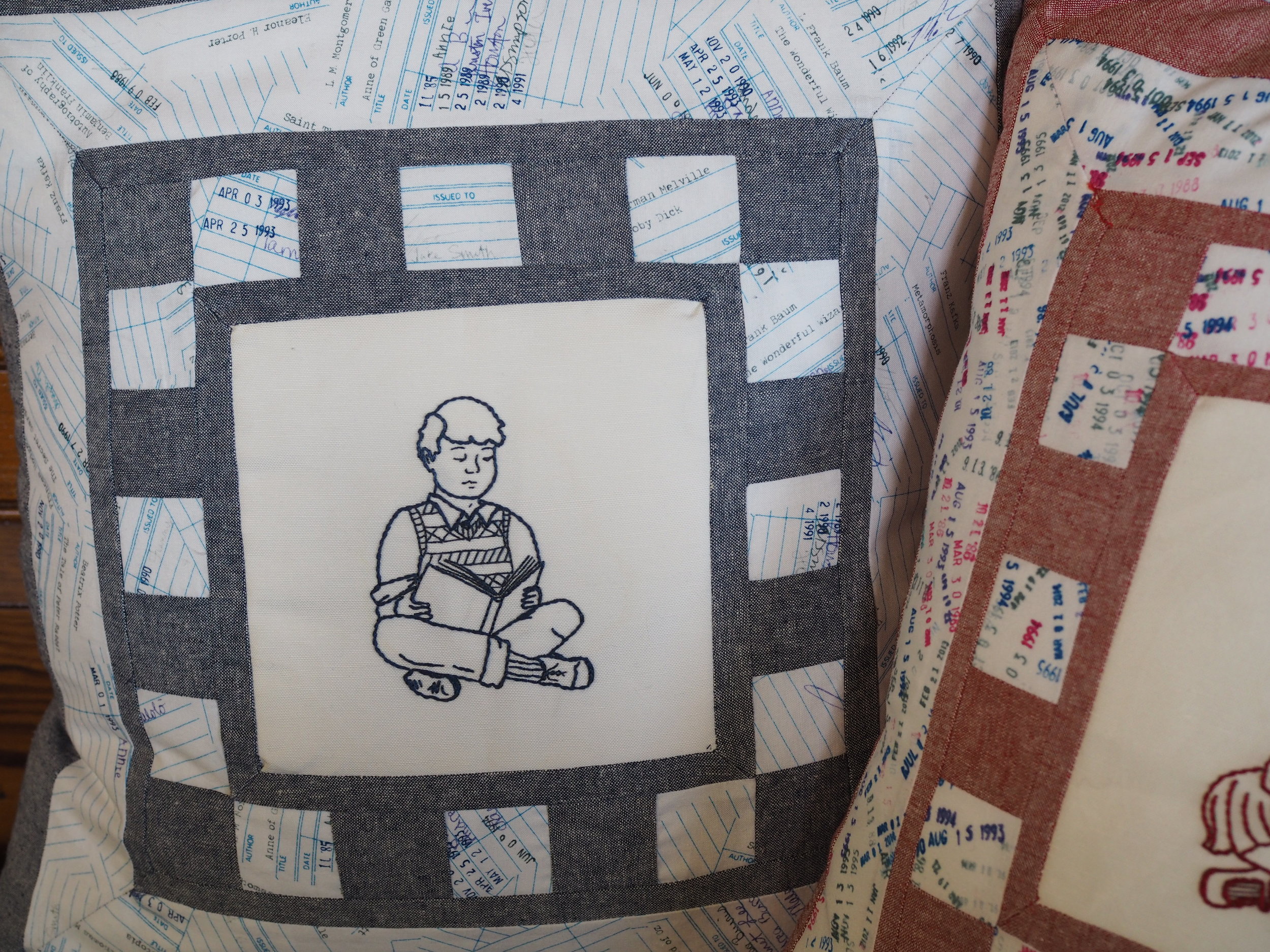
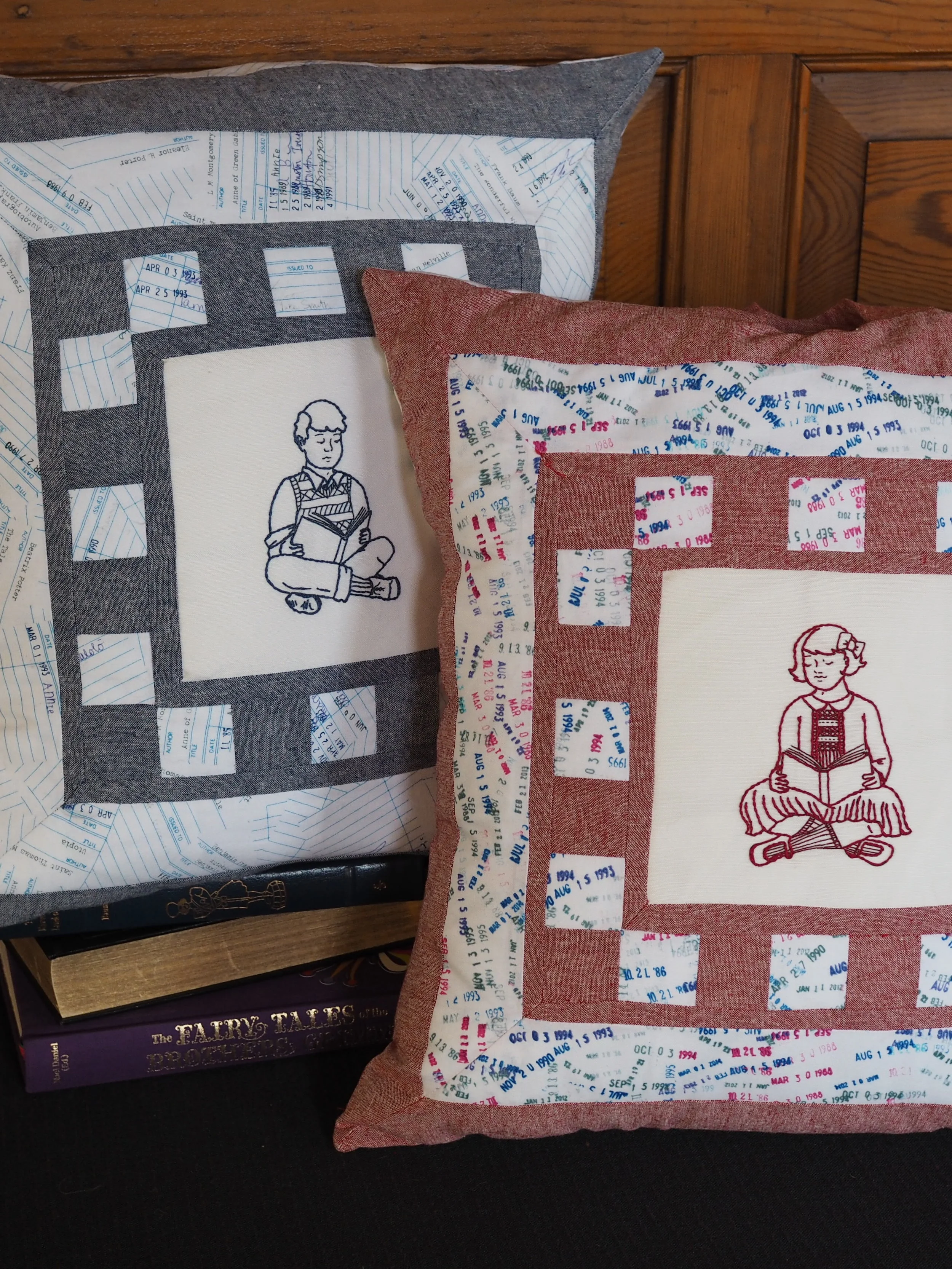
Little Readers Embroidery & Ms. Marian Pillow

Is there anything better than cozying up with a good book?

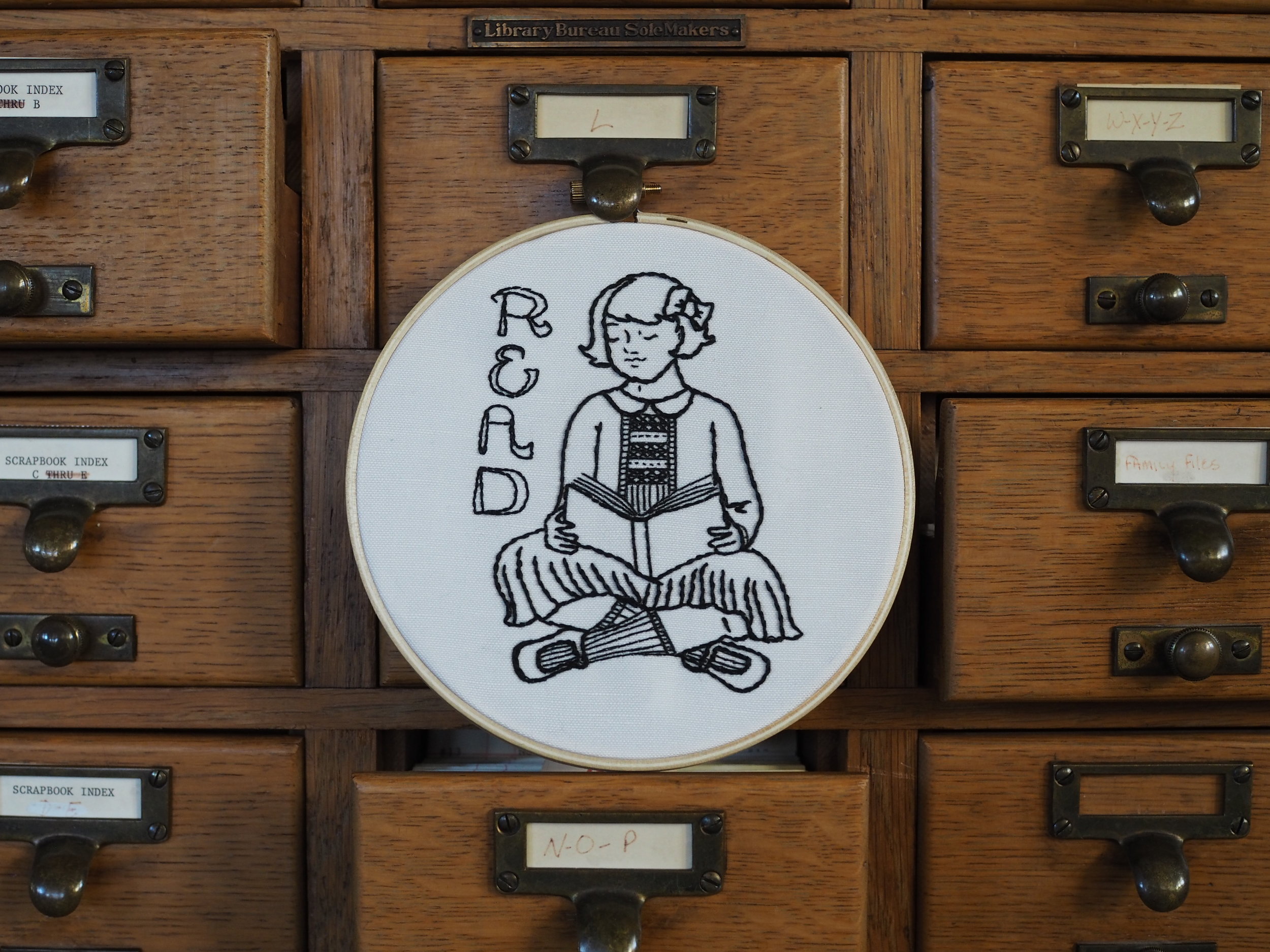
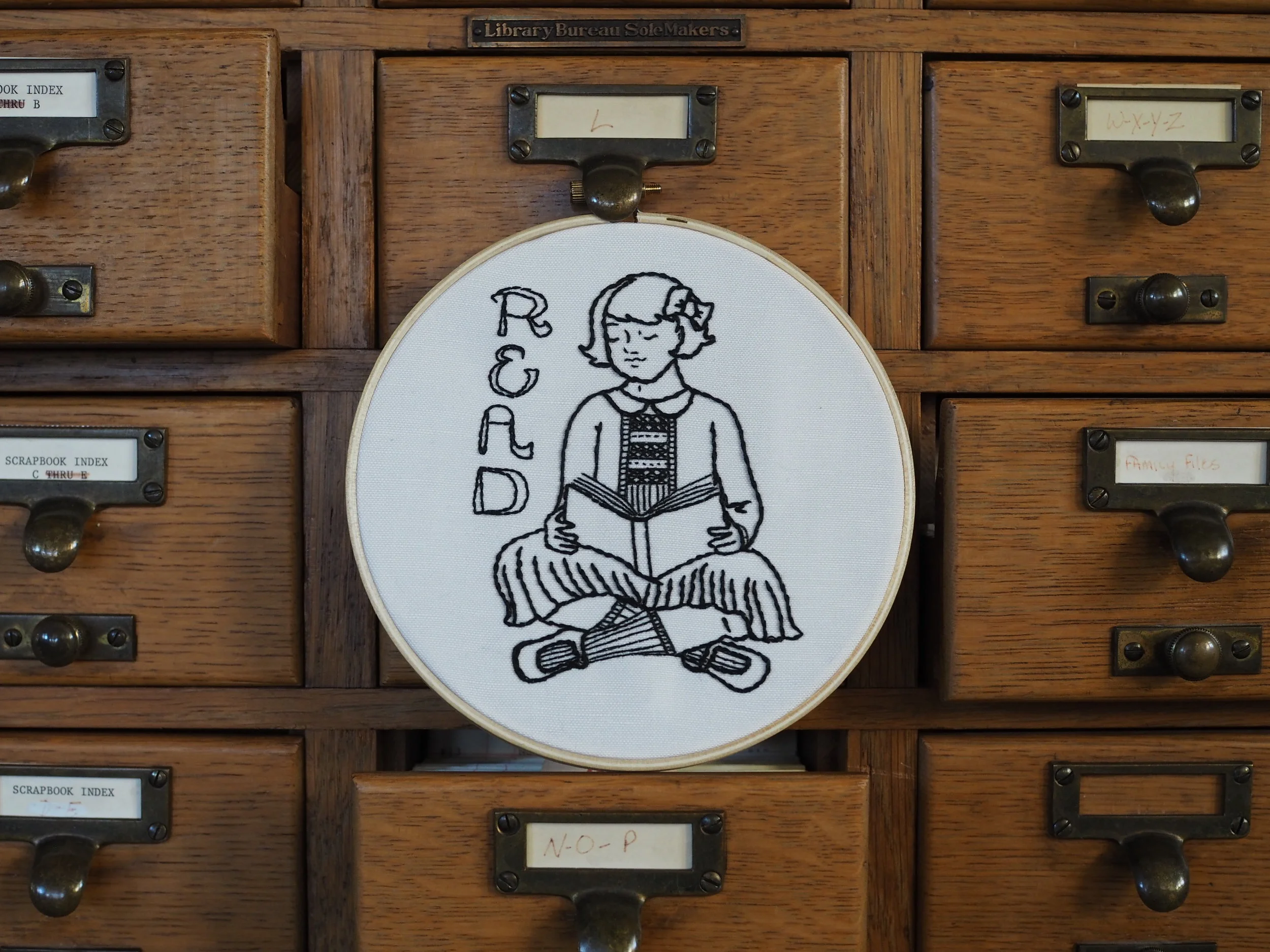
The Little Readers are vintage-inspired designs that use a single color to create a strong outline, a technique known as redwork (or bluework, depending on the color). The paired-down design is a great introductory project for beginning embroiderers and would make a wonderful gift for the book-lover in your life.

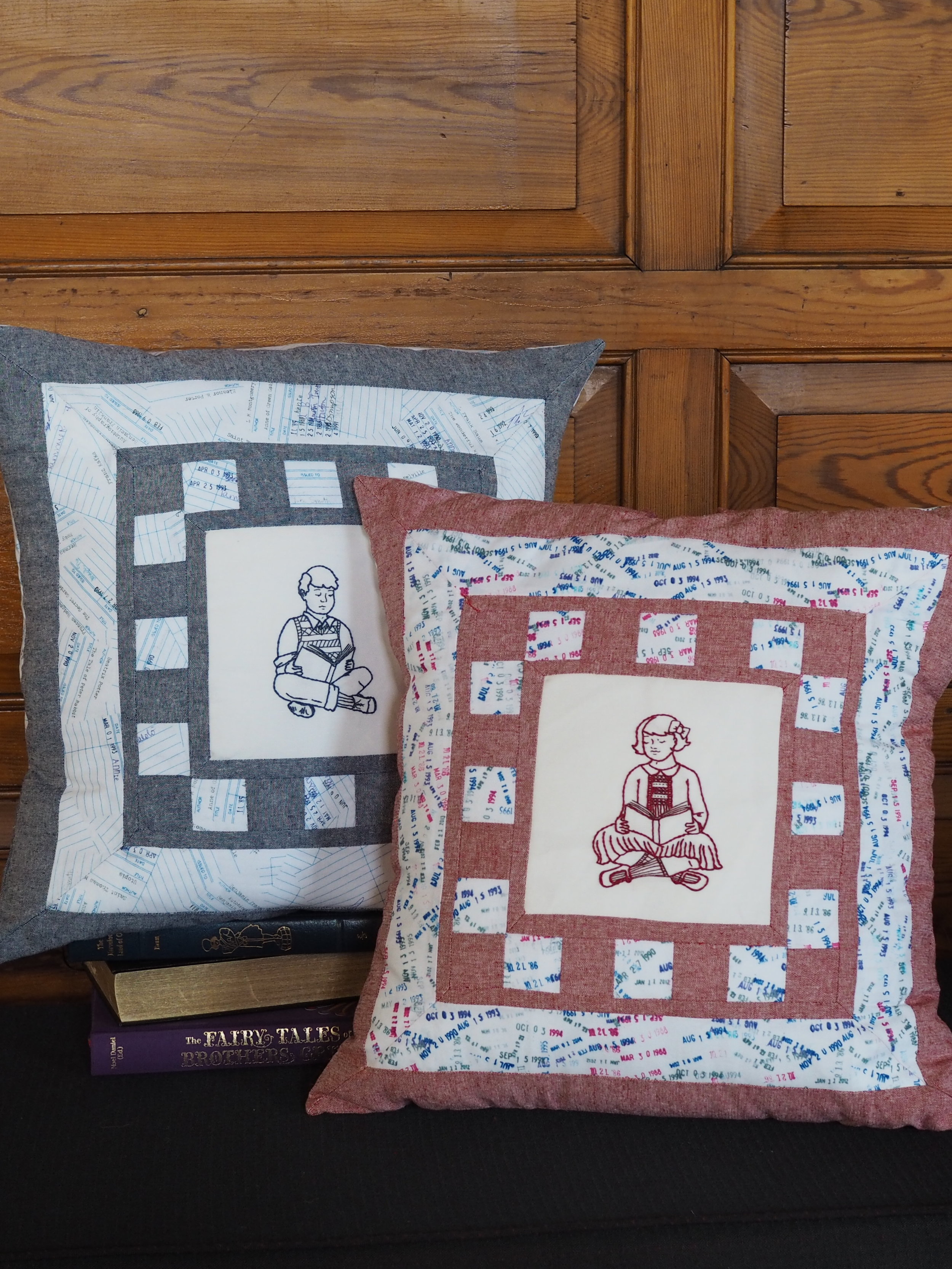
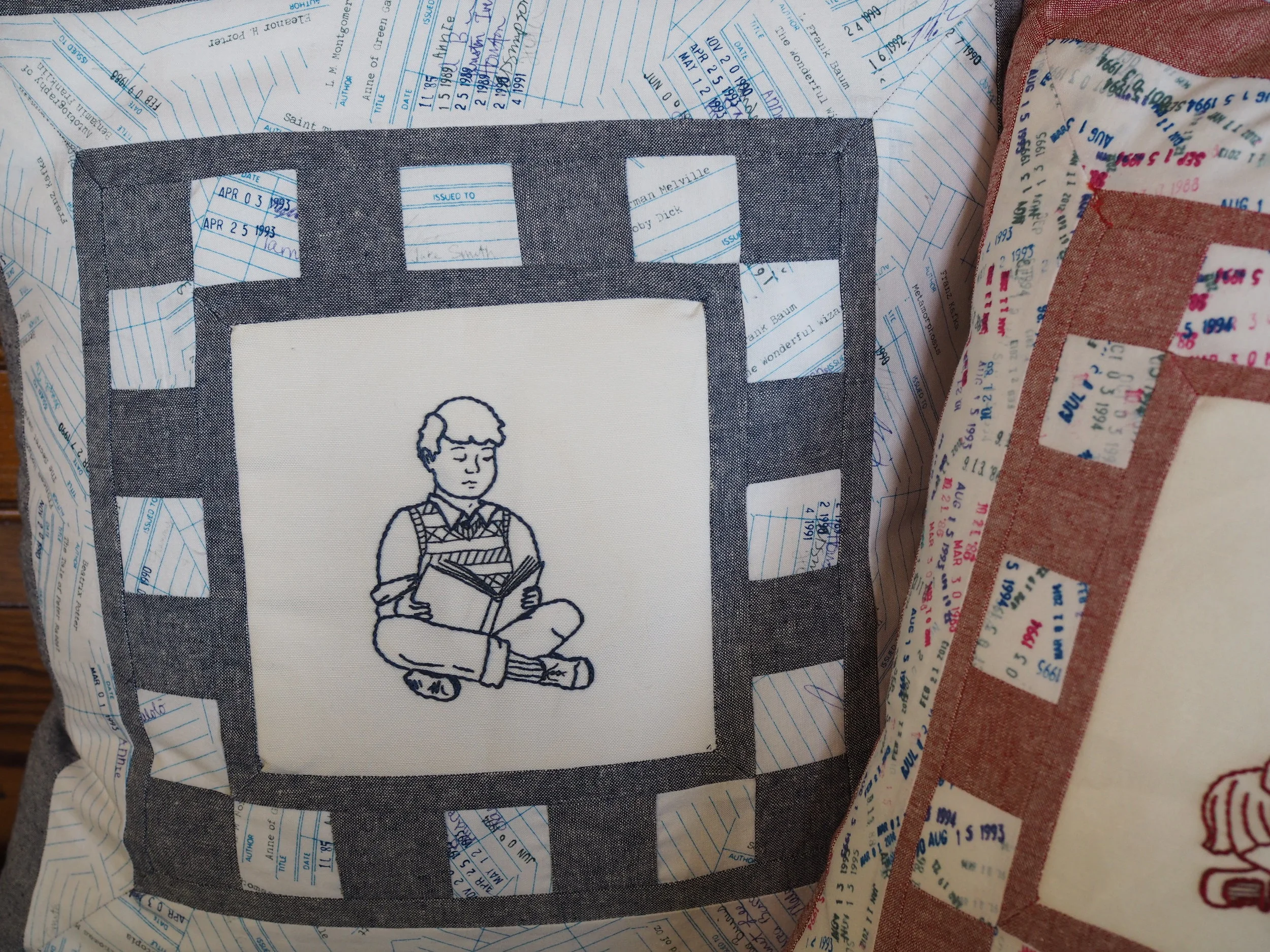
Named for The Music Man’s Marian The Librarian, the Ms. Marian Pillow turns your hoop art into cozy and beautiful home decor. Mitered corners and a checkerboard band increase the elegance of the design, which is suitable for intermediate sewists.

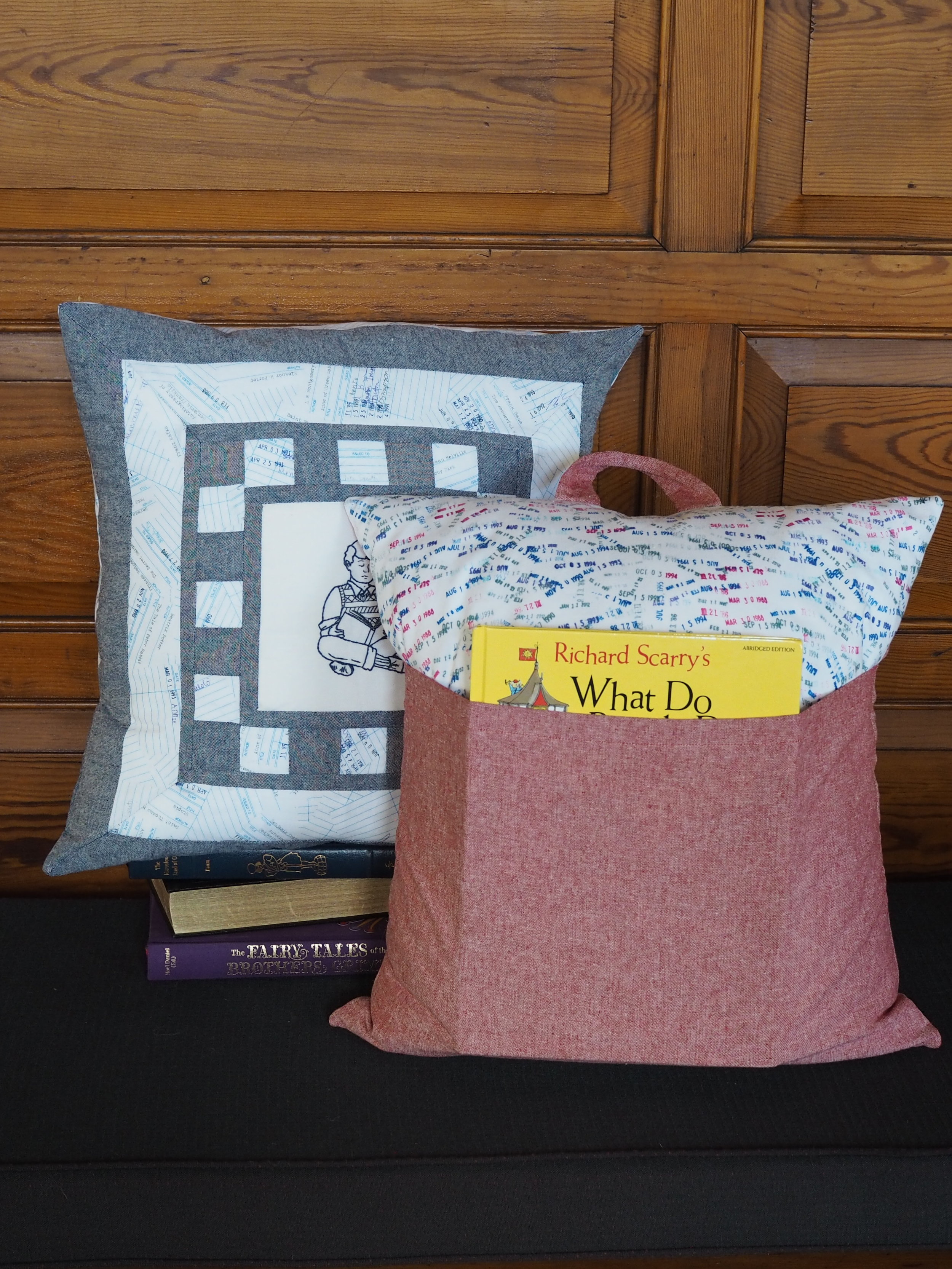
Instructions are included for a standard envelope pillowcase and a tote-able reading pillow with book pocket. The sewing pattern includes template/pattern for both Boy and Girl Little Reader embroideries and is a perfect companion to any of my 6” hoop designs or kits. Not into embroidery? Use the center panel to display an 7” square quilt block or panel of a favorite fabric.

The Ms. Marian Pillow Kit provides you with all the materials (minus pillowform) to make one beautifully embroidered, library-themed pillowcase. You can choose to sew it up as a standard envelope-back pillow, or (my favorite) as a tote-able reading pillow with book pocket.


FO Roundup - Into Fall 2018

One of the most fun parts of being a designer is seeing how others interpret your designs.

We’re in October already, leaves are starting to change color, which means we are entering peak knitwear season! Instead of the most recent FOs this go round, I thought I’d share some of my favorite of your autumnal knits.

Click on any image to visit the maker's Instagram or Ravelry page!

I LOVE seeing your makes! Tag me @mscleaver on Instagram, or if it's on Ravelry, I'll see it. :) 


Leading Bird Shawl by Mindful Folk in her own yarn!

Leading Bird Shawl by Mindful Folk in her own yarn!

Cormac by Fullosheep (pattern available via Interweave)

Cormac by Fullosheep (pattern available via Interweave)

Marketa Mitts by Irr-Saukh (pattern available via Interweave)

Marketa Mitts by Irr-Saukh (pattern available via Interweave)

Hemingway (Men's) by karencampandknit (pattern available via Twist Collective).

Hemingway (Men's) by karencampandknit (pattern available via Twist Collective).

Madalynn by Wolfcreeker

Madalynn by Wolfcreeker

Breakwater by Kahlefam

Breakwater by Kahlefam

A Two-Color Dolan Beret knit by Frances 75

A Two-Color Dolan Beret knit by Frances 75

Honeymaker by Shortrounds

Honeymaker by Shortrounds


Want to make one of your own? Grab the patterns below!

Honeymaker - PDF Pattern
$6.00

A feminine take on the traditional aran sweater, with a bee-inspired twist, the Honeymaker pullover features stitch patterns inspired by netting, hives, and, of course, the honeycomb. Knit in the optional bee inset, if you like.

  • 33 (36, 38 ¾, 41 ¾, 45 ¾, 48 ¾)" [84 (91.5, 98.5, 106, 116, 124) cm] bust circumference
  • 1020-1700 yds of Aran weight yarn, sample shown in Quince & Co. Osprey in Clay 113
  • 36-inch circular needle and set of dpns, US 9 - 5.5 mm and US 7 - 4.5 mm
  • 22 stitches and 22 rows = 4 inches in pattern stitch with larger needle

Learn more about Honeymaker in the Chronicles

View it on Ravelry

Photos © Quince & Co.

Leading Bird - PDF Pattern
$6.00

Inspired by the song “The Leading Bird” by Markéta Irglova, I designed this cozy half-pi shawl with the idea of creating a wooly piece with a rustic, yet graceful feel. Worked top down in Owl and featuring garter stitch and dropped stitch techniques, Leading Bird is the perfect project to take with you wherever you may go.

kills required : knitted cast on,  increasing, decreasing, working with dropped stitches.

  • 52 “ wingspan, 20” depth
  • 720 yds of Worsted weight yarn, sample shown in Quince & Co. Owl in Abyssinian 309 / 6 skeins
    Note: Sample used all of 5 skeins. Extra skein is required for swatching purposes.
  • 32-inch circular needle, US 7 - 4.5 mm
  • 17 sts and 33 rows= 4 inches in garter stitch, after blocking

Learn more about Leading Bird in the Chronicles

View it on Ravelry

Photos © Pam Allen

Dolan Beret - PDF Pattern
$5.00

Knit stitches, purl stitches--the basic bits of knitting. Used together they can create all manner of fancy fabrics. But even in simple repeating combinations, like those in the Dolan Beret, they can be dramatic.

  • 18” brim circumference, unstretched, 10” diameter
  • 170 yds of Aran weight yarn, sample shown in Quince & Co. Osprey in Leek 131
  • 16-inch circular needle, US 9 - 5.5 mm and US 8 – 5 mm; dpns in US 9 – 5.5 mm
  • 16 stitches and 25 rows = 4 inches in pattern stitch

Learn more about the Dolan Beret in the Chronicles

View it on Ravelry

Photos © Carrie Bostick Hoge

Madalynn – PDF Pattern
$5.00

Inspired by cross-stitch embroidery and old wallpaper, Madalynn is a subtly-toned infinity scarf which features stripes on one end and a simple colorwork pattern on the other.

The scarf is knitted in the round as a tube in stockinette stitch, first in cross stitch pattern, then stripe pattern. Scarf is then blocked flat before the ends are grafted together.

Instructions are given for working with dpns, and links are provided for working with 2 short circs and magic loop.

  • 52" [132 cm] circumference and 4" [10 cm] wide
  • 724 yds of Sport weight yarn, sample shown in Quince & Co. Chickadee in Kittywake 151 (MC) and Frost 103 (CC)
  • 16-inch circular needle or dpns, US 5 - 3.75 mm
  • 36 stitches and 30 rows = 4 inches in cross stitch pattern

View it on Ravelry

Photos © Carrie Bostick Hoge

Breakwater Pullover - PDF Pattern
$8.00

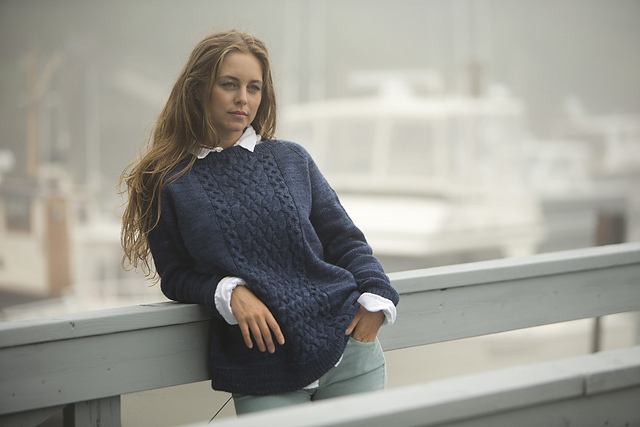
Inspired by traditional Aran sweaters, but simplified to the essentials, this sweater is a great introduction to cable work. This simple bottom-up raglan pullover features a striking woven cable panel down the center, while the back and sleeves are just simple stockinette. The knitting on Breakwater will keep you interested, but not overwhelmed. This fit of this sweater works equally well on both guys and gals. The unisex pattern is sized to fit both.

Materials: 
6 (7, 7, 8, 8) skeins Swans Island All-American Collection, 75% USA Rambouillet wool, 25% USA alpaca; worsted weight
(80 gms, 210 yds each) Color Shown: Newport #AAW416

US size 8 (5 mm) 29” circular and double pointed needles, 
or size needed to obtain gauge. 
US size 6 (4 mm) 29” circular and double pointed needles

Stitch markers, cable needle, stitch holders or waste yarn, yarn needle.

Finished Dimensions
Chest Circumference: 35¾ (39½, 42¼, 46¾, 50¾)”. 
Length: 25½ (26¾, 26¾, 27¾, 28½)


Got Moxie?

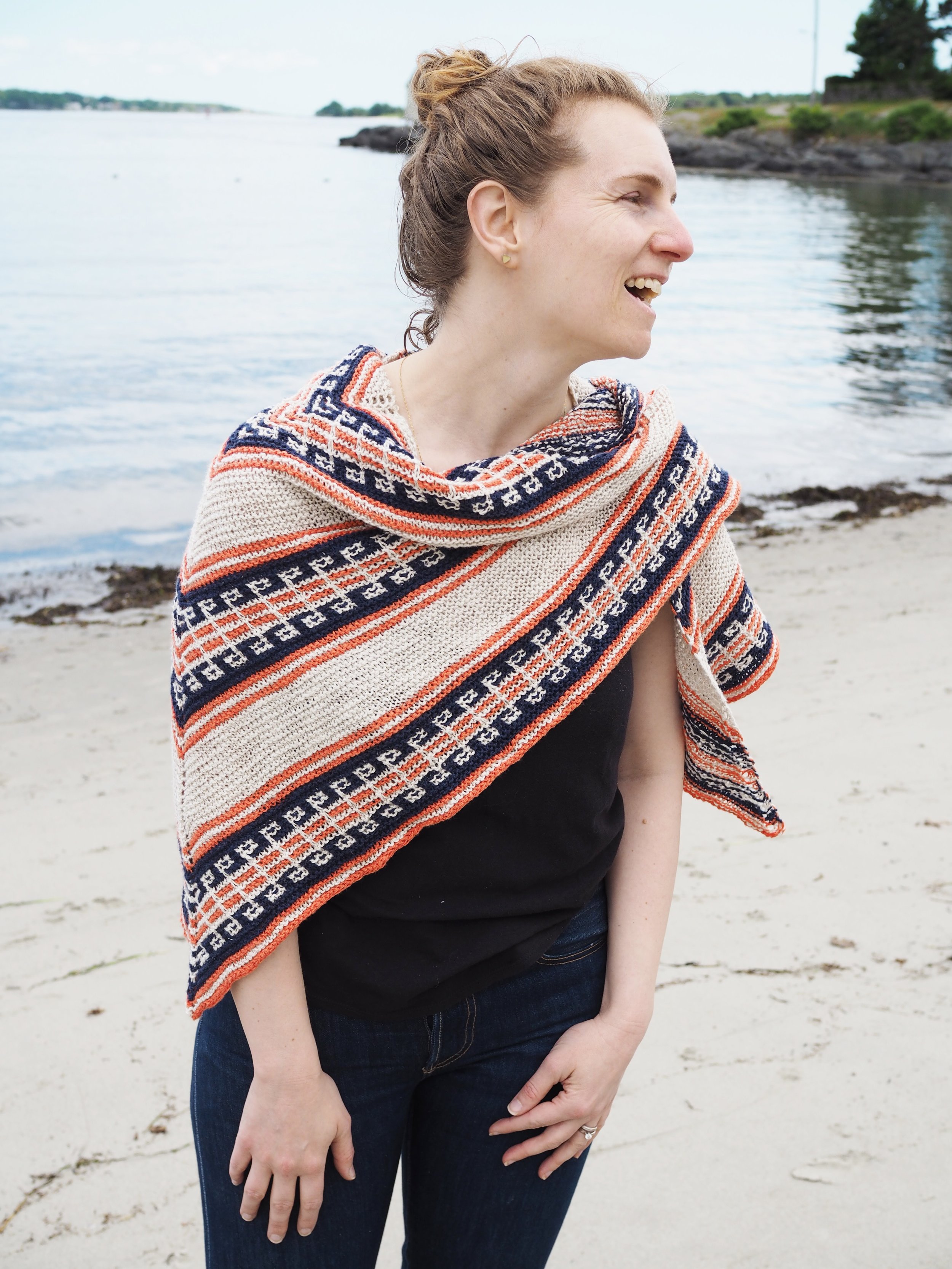
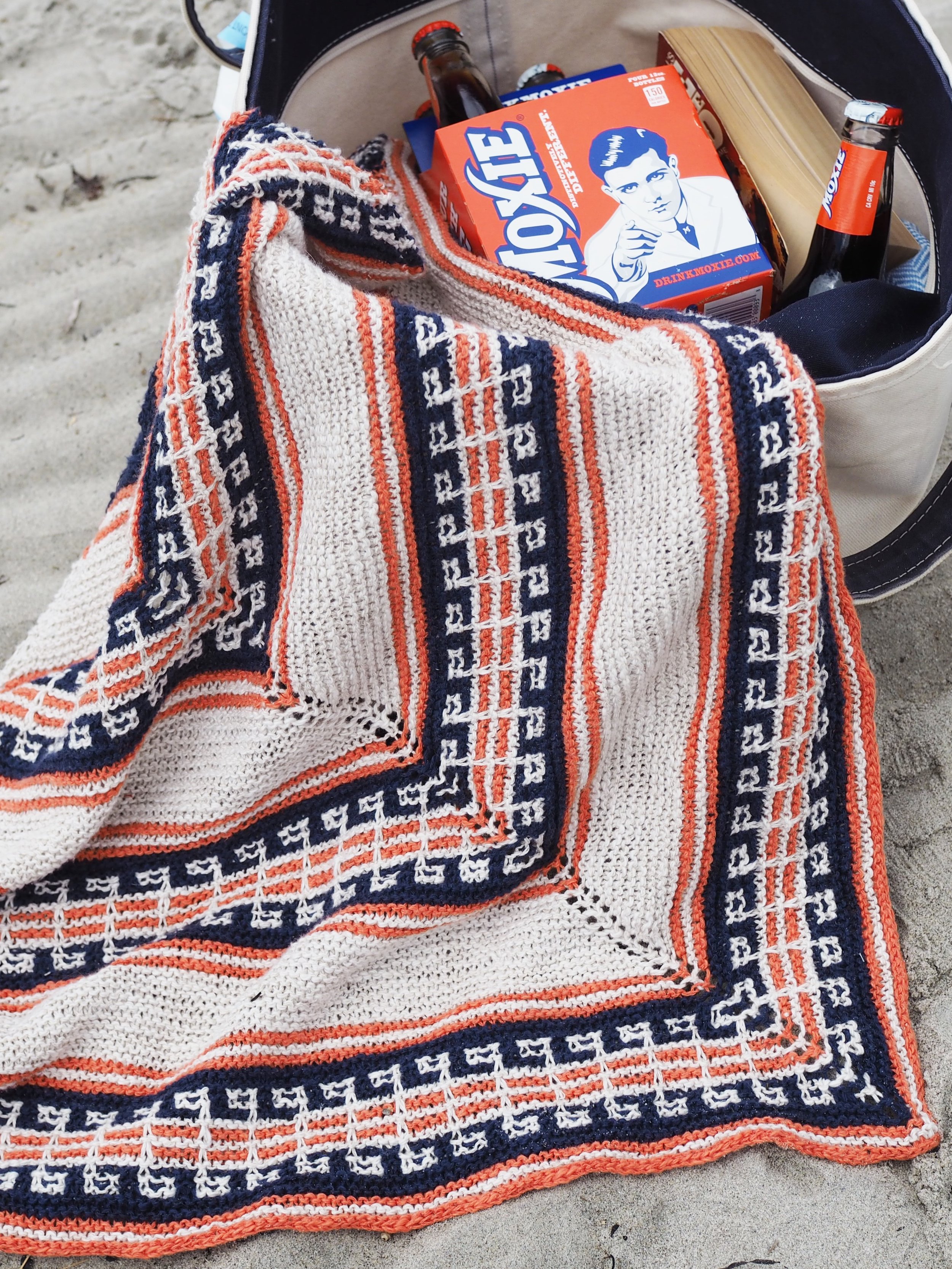
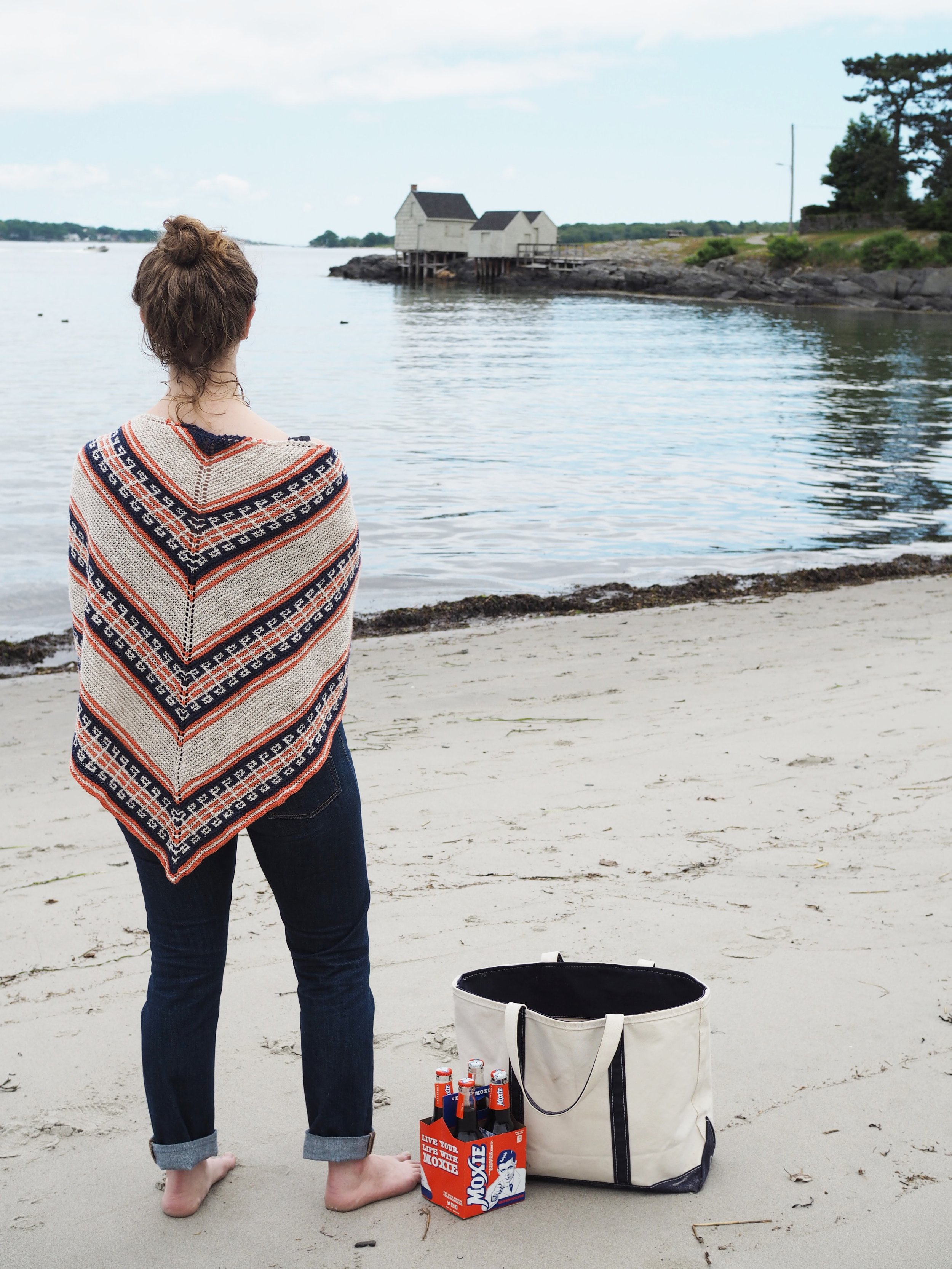
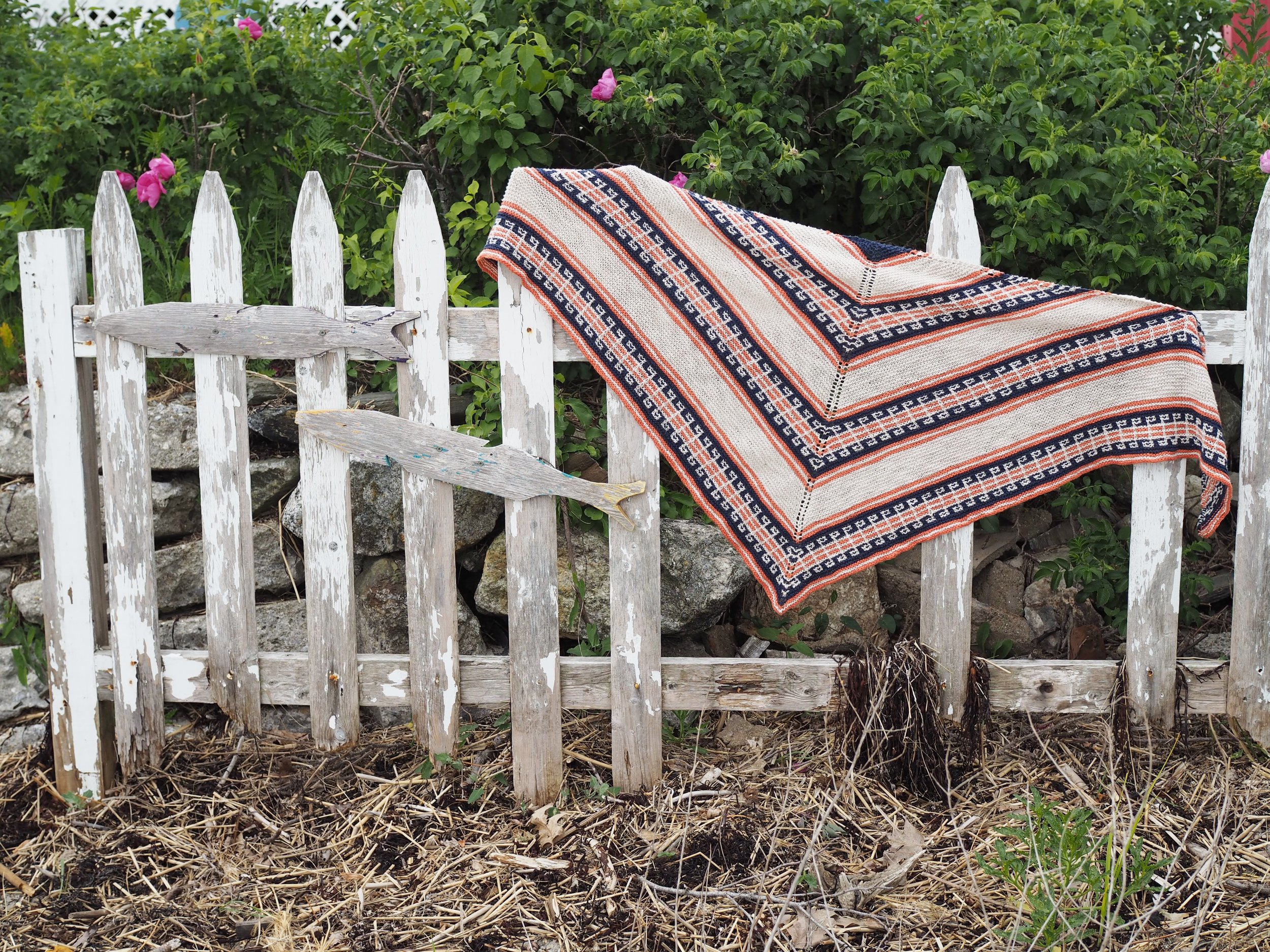
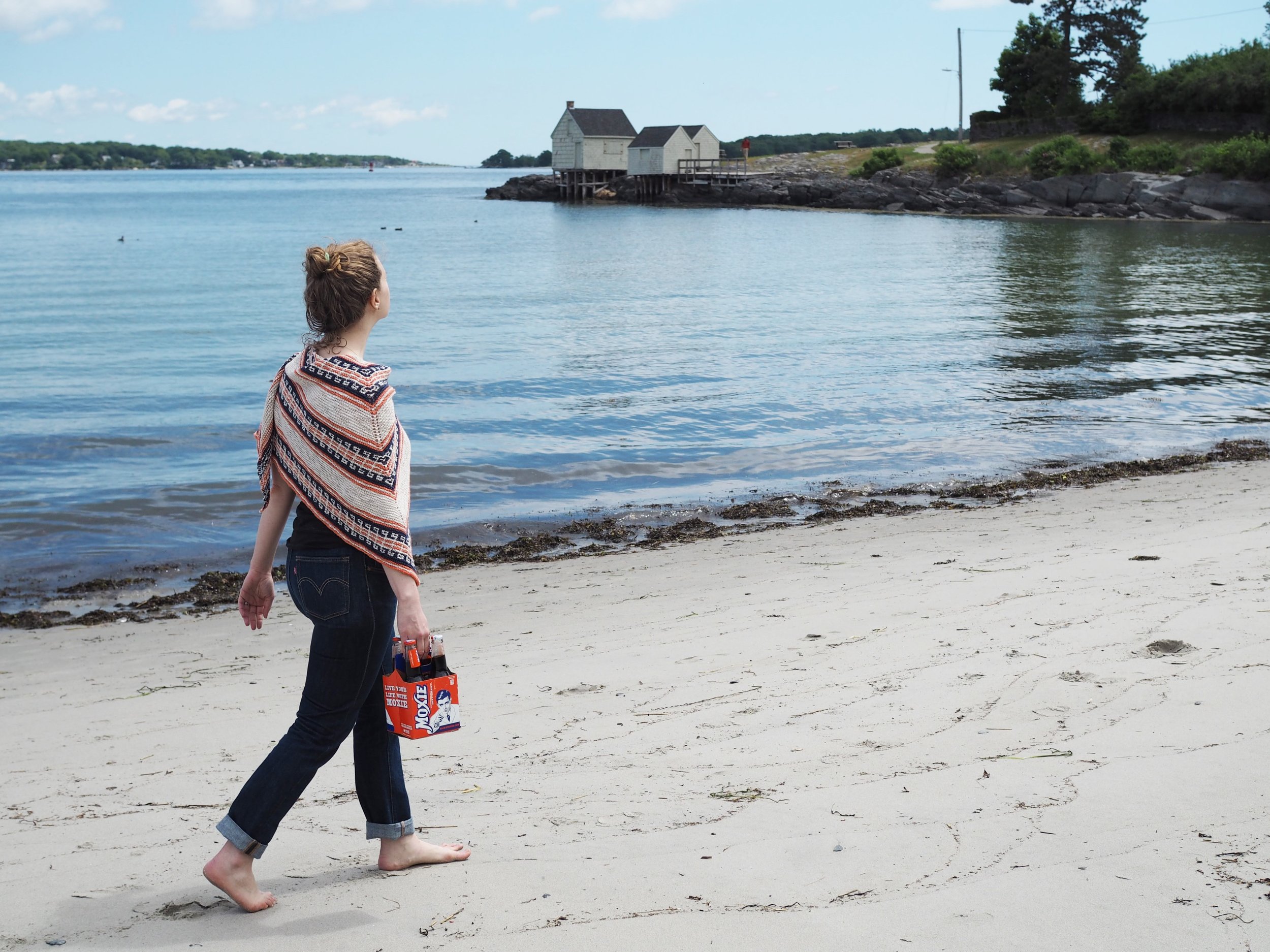
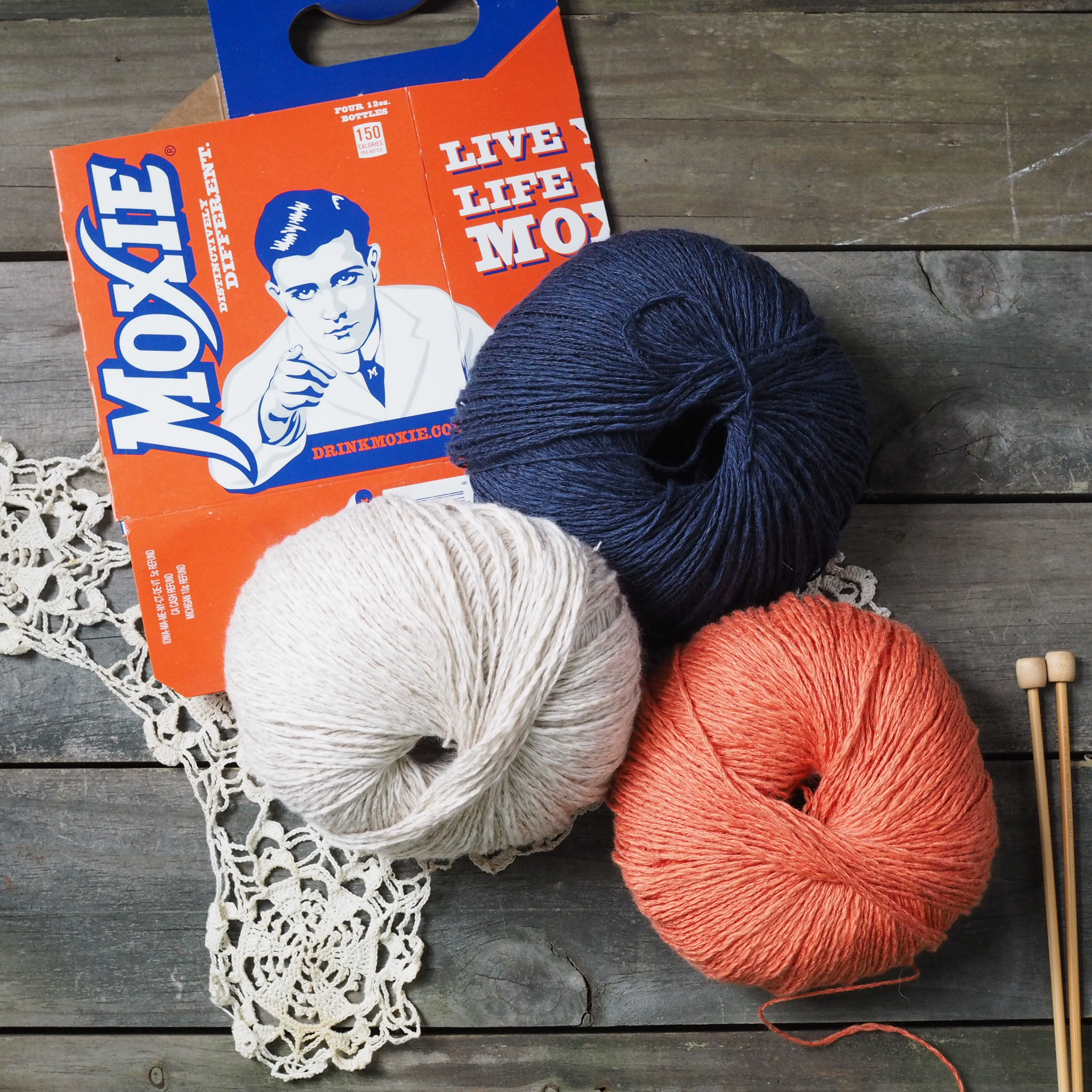
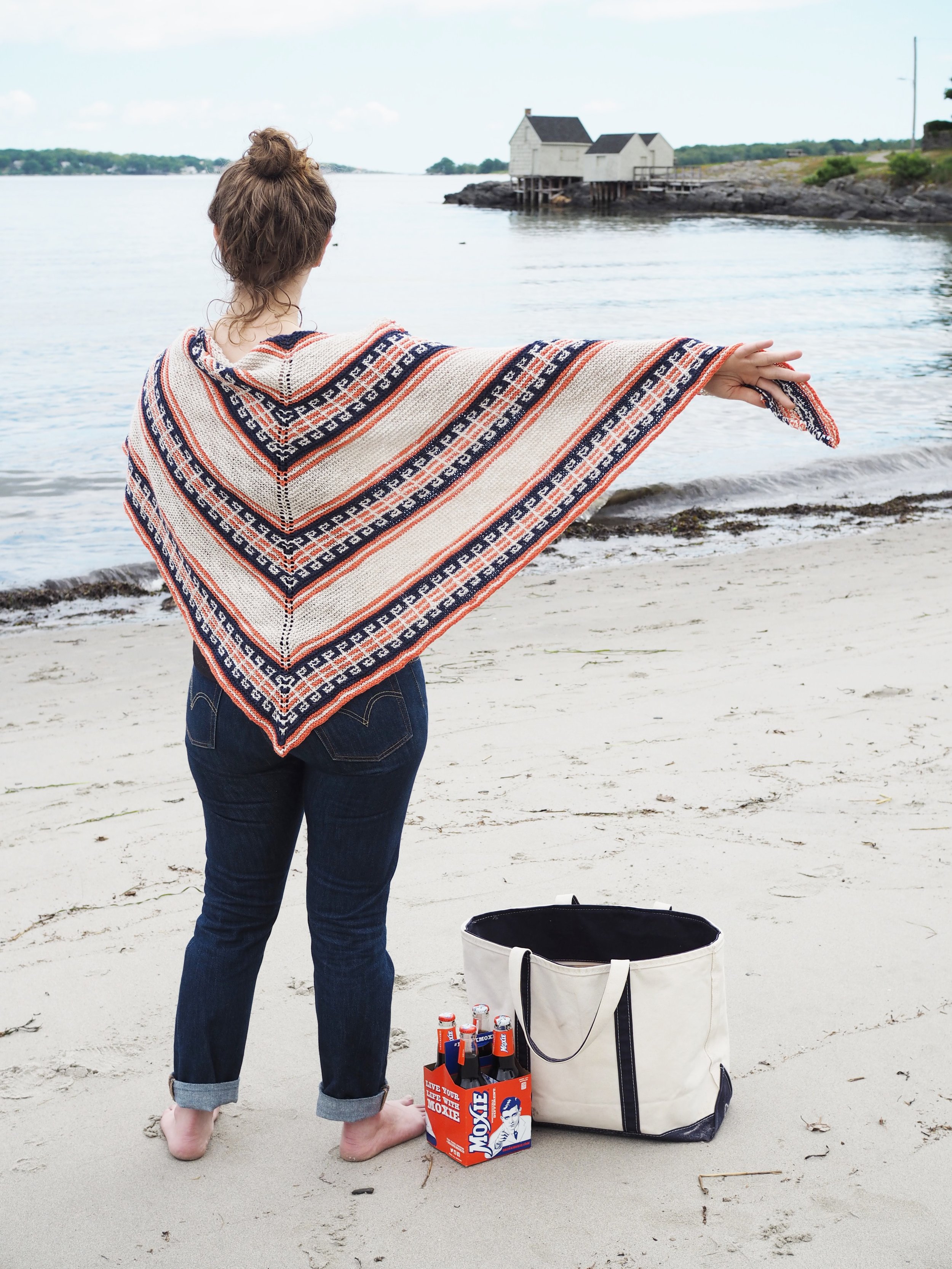
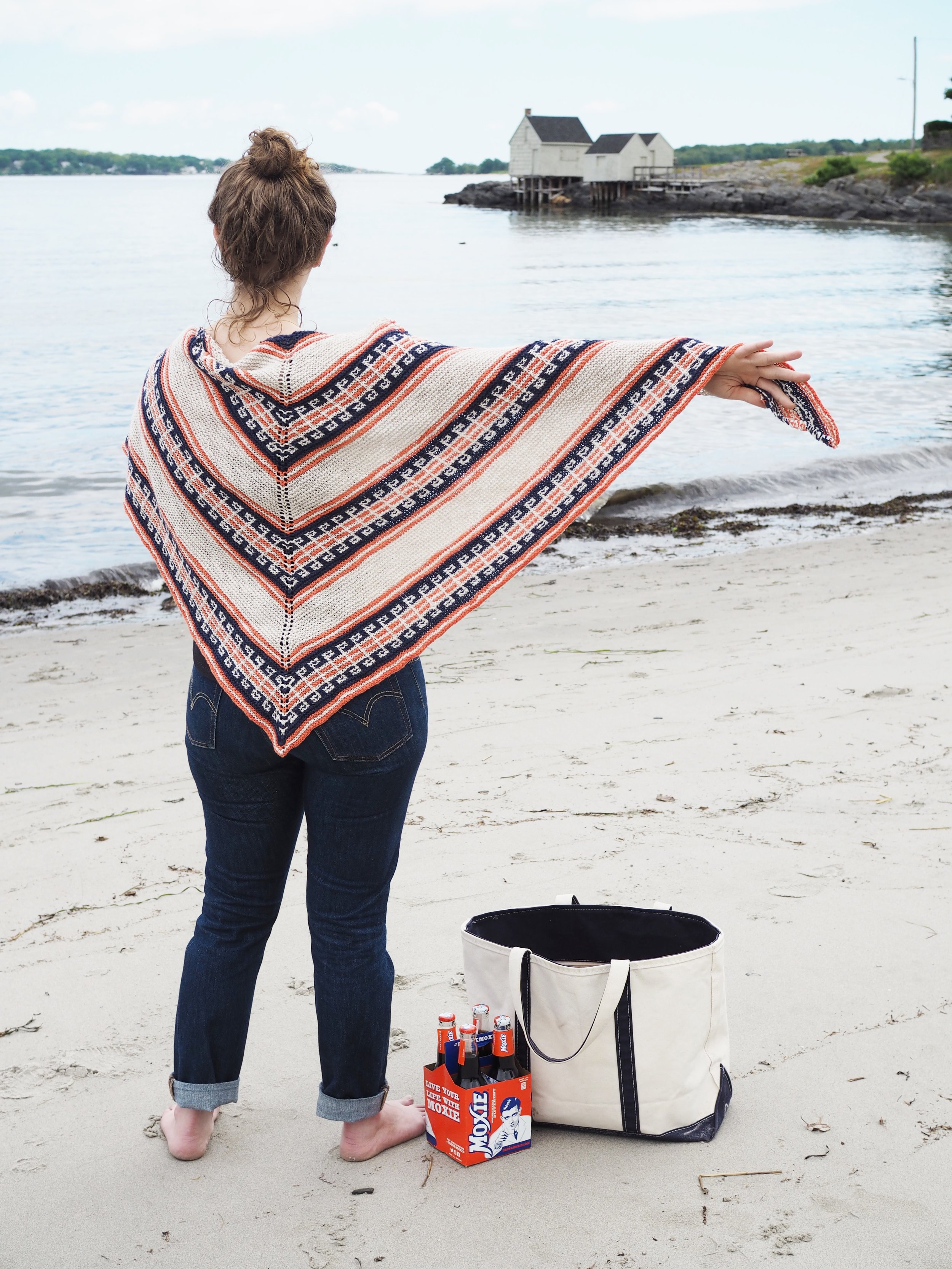
While browsing at my local yarn shop earlier this year, I came upon three colors of Juniper Moon Farm's Zooey piled together in a cubby and thought- what perfect New England colors for summer! When I got it home and placed my purchase next to some Moxie packaging, I realized that it was the perfect Maine summer colors. And so, inspired by the colors of Moxie soda, the official soft drink of Maine, the Moxie shawl is the perfect knit to both make and wear at the beach – whether your beach is in Maine or lands beyond.

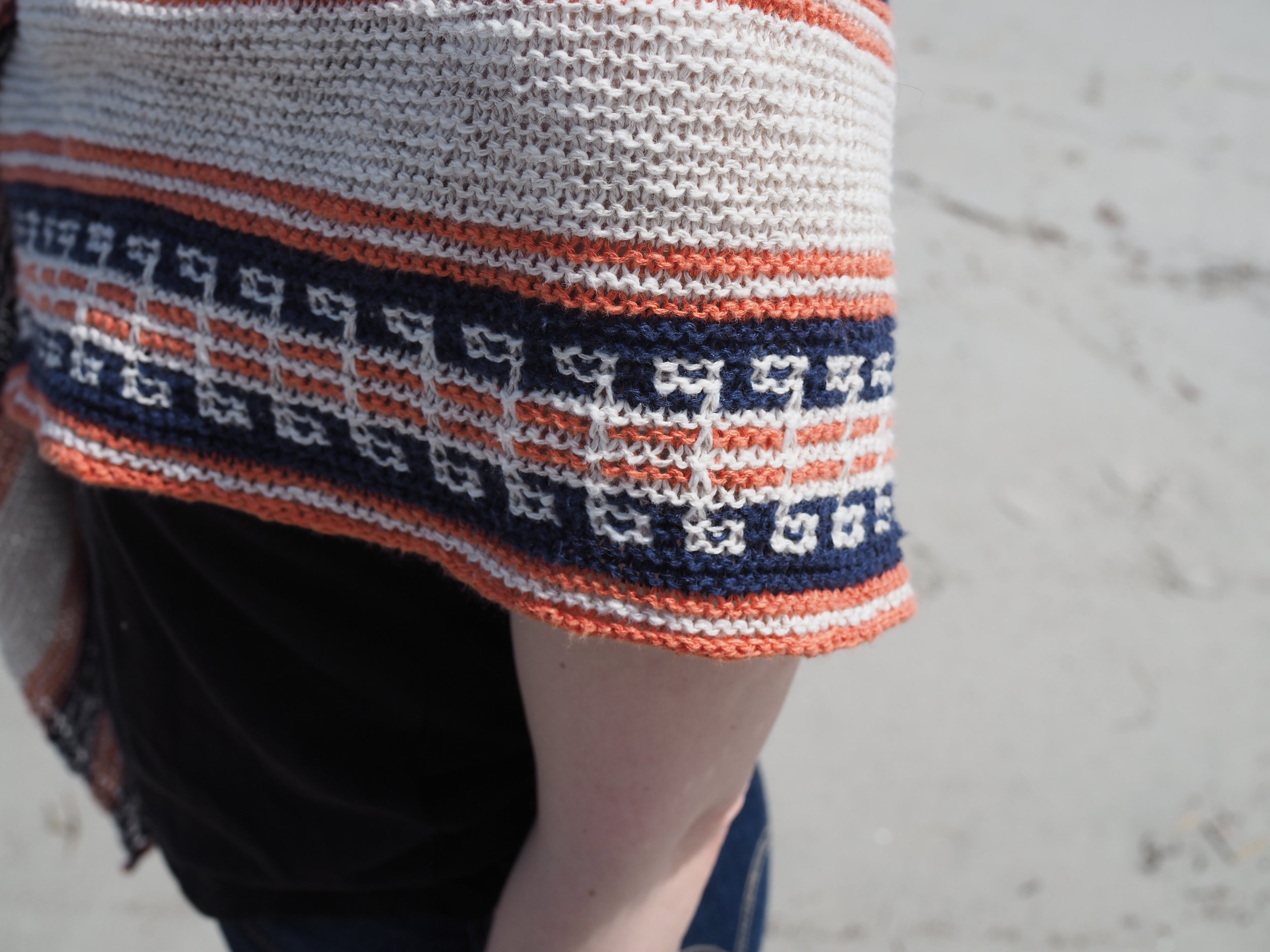
Moxie is a traditional top-down triangle shawl that uses a mosaic knitting technique for the colorwork bands. Mosaic knitting creates patterns by using slipped stitches that pull up a strand of color from the row below,  which means you're only dealing with one color in each row and getting a graphic "pop" with little complication. Worked in garter stitch, the shawl is a quick and cozy knit. 

The Moxie pattern can be found in GRAIN - the current issue of Taproot Magazine, available via subscription, their online shop, and at a variety of bookstores and stockists. 

A very special thanks to my testers and to Aimee Chapman for some short-notice modeling! 


Cherries, Chickadees, and Ms. Billingsley

2018-07-26 12.33.19.jpg

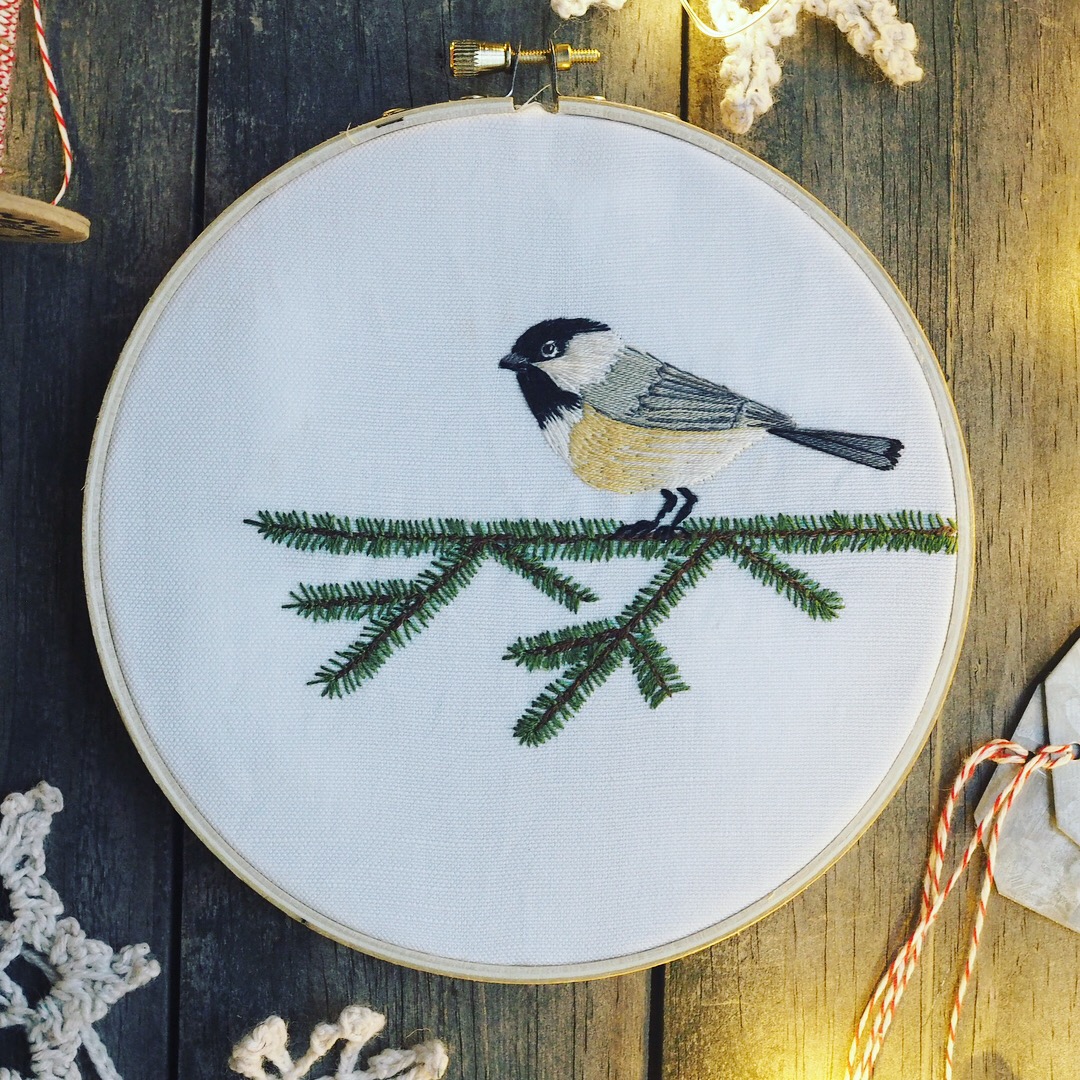
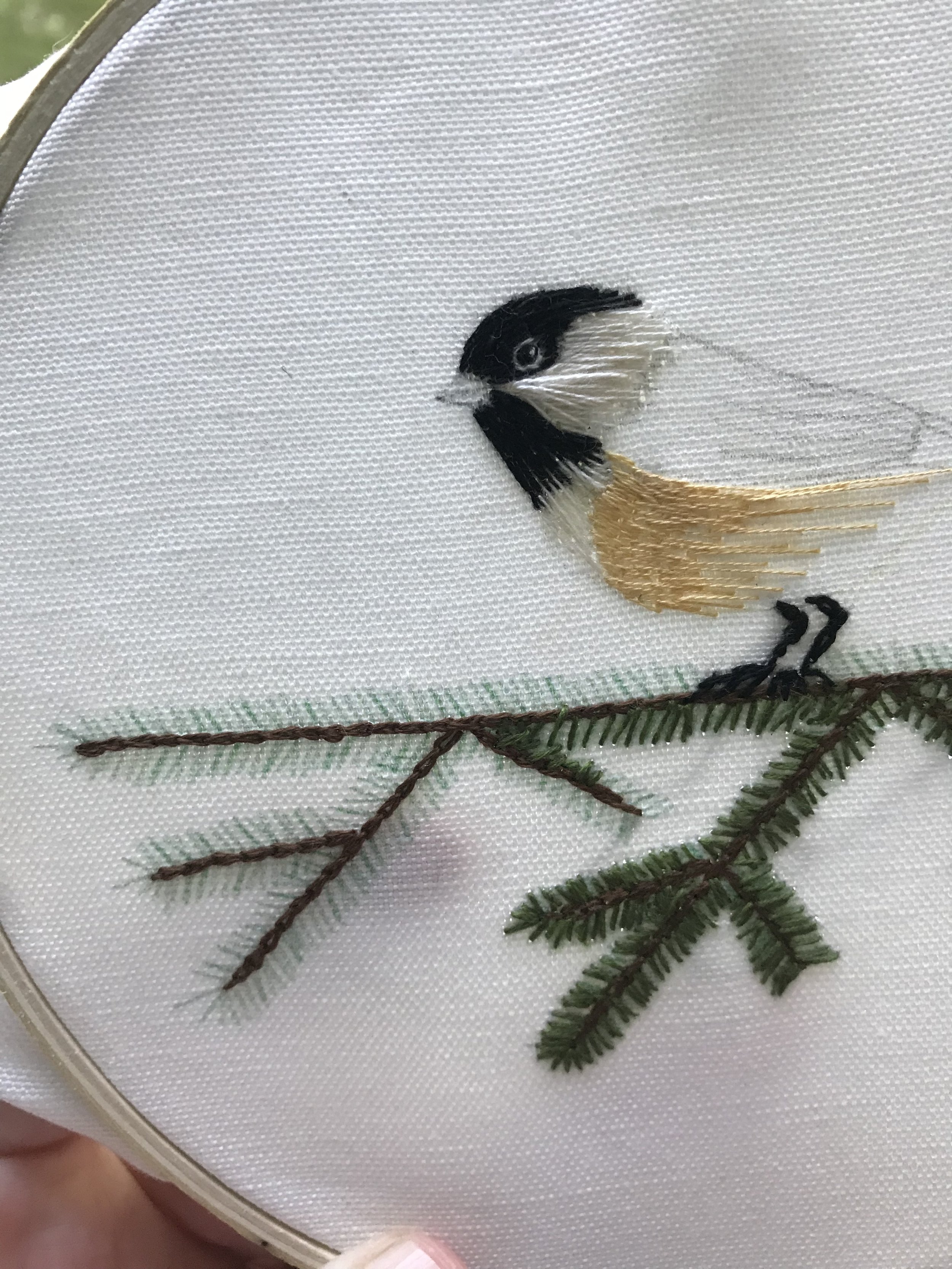
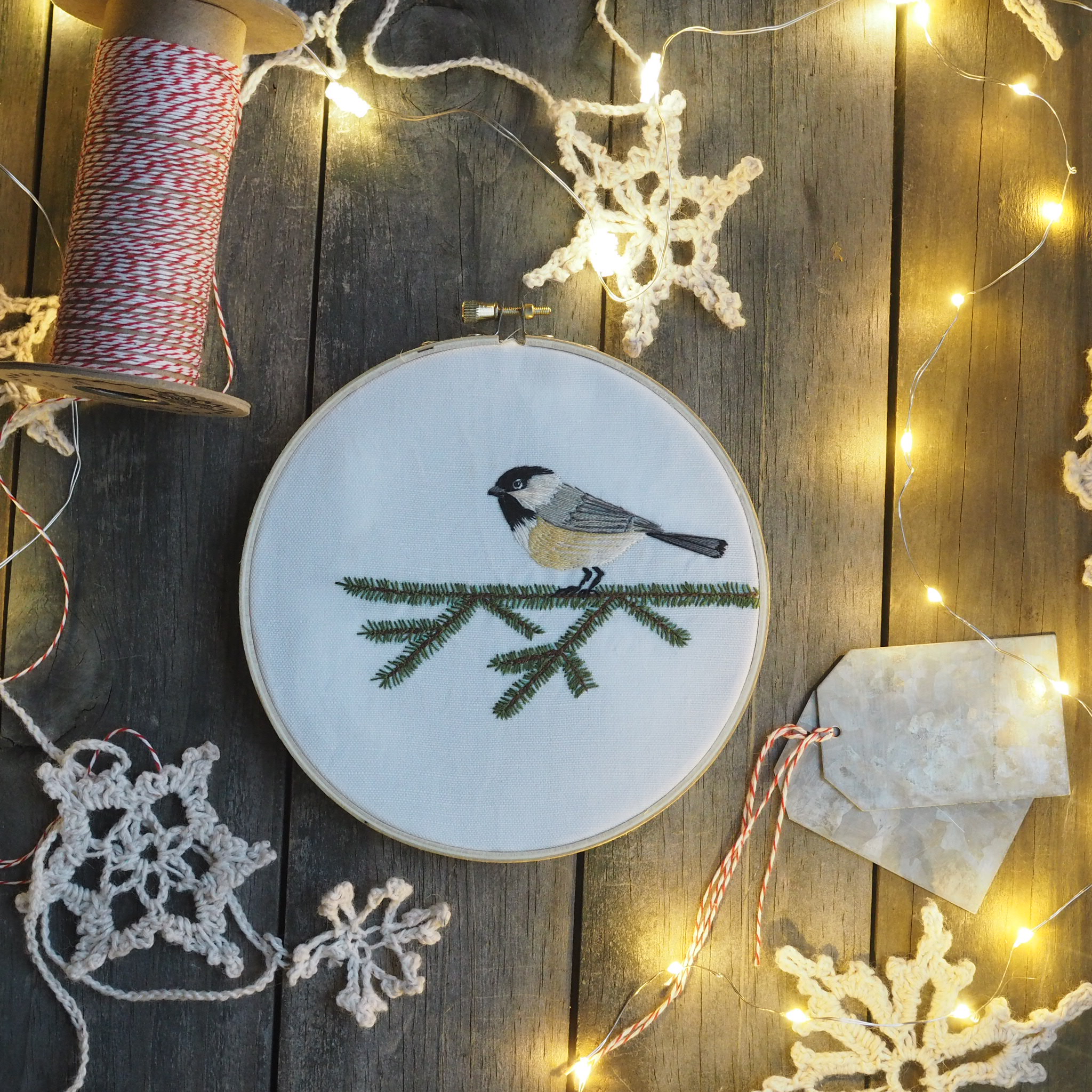
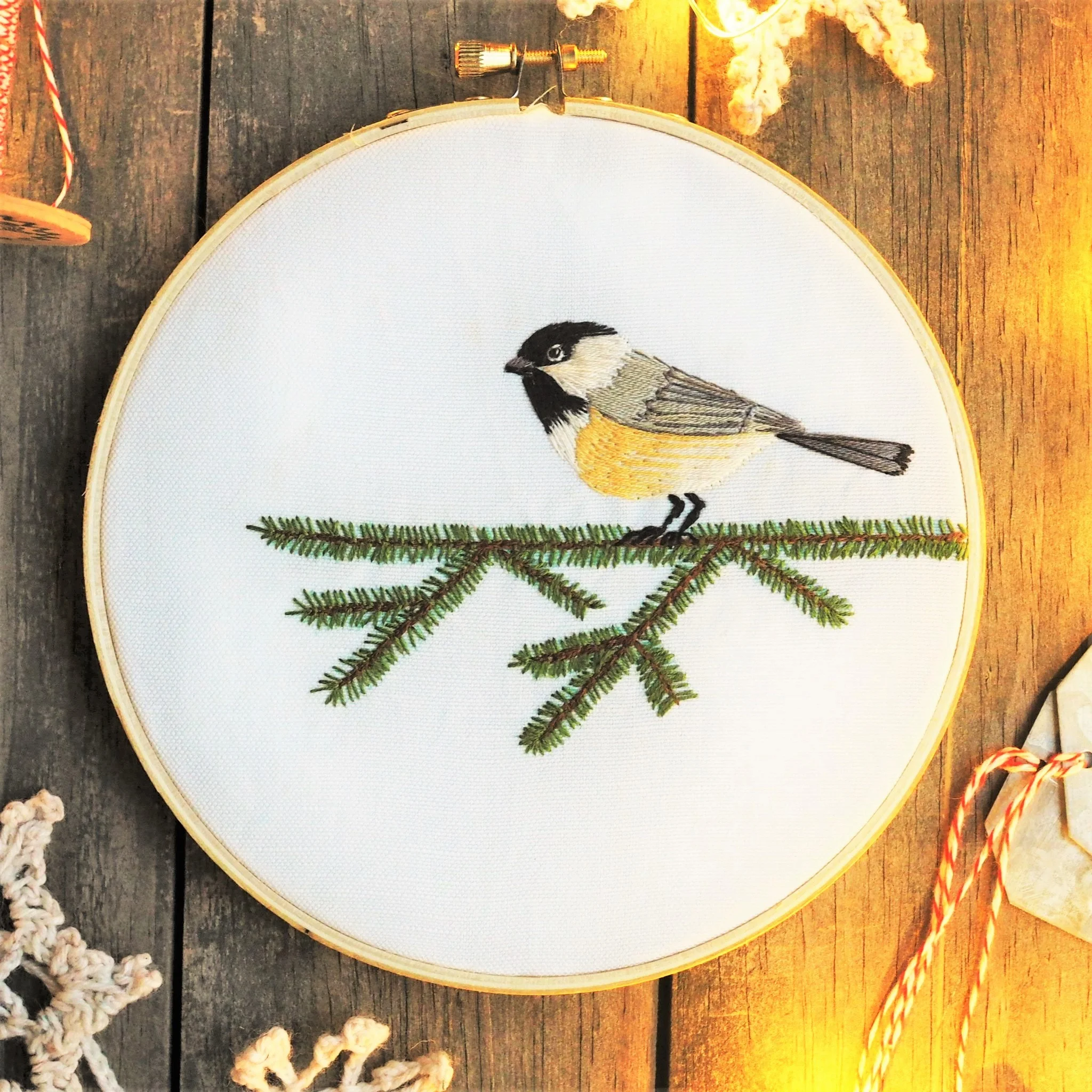
We're already halfway through August, which means that I've already got holiday crafting on the brain (not that I'll start on it for months yet, but I'm thinking about it...). For those of you who are a bit more forward-planning, my 2018 holiday design, Chickadee and Pine is now available, along with all my other wintery-woodland designs, to get a kick-start on that crafting. 

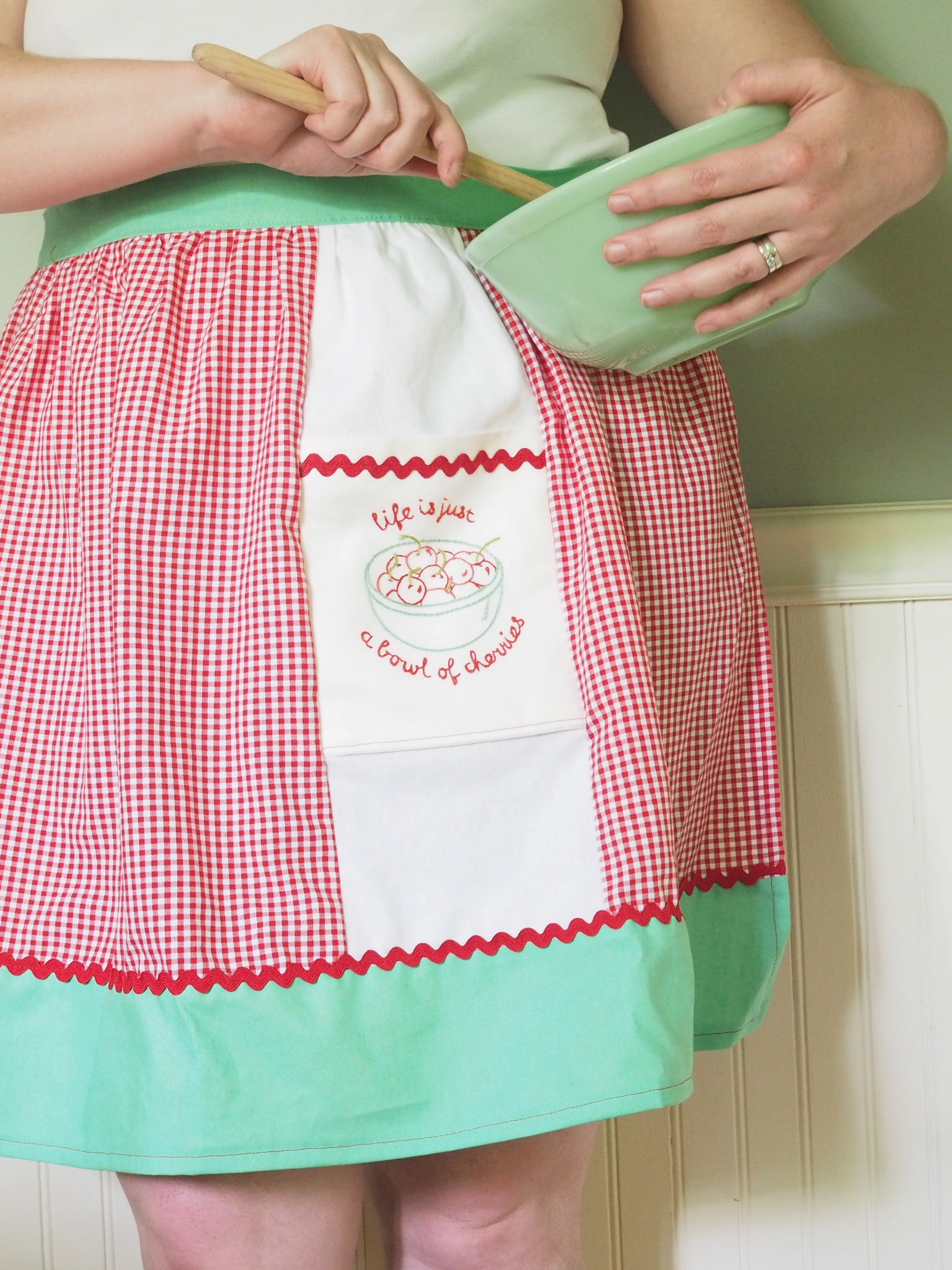
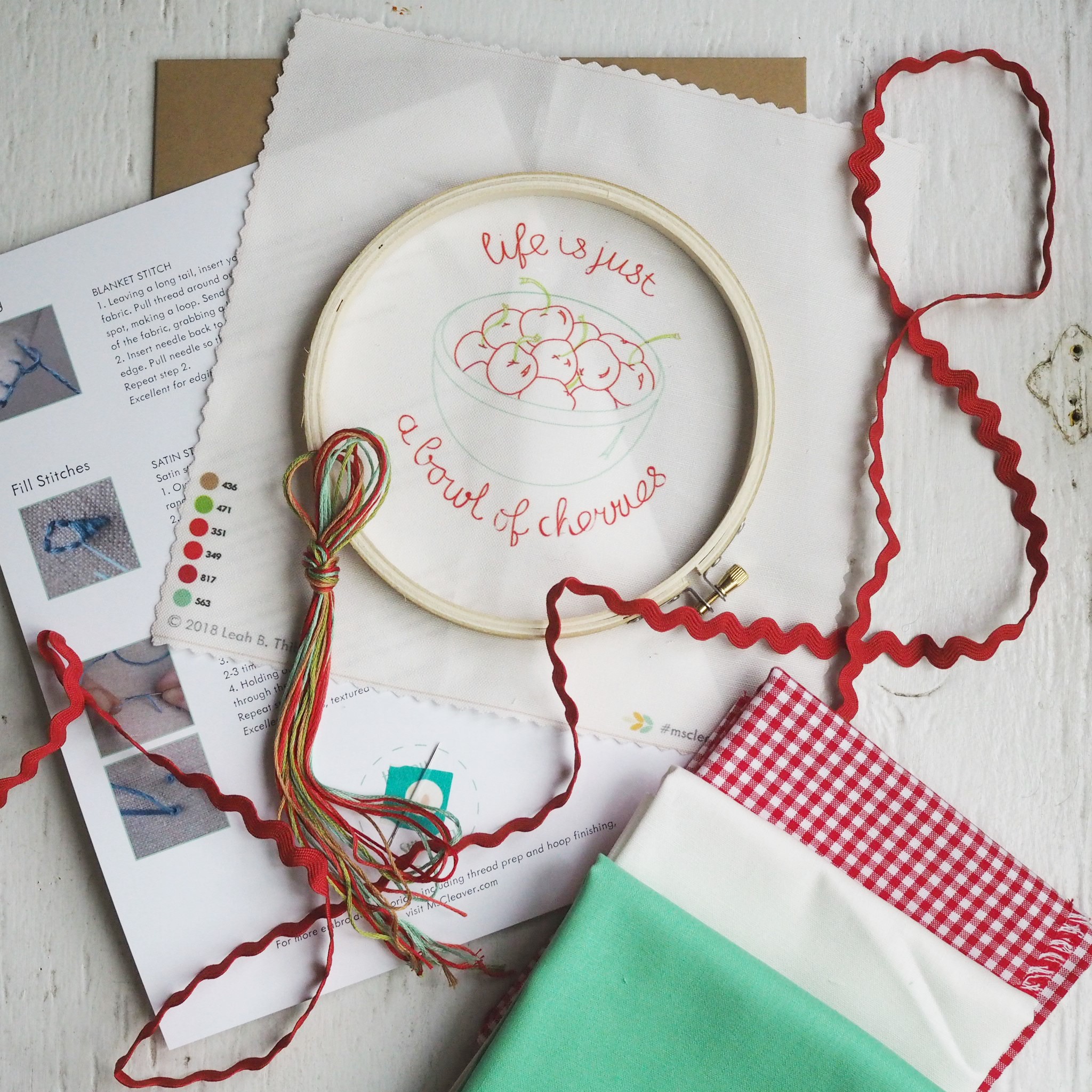
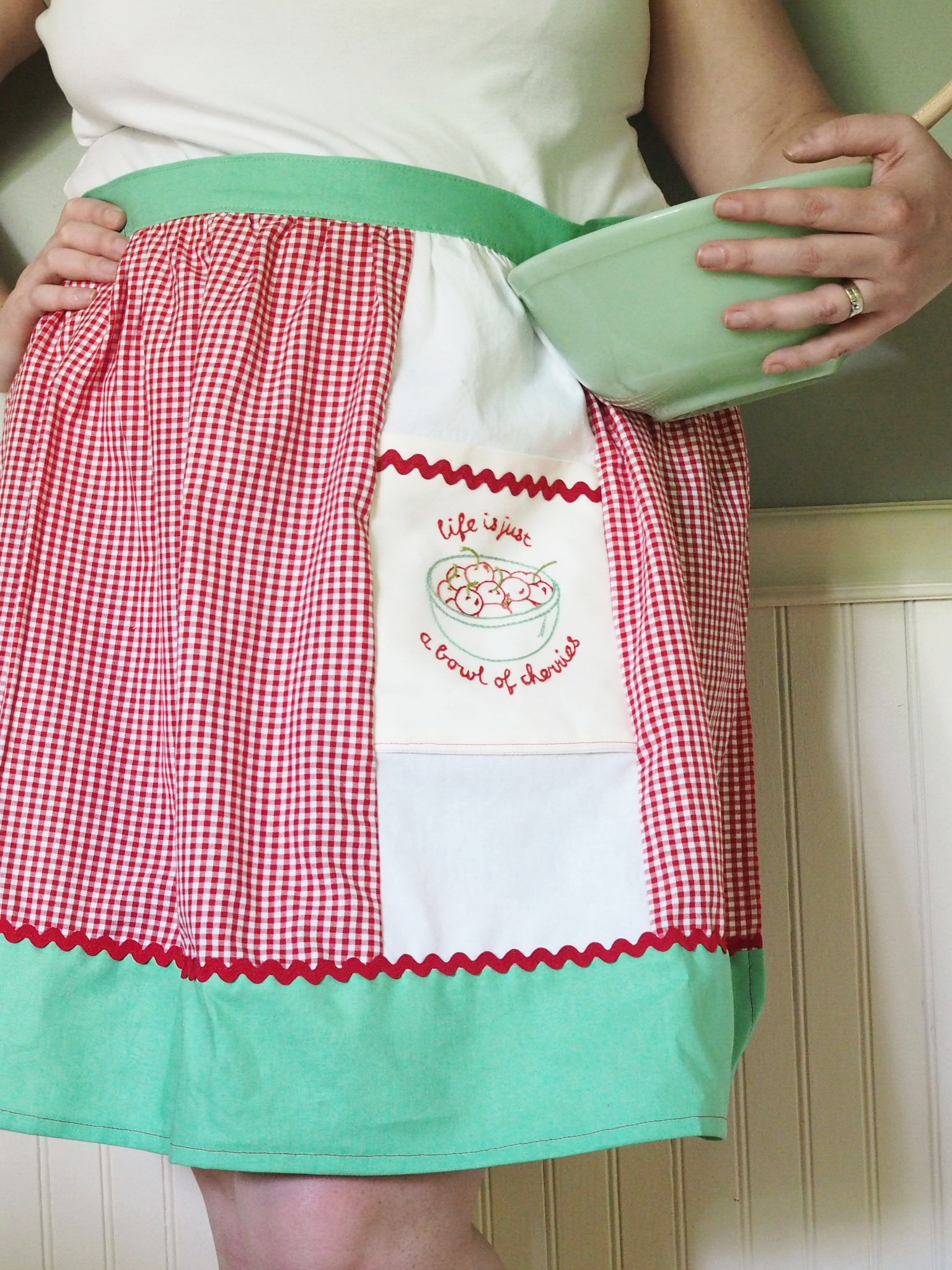
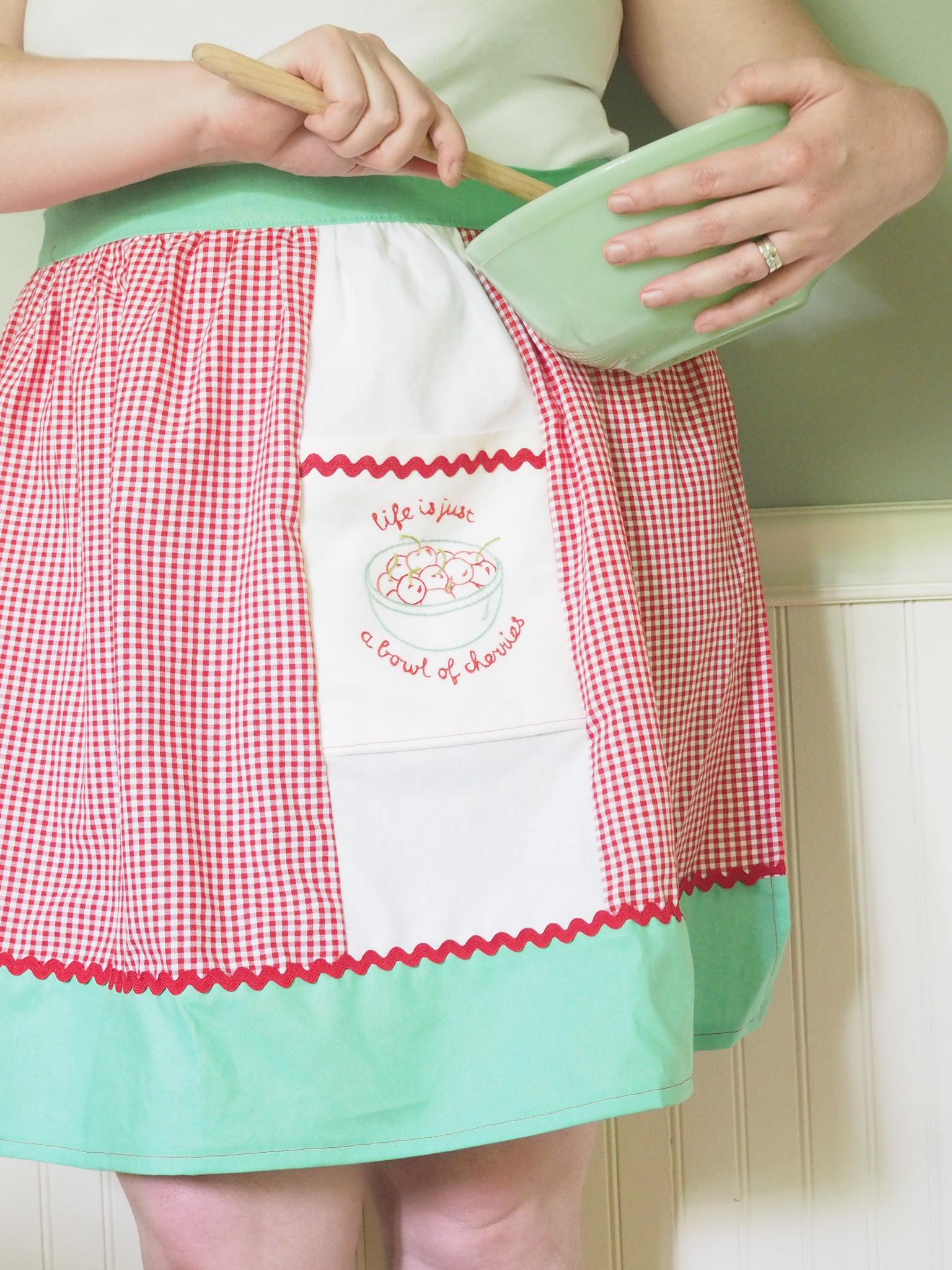
I've also got something else new that I'm super excited to share with you - my first sewing pattern! The Ms. Billingsley Apron (named for June Cleaver herself, Barbara Billingsley) is the answer to the question "but what do I do with the embroidery after I've finished it?"

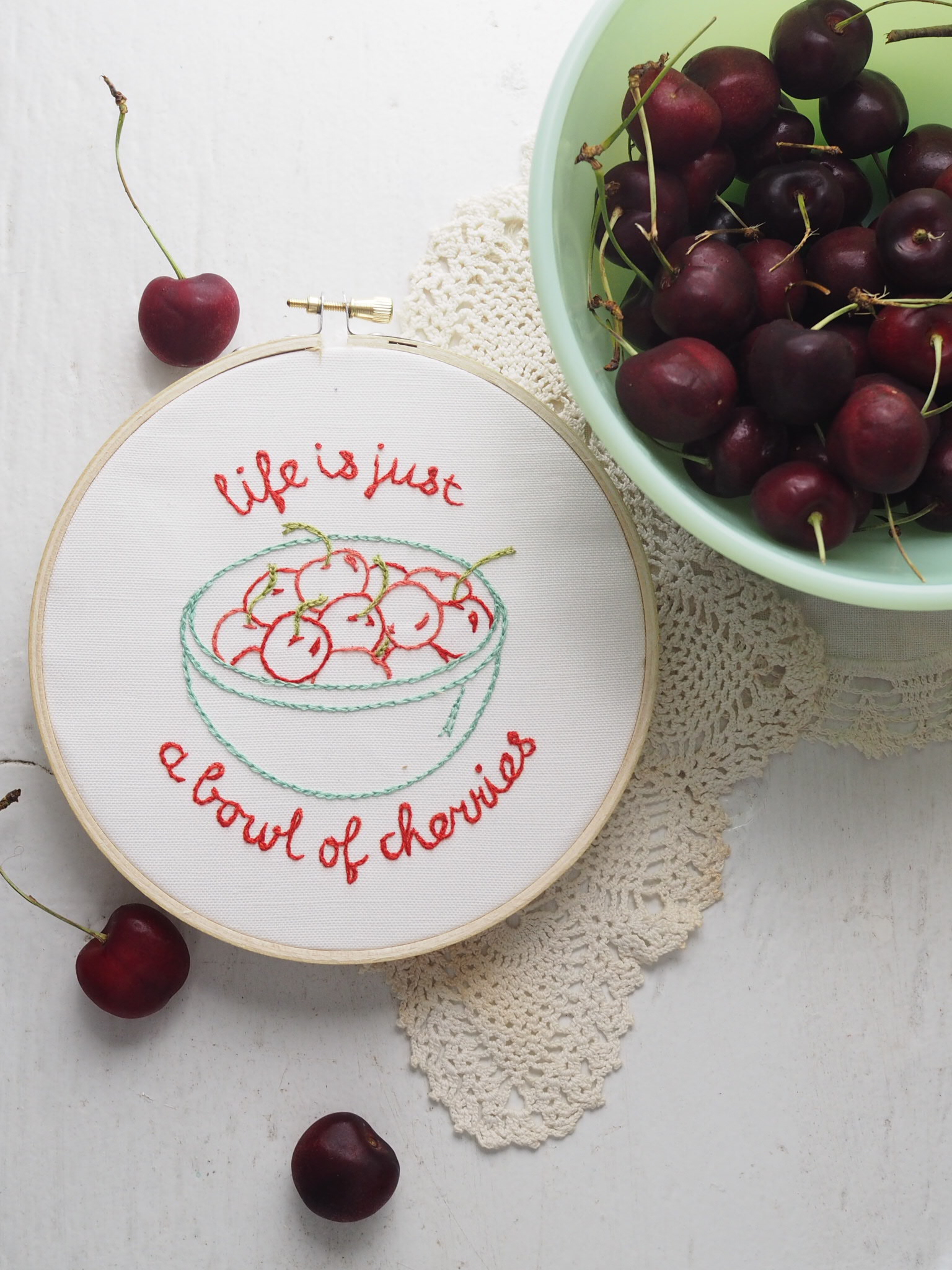
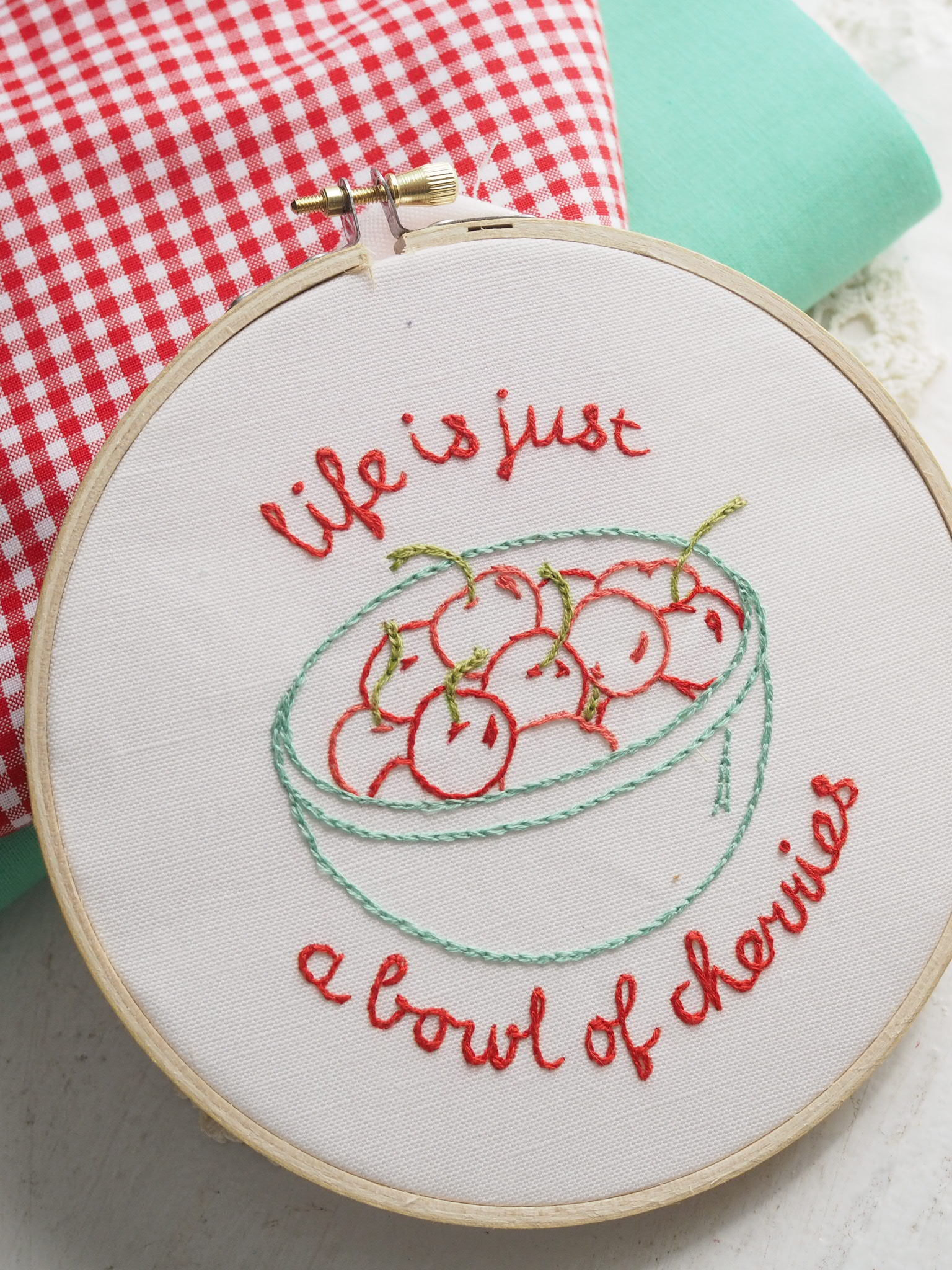
Designed to fit any of my 6" hoop designs, the easy-to-sew, but elegantly finished Ms. Billingsley apron can also be used to show off a single quilt block or panel of a favorite fabric. You can find the pattern as a downloadable PDF (complete with Bowl of Cherries template), or I've assembled some kits featuring the sample fabrics shown above paired with a Bowl of Cherries complete embroidery kit


Introducing Nerio

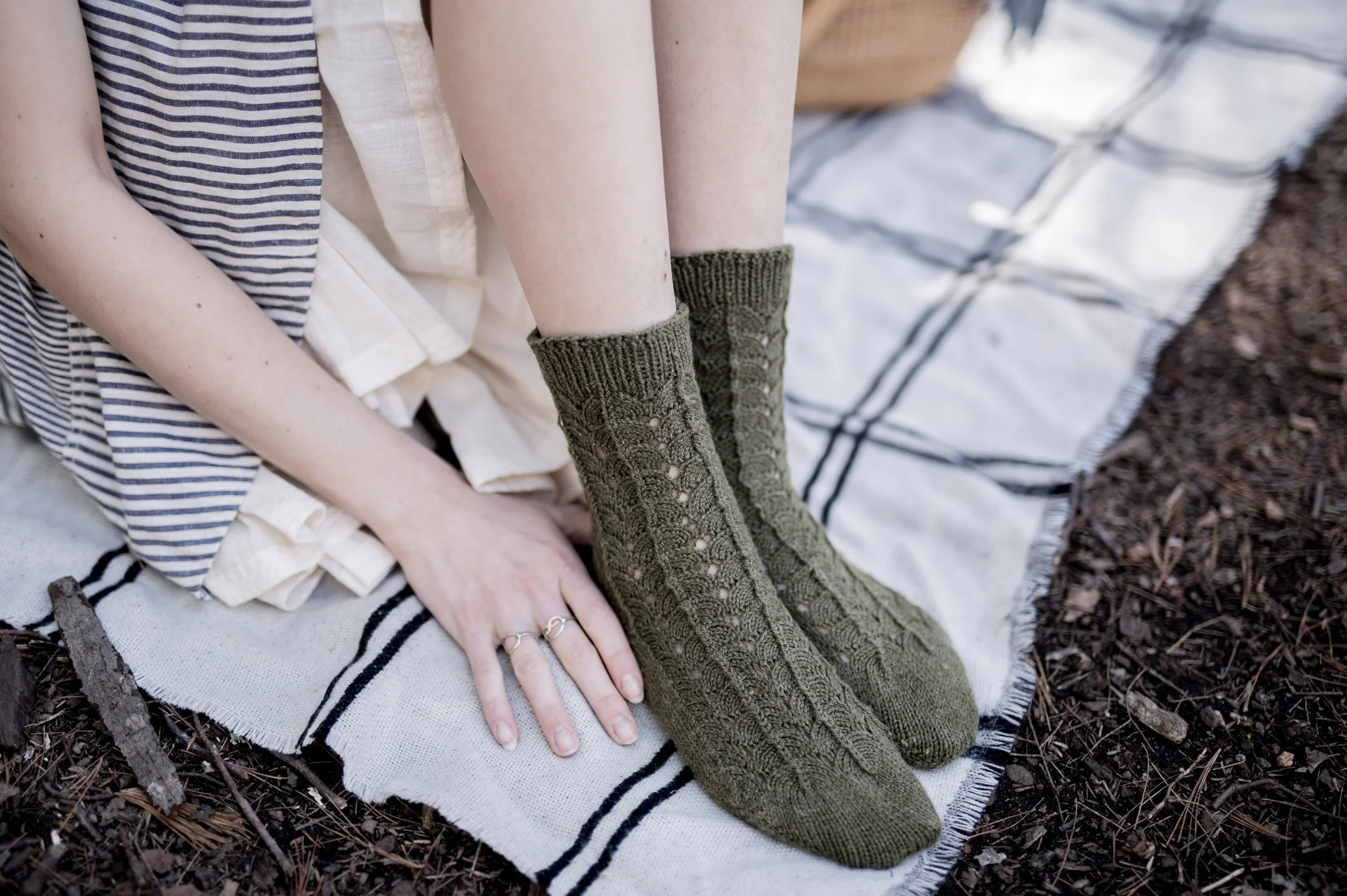
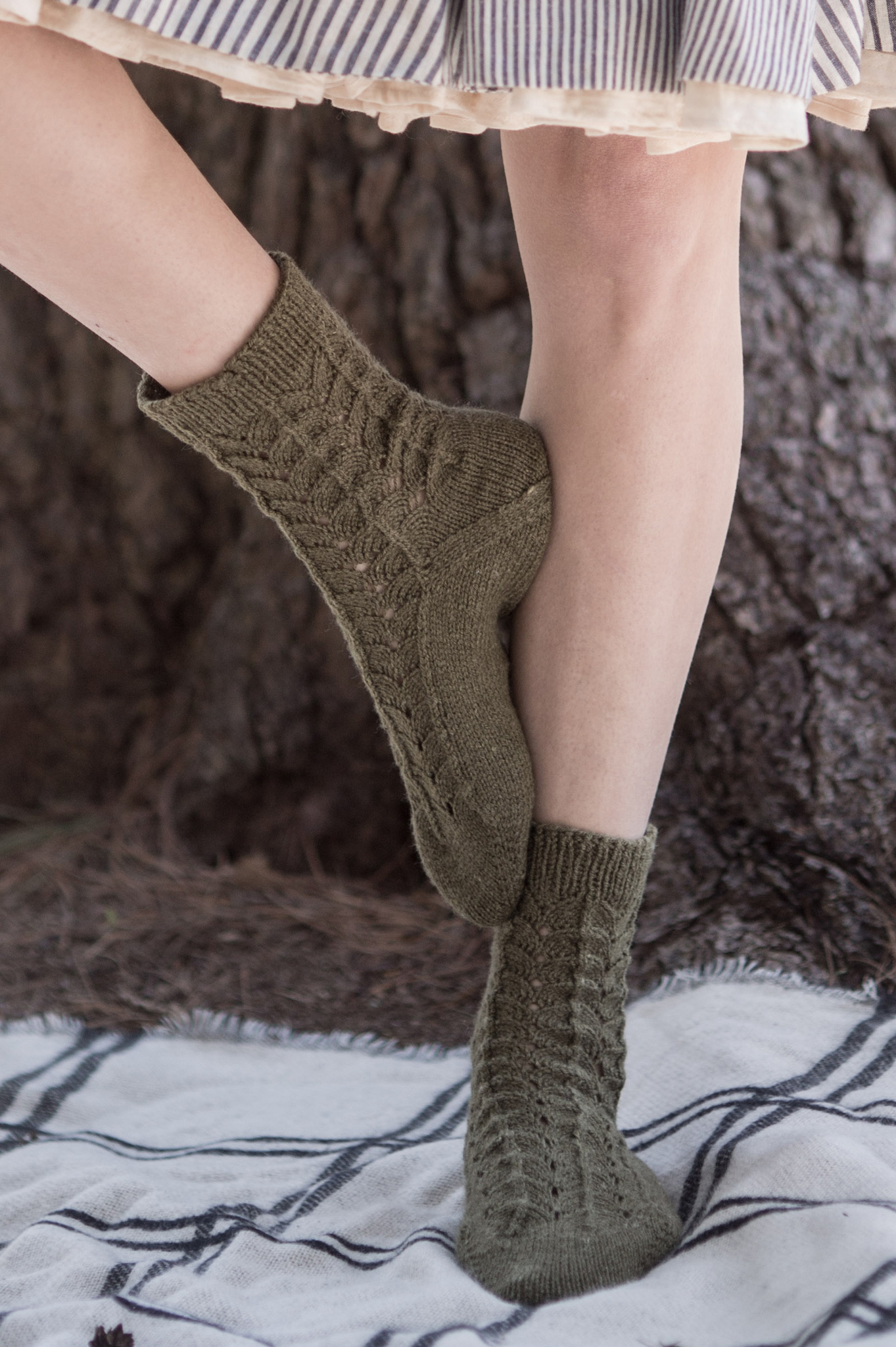
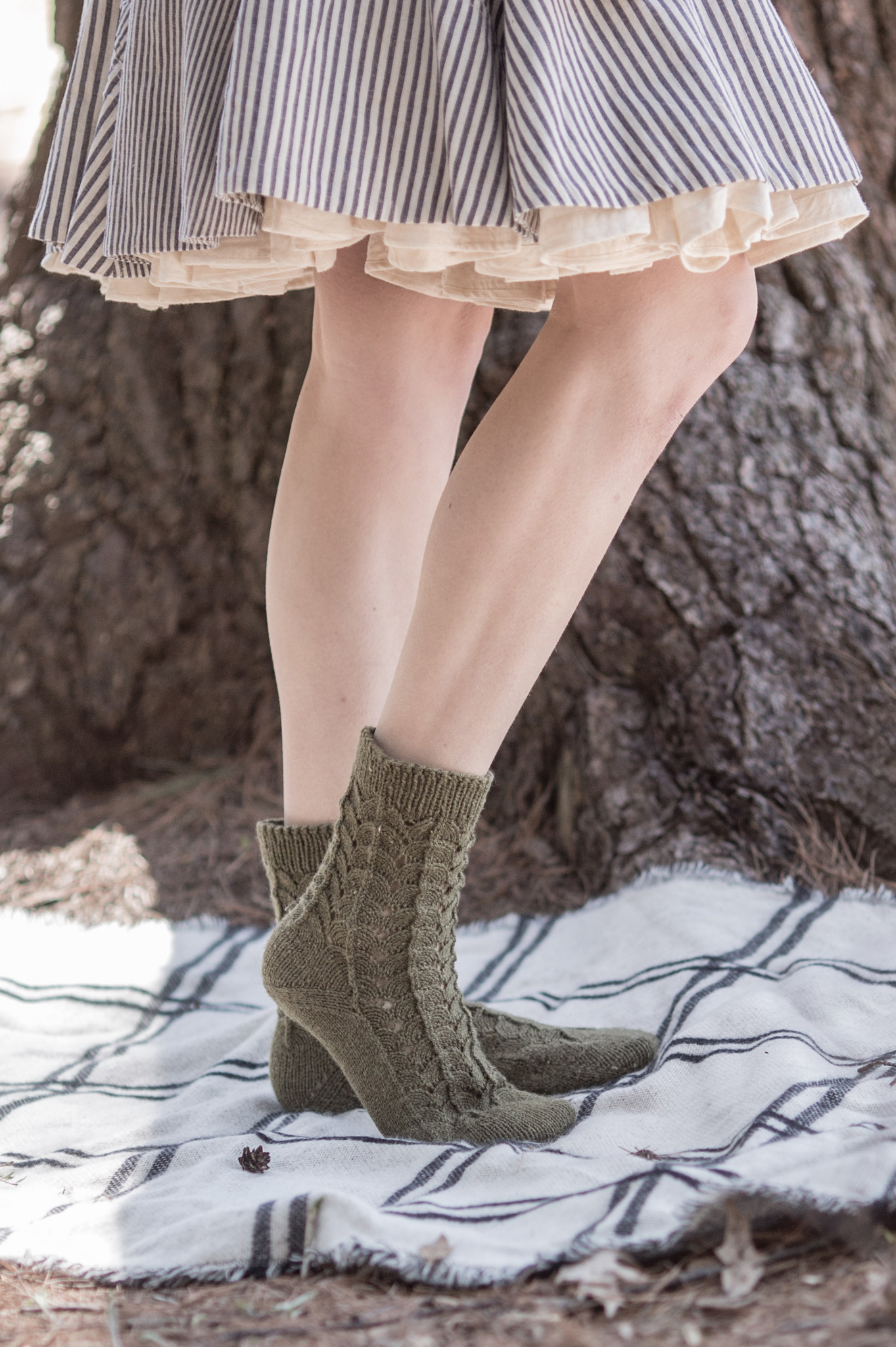
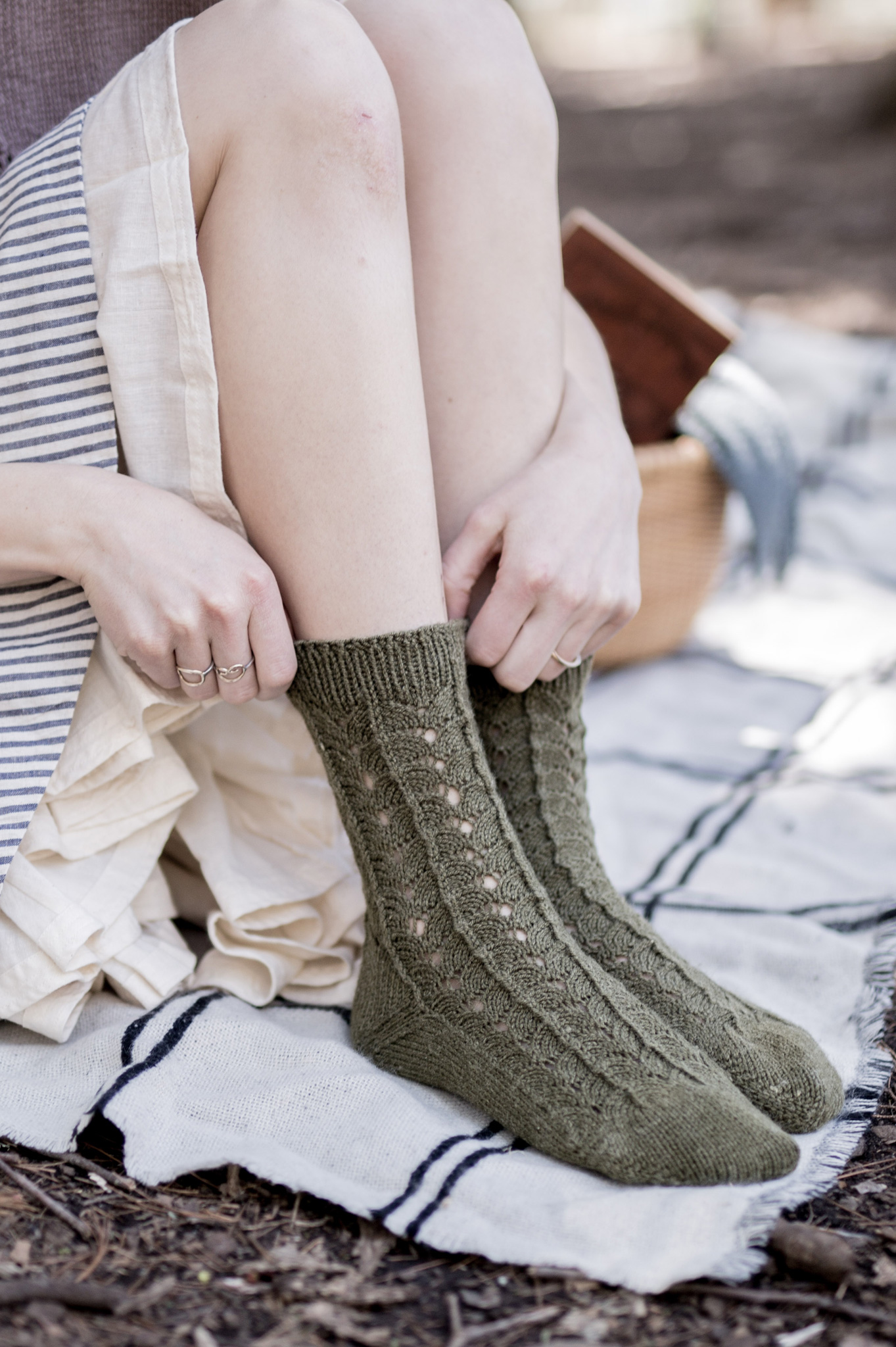
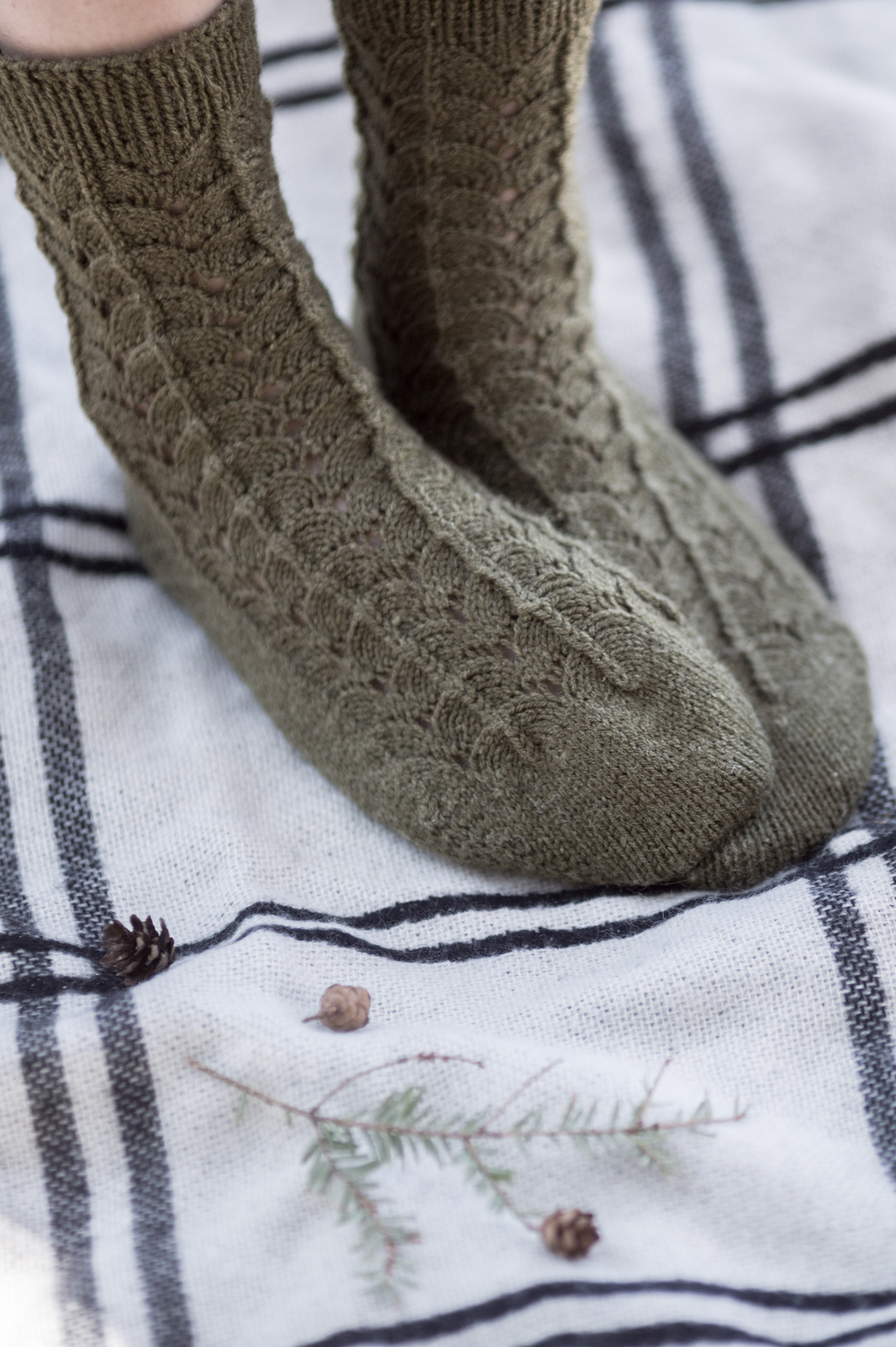
Meet Nerio, my latest (and 21st*!) release with Quince & Co. yarns. These quick-knit socks feature a deceptively simple lace pattern reminiscent of dragon scales. Toe-up construction with an afterthought heel keep the knitting flowing so these little beauties will practically hop (or should I say fly?)  off your needles. 

Nerio can be purchased as an individual pattern ($5.50 USD ) or as part of the five-pattern Tern 2018 collection ($18.00) from the following sources:

Ravelry | Ms. Cleaver | Quince & Co.

*And the third to be styled with that skirt!

Nerio -PDF Pattern
$5.50

Knit from the toe-up with an afterthought heel, these brief little socks feature a pretty lace design reminiscent of dragon scales that makes these a fun knit.

Shown in 8½“ / 21.5 cm foot length to fit women’s US size 8½ / 39 shoe

yarn 
tern / seaweed 404 
2 skeins

needles 
set of five dpns in size US 1½ / 2.5 mm

gauge 
29 sts and 42 rnds = 4” / 10 cm in stockinette stitch, before wet blocking 
31 sts and 44 rnds = 4” / 10 cm in stockinette stitch, after wet blocking

skills required 
Judy’s magic cast on, Jeny’s surprisingly stretchy bind off, grafting (links provided); increasing, decreasing. Charts and line-by-line instructions included.

Also available as part of the Tern 2018 collection from Quince & Co.