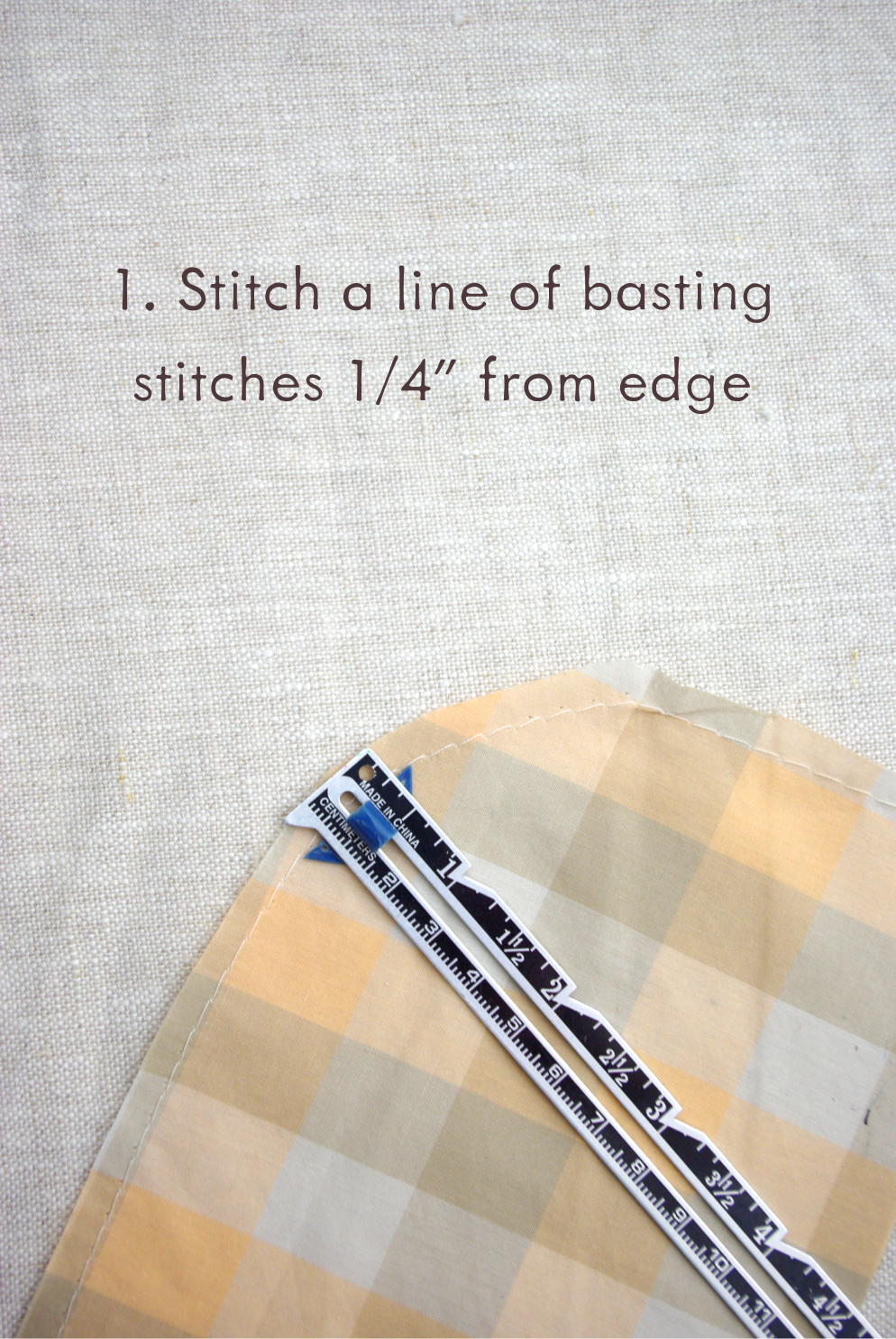
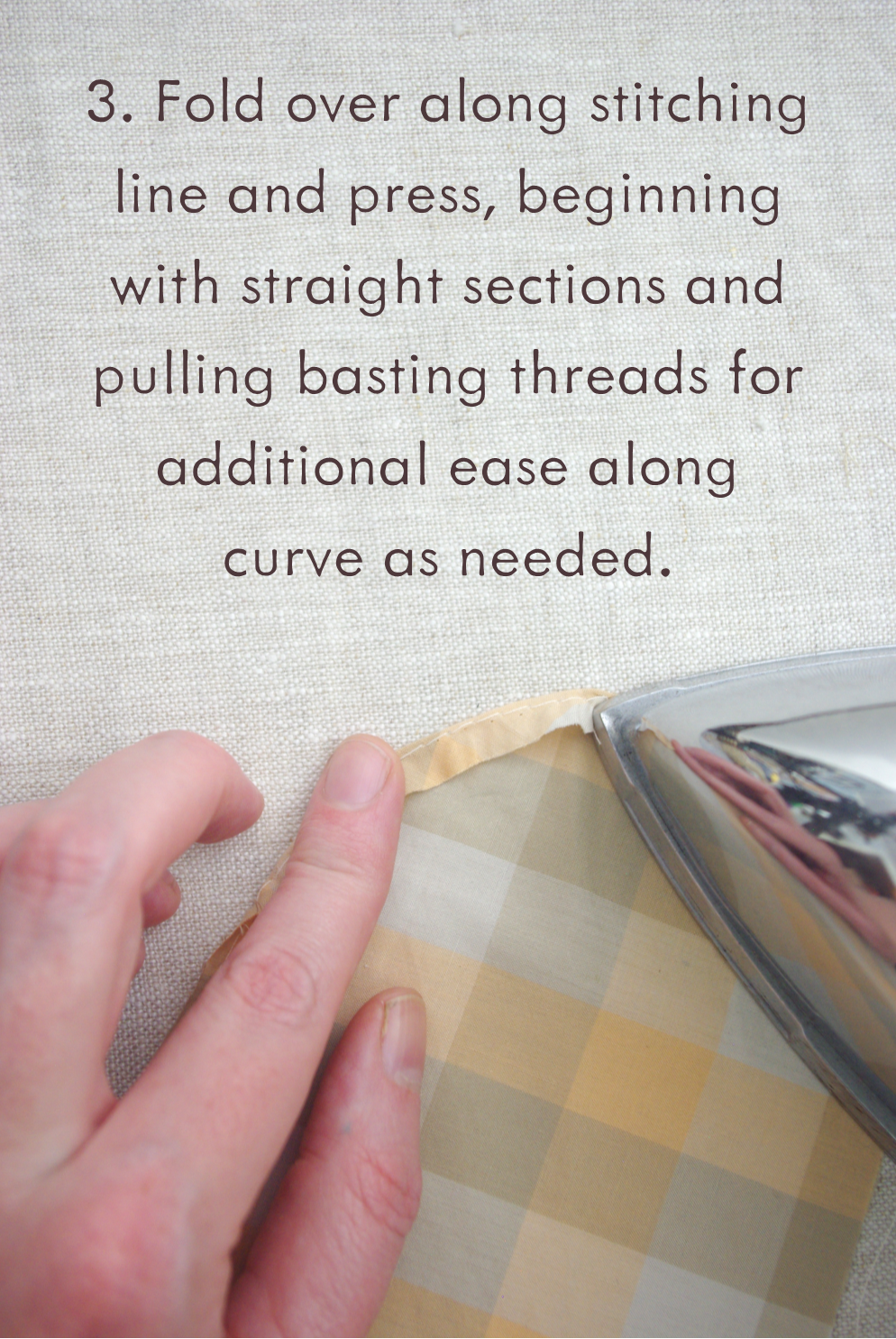
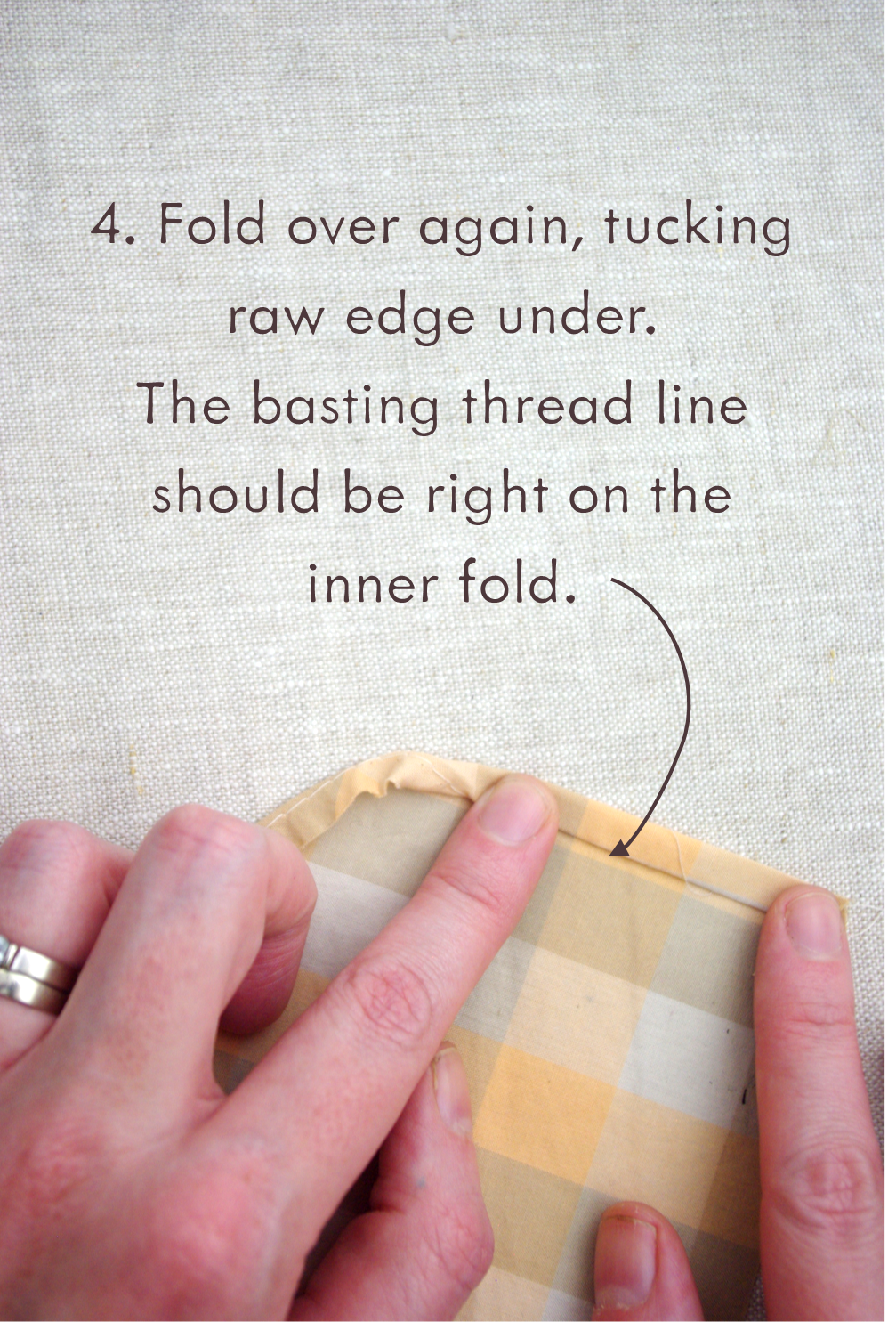
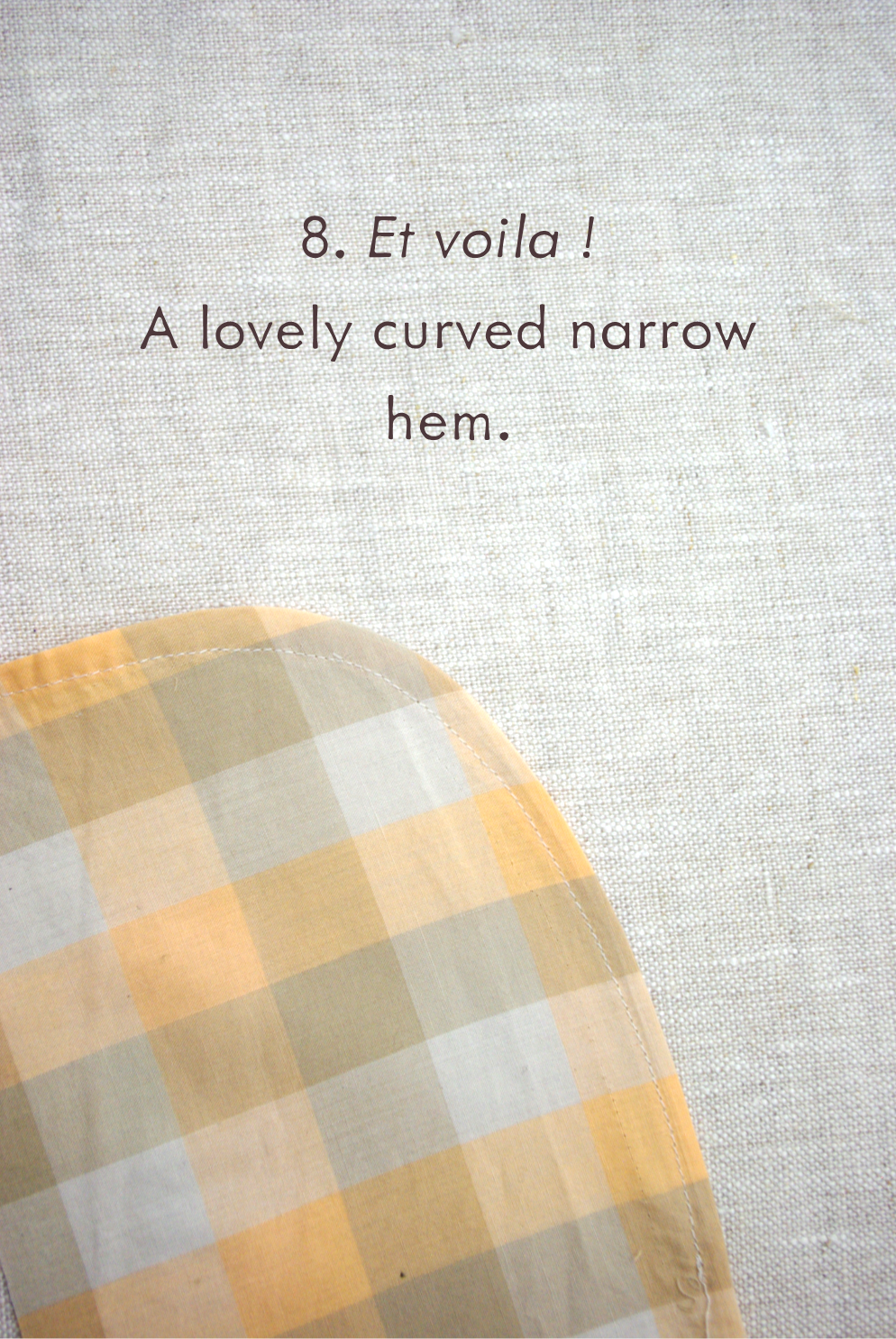
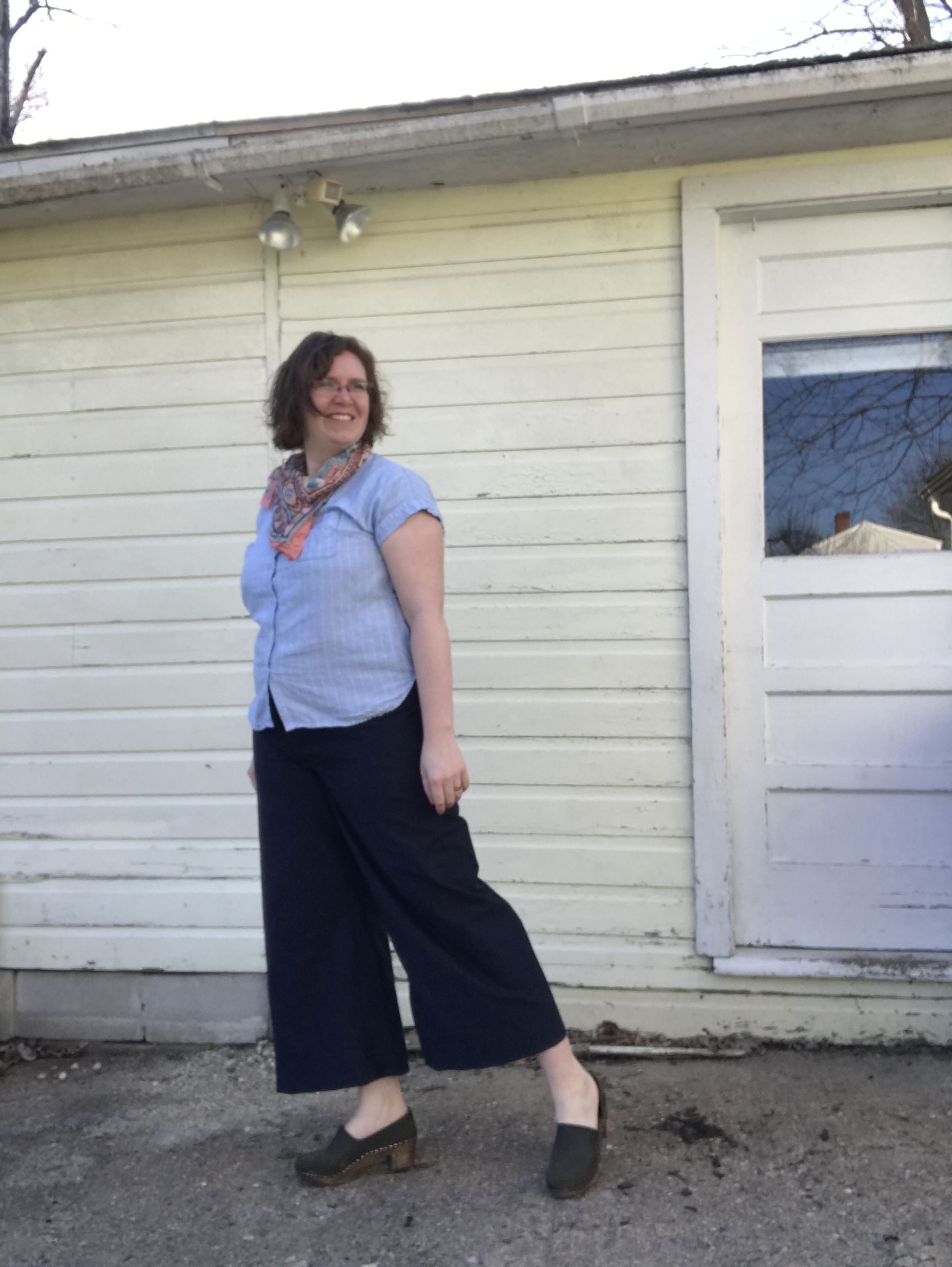
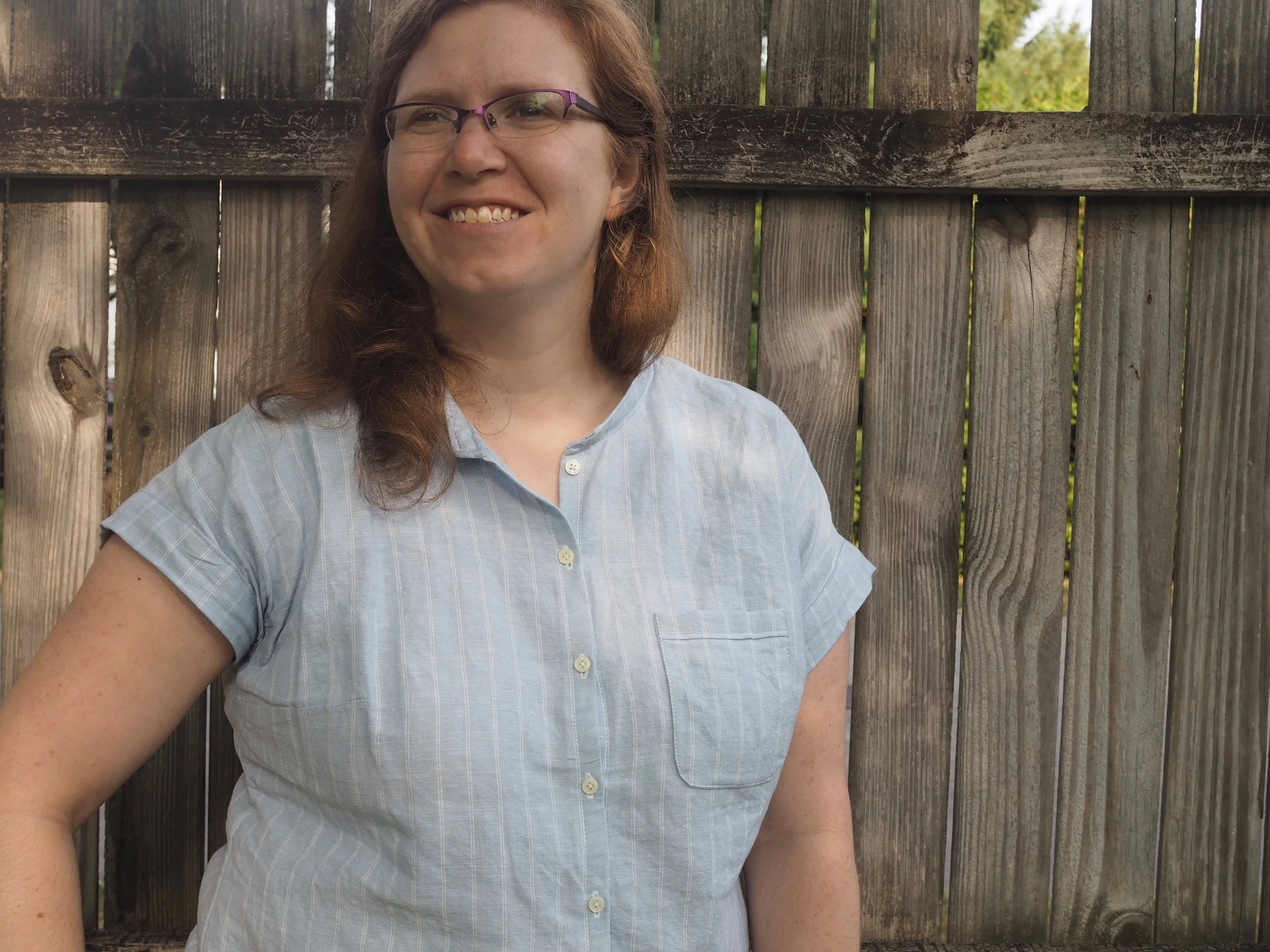
I love a good button-up, and if it's got that classic shirt-tail hem? All the better! But as much as I love the look of the sweeping shirt-tail hem, it can be a bit fiddly to actually hem all those curves, so here's a little trick I use to make sewing them just a little bit easier.
Those Last Days of Summer
Those last precious days of summer.
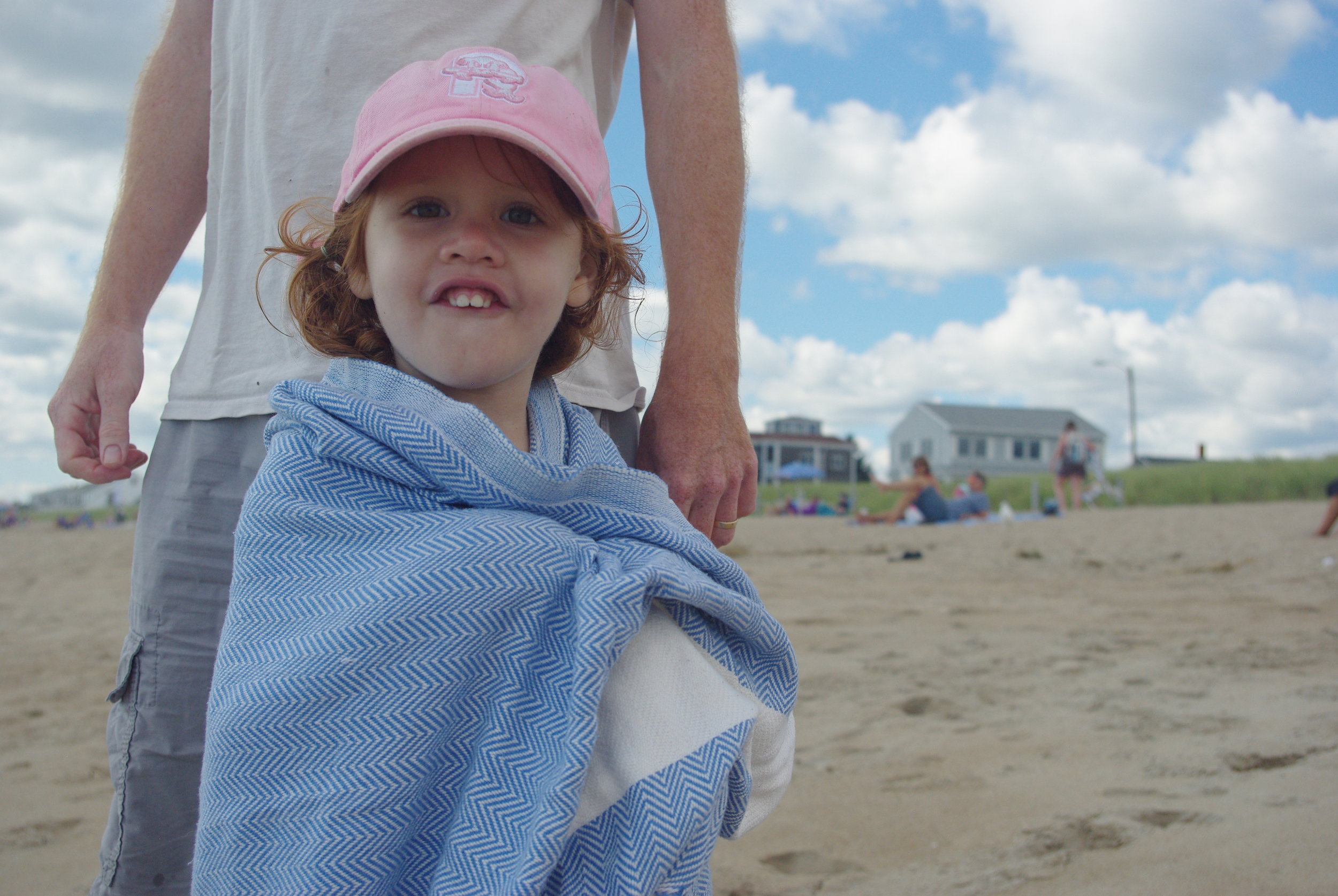
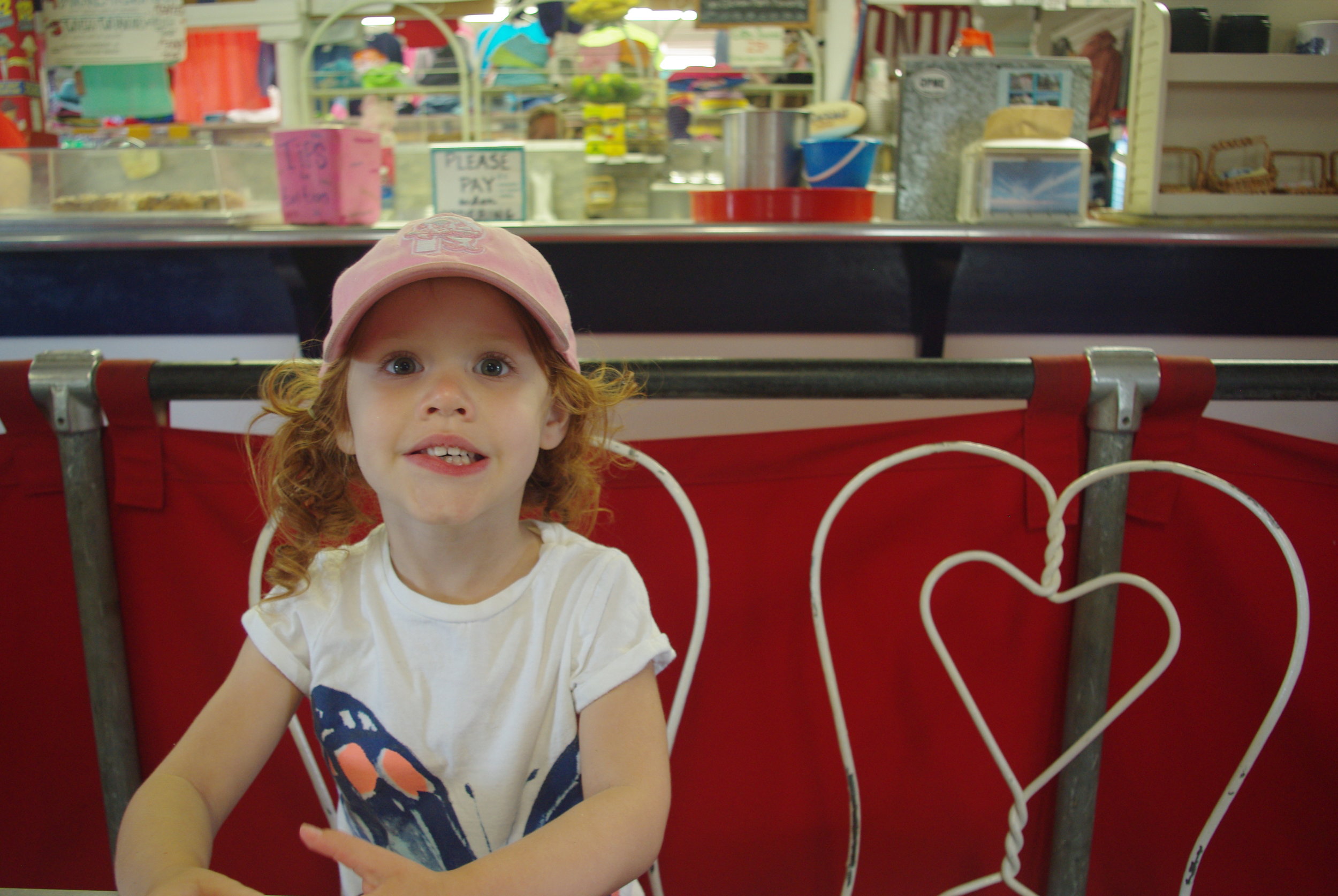
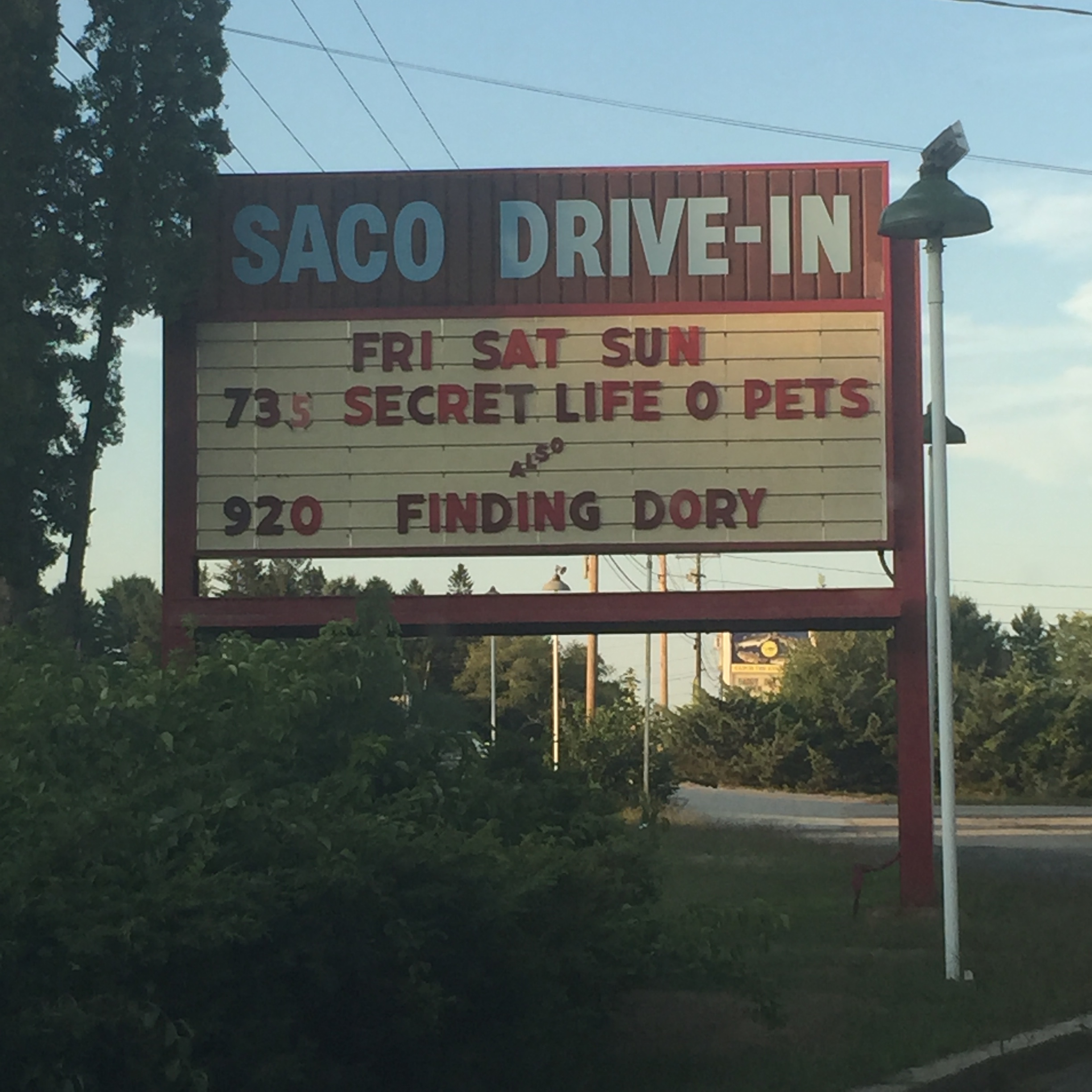
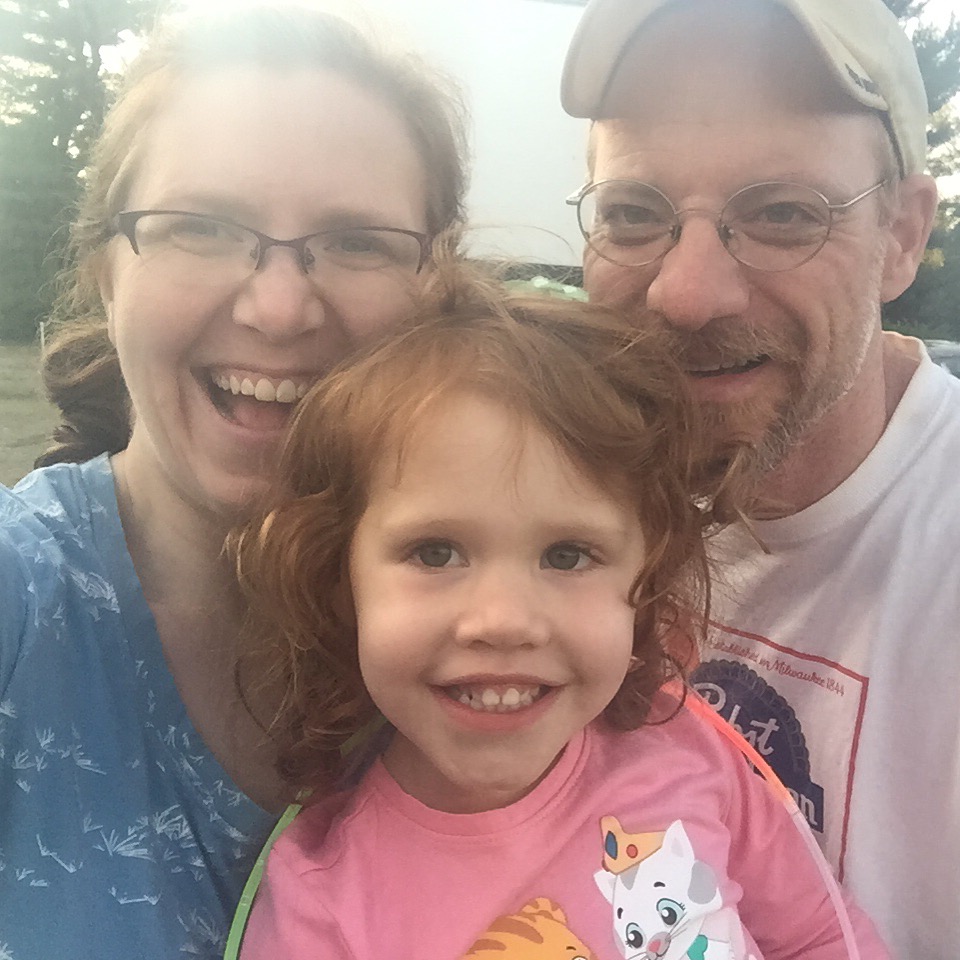
In reality, our schedule doesn't really change all that much between the seasons, but there's something about the marker of Labor Day weekend that kicks us into gear to finally get to our favorite beach soda fountain and make the trip to the Drive-In movies. Because even if our schedule doesn't change, those things pretty much shut down come September. So we got our ice cream cones and popcorn and wore our glow bracelets and sunscreen for one last summer fling.
And it was fabulous.
Things I Made This Summer
There's been so much knitting stuff this summer (which seems like an odd phrase to write) that I've sorely neglected sharing some of the other projects I've been working on!
Which is a shame, because I've been working on some cool stuff these past few months.
Like, I made a backpack!
The pattern is Made by Rae's Toddler Backpack, to which I added the optional lining, and some self-drafted pockets on the outside with mesh fabric, elastic and bias tape. It looks super-impressive, but is surprisingly easy to make.
Also awesome?
Lobster shorts!!
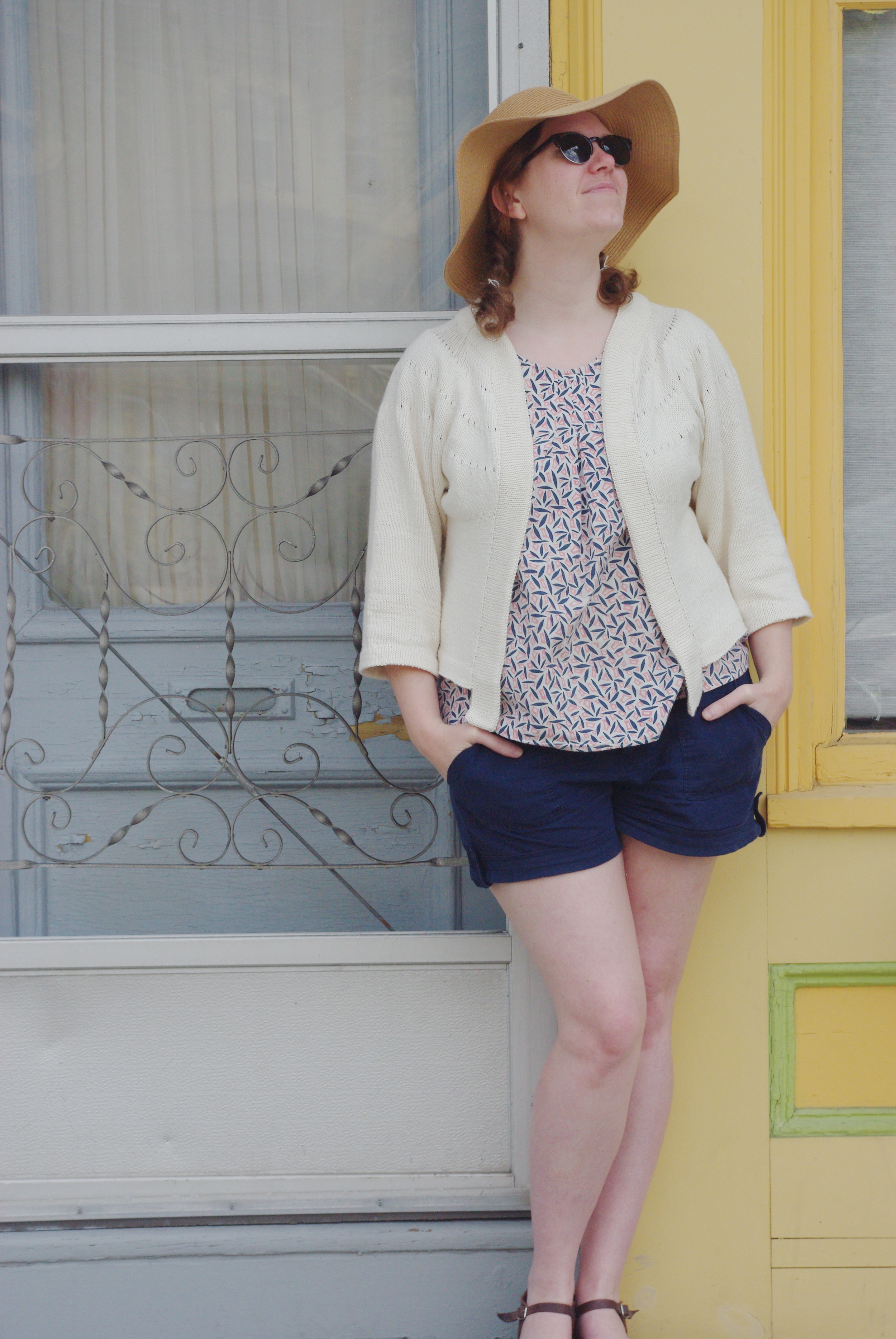
There's been three different Renfrew tees that have been getting a lot of wear (including the white one above and this beauty):
I made baklava for the first time and garlic scape hummus. I've baked tiny cherry pies and at least three versions of a buttermilk tea cake trying to get my recipe perfect (almost there...)
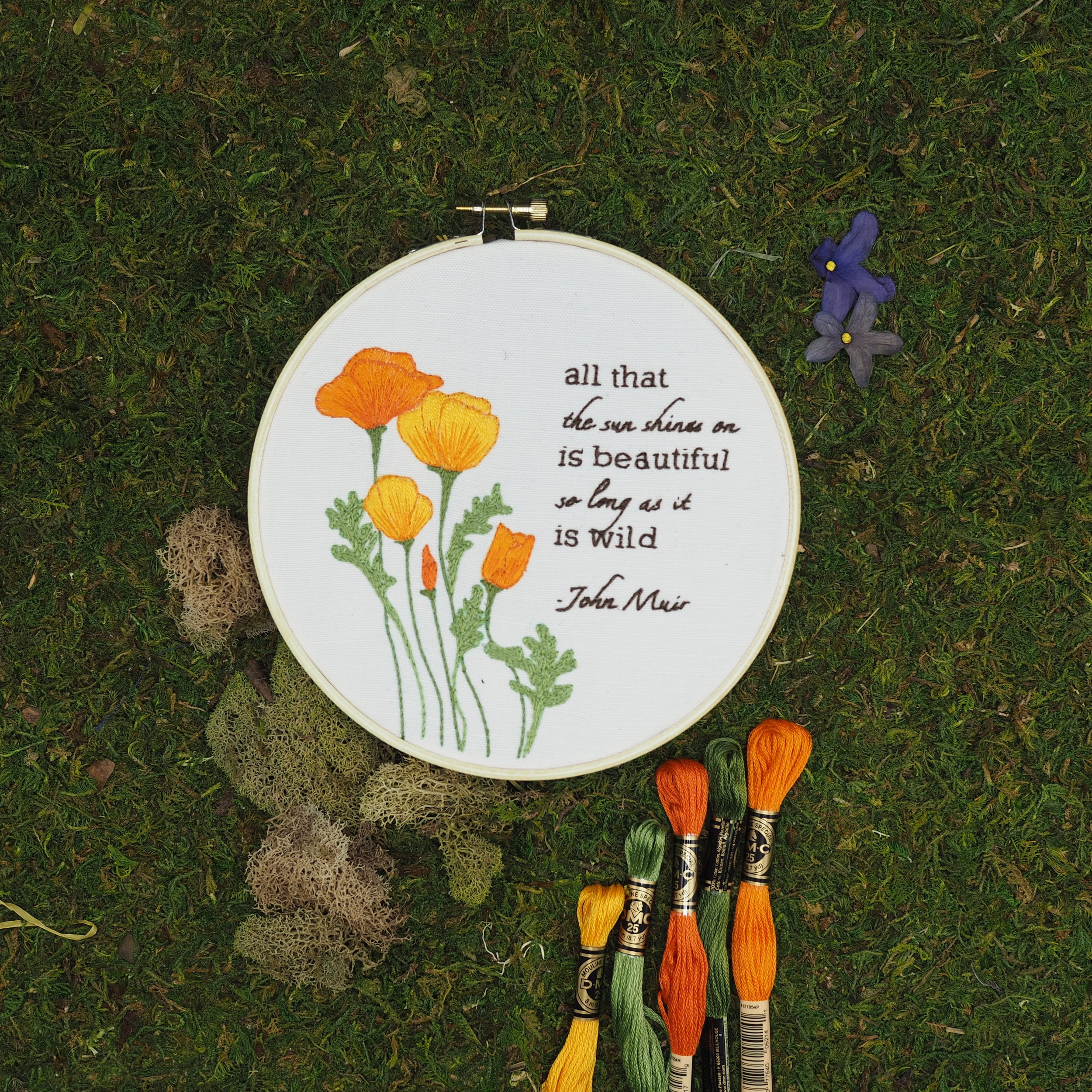
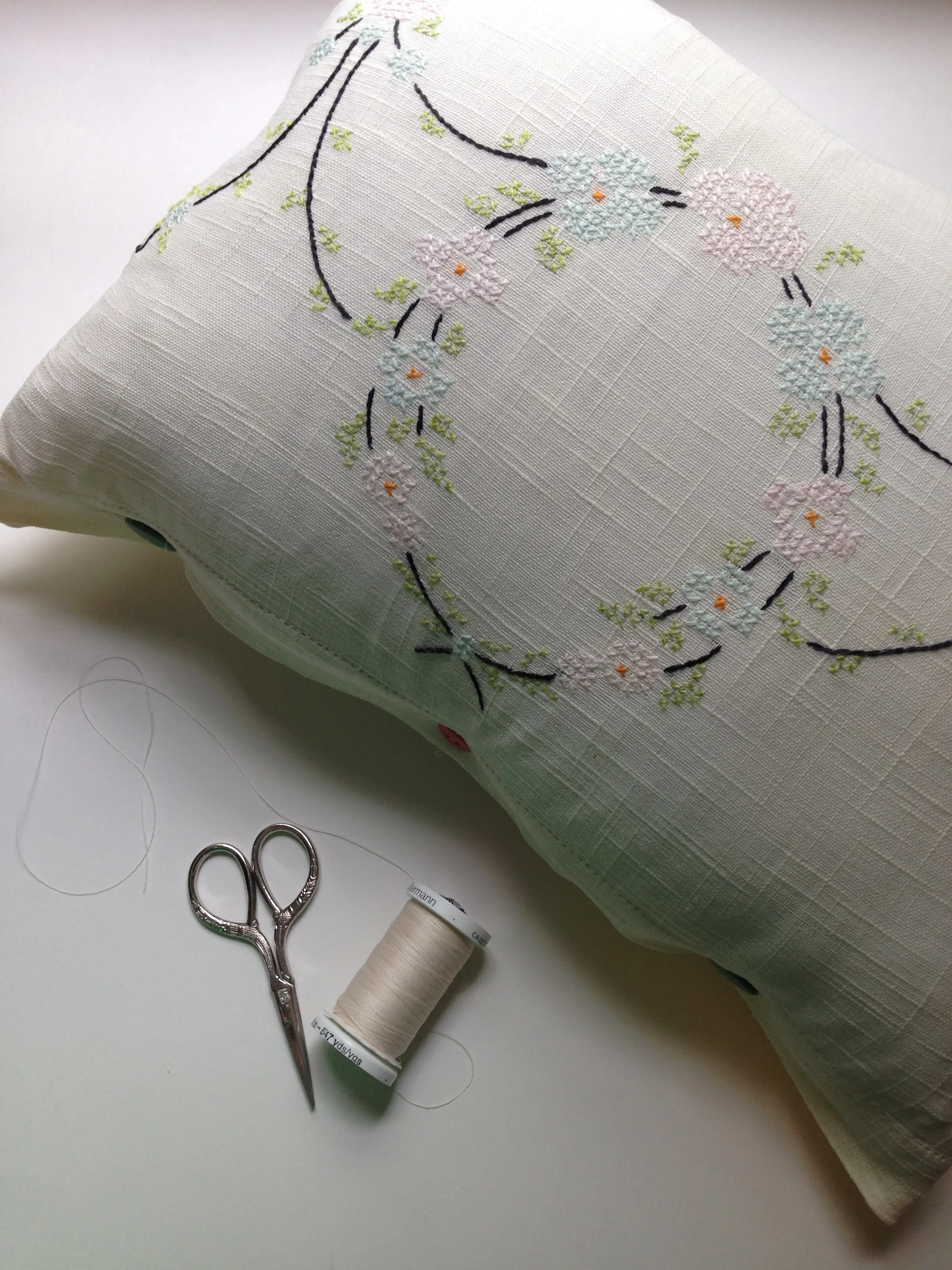
I've done some embroidery:
I've whipped up quick little projects:
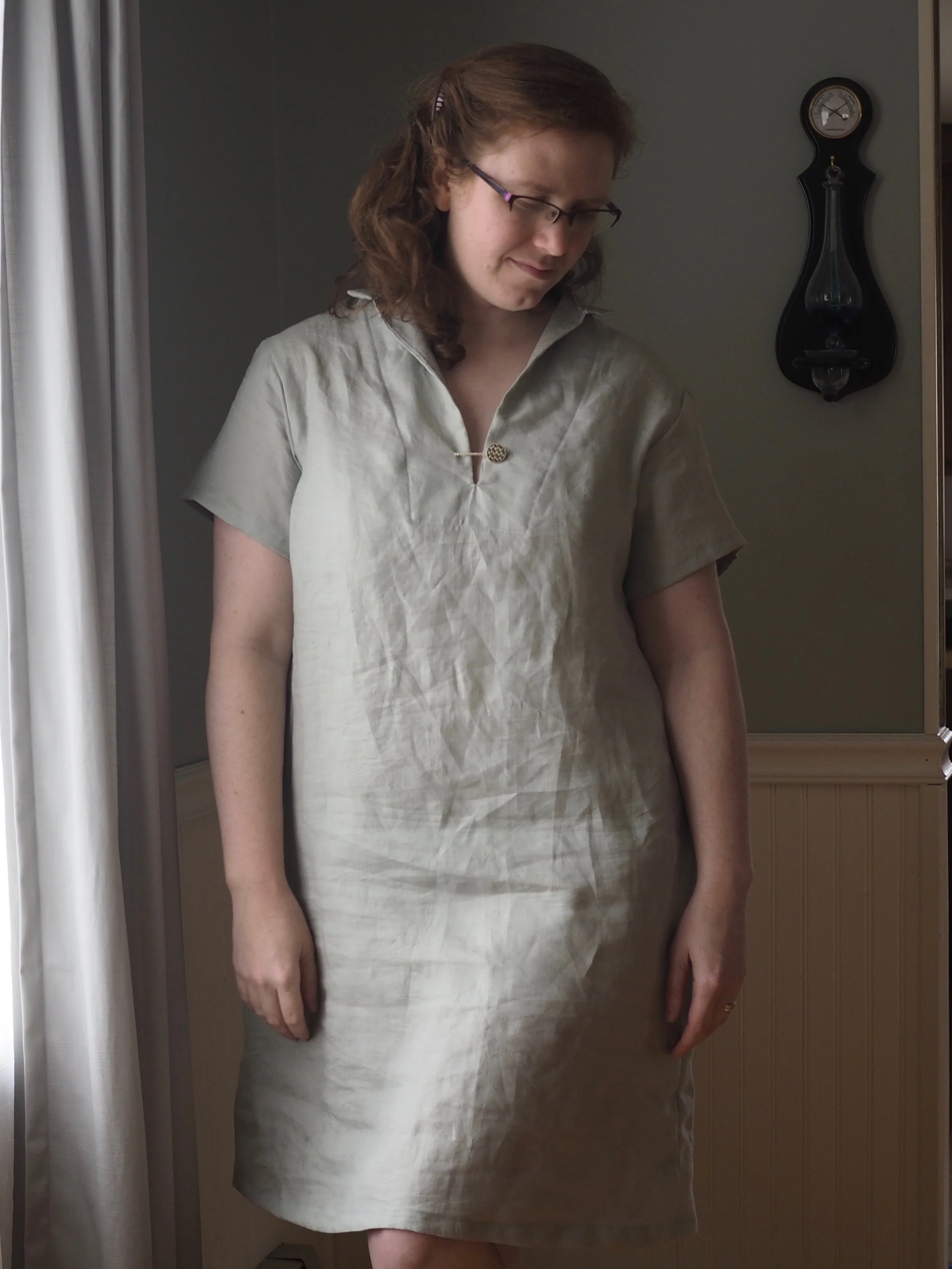
And sewn another dress LMC refuses to wear even though she picked out the fabric from my stash.
Let's just say, it's been a productive summer. :)
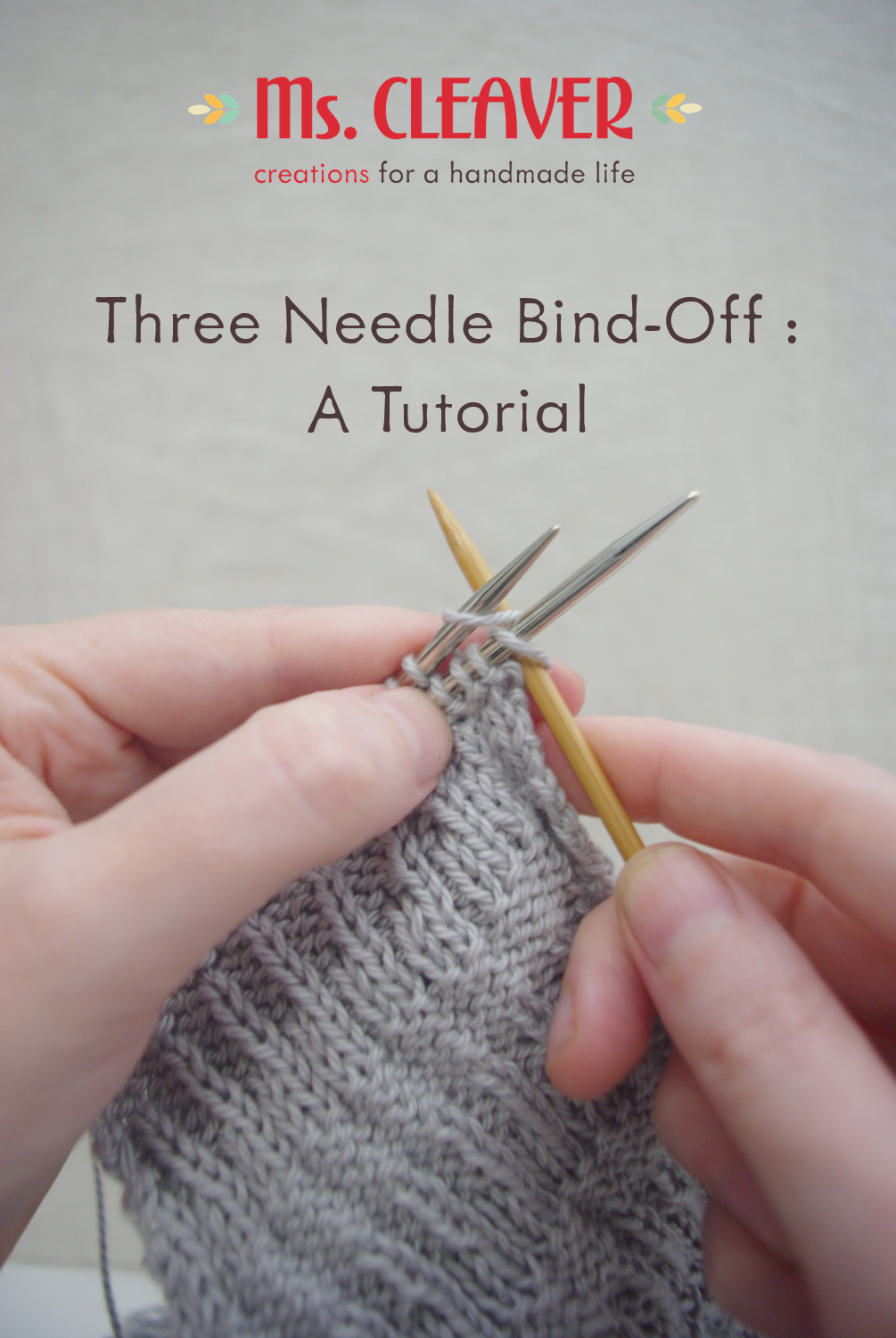
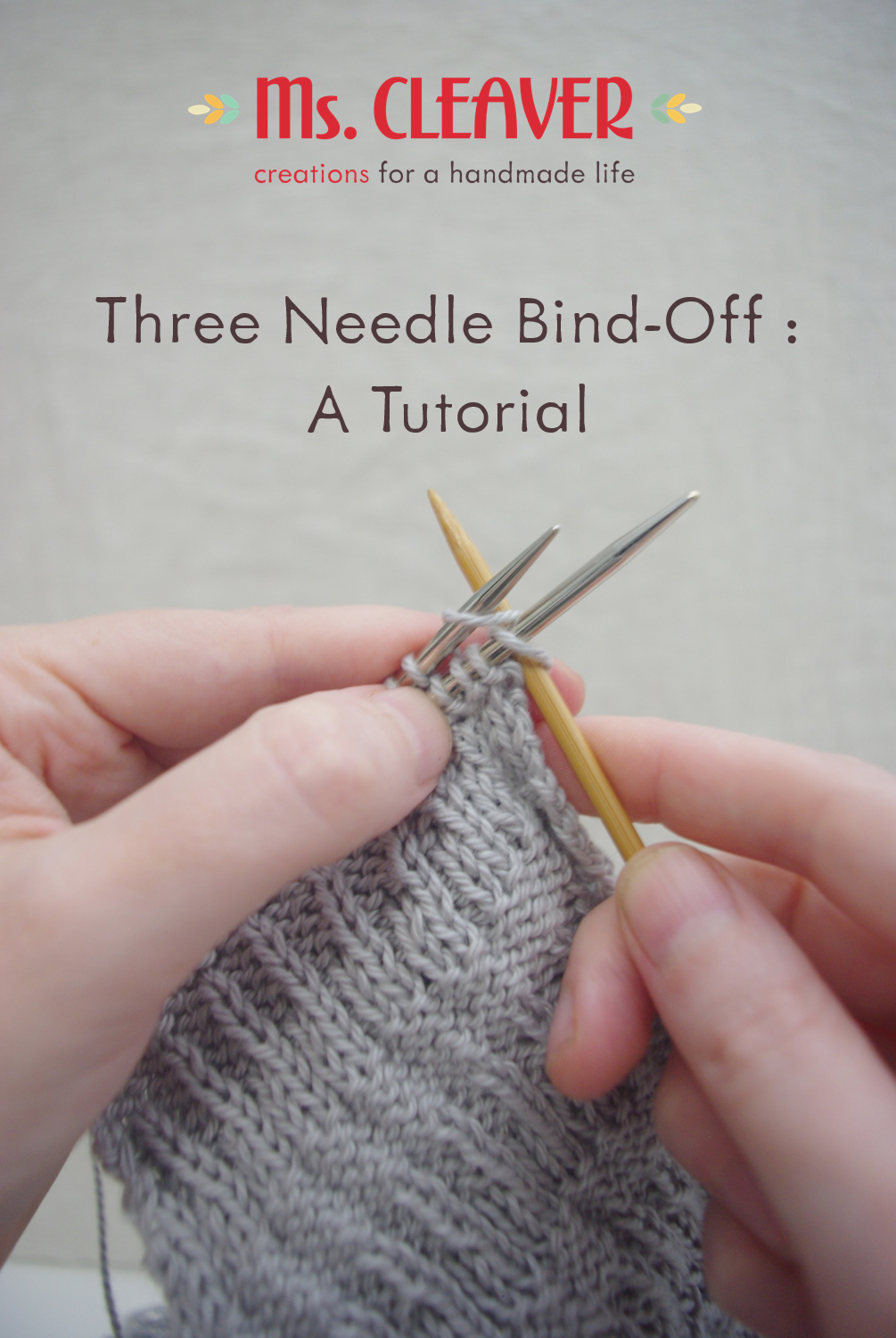
Three Needle Bind-Off - a quick tutorial
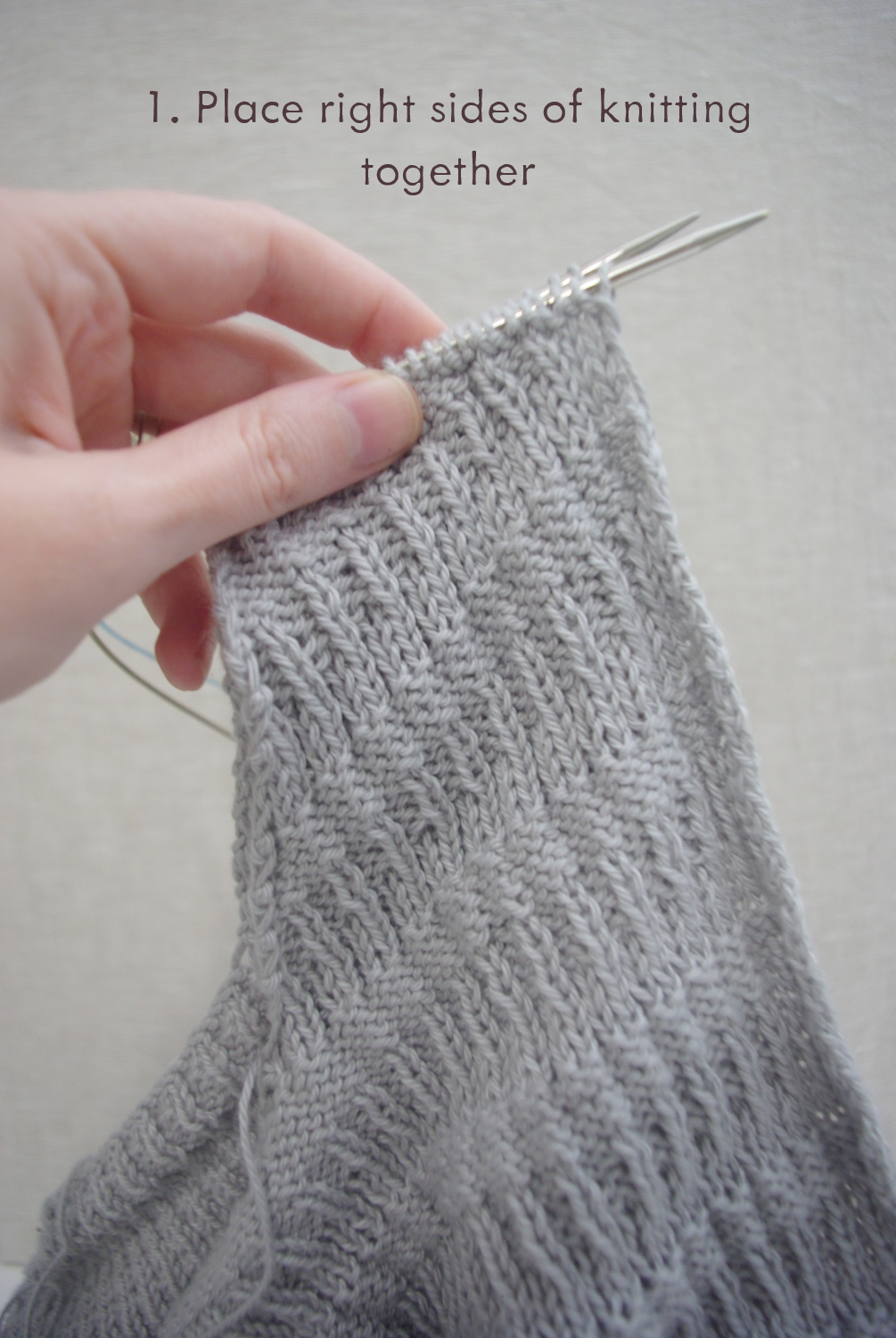
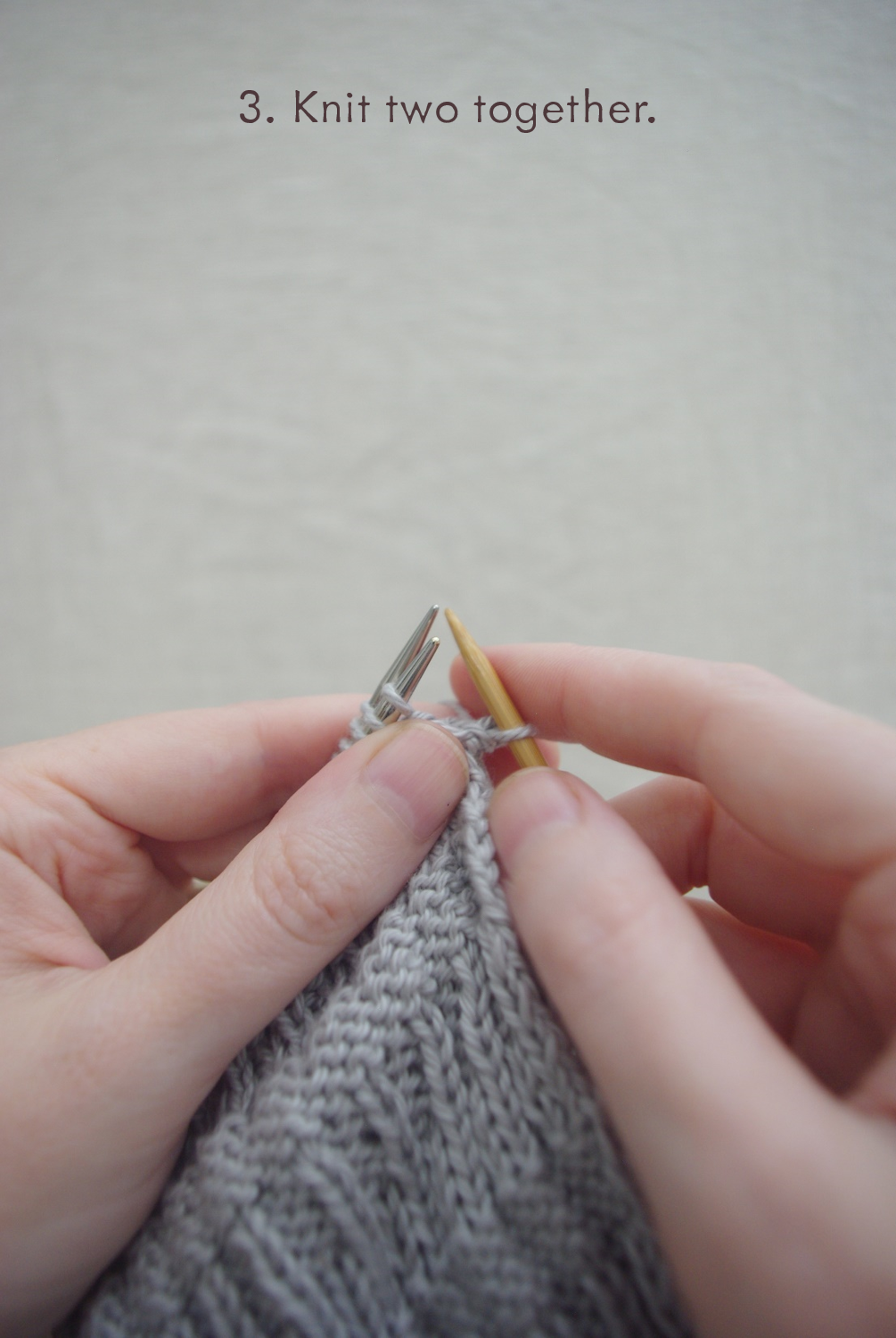
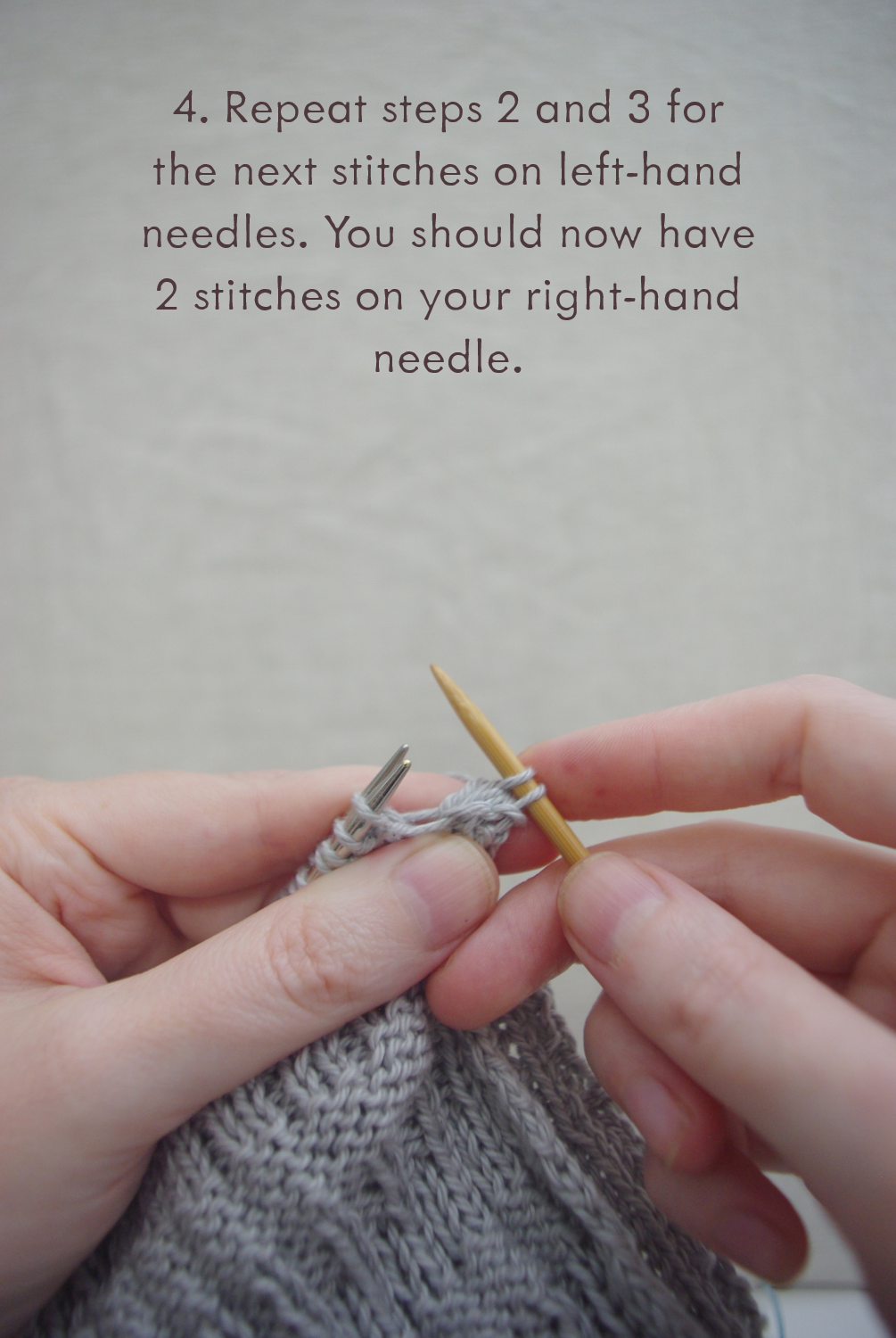
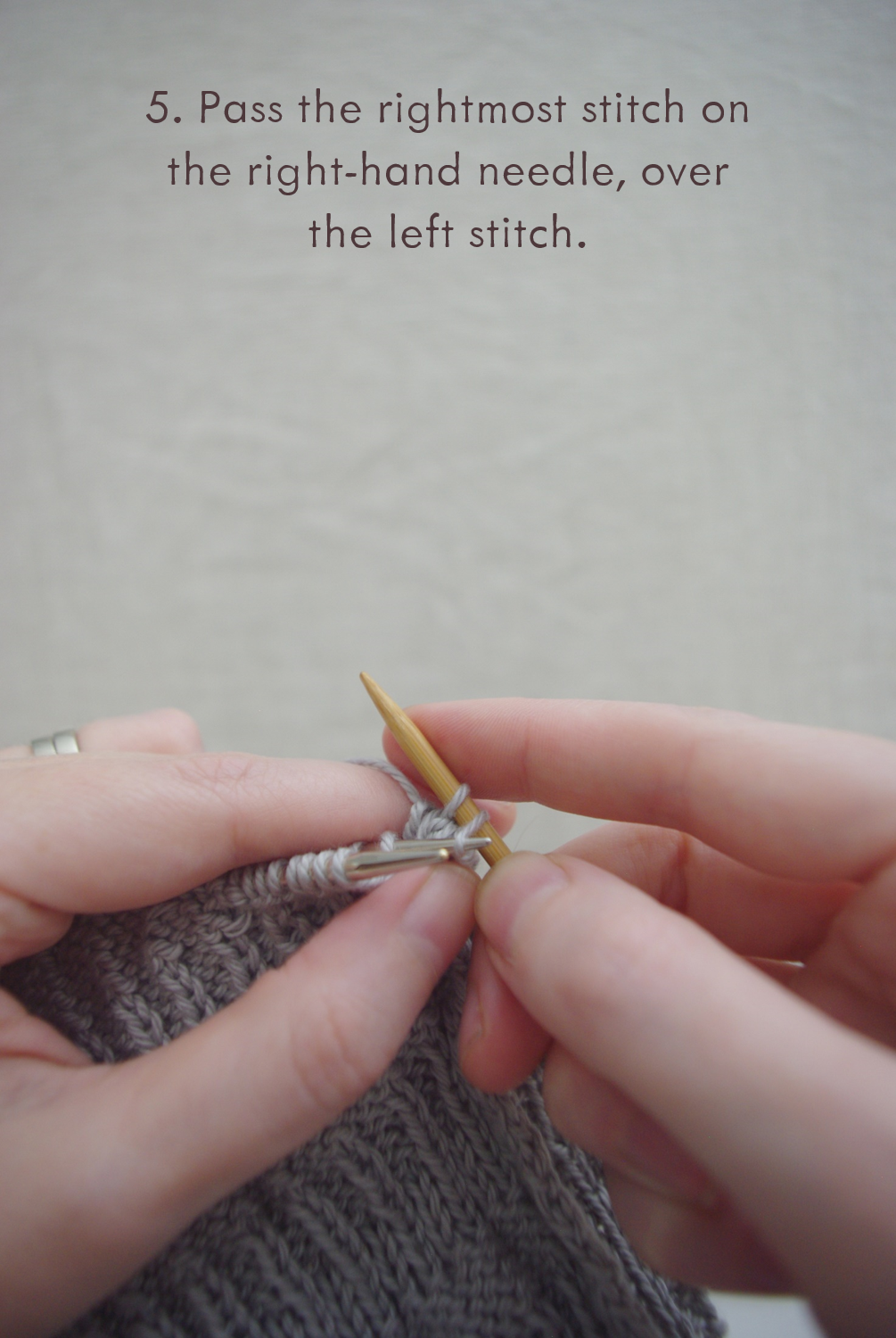
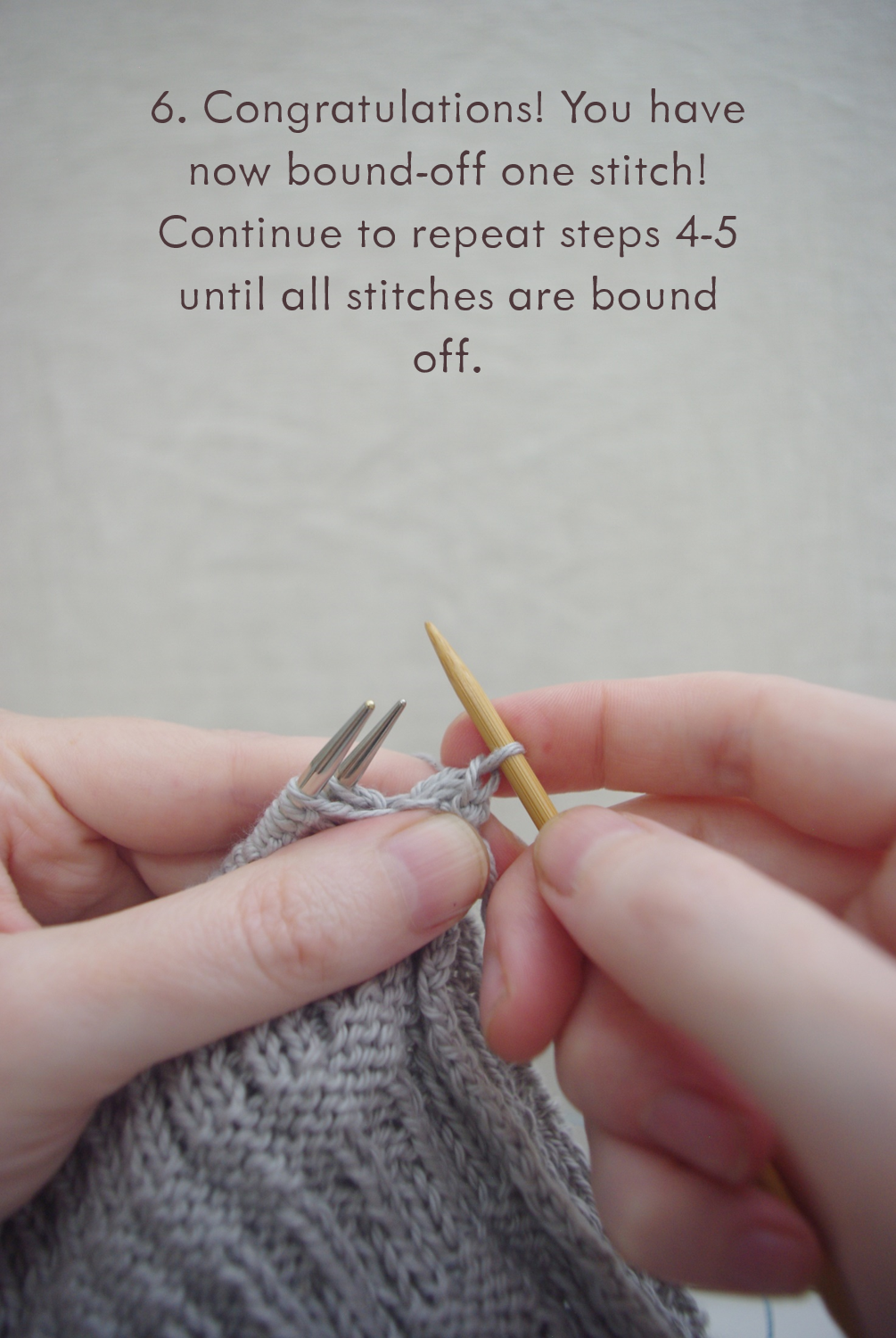
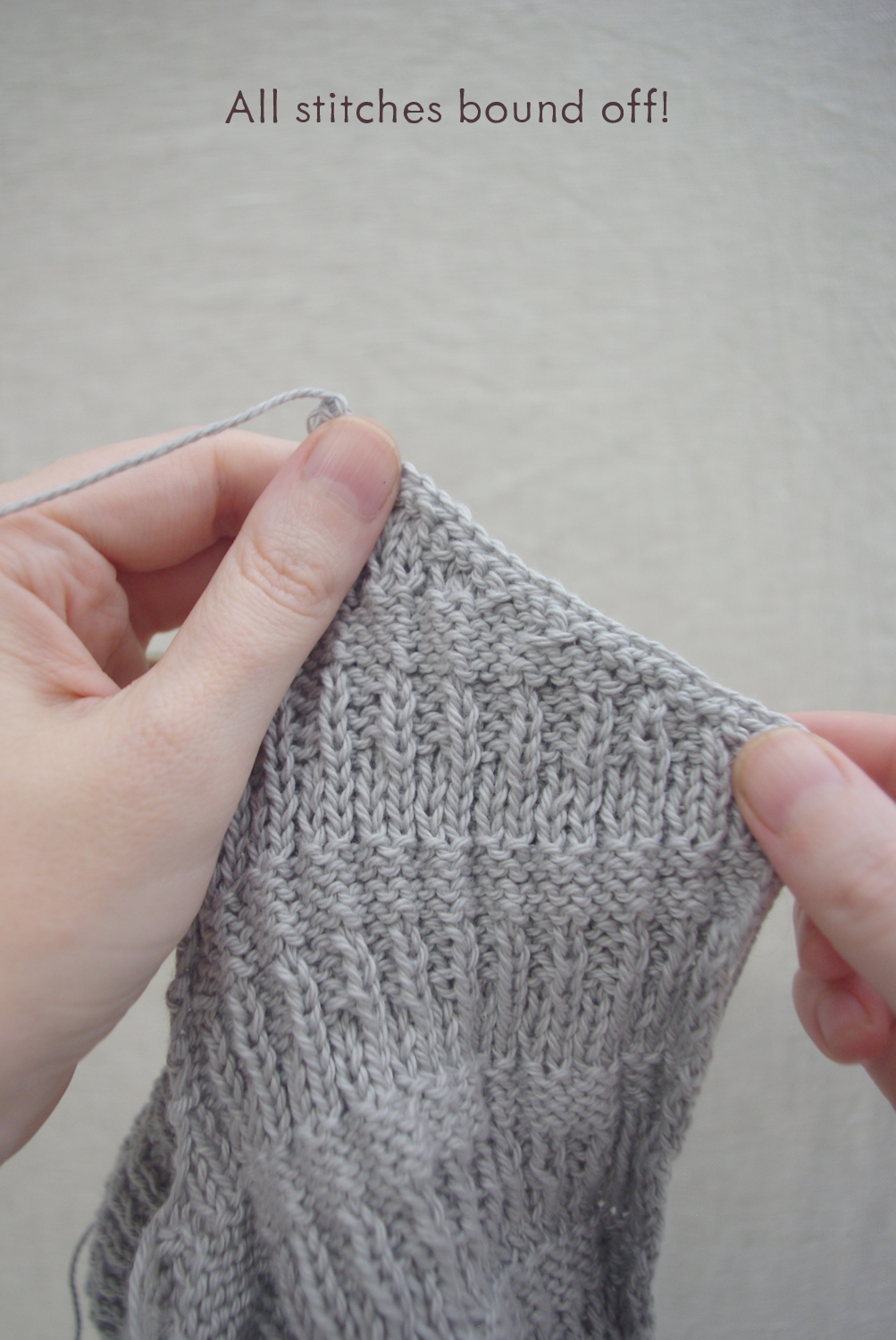
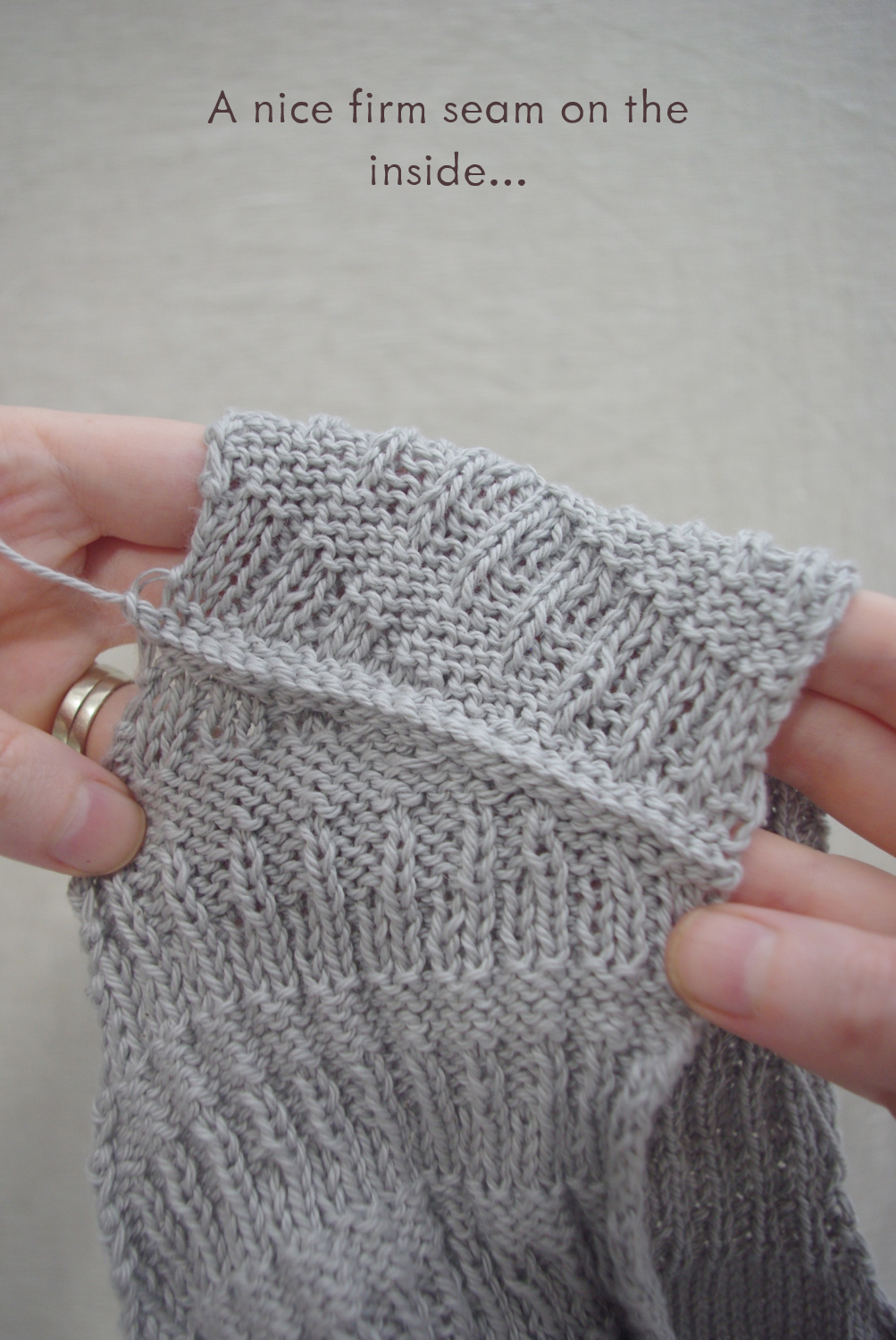
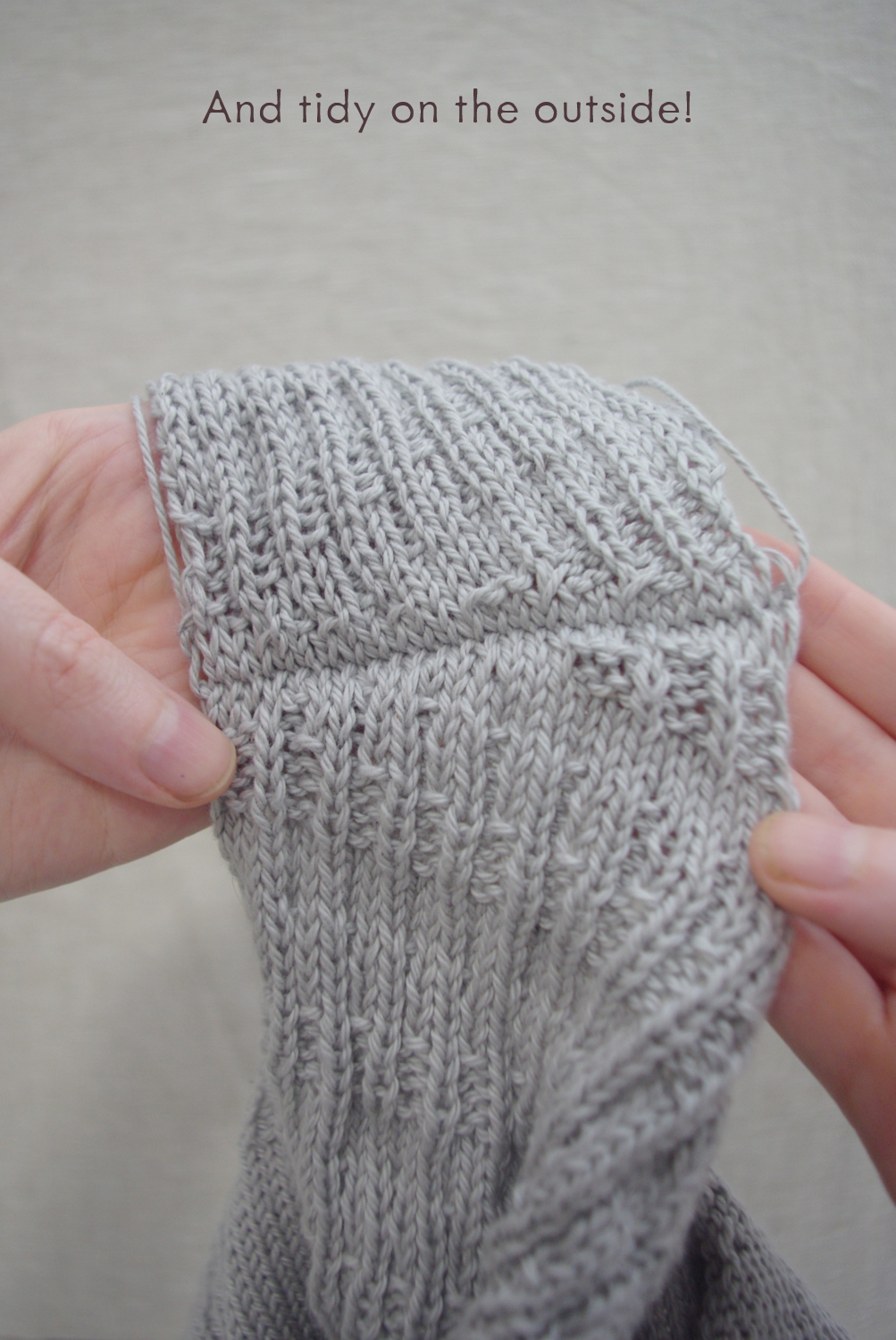
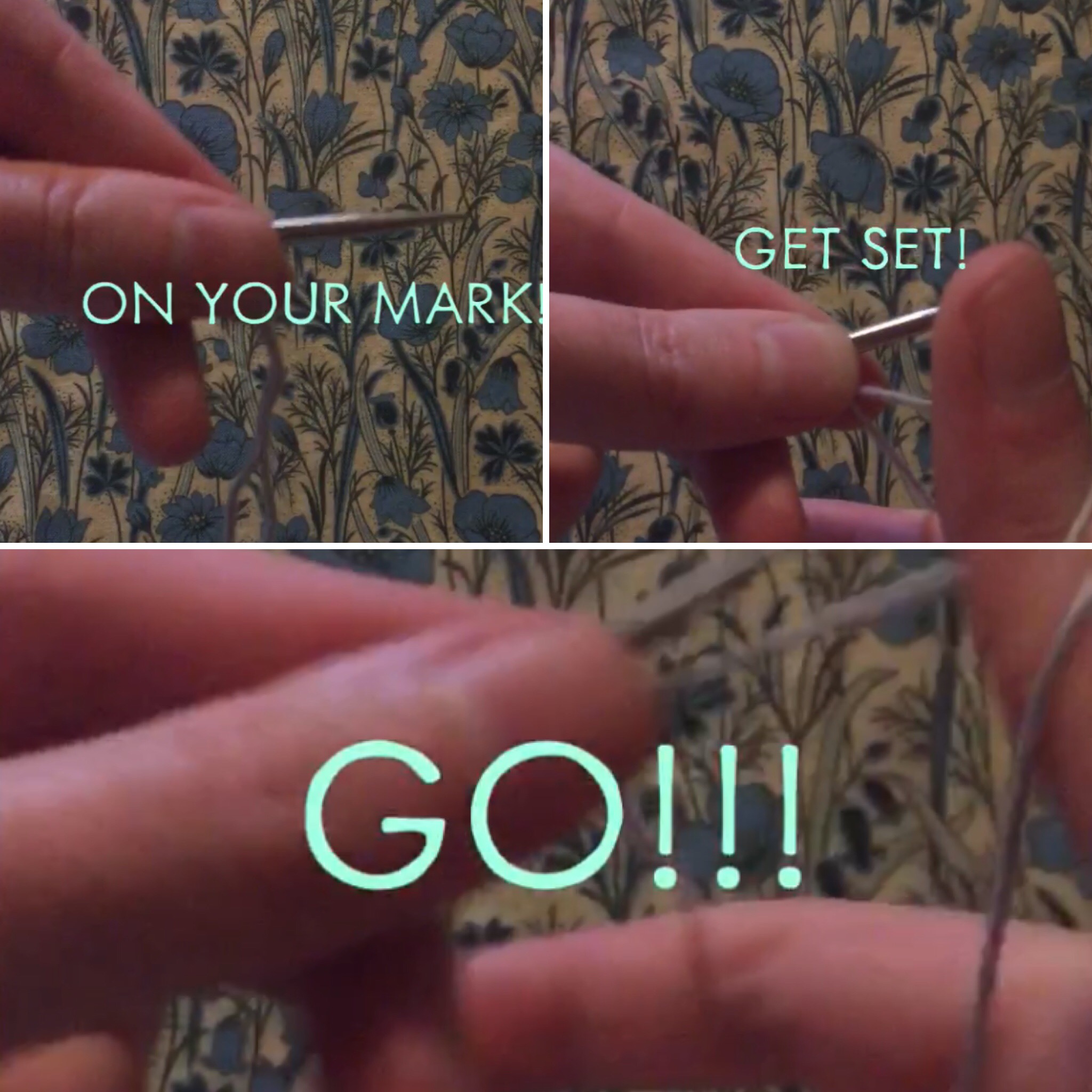
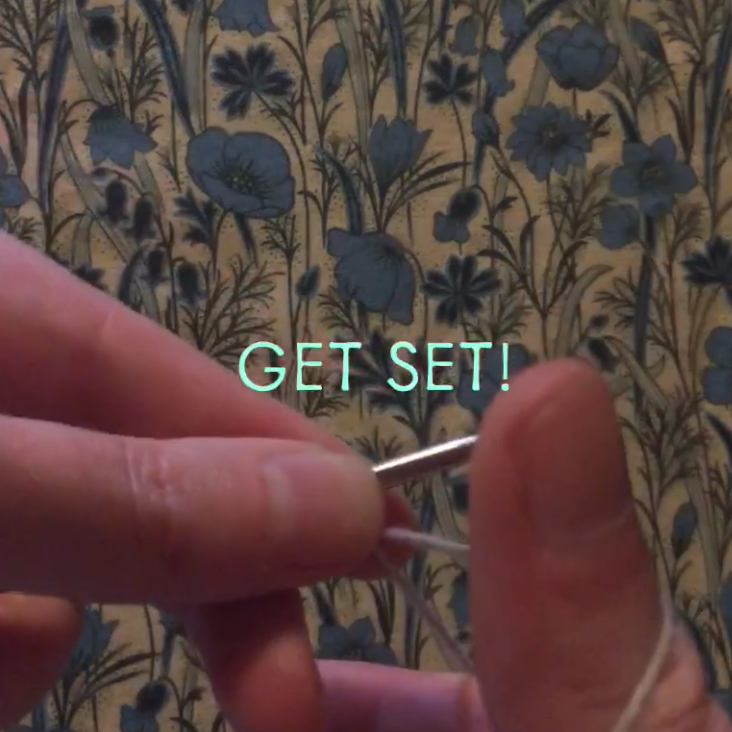
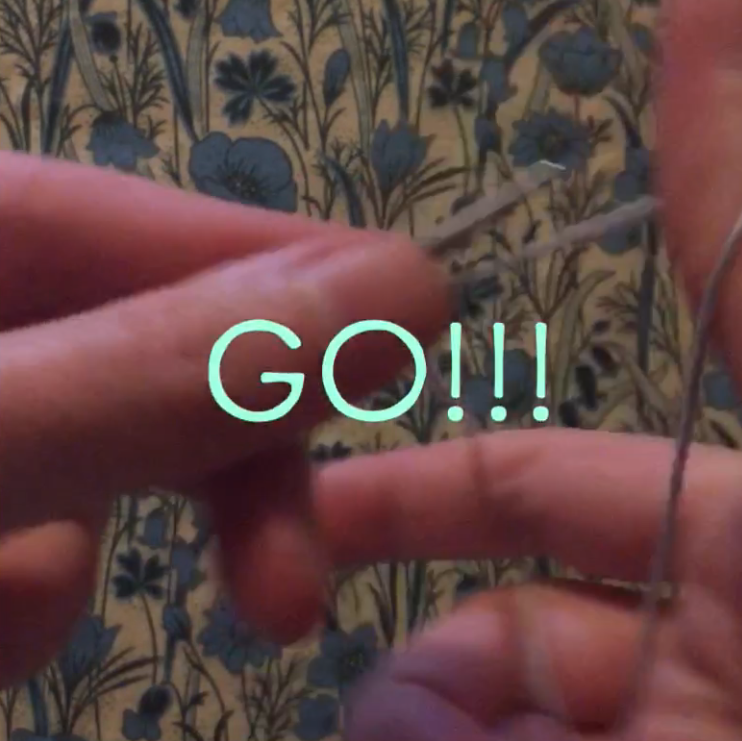
A few people knitting Atlee had mentioned that they'd never done a three needle bind-off before, so I thought I'd post a real quick tutorial. Once you see how easy it is, you'll be kicking yourself for not learning it ages ago (I did!). Prefer to see it in motion? There's a quick video on my Instagram.
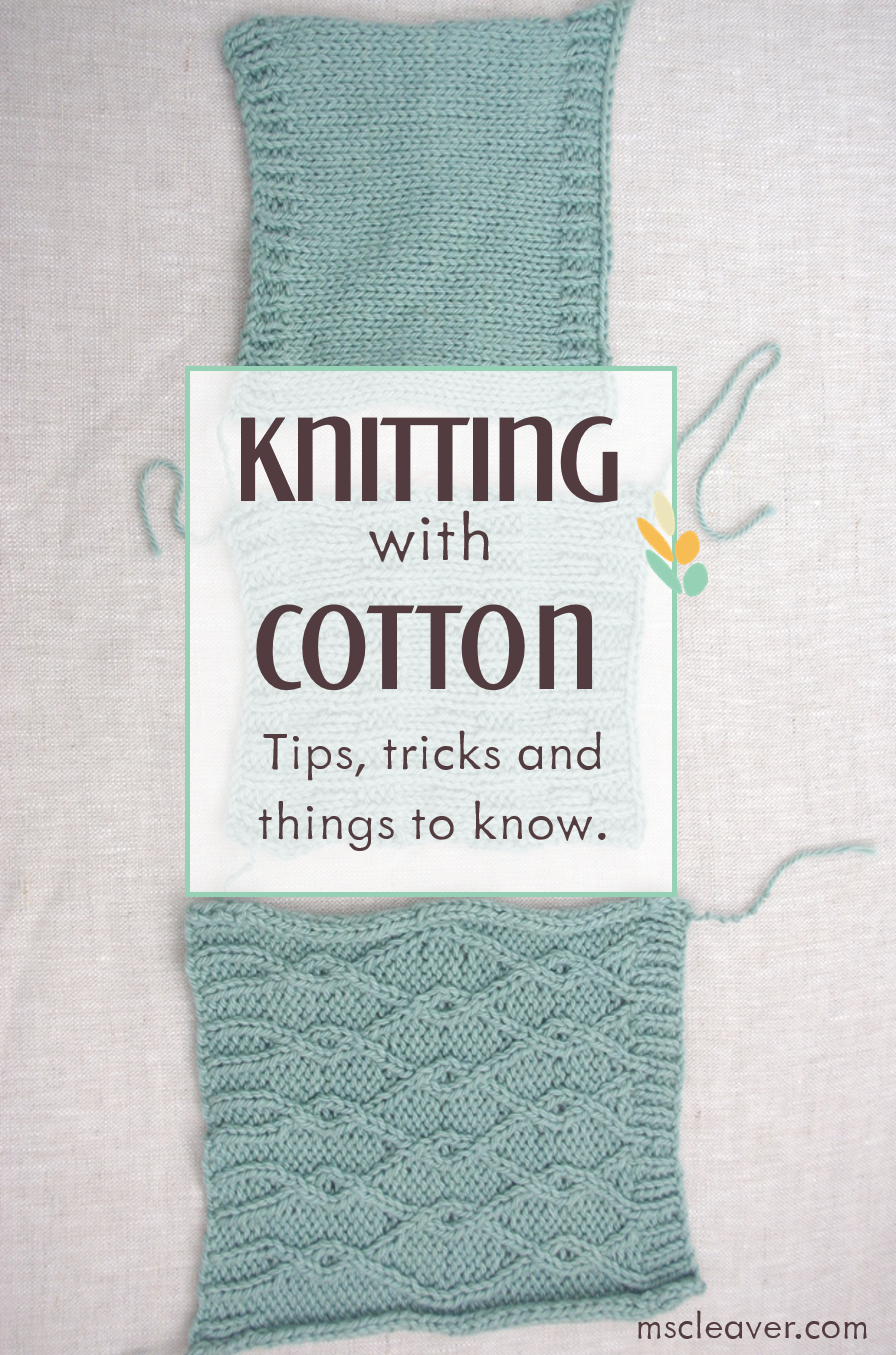
Knitting with Cotton, a tutorial
Earlier this year I had the chance to spend a lot of quality time with Willet, Quince & Co's sport-weight 100% cotton yarn. After swatching my way through a skein of yarn, I had some ideas of what did and didn't work in the yarn, and came up with three very different designs: Atlee, Ocaso, and Caiterly. While cotton yarn isn't as commonly seen in hand-knitted garments as wool or even linen, it doesn't need to be relegated to the land of dishcloths, as cotton can be very versatile and wearable.
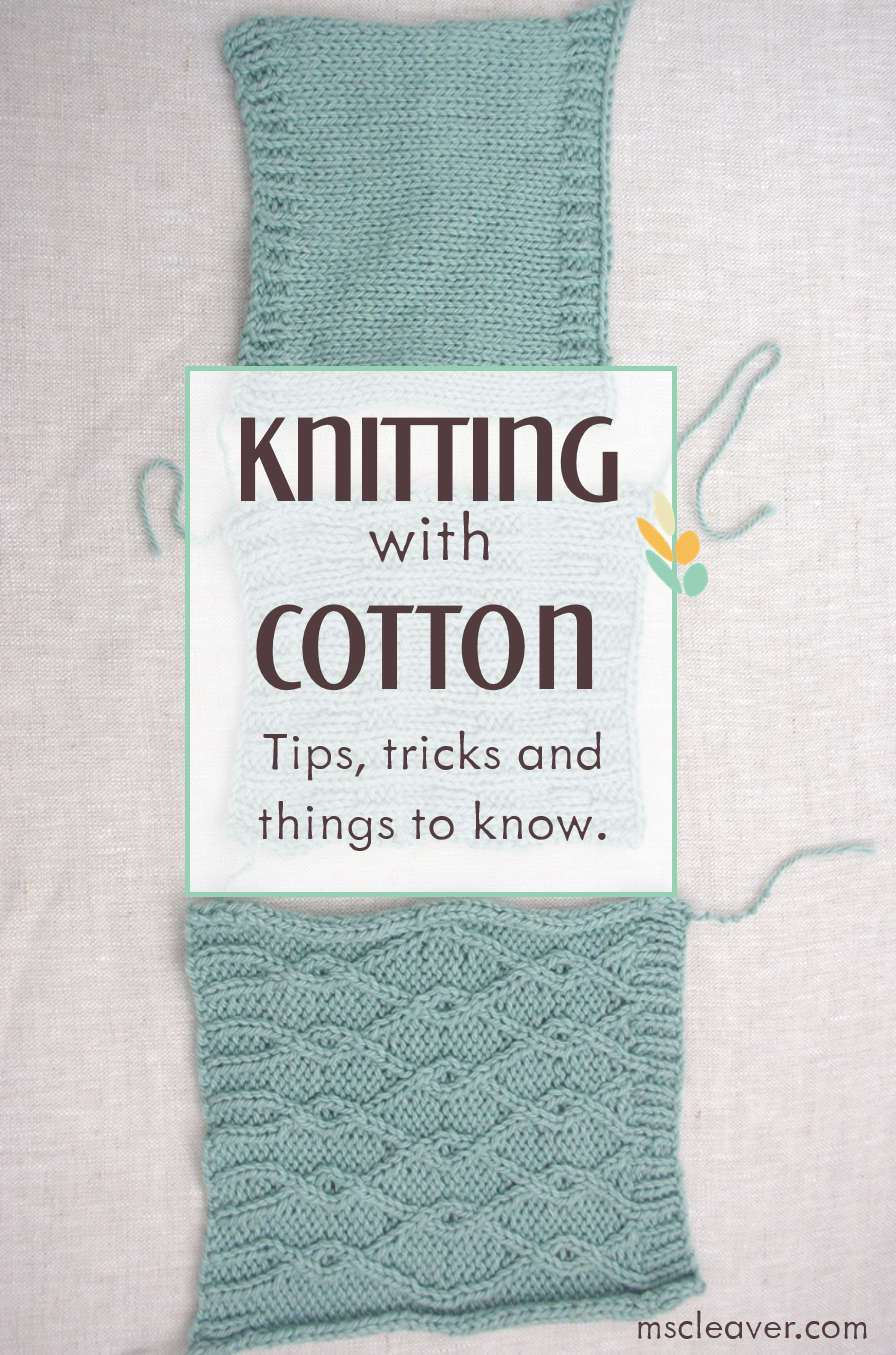
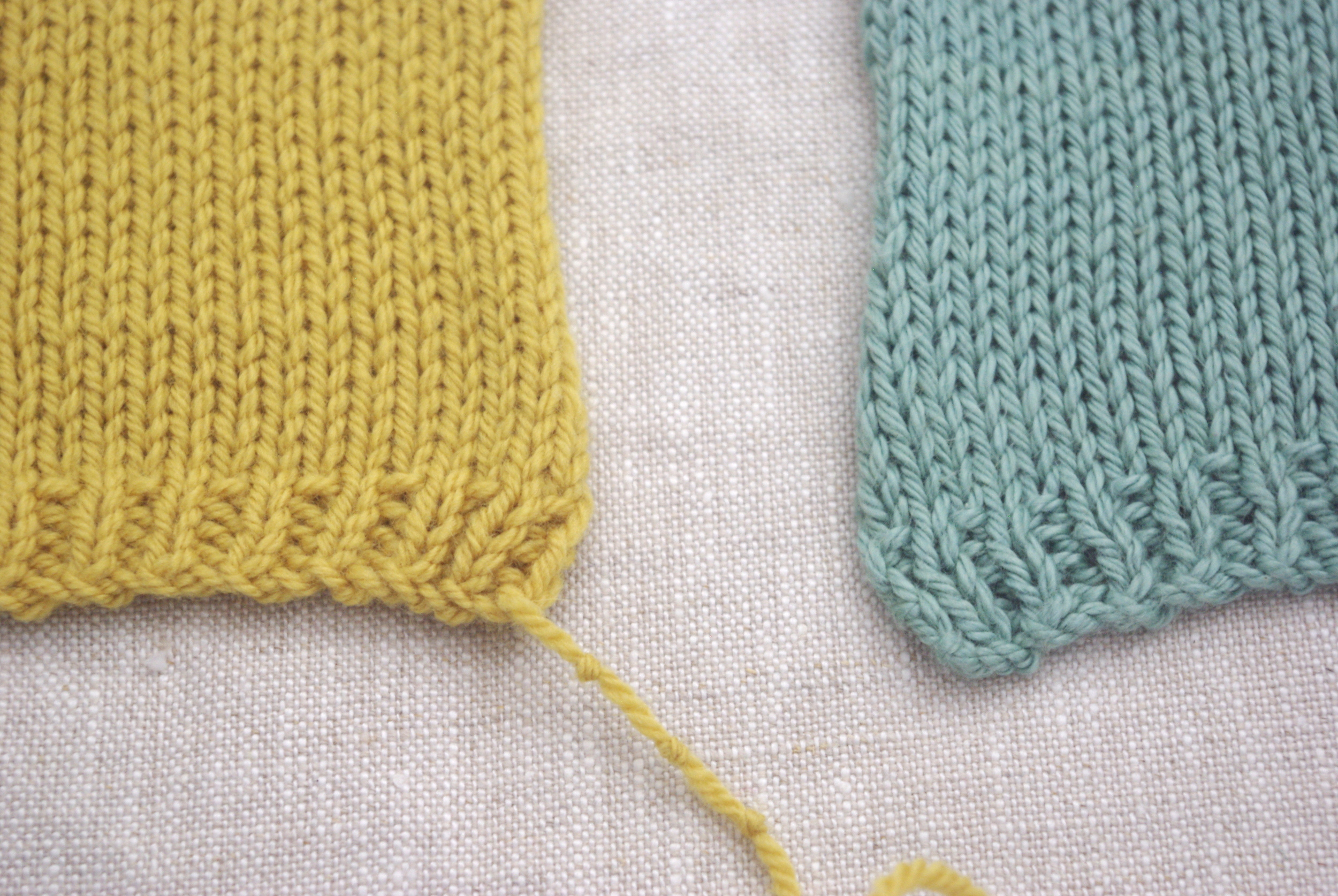
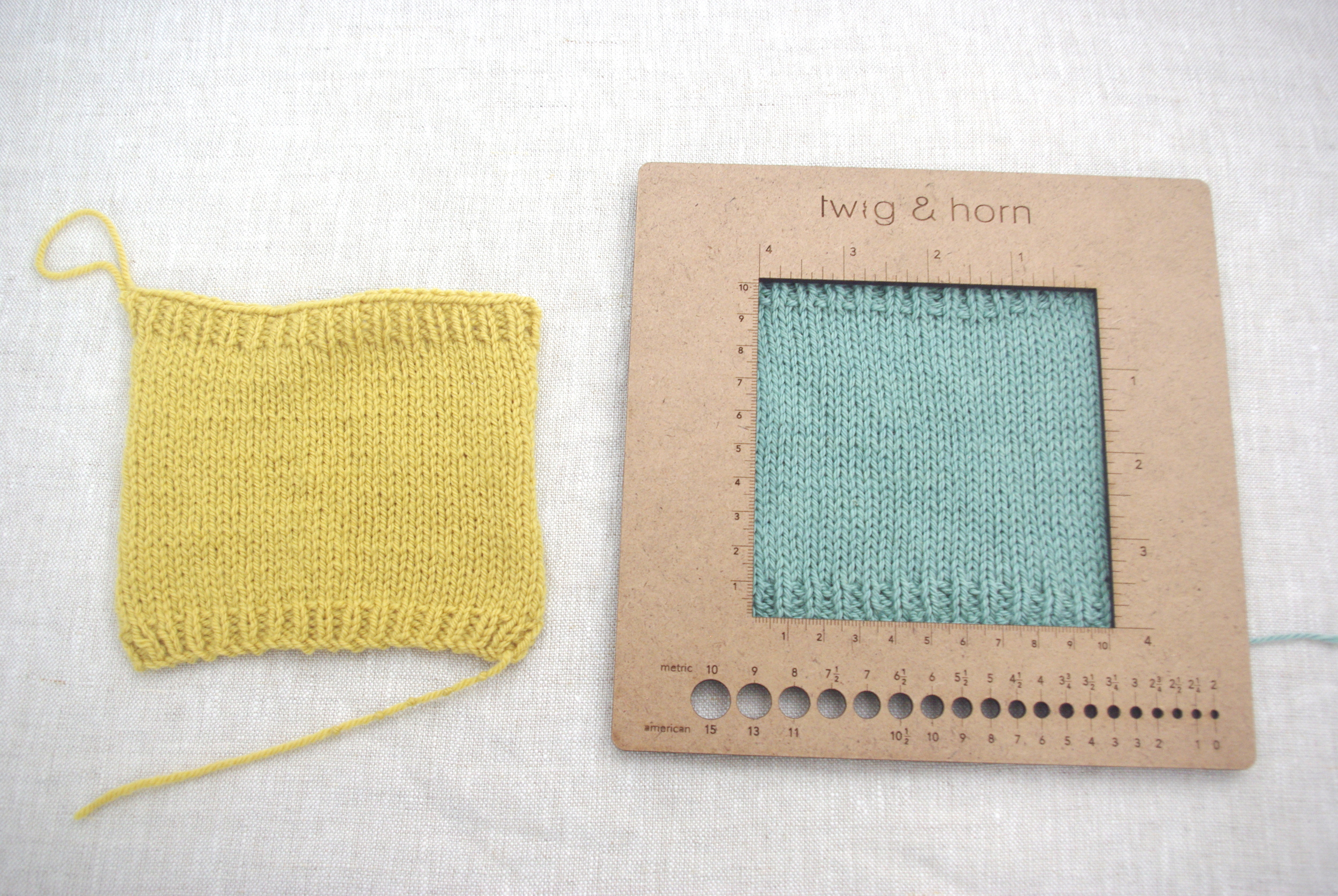
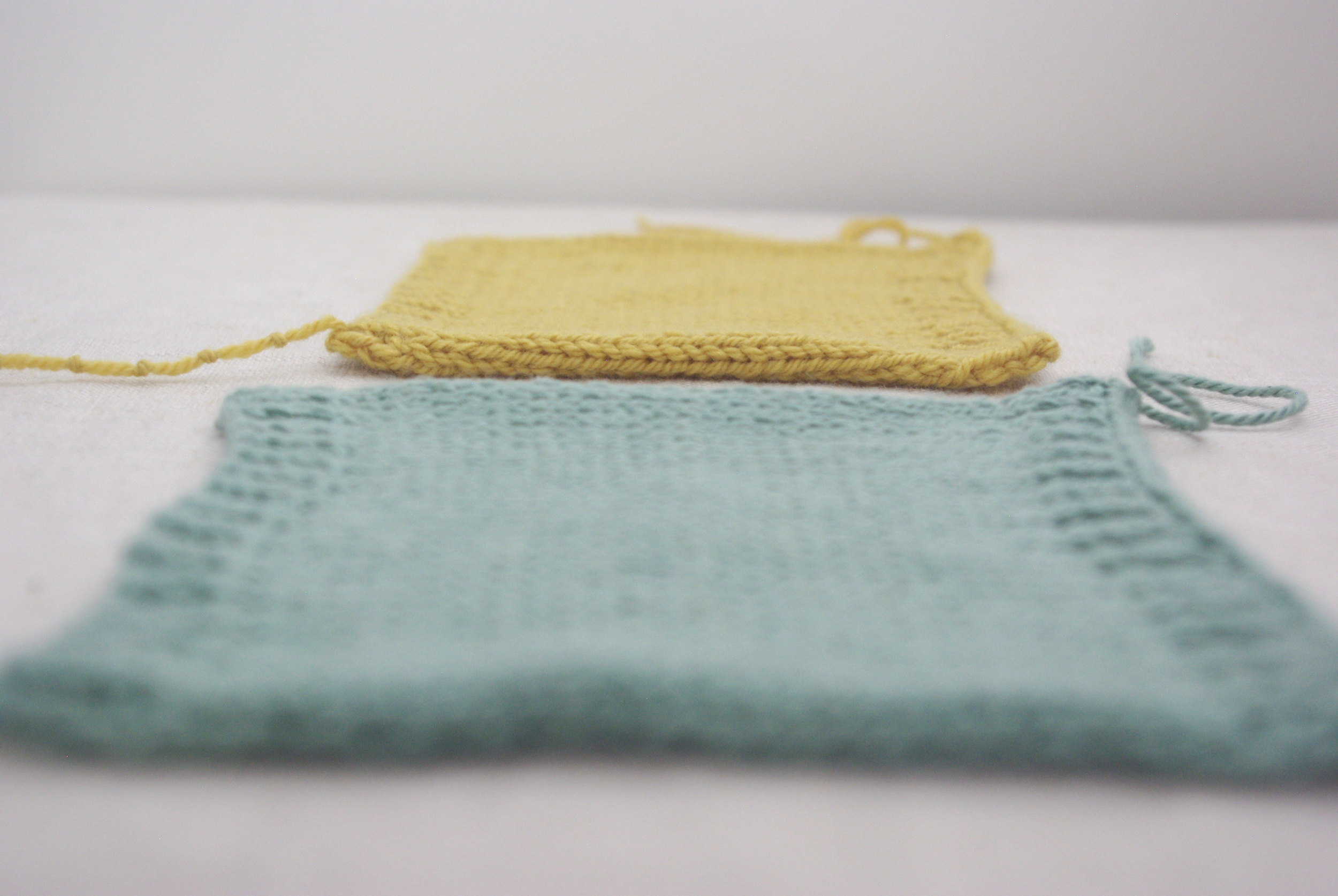
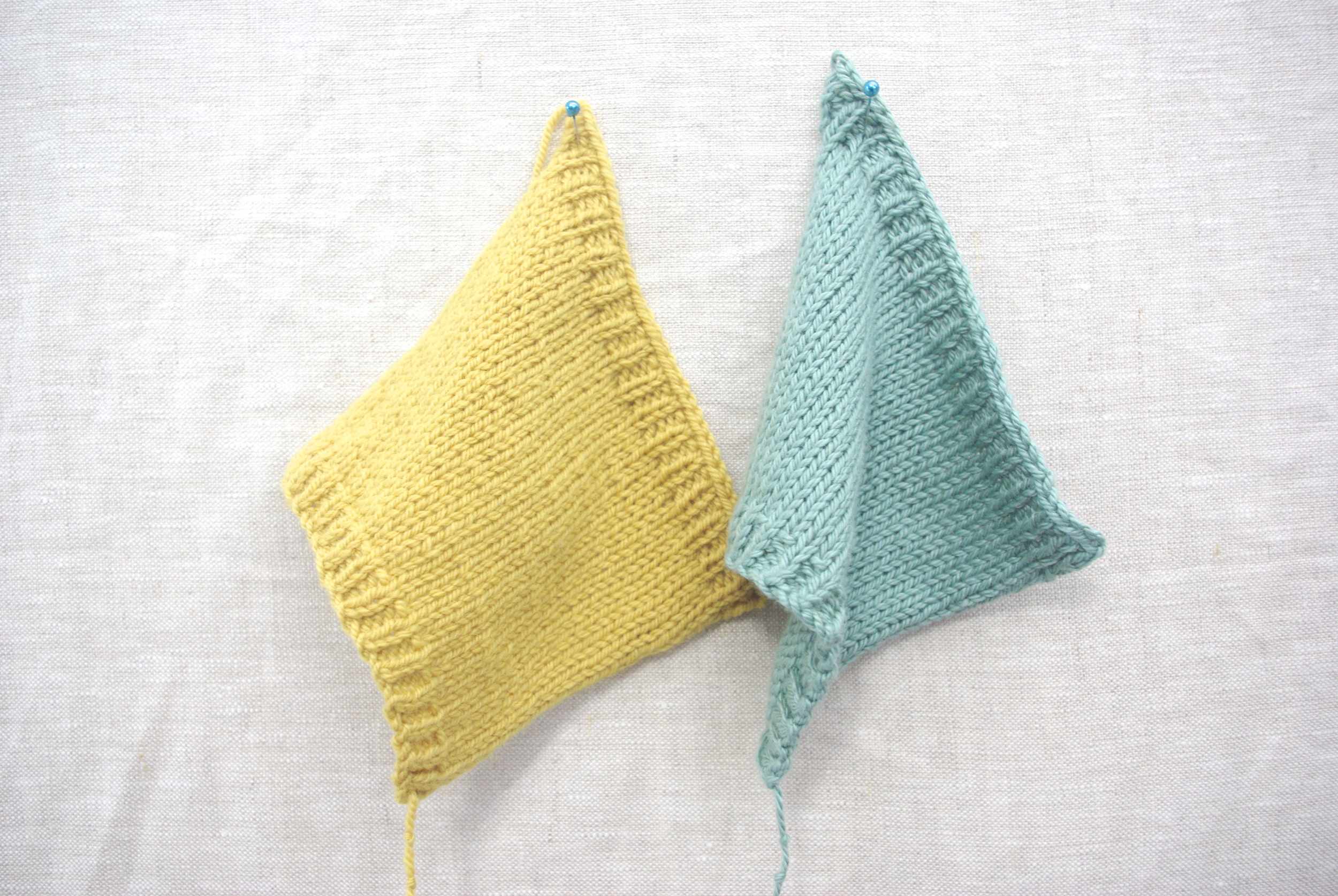
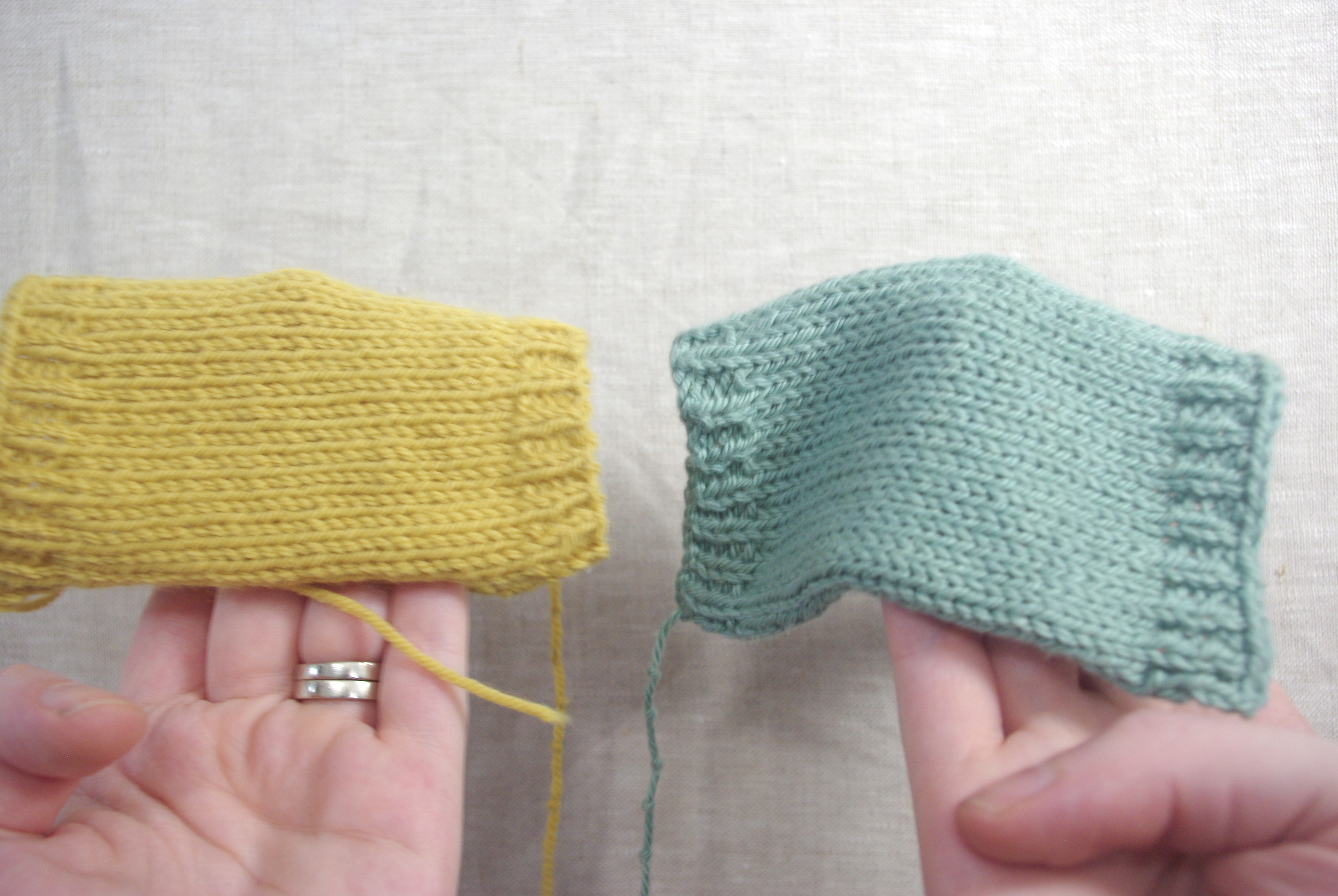
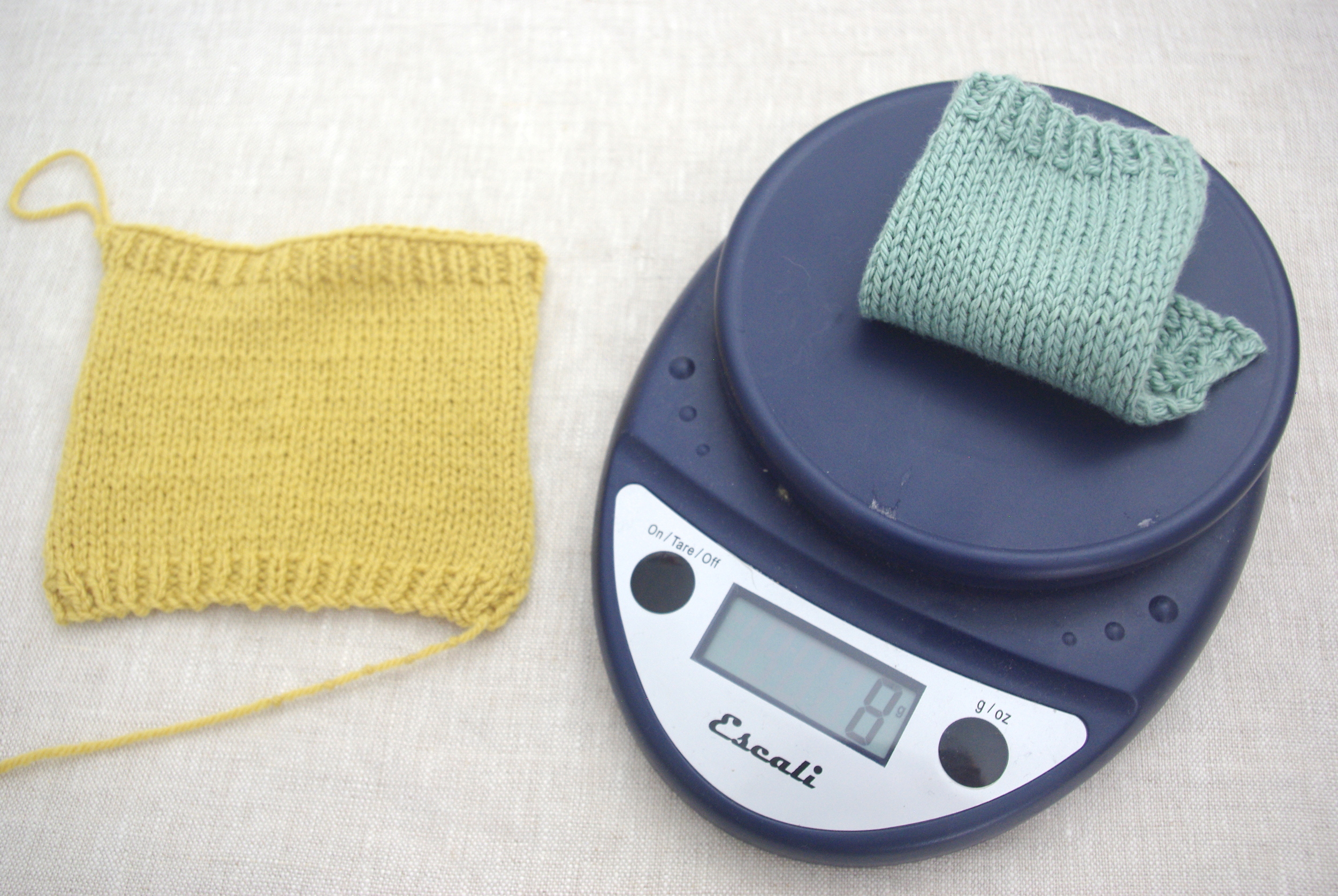
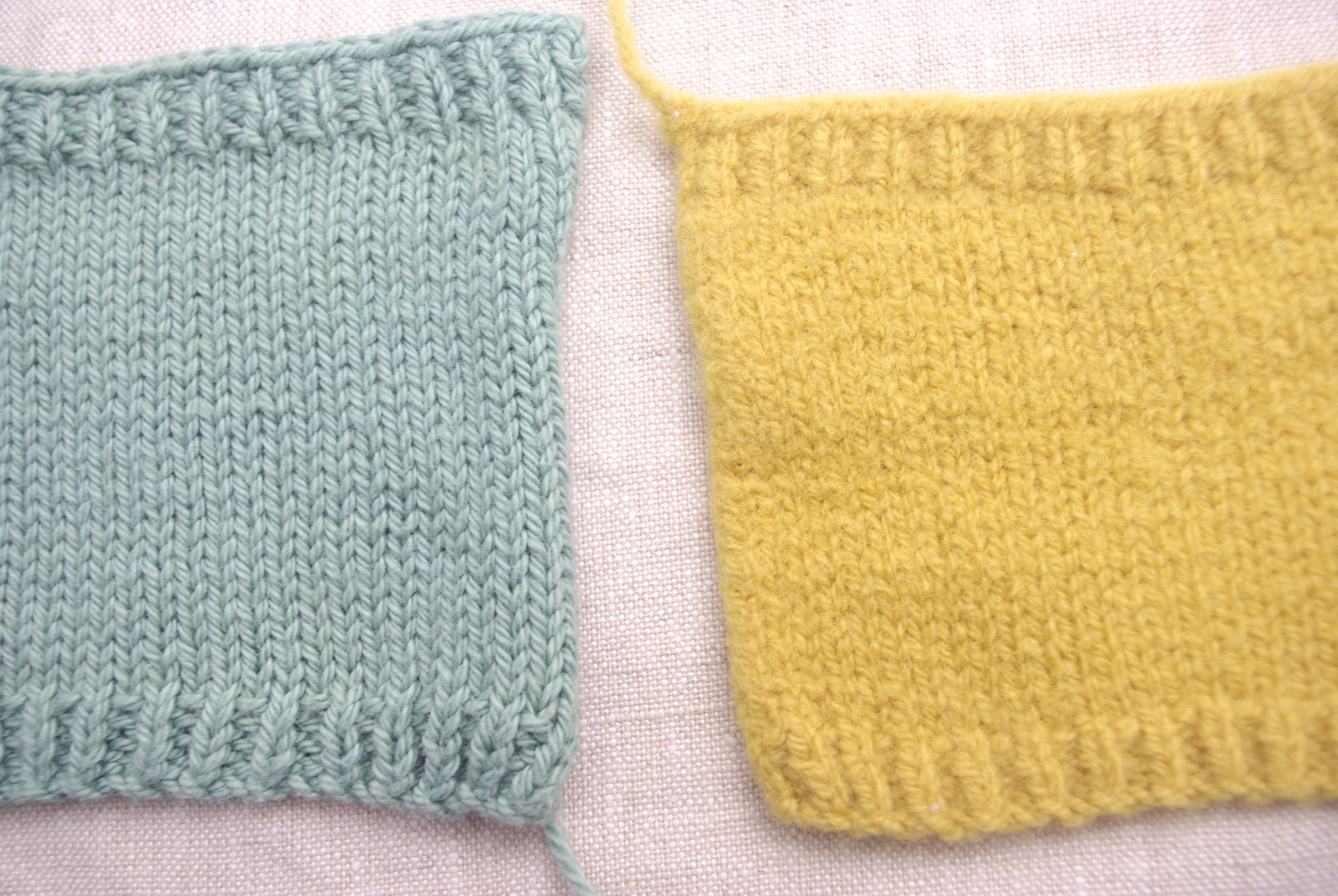
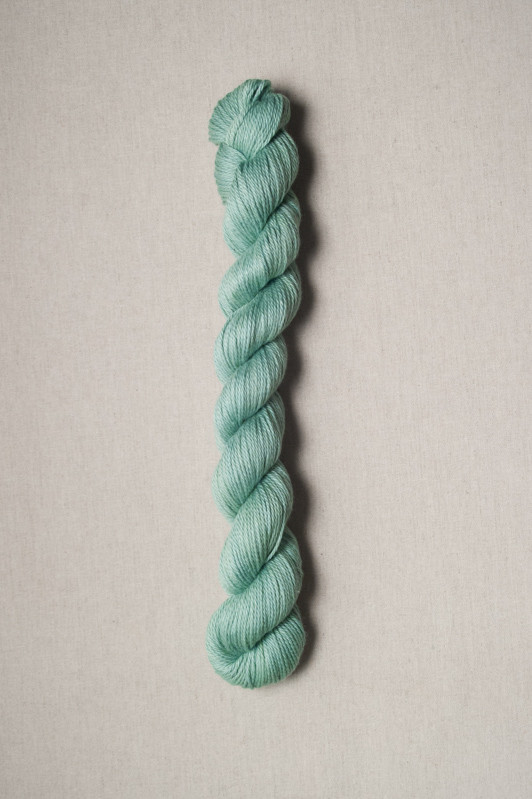
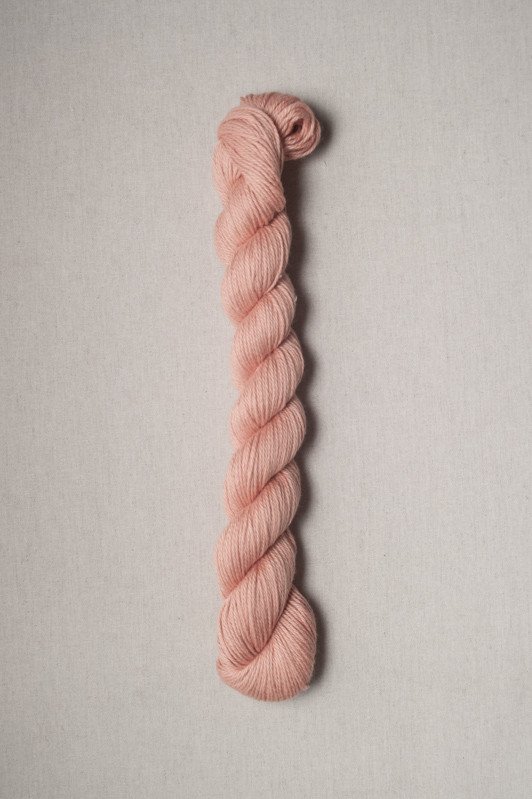
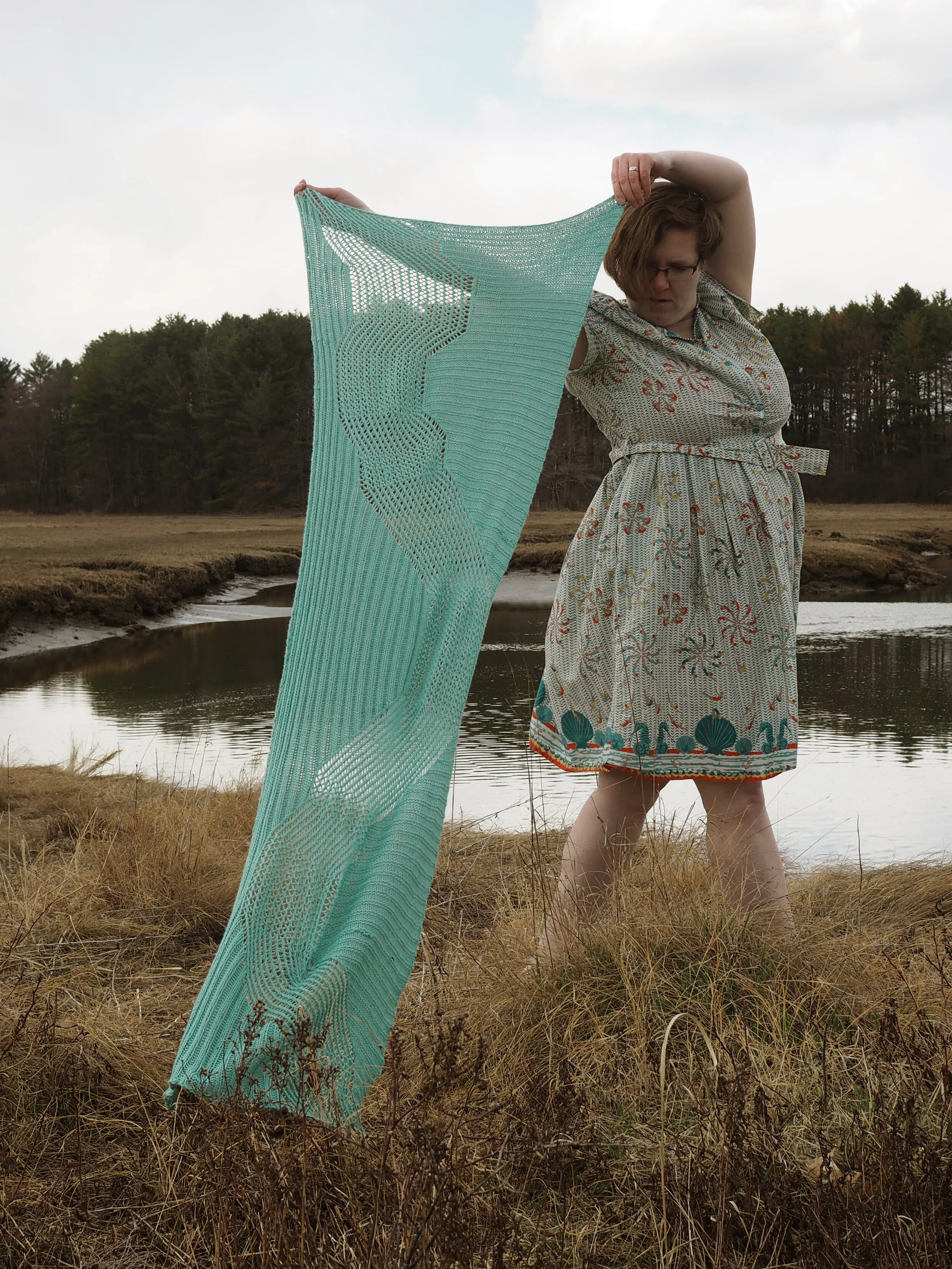
It does, however, have some distinct differences from it's woolly counterparts that should be kept in mind, which I'll be covering today. For all the photos in this post, Willet is shown in the Dinghy colorway, a teal, and I'll be comparing it with Quince's Chickadee - a 100% sport-weight wool in Carrie's Yellow. Both swatches were knit with the same stitch and row count on size US 5 (3.75 mm) needles.
Gauge
Per the tag guidelines, both Willet's and Chickadee's base gauge is 6 sts/inch on size 5 (3.75 mm) needles. When I made the swatches, I hit 6sts/inch exactly on my stitch gauge for both yarns, but Willet had 8.25 rows/inch, while Chickadee came in at 9 rows/inch. Over 12 inches, this is 9 rows of difference, so it can really add up over a long length (like a sleeve or body)
Tip #1 - when alternating between wool and cotton, pay attention to row gauge.
Fabric Characteristics
Even though the gauge is quite similar, the fabric itself behaves rather differently. The wool is much squishier and plusher, and tends to hold it's shape better, while the cotton is more floppy, but not exactly drapey (not like silk or linen). The wool, in general, has better recovery (springs back to shape), while cotton has a more relaxed vibe.
Tip #2 - for highly structured knits, cotton isn't your best bet, but it works great for softer, more relaxed lines.
Weight
Though these swatches are basically the same size (the Willet is 5"x4.5"; Chickadee is 5"x 4.25"). the cotton weighs a gram more. This is why 50g of Chickadee (100% wool) gets you 181 yds, while 50g of Willet (100% cotton) gets you 160 yds. This weight can make a difference in two things: number of skeins required and the row gauge of finished product.
A few grams isn't a big deal in a swatch, but again, it can really add up over a large garment. If you were working, say, a sweater coat in both yarns, the additional weight of the cotton can drag the garment down, lengthening the row gauge and pulling more on the shoulder seams, and again, leading to a more relaxed silhouette.
The weight can be compensated for in a number of ways - making a close-fitting garment, so the weight is distributed across the body; having strong shoulder seams; and making sure to block the garment flat.
Tip #3 - a little extra weight can add up, so choose your pattern wisely
The Yarn
The biggest complaint I've heard about cotton yarn is that it "has no give" and/or "it hurts my hands." The "no give" is pretty much true.
Remember how I mentioned the fabric of the wool swatch is springier and has more recovery? The same is true of the yarn itself.
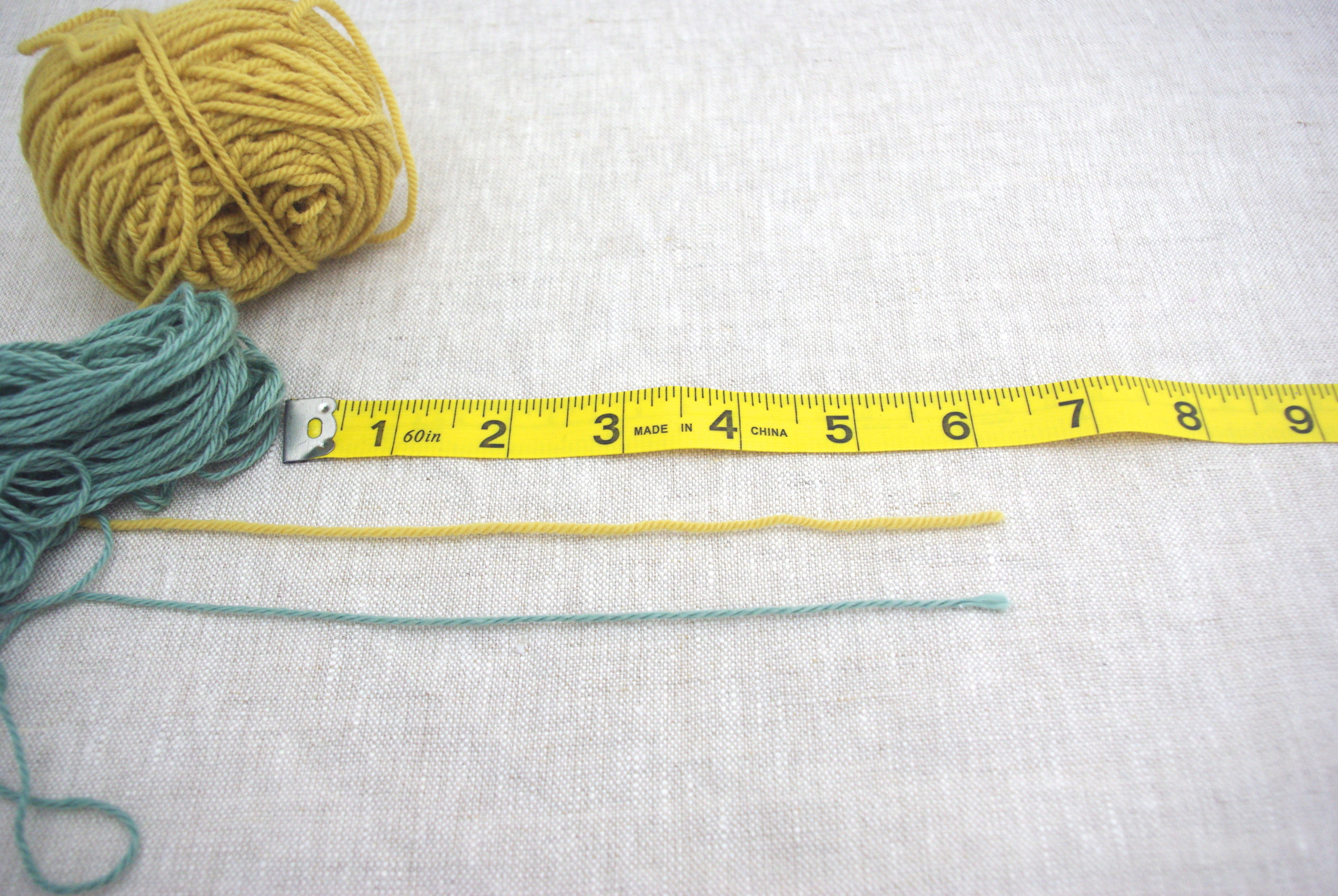
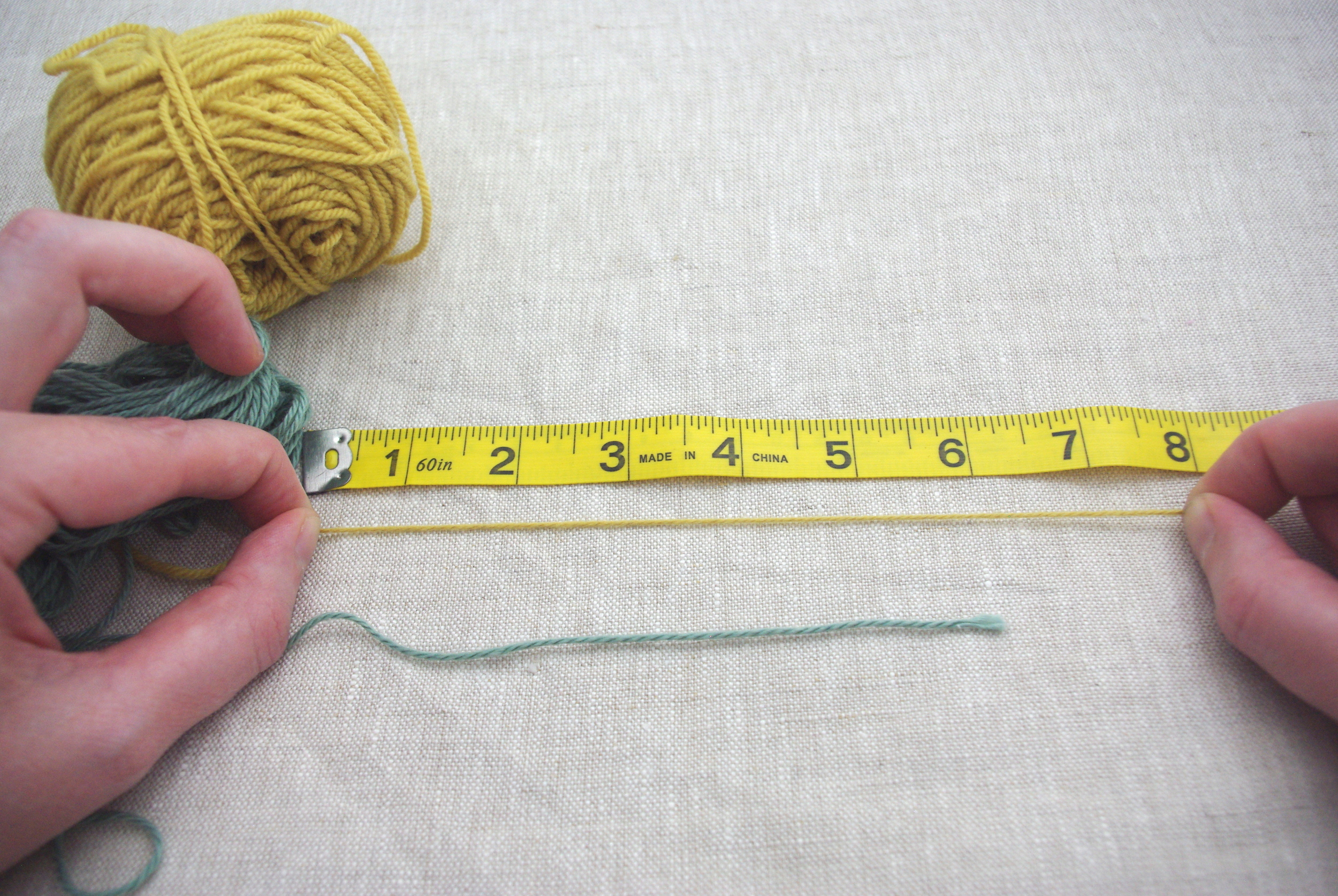
From a 6 inch piece, I was able to easily stretch the wool yarn an additional 2 inches, and it sprung right back into place. With the same length of cotton yarn, I could barely stretch it all, even pulling quite hard. If you're used to tensioning wool yarn, this can be quite a shift. So once again, the key to cotton is relax. Let the yarn glide through your hands, rather than trying to pull it.
Tip #4 - When knitting with cotton, relax and don't try to fight the yarn.
But don't think of this rigidity as a knock against the yarn. It has some great benefits, namely that the stitch definition is fantastic. The reason the single stitch cables on Caiterly or the subtle patterning on Atlee's yoke work is because of the way the Willet stitches sit on top of the fabric, instead of blending in the way it would more with wool. One caveat: this means ends don't blend in as well too, so hides your ends in an inconspicuous place, like the side seams.
Tip #5 - Pay attention to ends, but enjoy the stitch definition!
Blocking and Washability
One of the big draws of cotton is it's washability. It can go in the washer and the dryer and be none the worse for wear. Both the swatches were washed loose and dried along with a load of laundry in a top loading machine on warm and a standard electric dryer on regular. While the wool swatch clearly felted, losing about a half an inch in both length and width, the cotton swatch was virtually unchanged. That said, some cotton yarns may experience more shrinkage than others, and it may be more noticeable over a larger area than this rather small swatch.
Tip #5 - treat your swatch like you intend to treat the finished garment, then measure gauge
In Conclusion
Cotton is great for a lot of things, but not everything. So as with any project, match your yarn appropriately to the project and you'll have success! So let's get the cotton yarn out of the kitchen and on to our bodies.
In the Garden
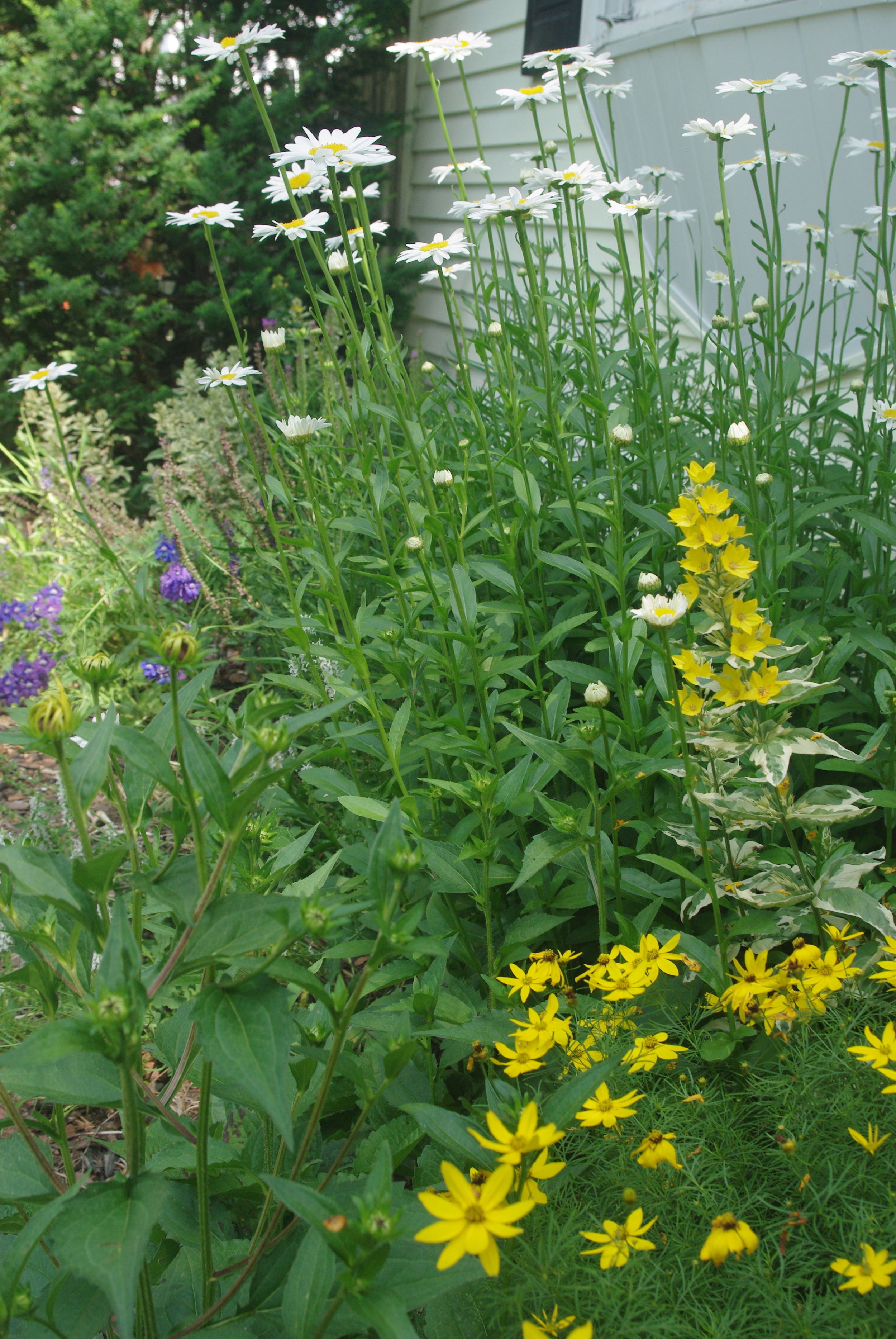
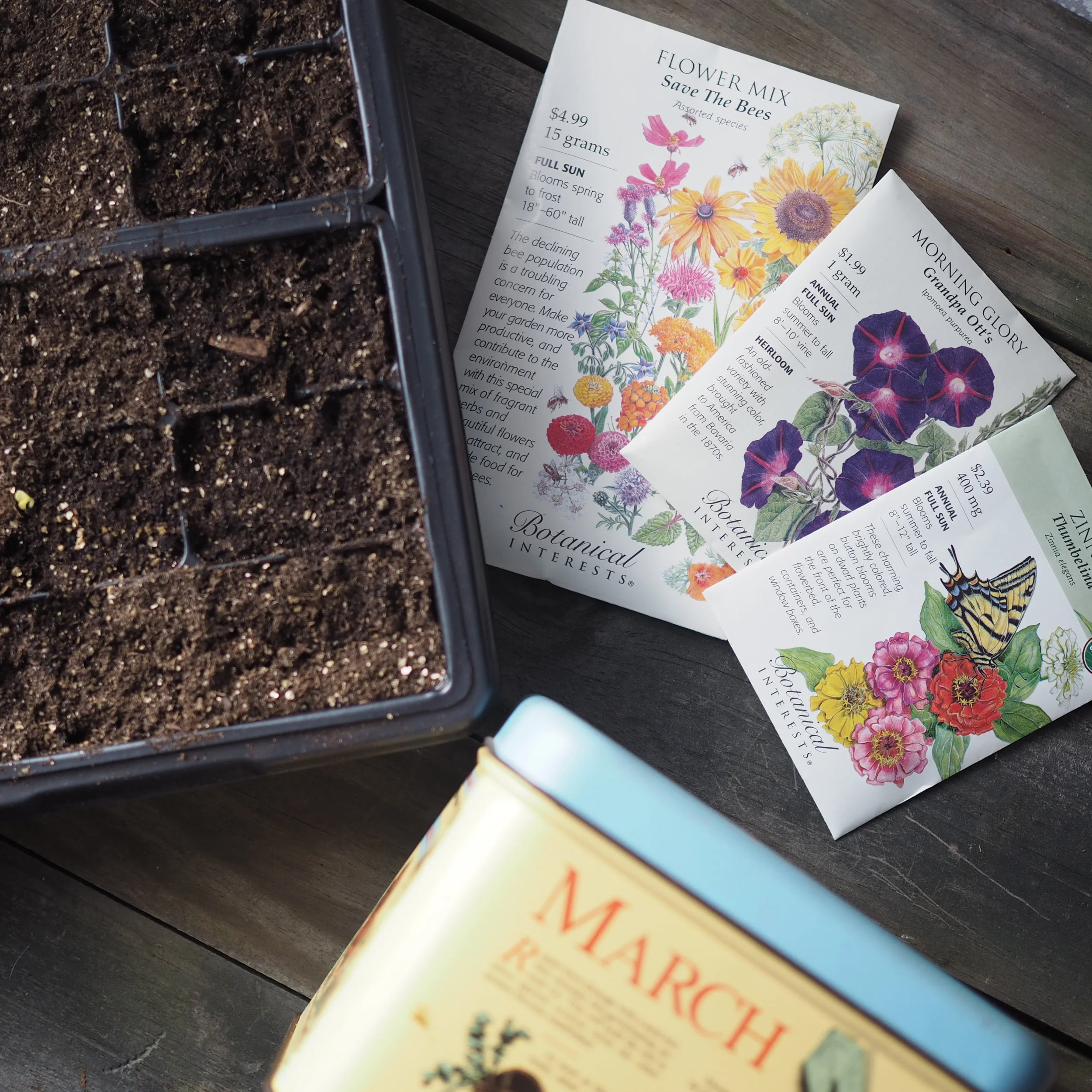
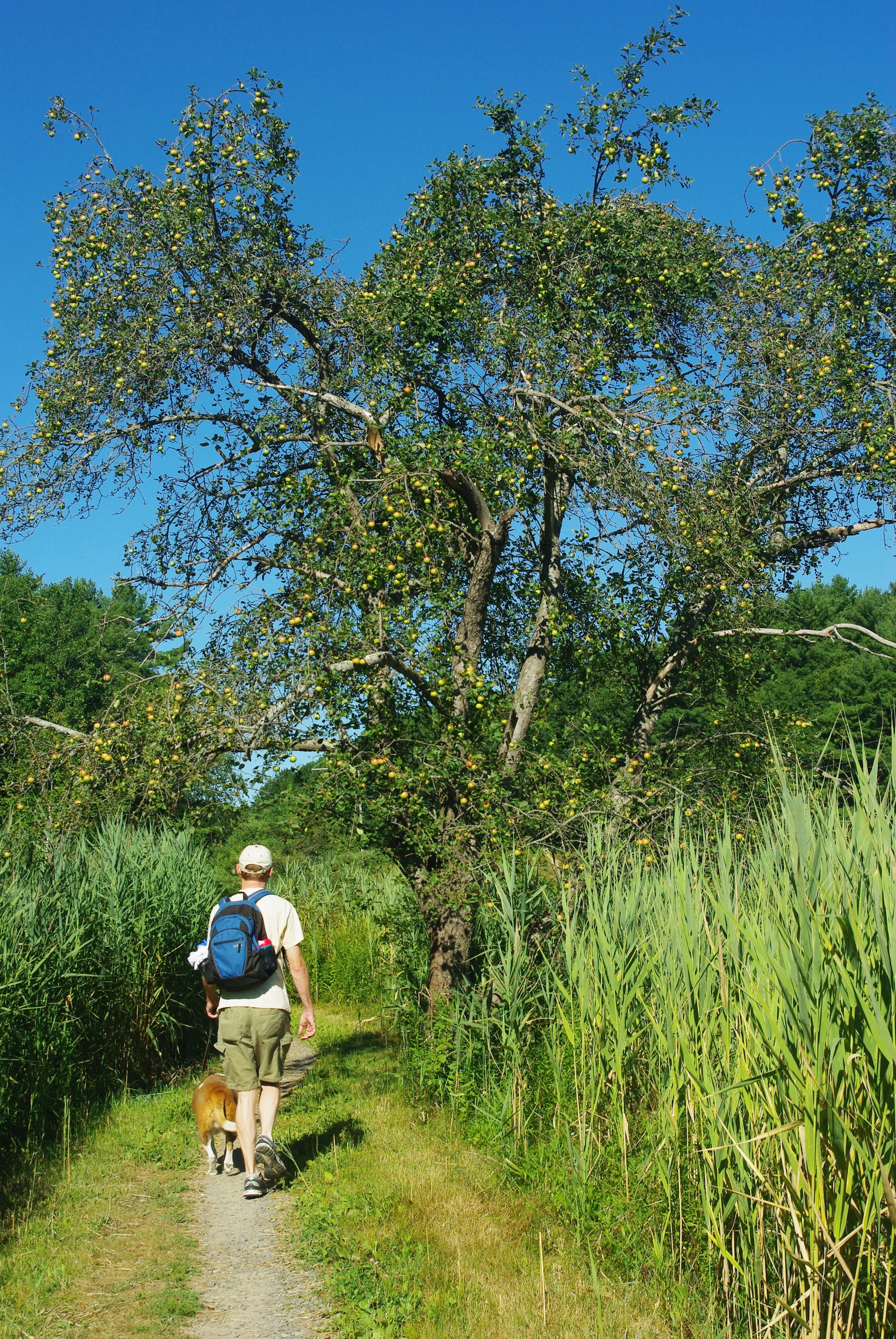
It's been usually hot and dry in these parts of late, so I haven't spent as much time out in the garden as I'd like (I'm seriously overdue with some weeding), but with a little help from the hose, things are growing.
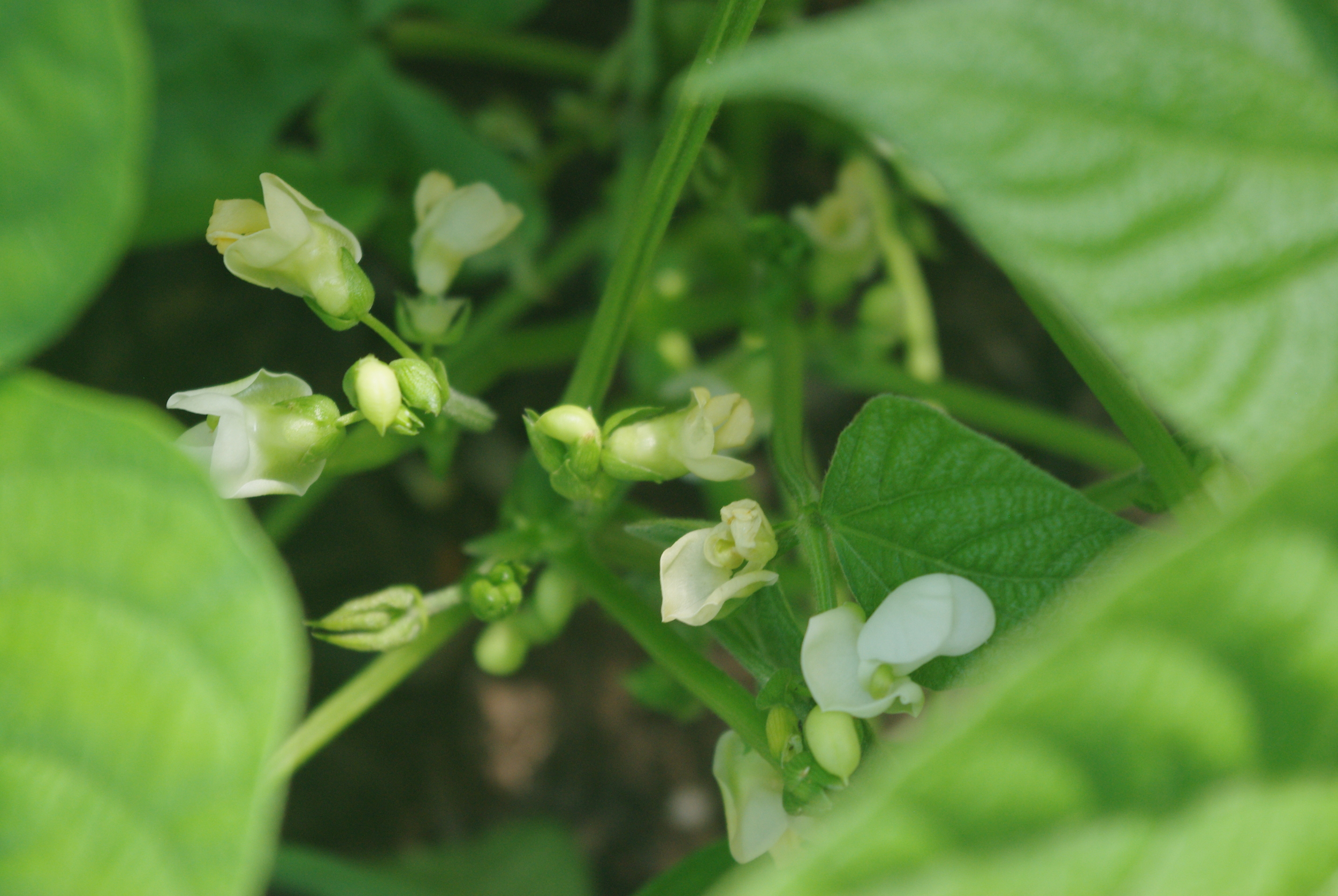
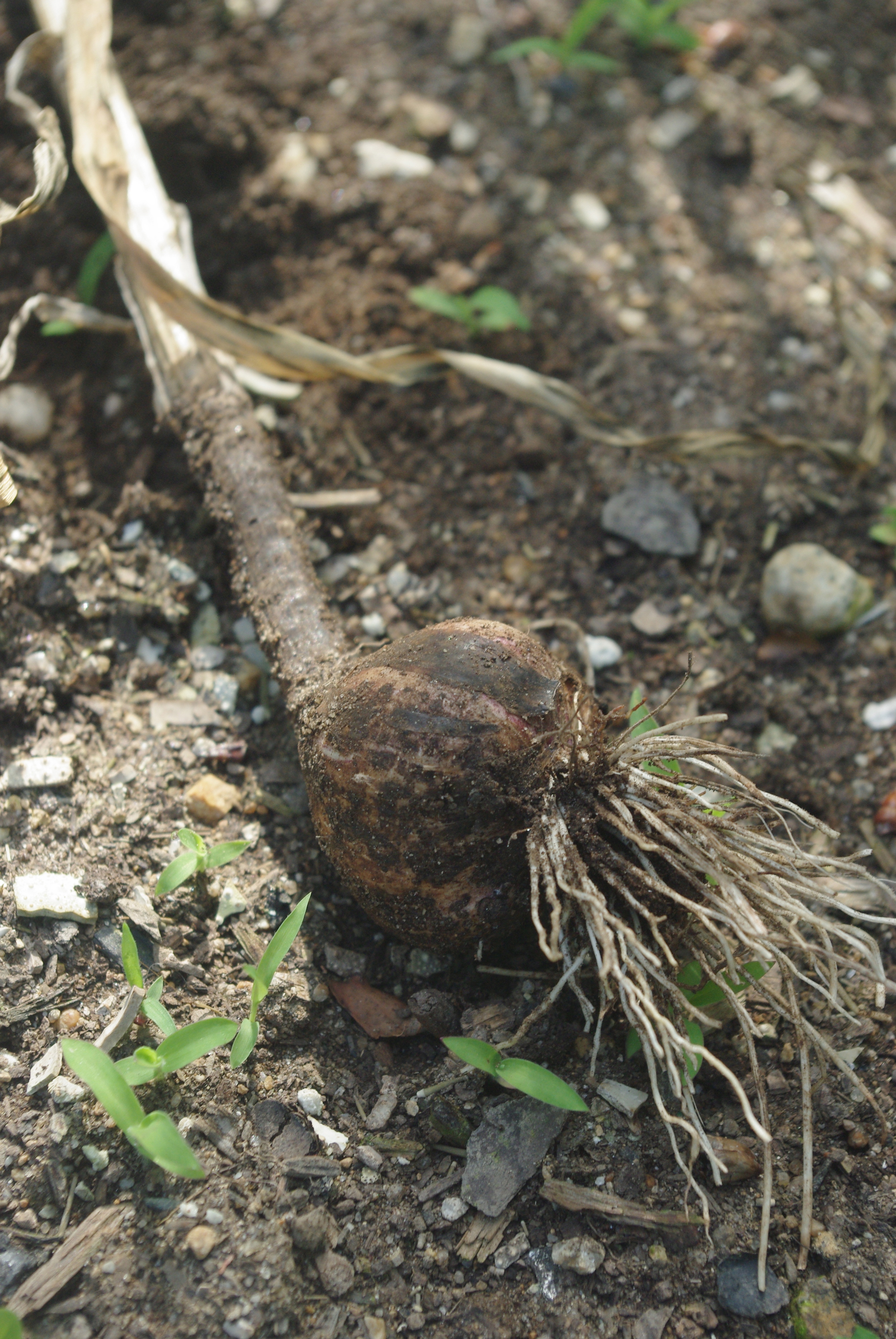
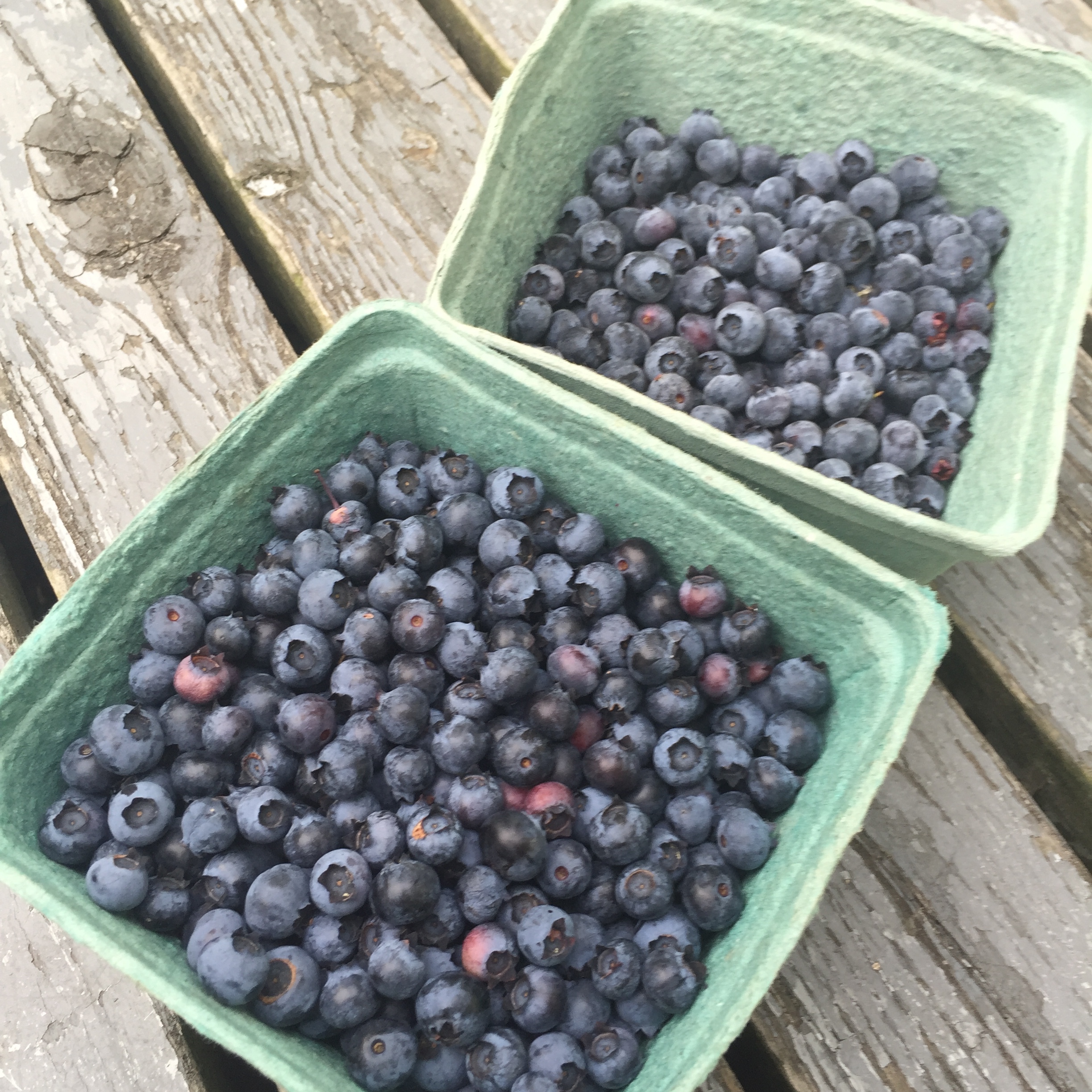
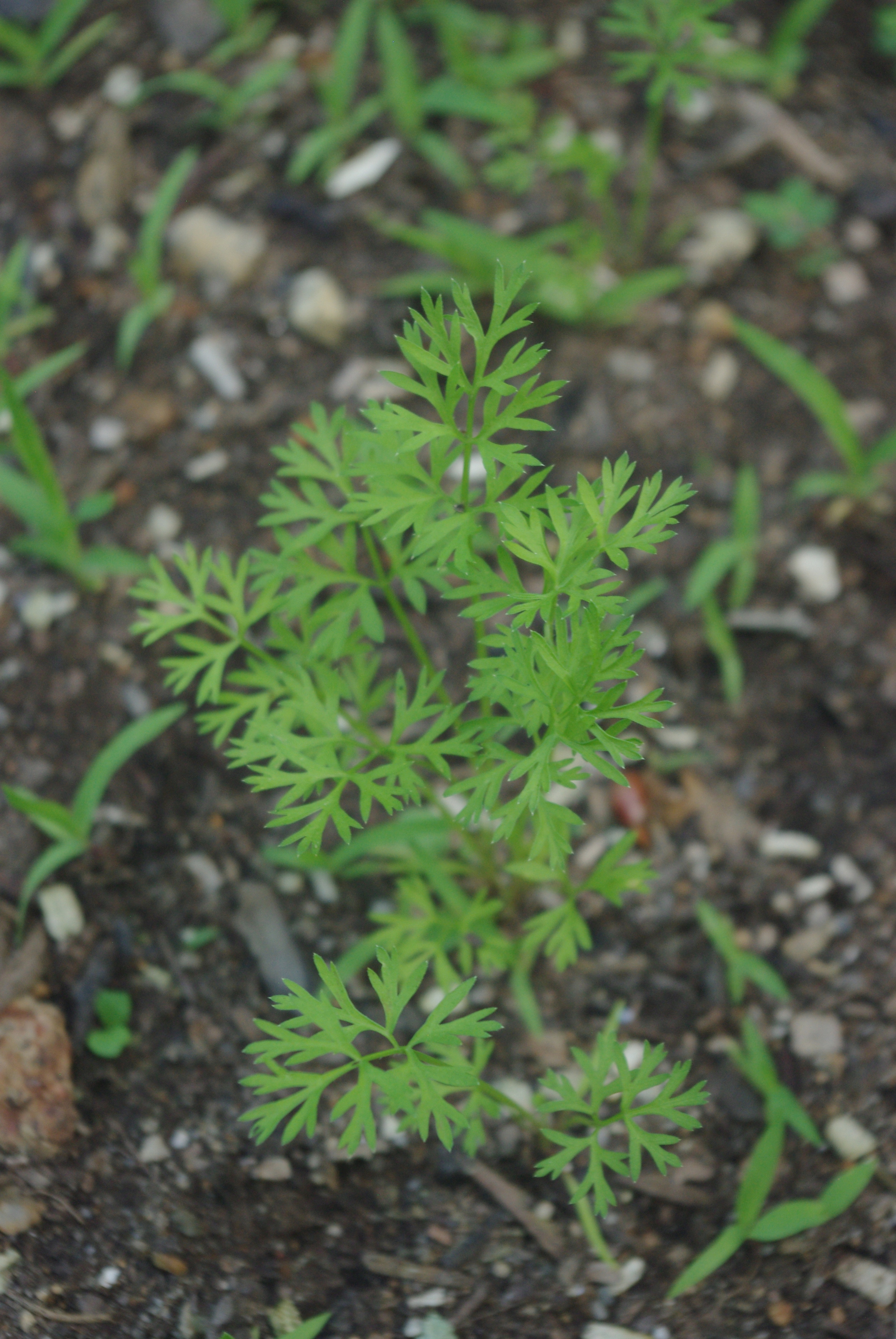
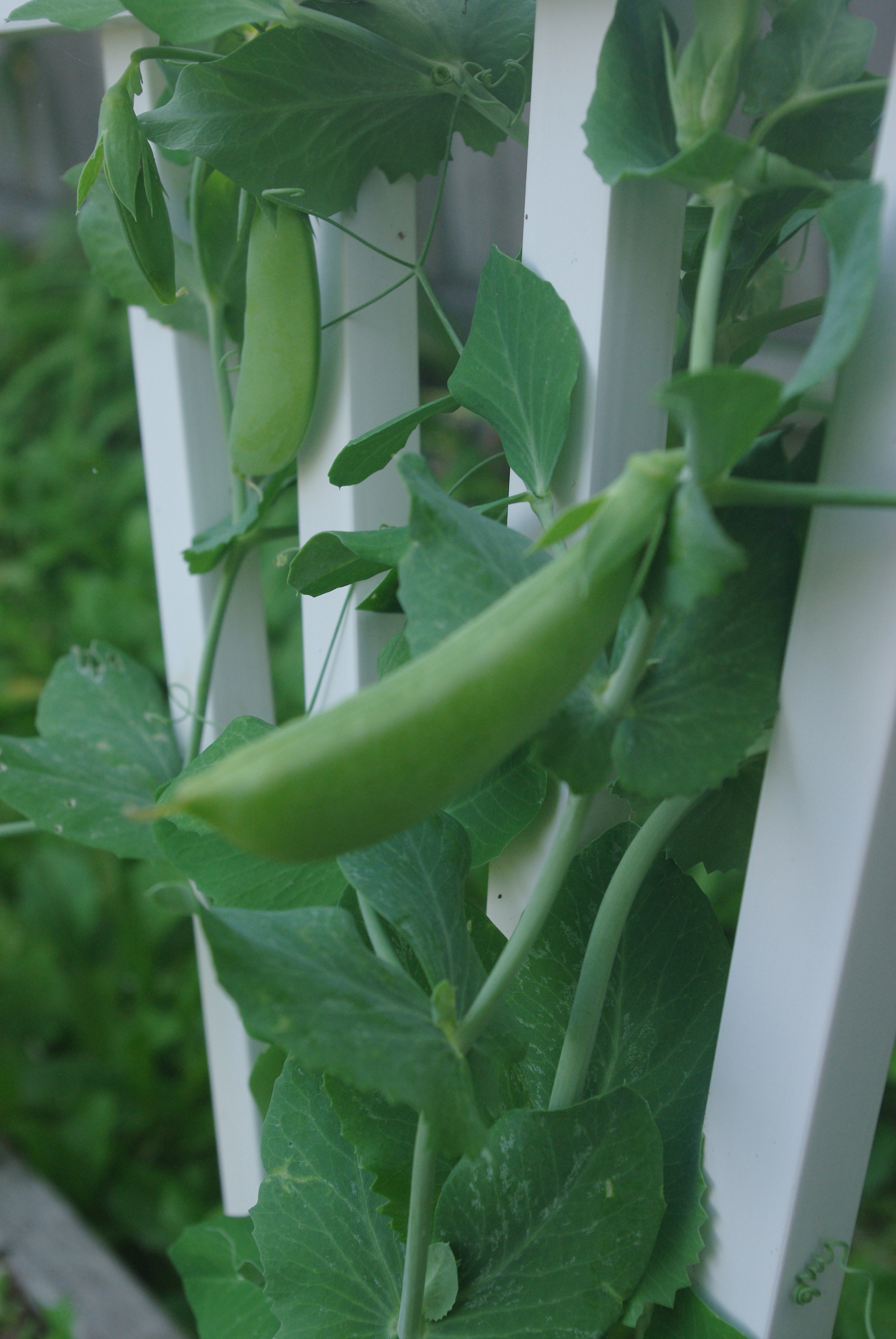
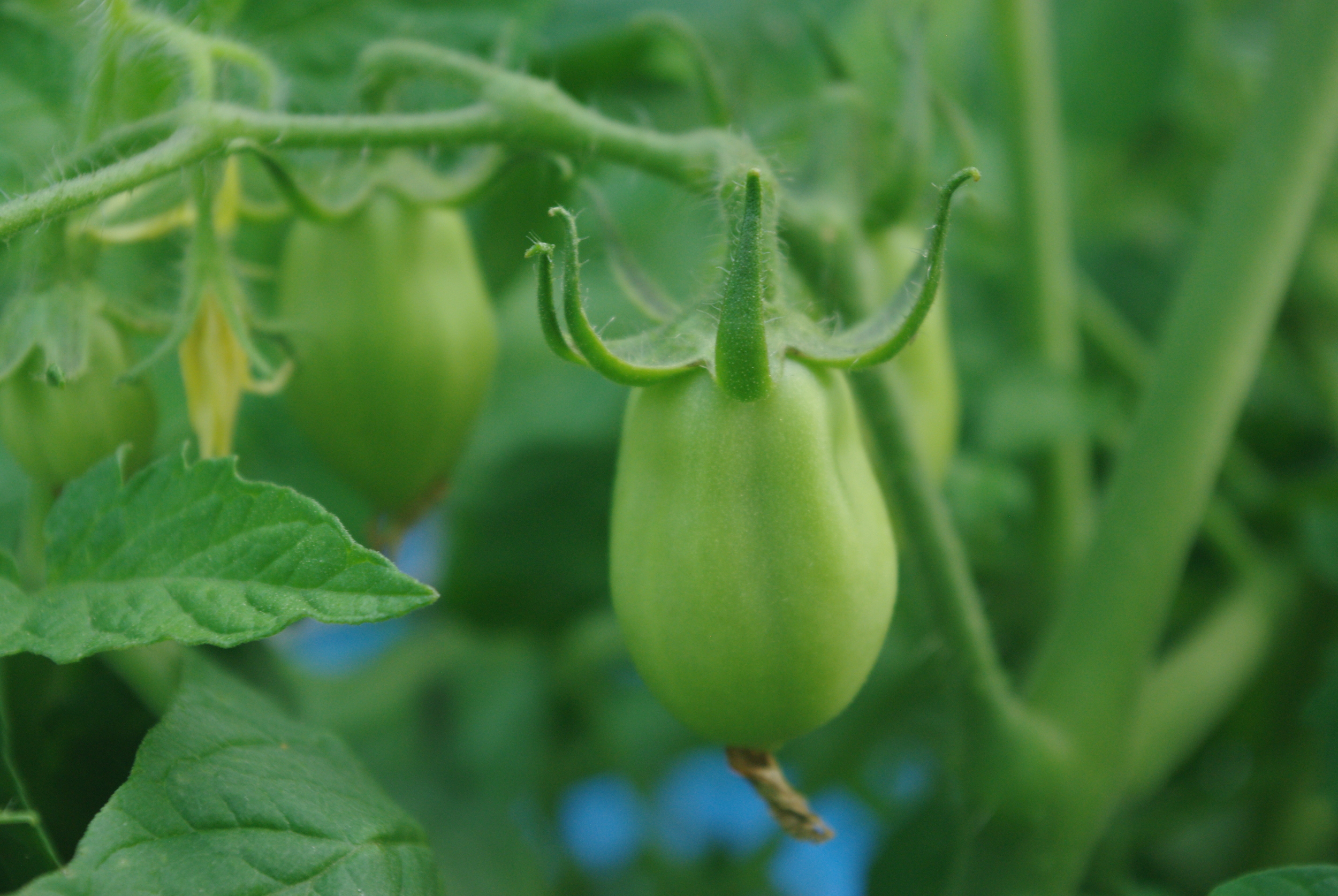
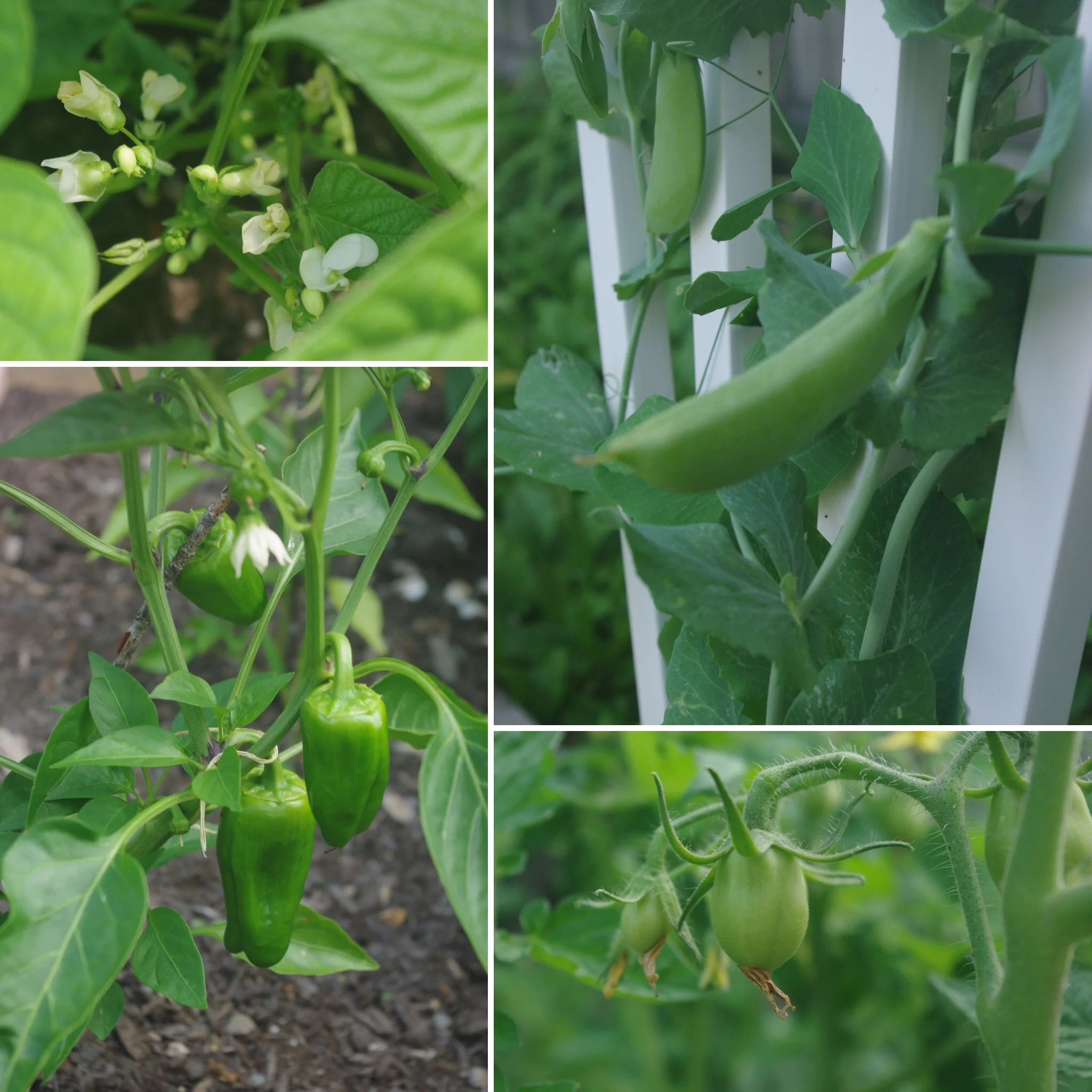
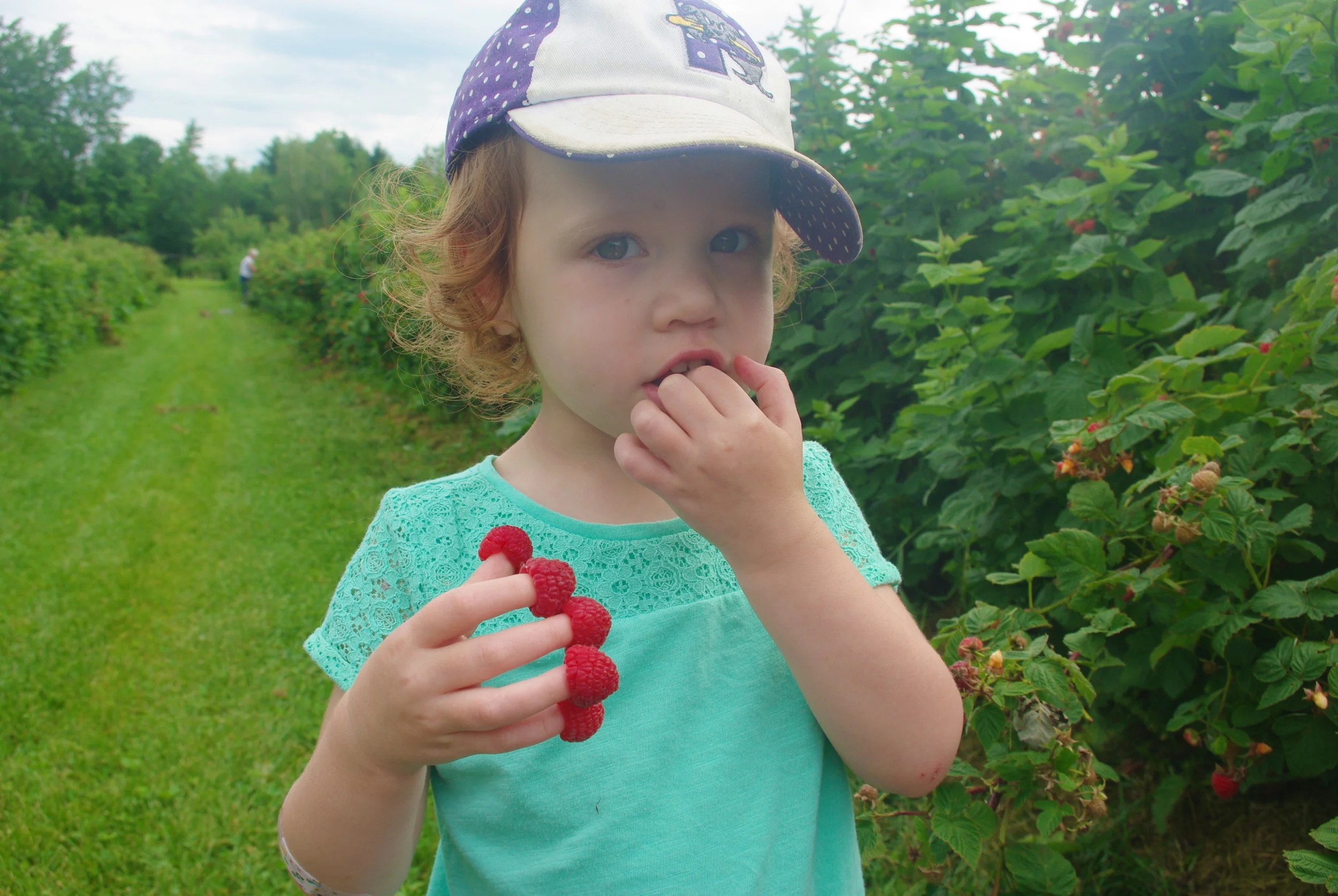
I started a lot of my plants from seeds this year to mixed success. My broccoli didn't make it, the leaf lettuce is sad at best, and the sugar snap peas, I think in part to some bad trellising on my part, haven't performed all that well. But where these have faltered, others have blossomed. The tomatoes and bell peppers are looking fantastic, the butternut squash and green beans grow in leaps by the day. The small batch of garlic, which i planted in the fall on a whim has been harvested and hung up to dry, waiting to make its appearance in fresh tomato sauce later this summer. I'm picking blueberries by the quart.
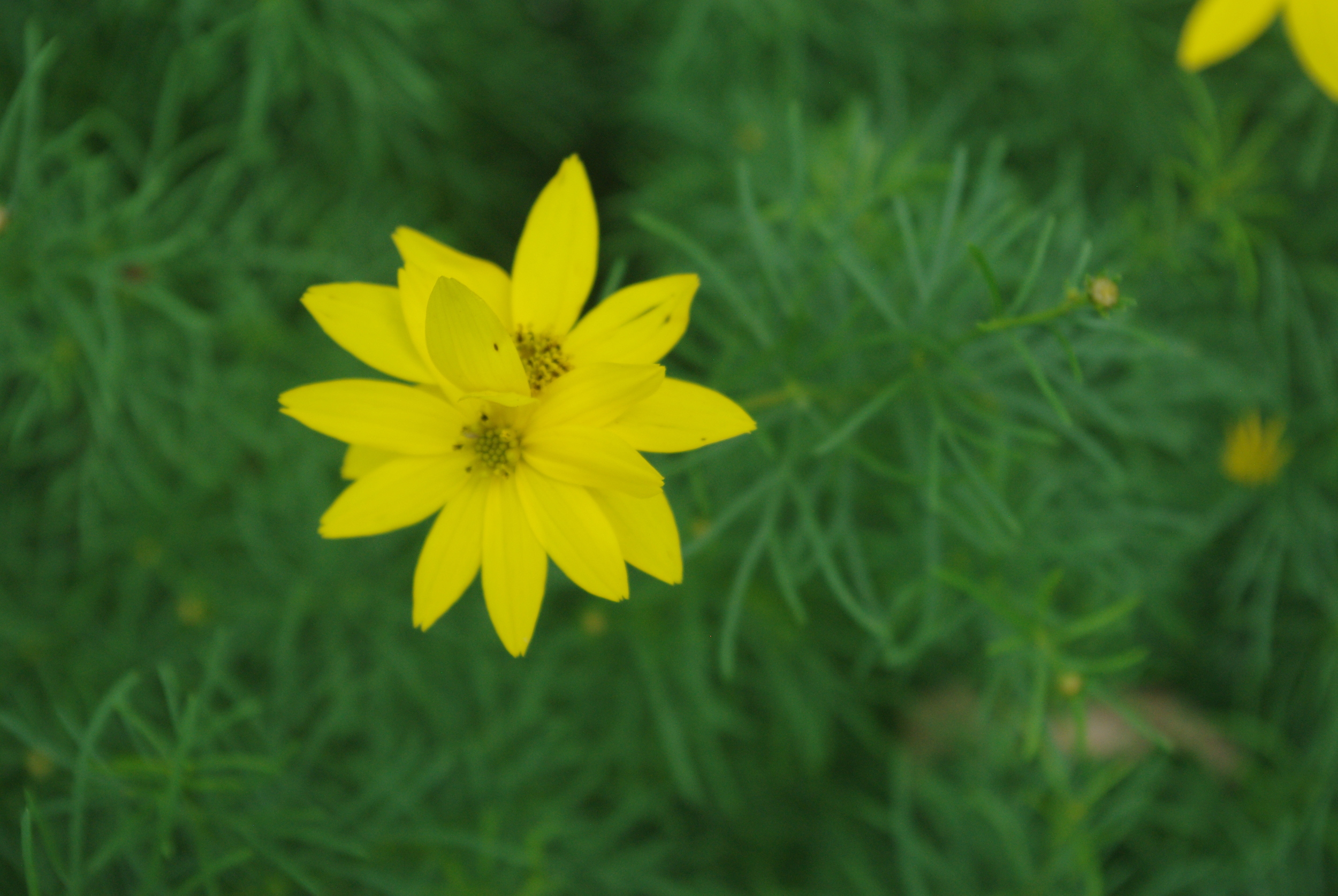
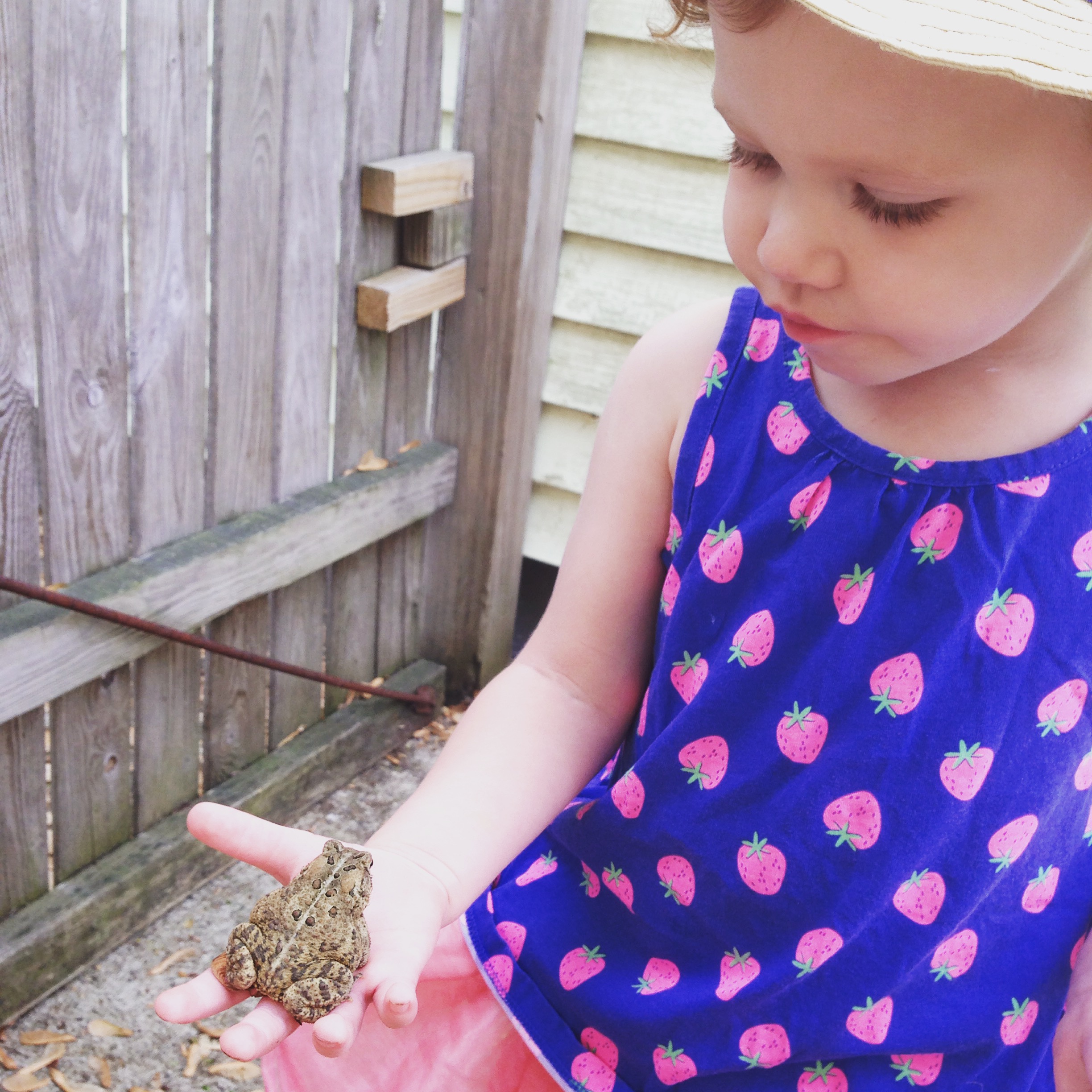
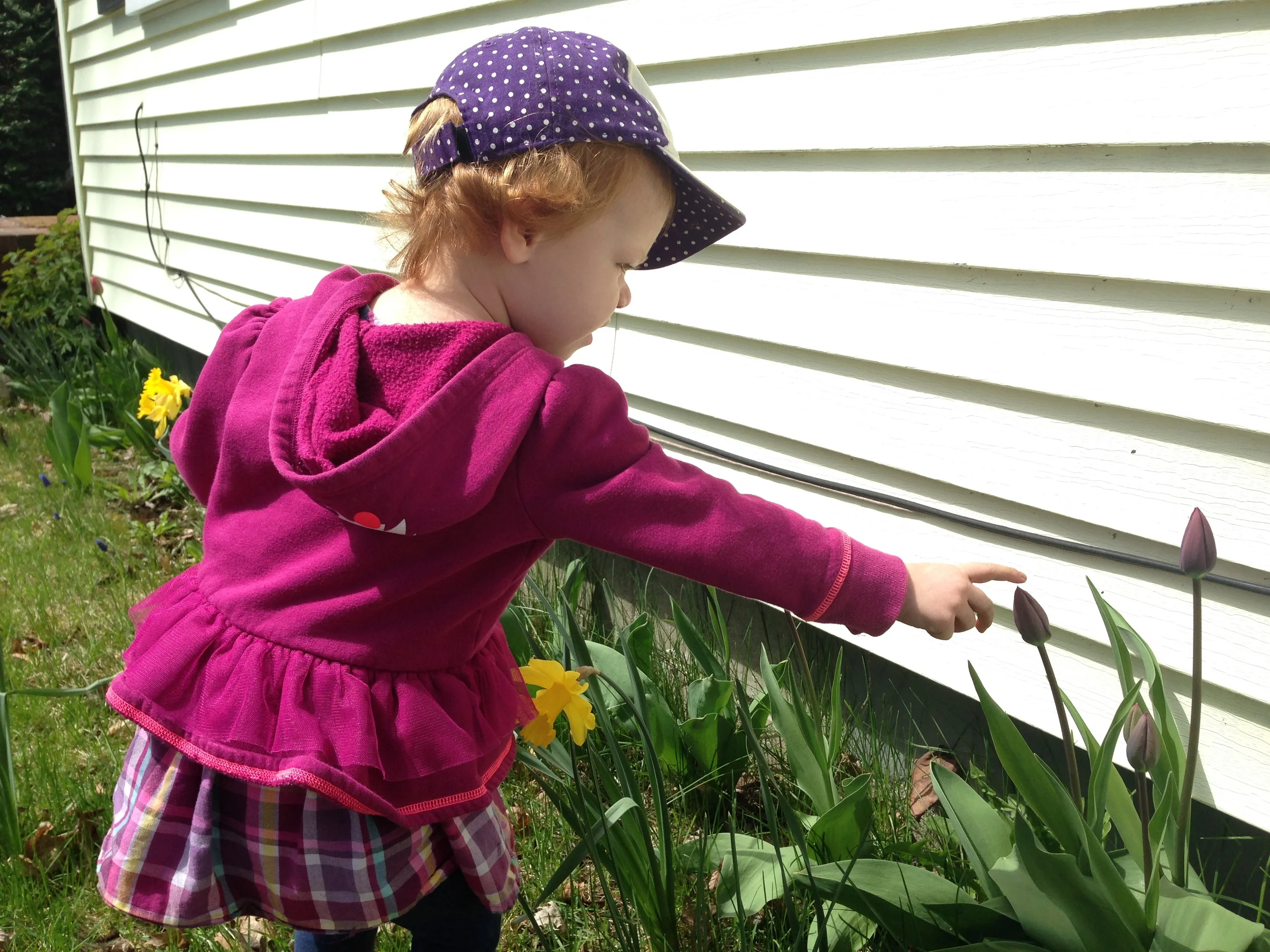
But the best part? How LMC asks if we can go cut more flowers for the table, or when she says "Mama, we need more peas." Now look, normally we're much more of a goldfish cracker than a kale chip kind of family, and my kid can certainly be picky, but when it's this fresh and you pick it yourself? Even a toddler can't say no.
Cast On Party!
Introducing Caiterly and the Dog Days KAL
While I wouldn't normally volunteer to spends months knitting only in white yarn, especially with a dog and a toddler in the house, the nice thing about spending a bunch of time with the sample yarn in a neutral color is that you really get to play with it and see all the things it can do. That's what I got to do with Quince's Cleaner Cotton™ Willet,.
Ocaso shows off the yarn in a beautifully smooth stockinette stich, Atlee displays the marvelous stitch definition in the textured yoke. Caitlery shows what it can do in fine-gauge cables. I like all three designs for different reasons, but Caiterly is probably the one that is most distinctly me.
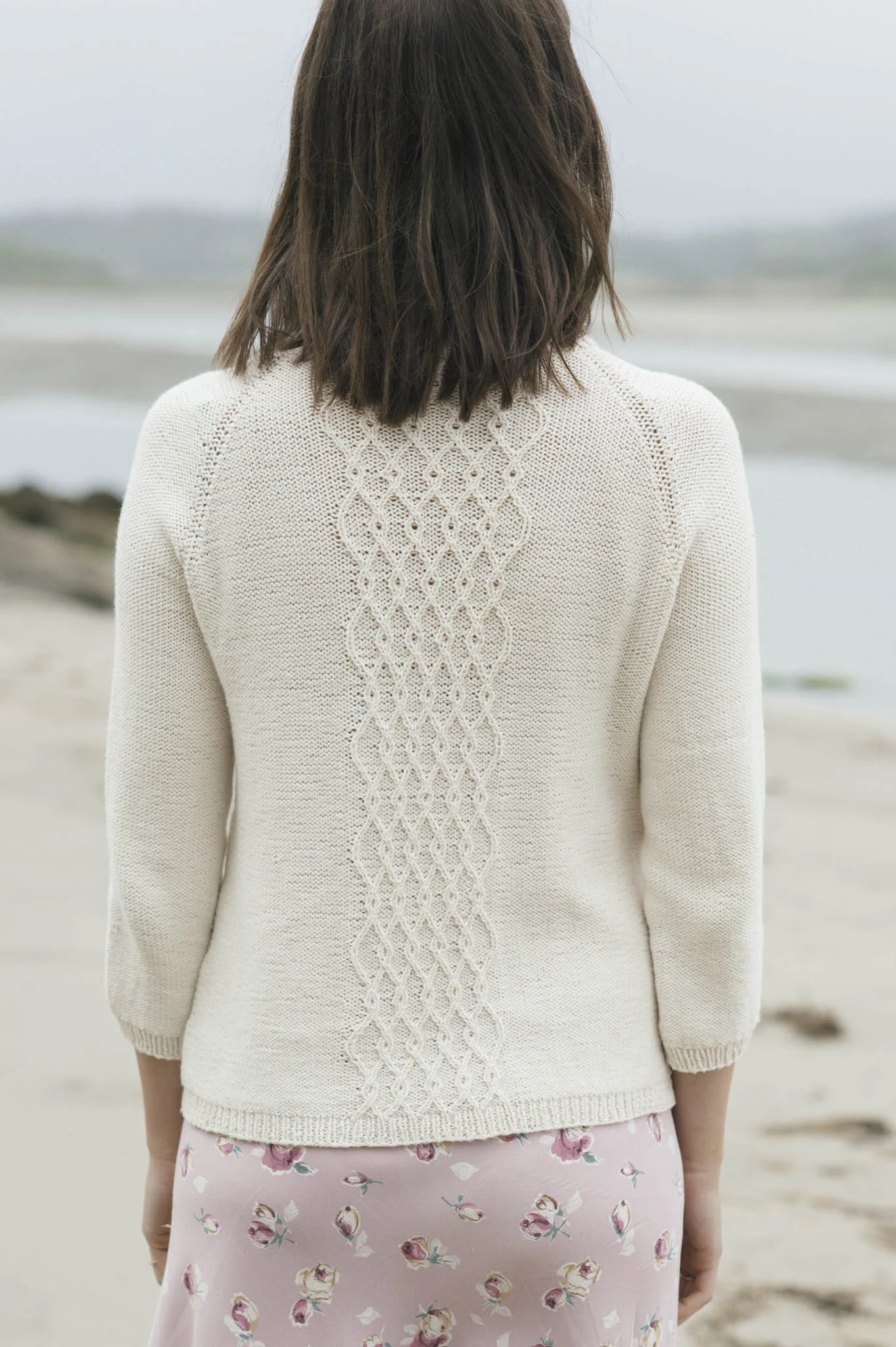
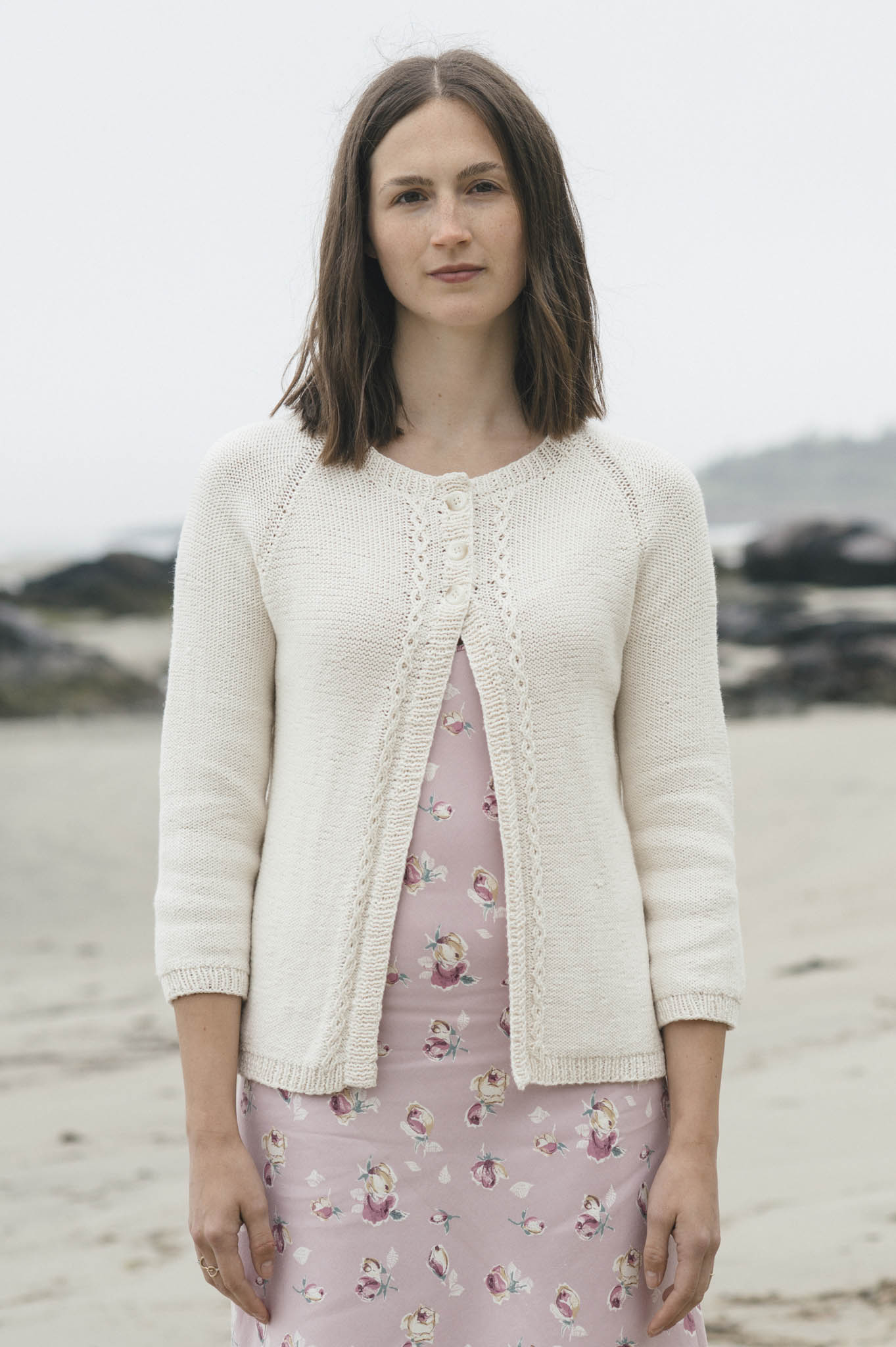
With three-quarter sleeves, a fitted bust, and delicate cabling, Caitlery is elegantly feminine and the details are subtle enough that it can be worn with almost anything.
The sweater is worked seamlessly from the bottom up- raglan style.and features a ribbon-lined button band. (See my tutorials page for details on how to add this detail).
Caiterly is available for $6.50 from the following online shops:
Quince & Co. | Ms. Cleaver Creations | Ravelry
If you knit it and participate in social media, use #quincecaiterly to share and/or tag me @mscleaver !
To celebrate the release of my three Willet patterns, I'm hosting a Willet-centric knit along with Quince on their Ravelry group. The KAL runs for six weeks and includes special handmade prize for a FO knit from one of my patterns and several Quince gift cards for FOs worked in Quince yarns. For more details, visit my Knit Along page or the Quince group. I'll be knitting an Atlee myself, and I hope you'll join in!
Introducing Atlee
The range of what you can do with knitting is so broad and varied - colorwork, cables, lace, brioche, intarsia, etcetera. I love a good complex knit, but sometimes you want a palate-cleanser - something simple, just knits and purls - and why not make it in white?
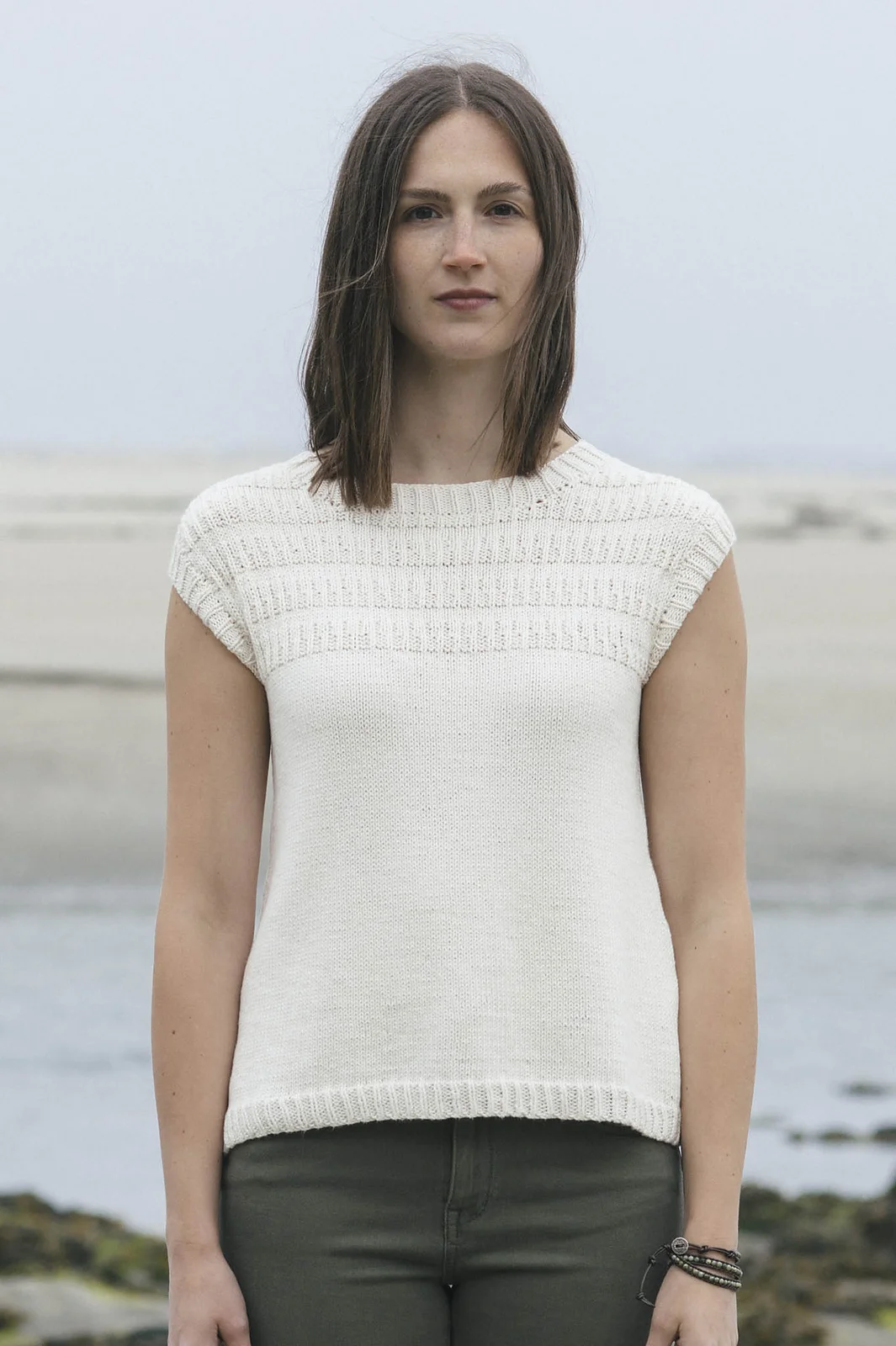
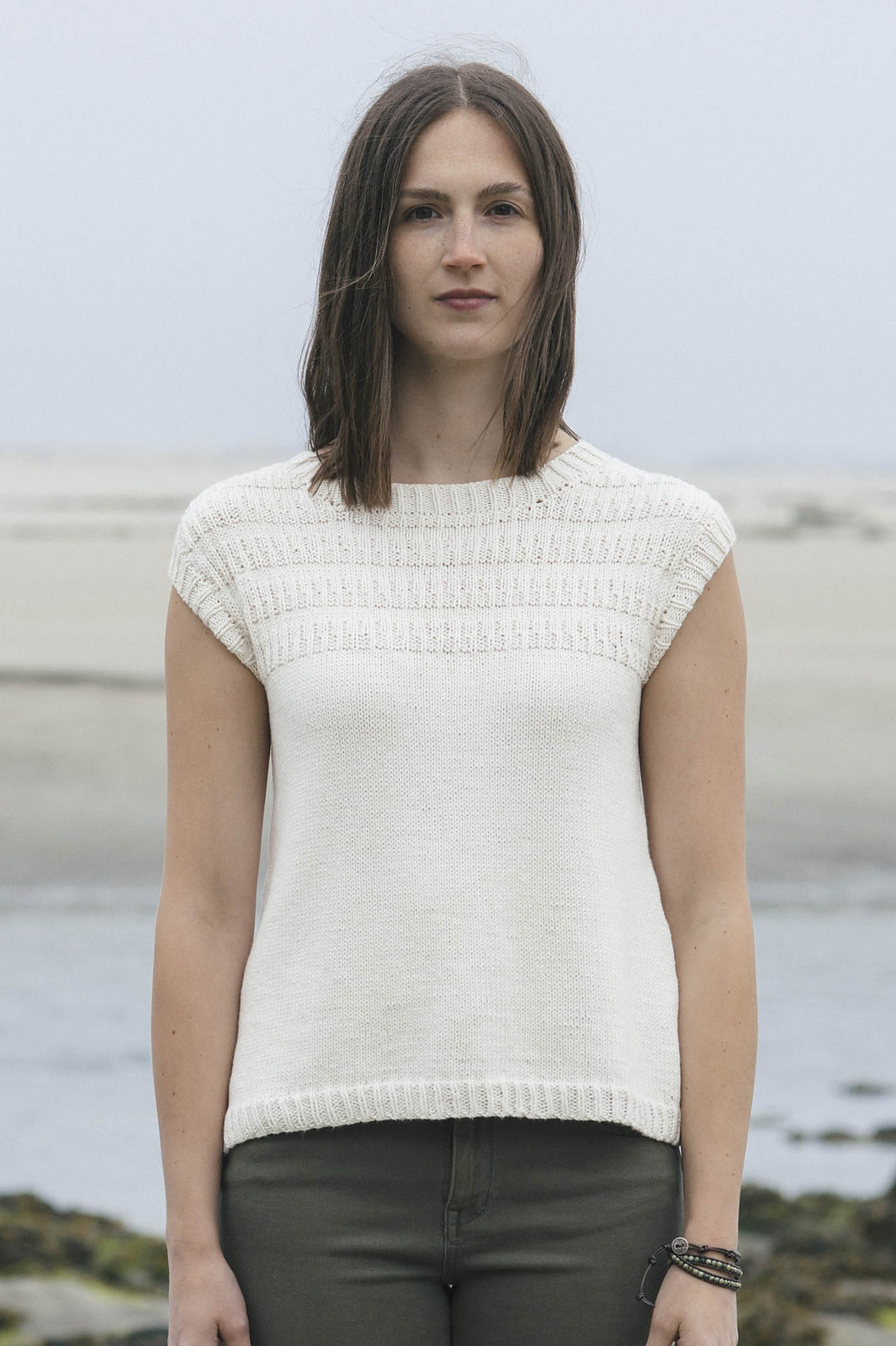
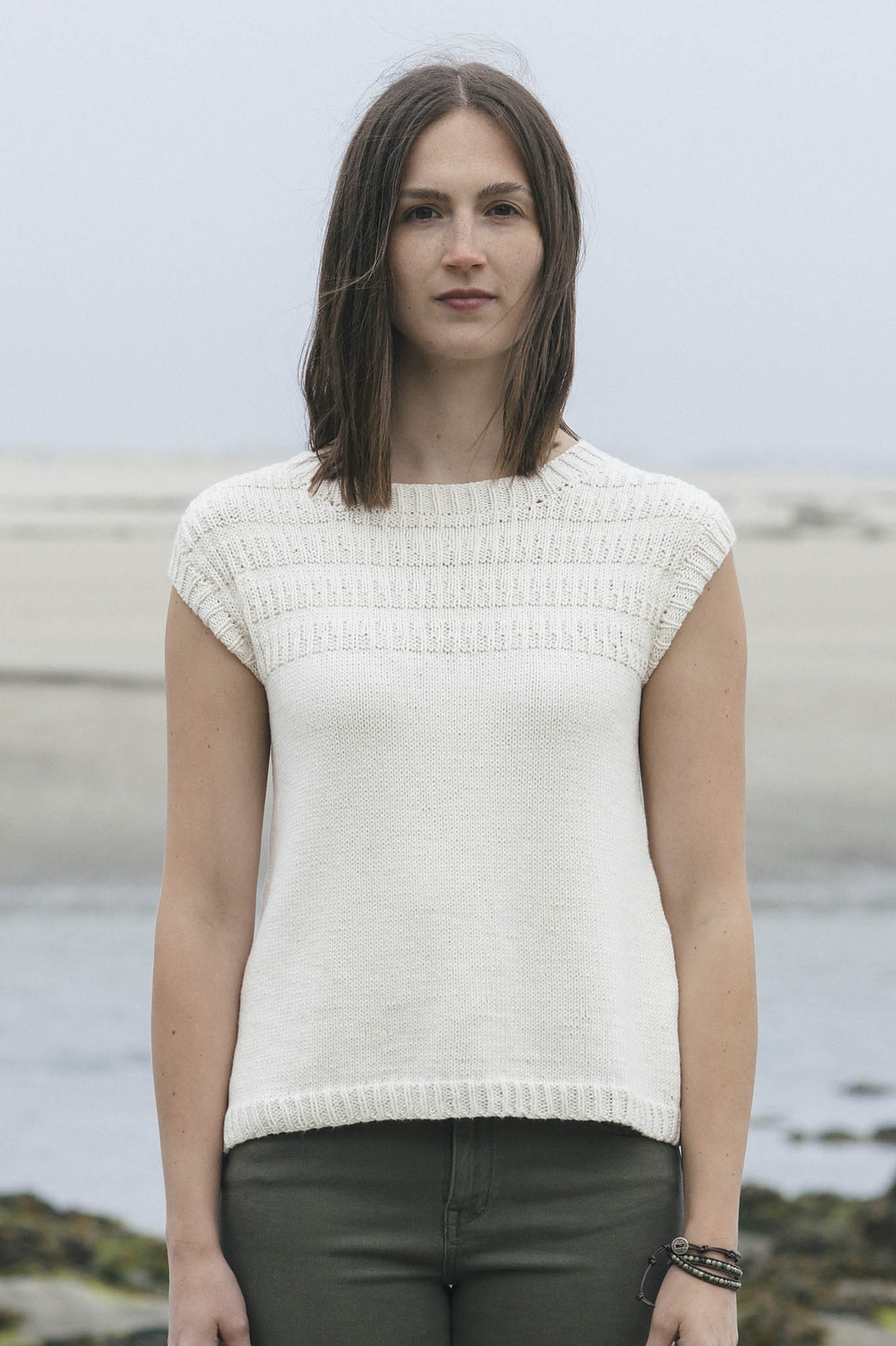
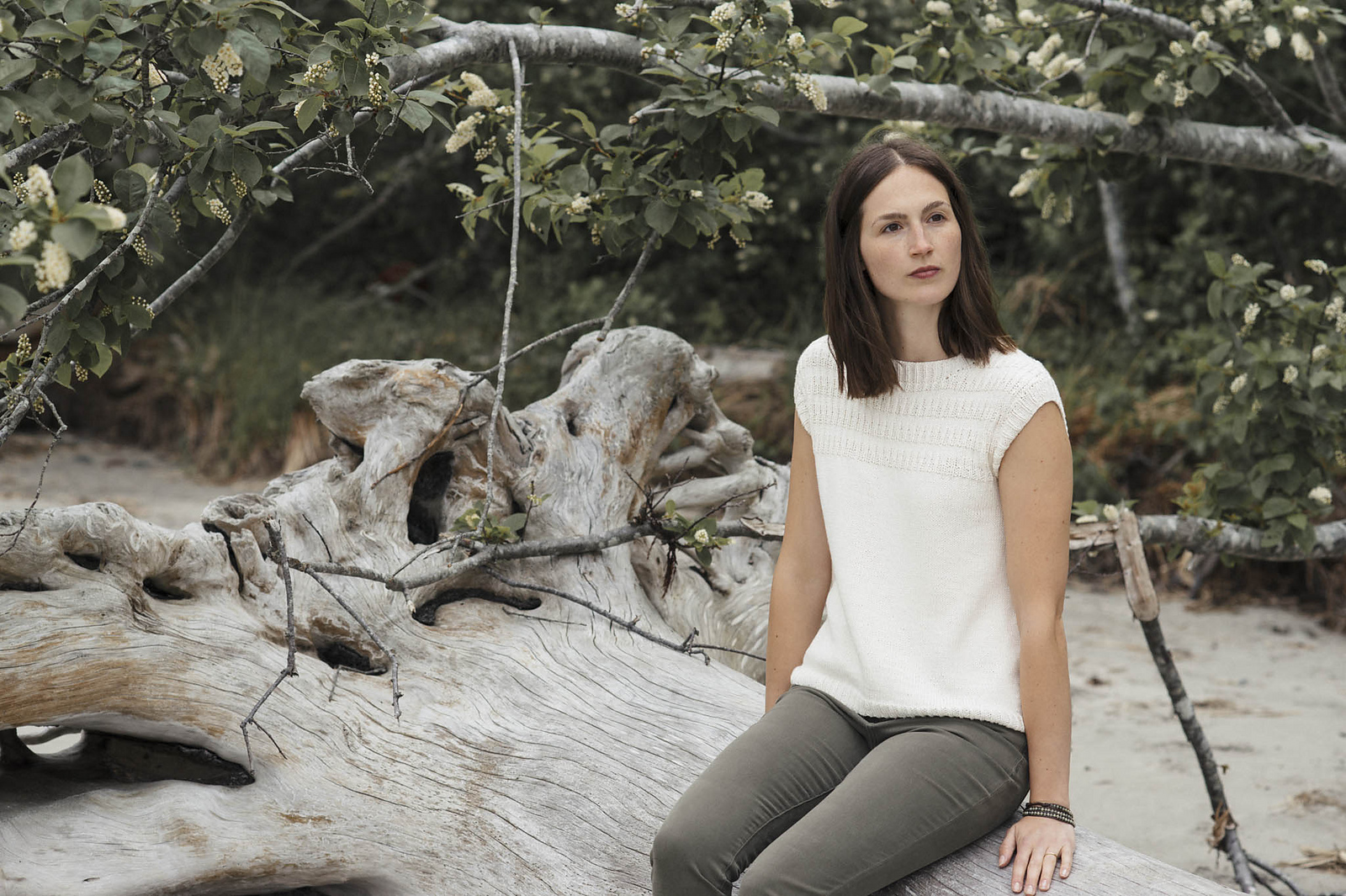
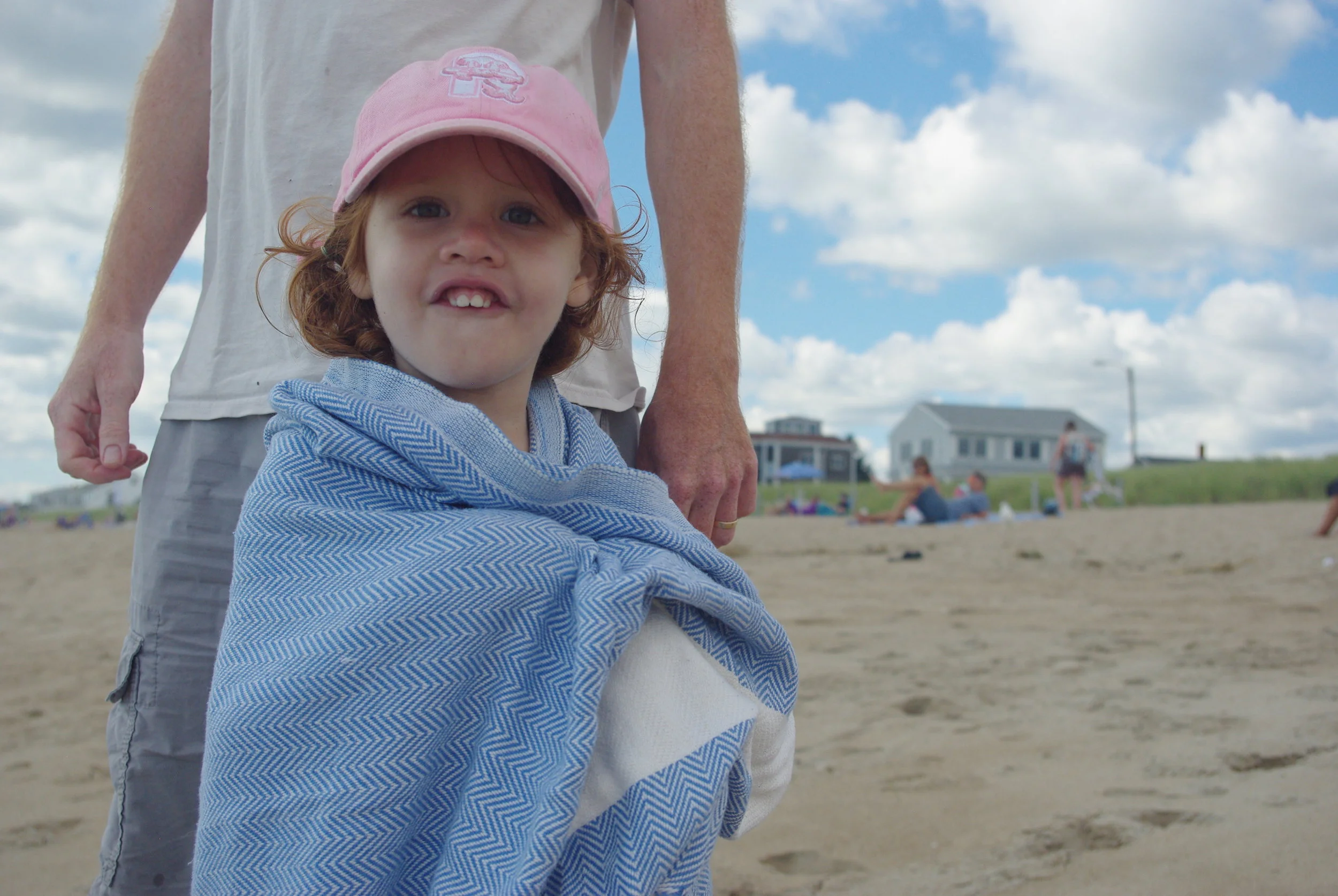
In comes Atlee, my newest design for Quince & Co. - a simple, soothing tee. In Quince's Cleaner Cotton™ Willet, with an a-line shape, scooped neckline and textural details in the yoke, Atlee is a picture-perfect essential for easy days in the sun.
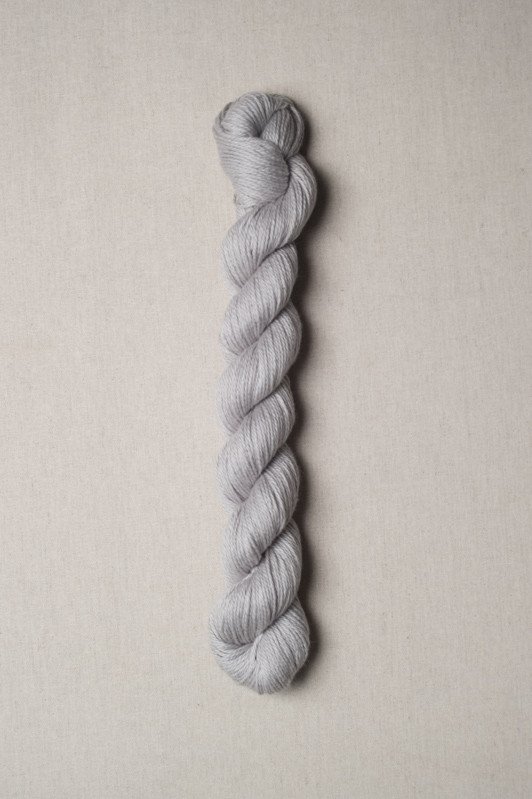
The tee is worked in the round from the bottom up and split for arms, with the ribbing picked up and worked after a three-needle bind-off at the shoulders. Simple tee, simple construction. Easy enough that you could make one in multiple colors! Which is good, because I want to knit one for myself, but how do I choose between Dinghy, Windlass, or Oar?
Atlee is available for $6.00 USD from the following online shops:
Quince & Co. | Ms. Cleaver Creations | Ravelry
If you knit it and participate in social media, use #quinceatlee to share and/or tag me @mscleaver !
I'd love to see your version!!!
Summer
It takes a while for summer to arrive in Maine, but is it ever worth the wait.
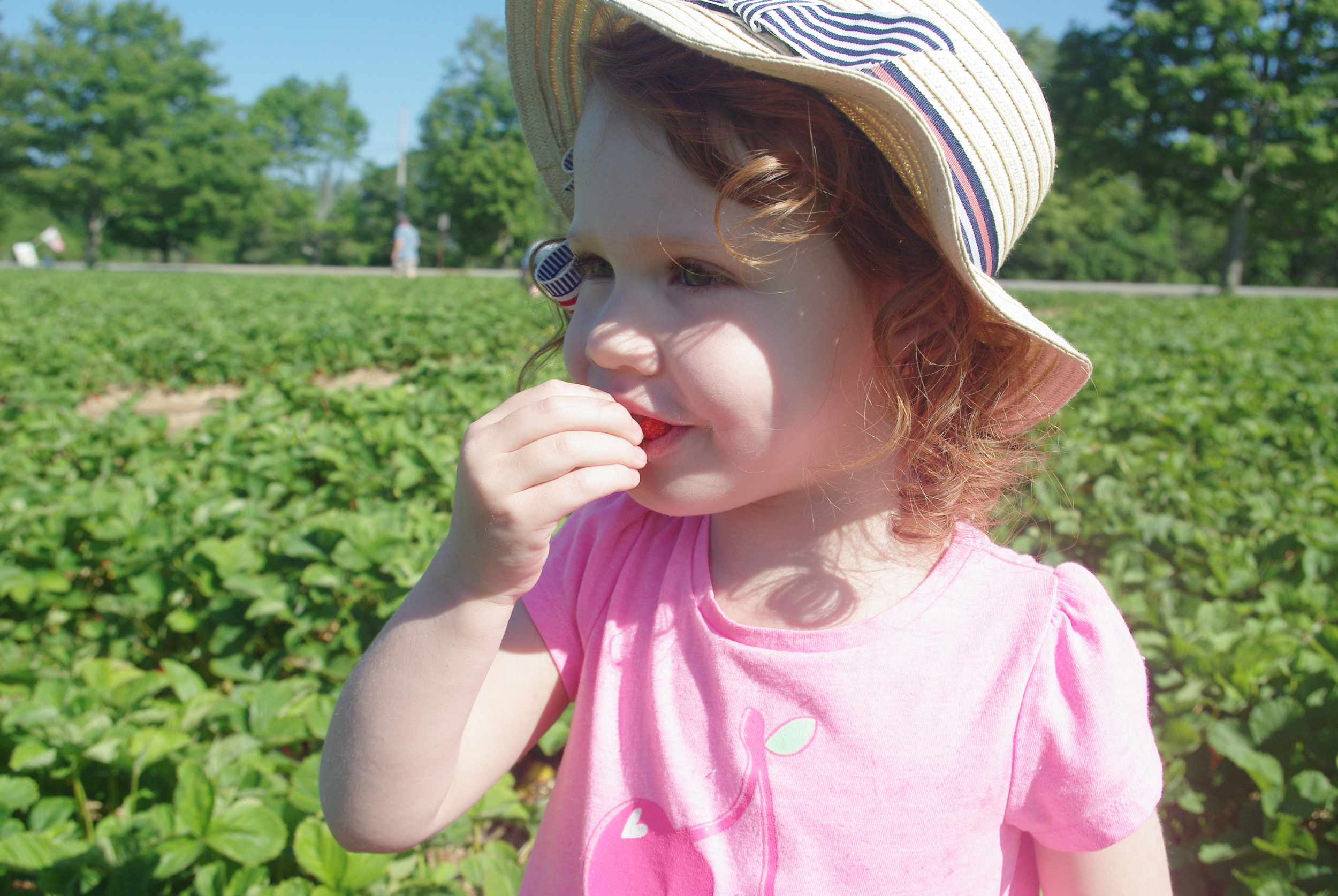
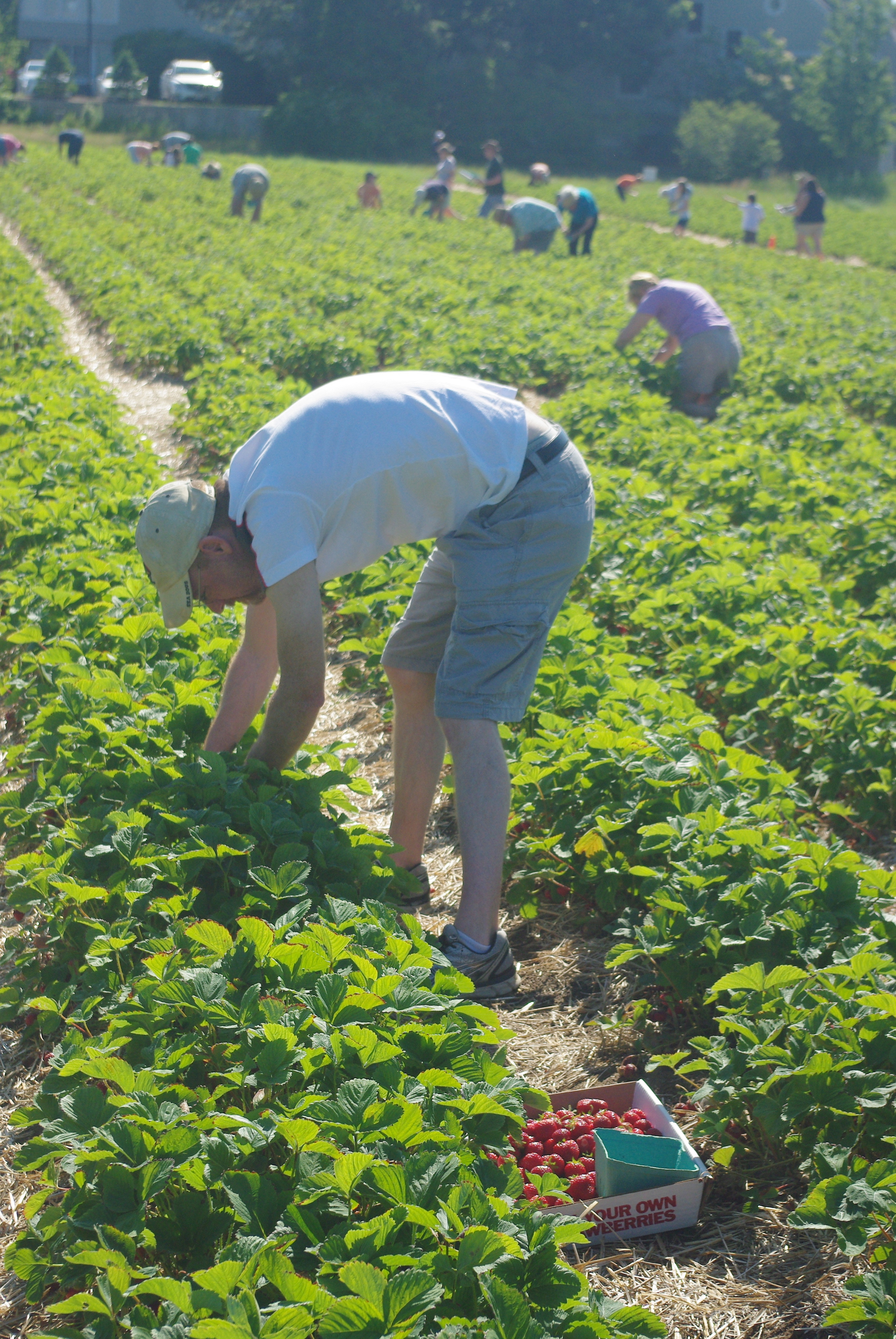
Strawberries and splash pads and sunshine. Home runs and wading pools and little owl nests. Yes, please, and thank you.

Wherein I talk about body image, mental health and making your own clothes, one year later...