FO Roundup - Summer 2017

One of the most fun parts of being a designer is seeing how others interpret your designs. Here are a few of my favorite finished objects (FOs) of late,  including some of my lesser-made patterns (click on any photo to visit the knitter's Ravelry and/or Instagram page):
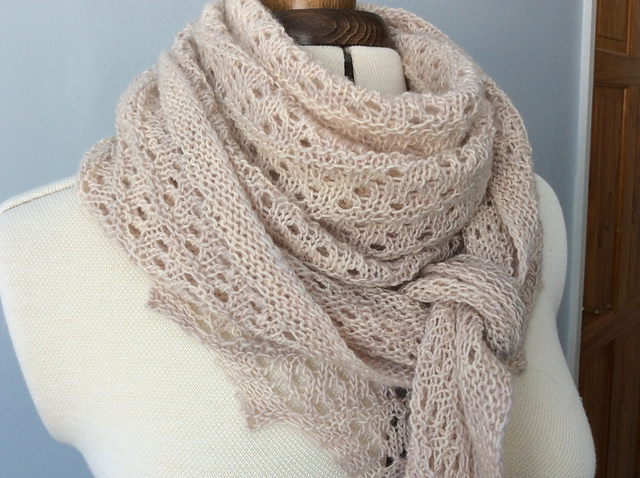
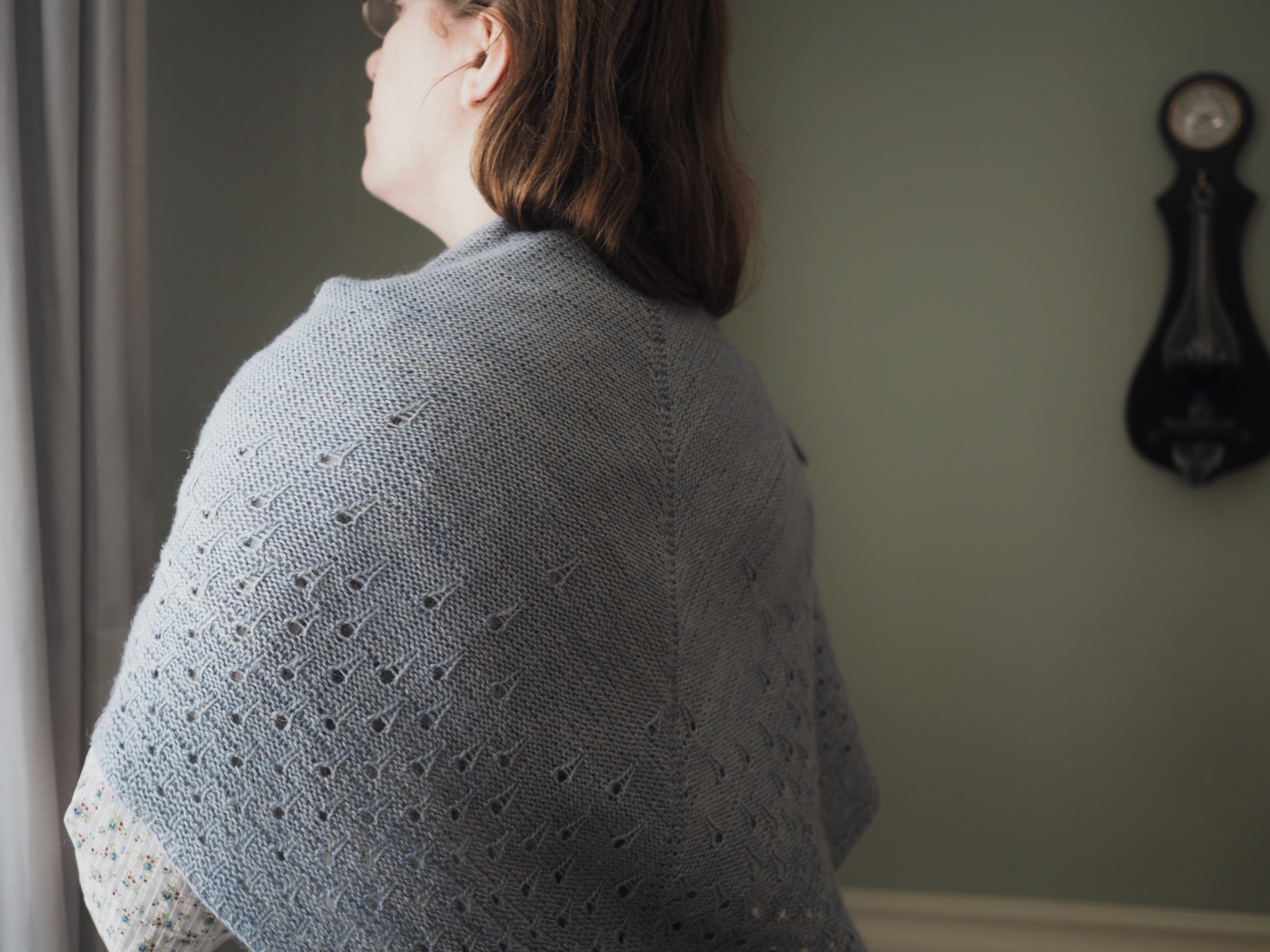
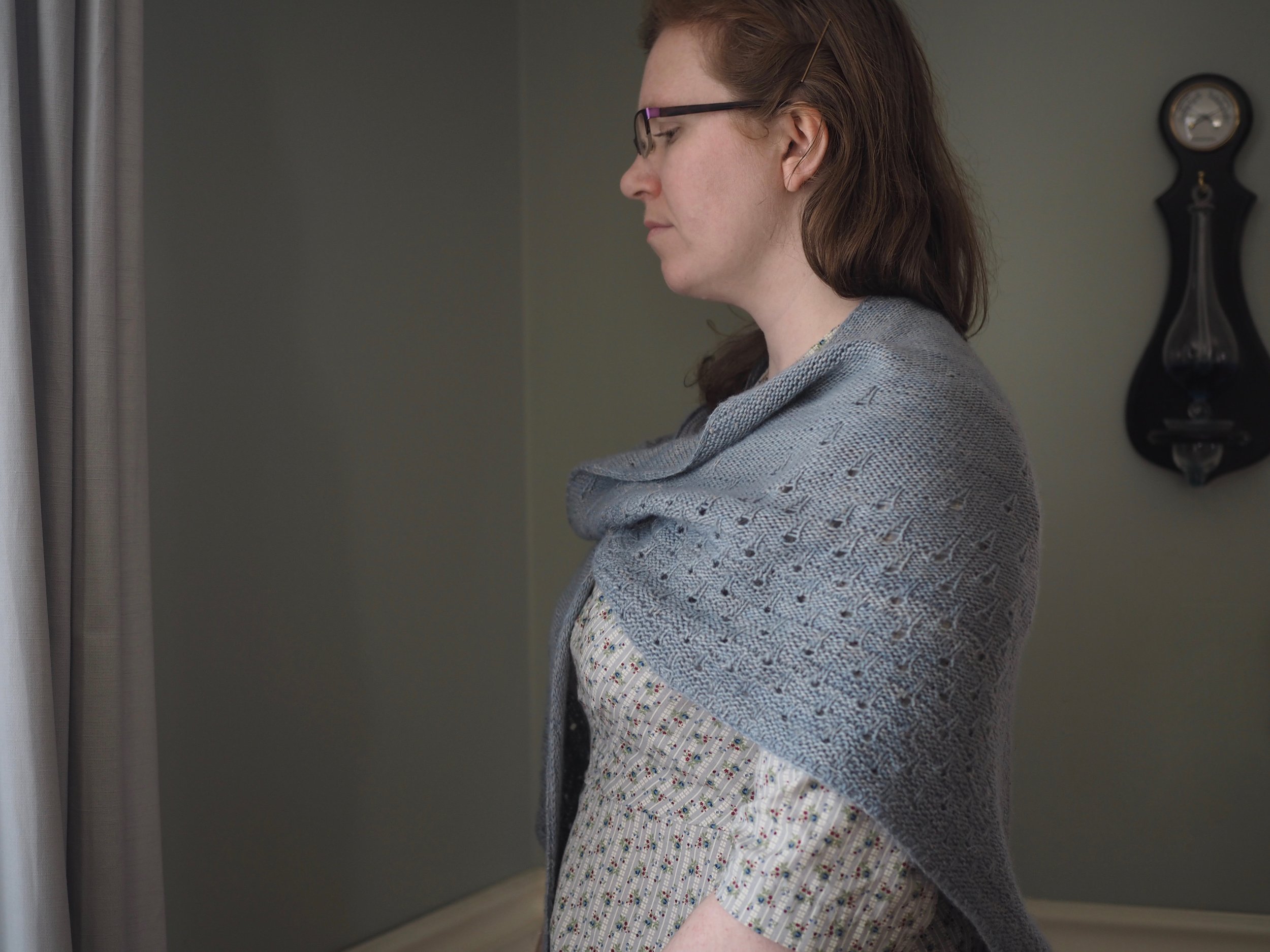
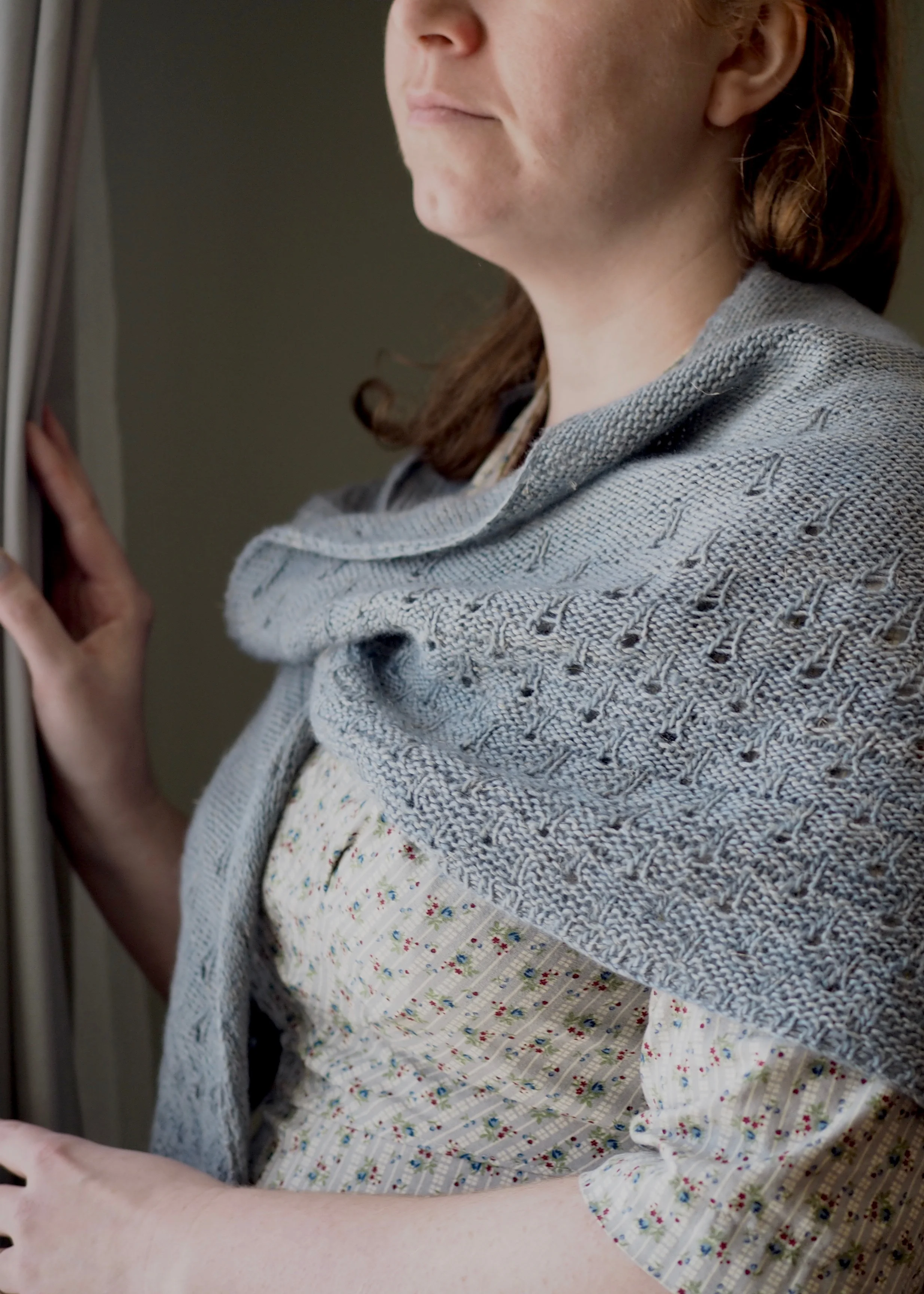
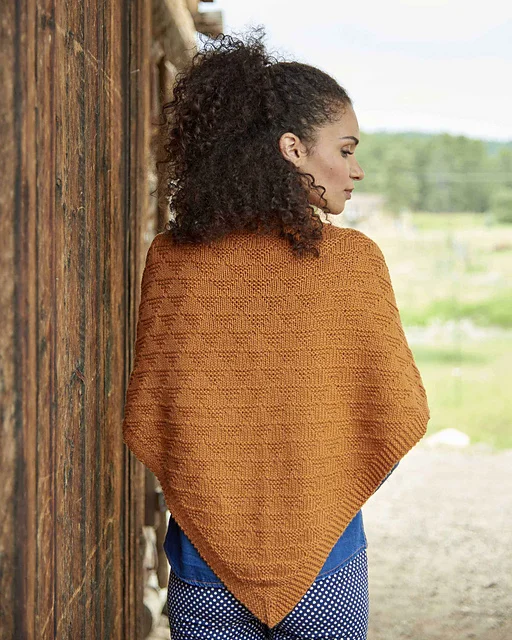
Maian - knit by DinkyDebbie
Maian - knit by DinkyDebbie

Ripley - knit by Victorious Wool

Ripley - knit by Victorious Wool

Ripley - knit by VictoriousWool
Ripley - knit by VictoriousWool

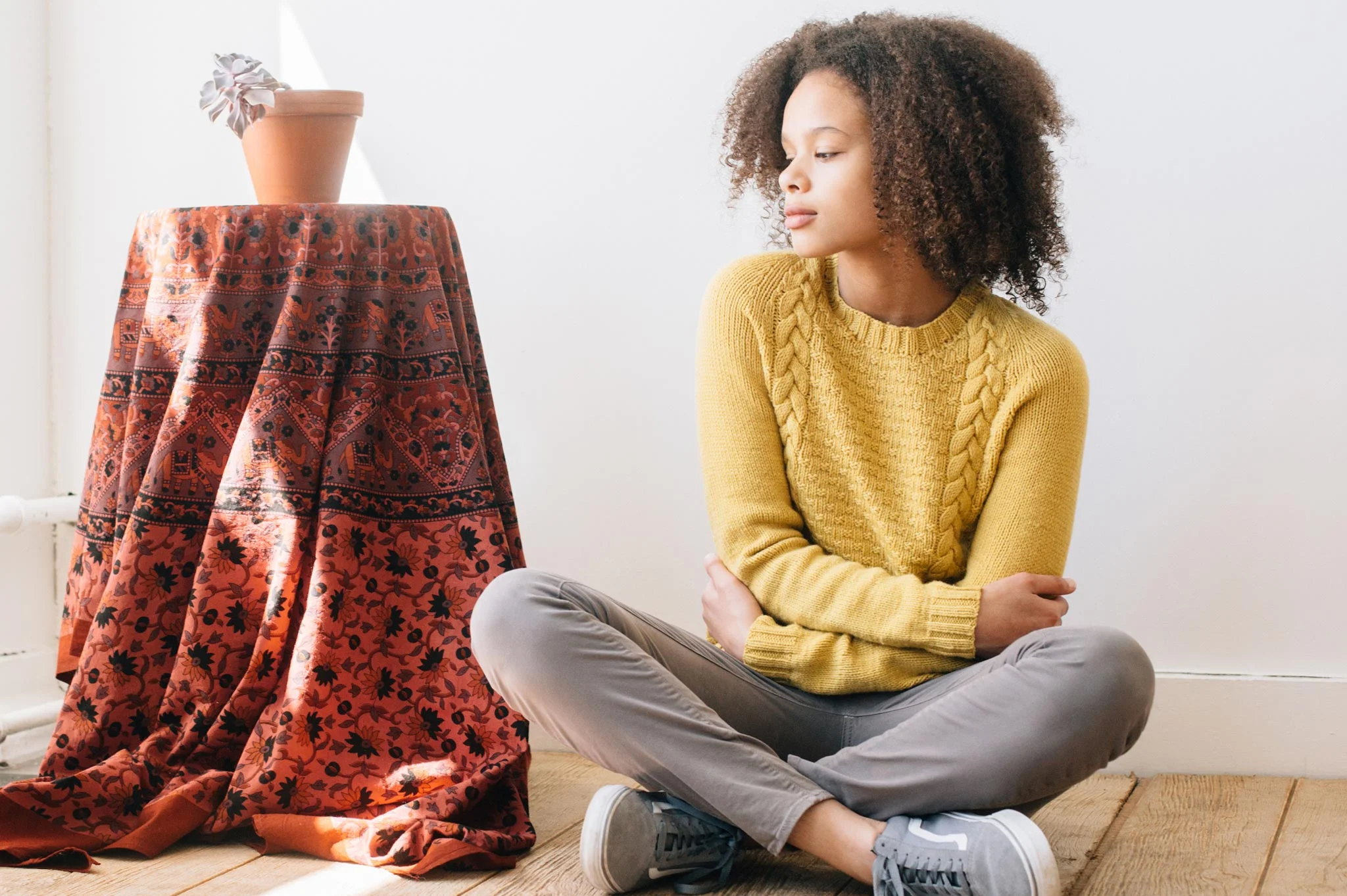
Kaeryn - knit by sweepea

Kaeryn - knit by sweepea

Domenic Duck - Design By Leah B. Thibault, knit by Traceyknits5

Domenic Duck - Design By Leah B. Thibault, knit by Traceyknits5

Atlee- Knit by java1994

Atlee- Knit by java1994

Atlee- Knit by java1994

Atlee- Knit by java1994

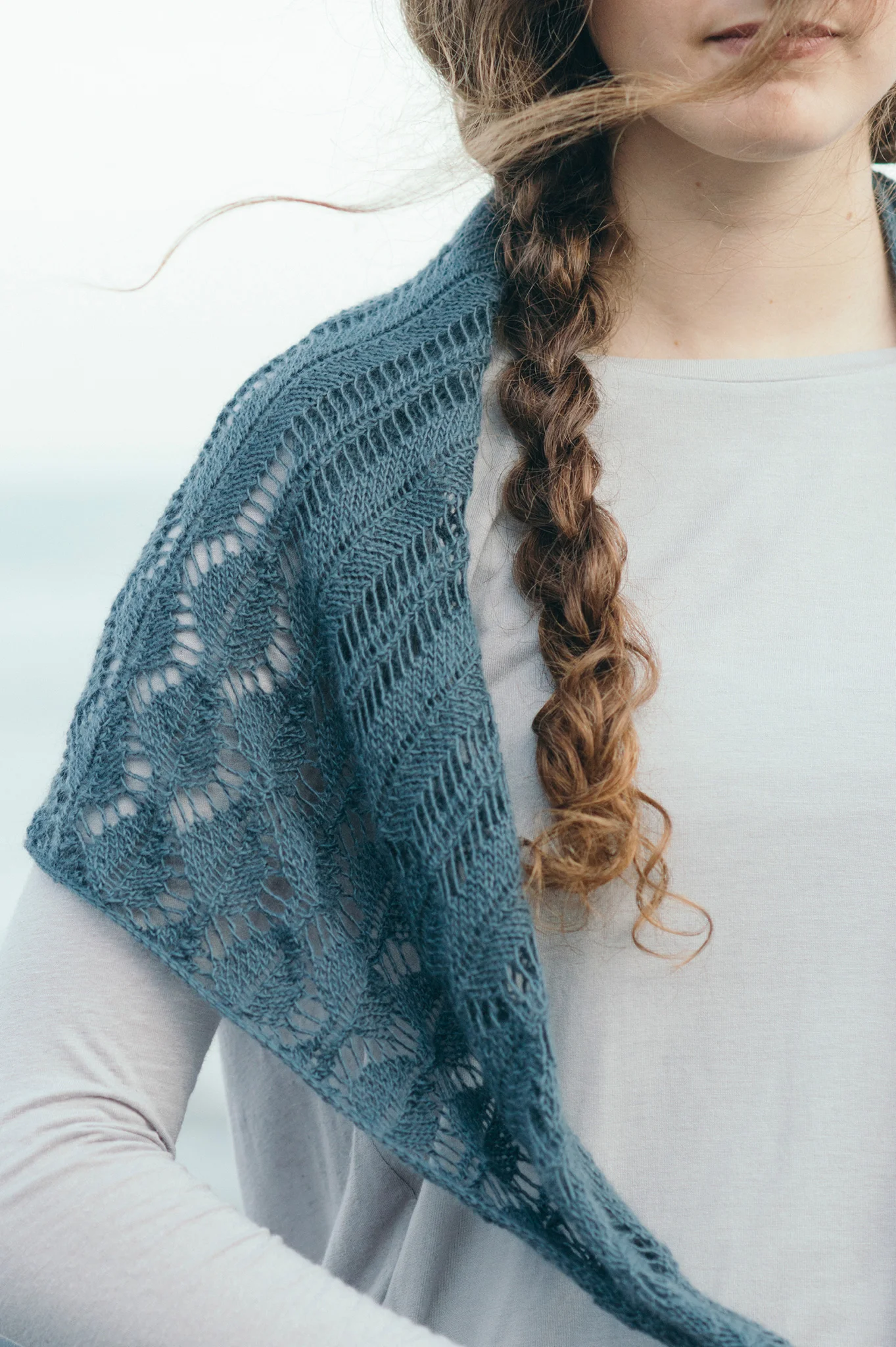
Ezekiel Saw - design by Leah B. Thibault, knit by knitterripper

Ezekiel Saw - design by Leah B. Thibault, knit by knitterripper

Want to share your knits with me? Tag me @mscleaver on Instagram, or if it's on Ravelry, I'll see it. :) 
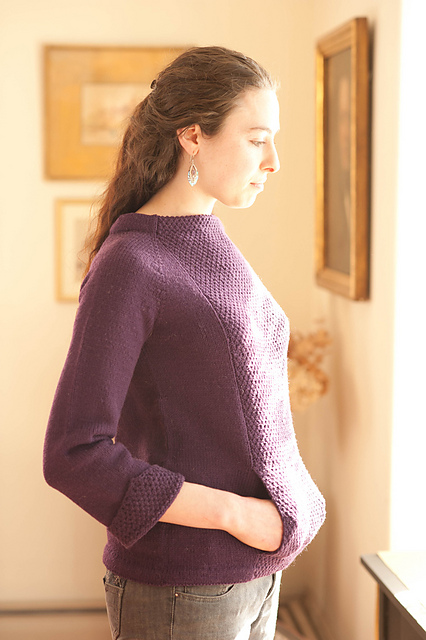

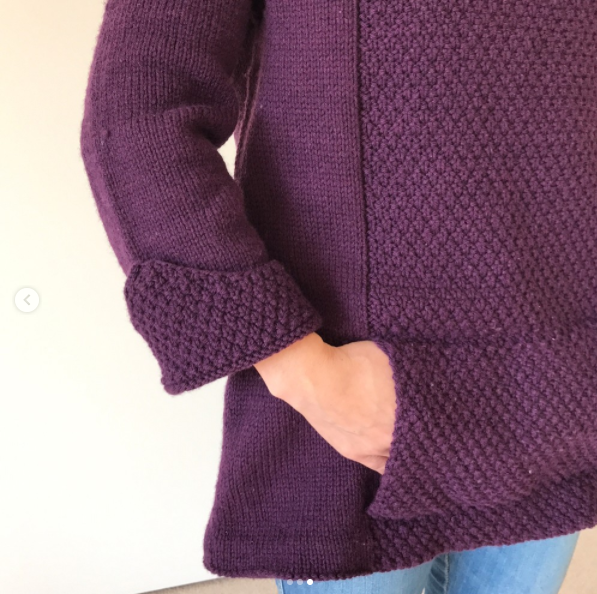
Kaeryn - PDF Pattern
$6.00

A comfortable, cozy, A-line pullover with a moss stitch panel and kangaroo pocket in the front. The sweater is worked from the top down and finished at the bottom edge with a turned hem. The sleeves end in a turned cuff--for a little extra flair.

  • 30½ (32¾, 34¾, 36¾, 39, 41, 43¼, 45¼, 47¼, 49½, 51½, 53½, 55½, 57¾, 59¾)” bust circumference
  • 1340-2680 yds of Worsted weight yarn, sample shown in Quince & Co. Lark in Frank’s Plum 114
  • 36-inch circular needle, US 6 - 4.0 mm and US 5 – 3.75 mm
  • 23 stitches and 32 rows = 4 inches in Stockinette

Learn more about Kaeryn in the Chronicles

View it on Ravelry

Photos © Carrie Bostick Hoge

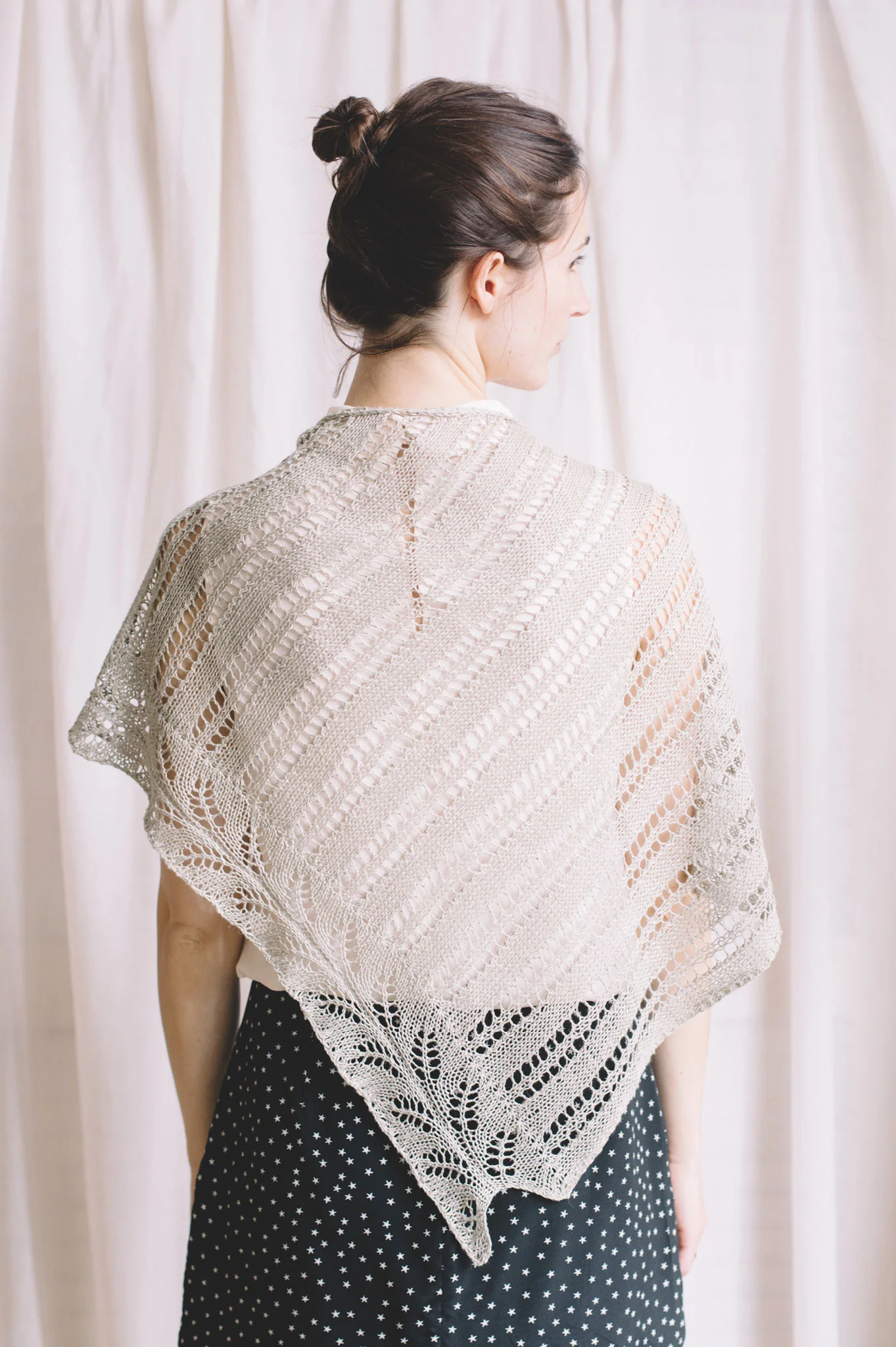
Ezekiel Saw - PDF Pattern
$6.00

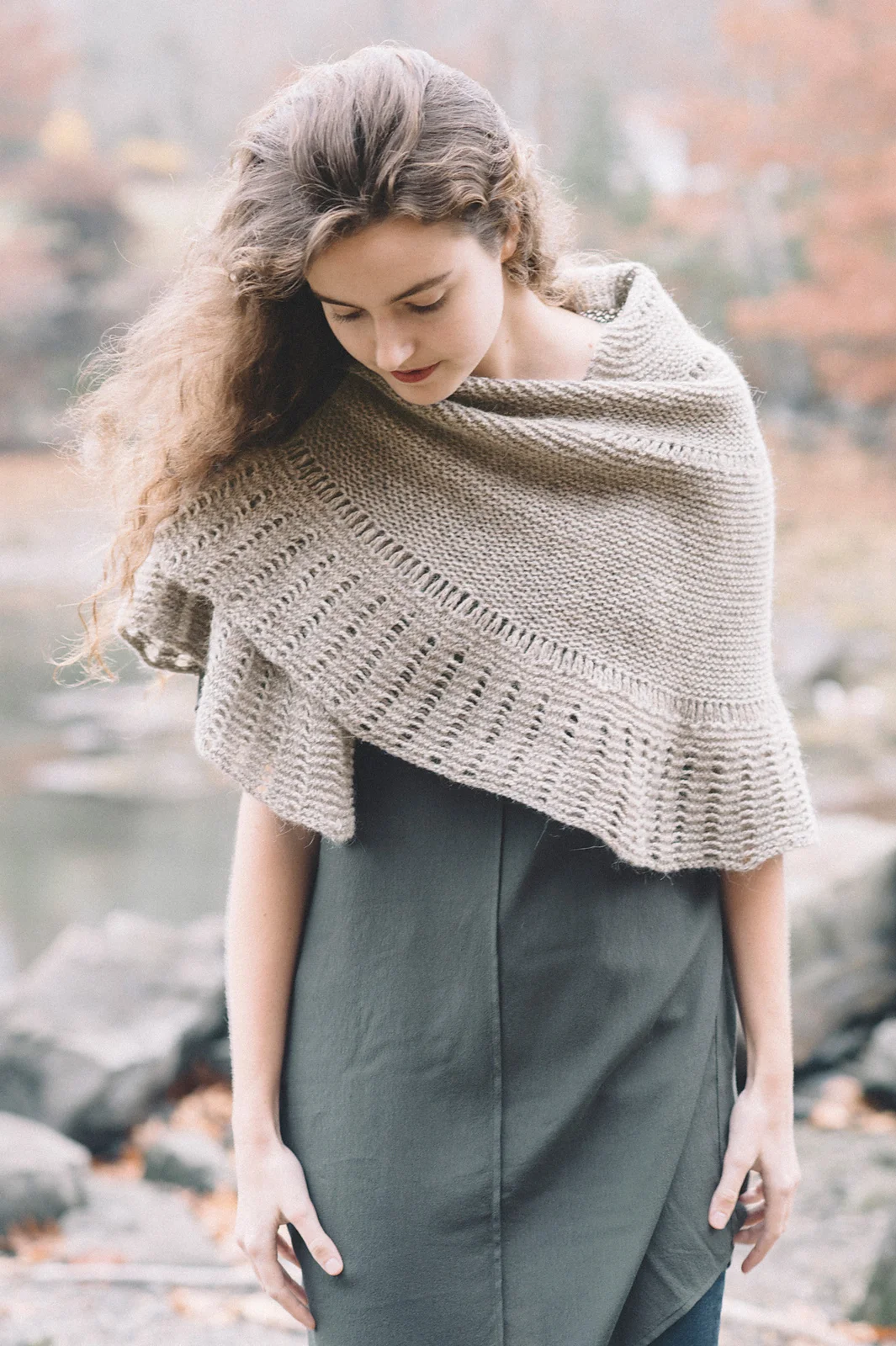
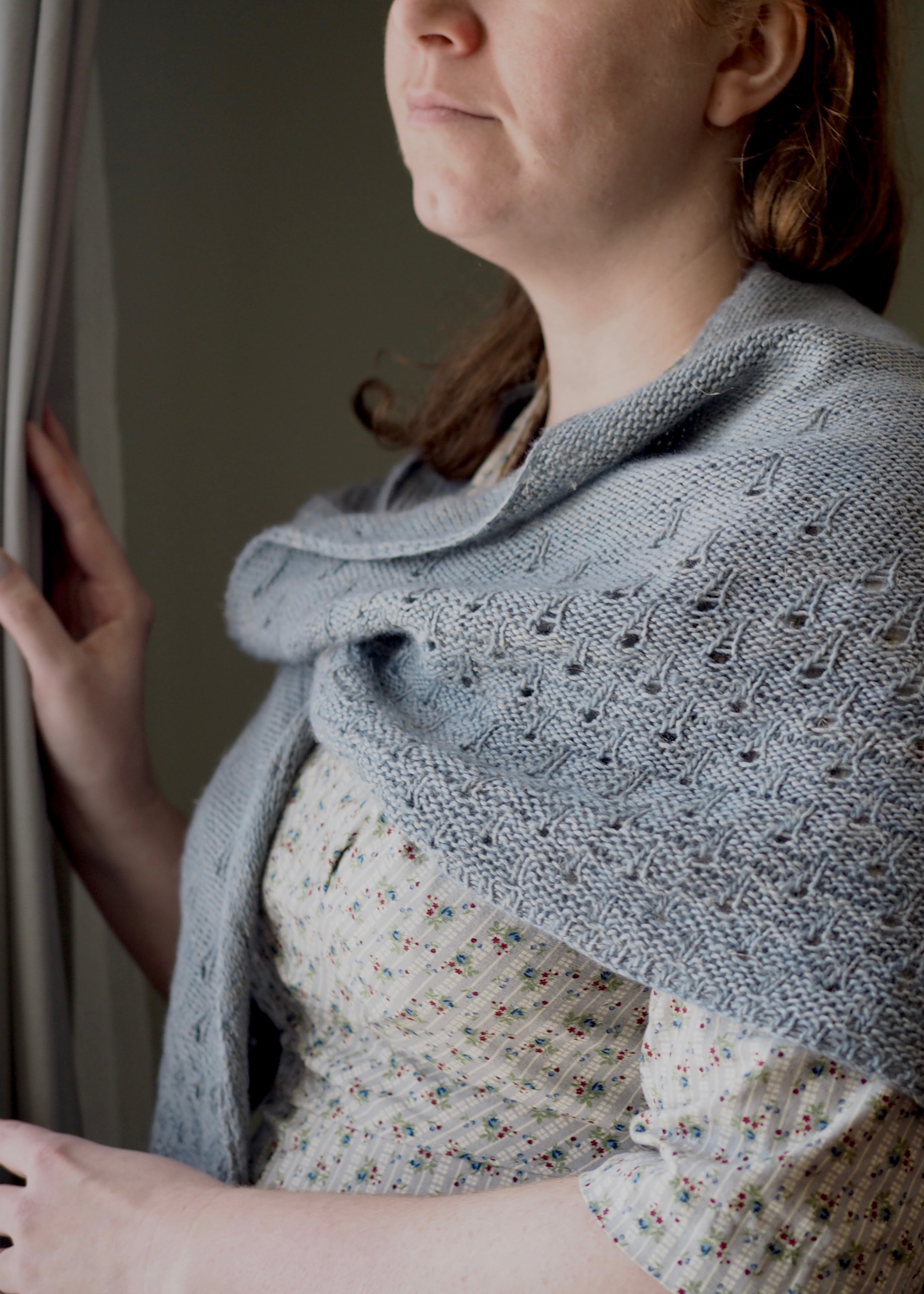
Every so often, a design bursts, Athena-like, fully formed from its creator’s head. Ezekiel Saw is one such design for me. I had a clear vision of a triangle shawl in two-similarly toned, but distinct colors with detailed open lace bands. The subtly marled palette of CoopKnits’ Socks Yeah! provided the perfect material for bringing that vision to life.

The Wave and Wheel lace pattern of the bands creates a wheel within a wheel motif, reminiscent of an old folk song about an altogether different kind of vision, “Ezekiel Saw Da Wheel.”

  • 66”/167 cm wingspan, 27” from center back to point

  • Yarn: Socks Yeah! by CoopKnits (75% Superwash Merino, 25% nylon; 230yd [212m]/50g)
    MC: 2 skeins Ammolite (102) and CC: 1 skein Axinite (103) Sample uses all of suggested yarn.

  • Needles: 24” circ in size US 5 / 3.75 mm 

  • Gauge: 18 sts and 38 rows = 4”/10 cm in St st 

Also available as a kit!

Learn more about Ezekiel Saw in the Chronicles

View it on Ravelry

Photos © Bristol Ivy/Ms. Cleaver Creations

Domenic Duck - PDF Pattern
$6.00

Finished Size: 
11 inches/ 28 cm tall.

Yarn: 
Brown Sheep Co. Lambs Pride Super
Wash; 200 yds/ 183 m per 3.5 oz / 
100g skein; 100% wool: 
MC: #SW169 Sunshine Yellow or 200 yds worsted weight yarn. 
CC: #SW038 Alabaster or 25 yds worsted weight yarn
• 1 yard black yarn or embroidery thread.

Pattern is knit in the round from the bottom up with a short-row tail. Wings and beak are picked up seamlessly with an afterthought technique. The first few rounds of all appendages will be fiddly, but it is easier if you use the magic loop technique.

Step by step tutorial available at MsCleaver.com

Also available as a complete kit.

Learn more about Domenic (Duck) in the Chronicles

View it on Ravelry

Photos © Leah B. Thibault

Atlee - PDF Pattern
$6.00

Summer begs for basics, and Atlee delivers. In Cleaner Cotton™ Willet, with an a-line shape, scooped neckline and textural details in the yoke, Leah B. Thibault’s tee is a picture-perfect essential for easy days in the sun.

Shown in size 35” / 89 cm with 1” / 2.5 cm positive ease

  • Bust Circumference: 33 (35, 36¾, 39¾, 43¼, 45, 48, 50)" [84 (89, 93.5, 101, 110, 114.5, 122, 127) cm] bust circumference
  • Yarn: 5 (5, 6, 6, 7, 7, 7, 8) skeins of Willet by Quince & Co in Sail (701)(100% cleaner cotton; 160yd [146m]/50g)
  • Needles:

32” circ in size US 5 / 3.75 mm 
16” circ in size US 4 / 3.5 mm 
set dpns in size US 4 / 3.5 mm

  • Gauge: 25 sts and 33 rows = 4”/10 cm in St st on larger needles 

Learn more about Atlee in the Chronicles

View it on Ravelry

Photos © Pam Allen

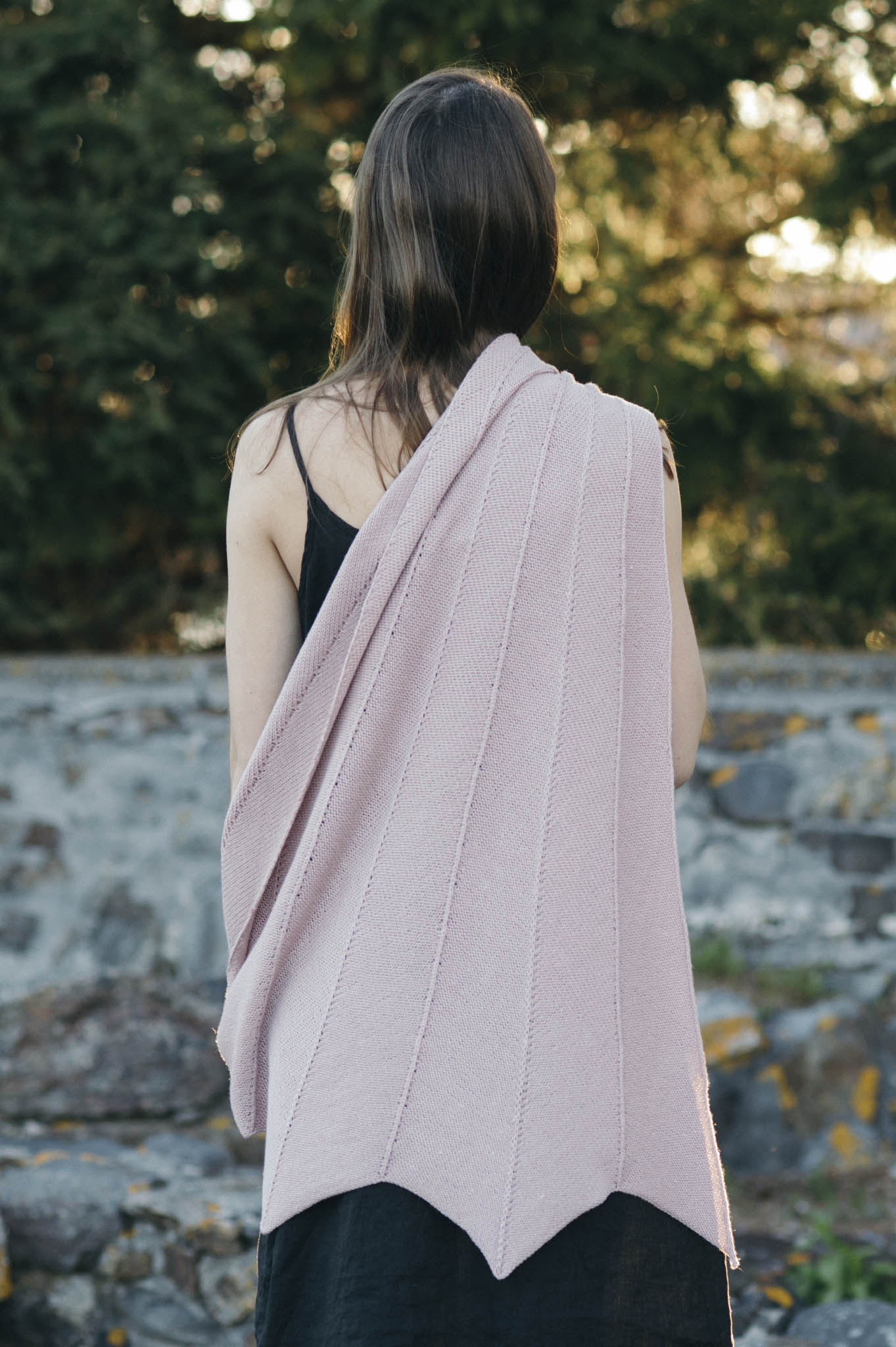
Maian – PDF Pattern
$6.00

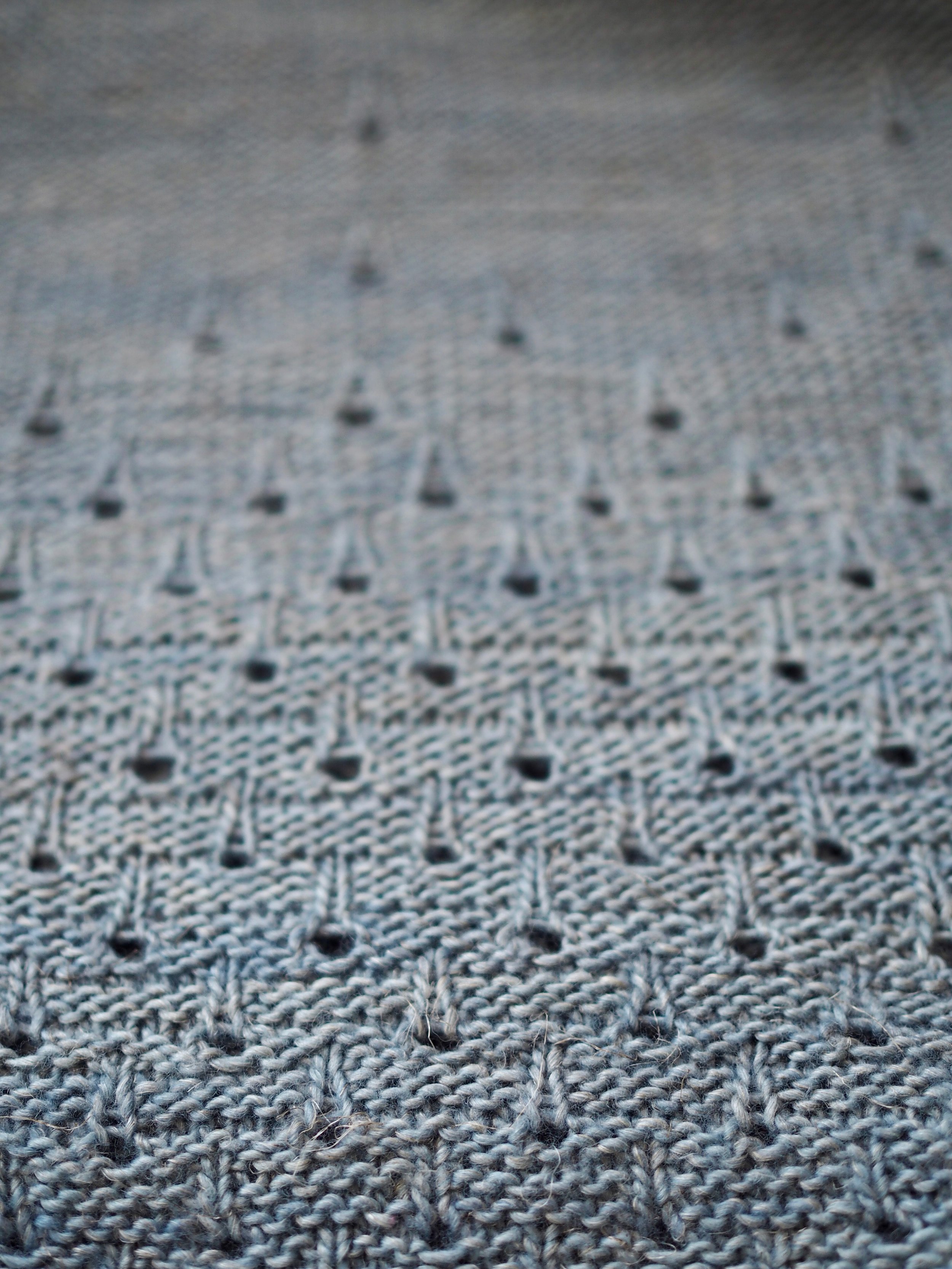
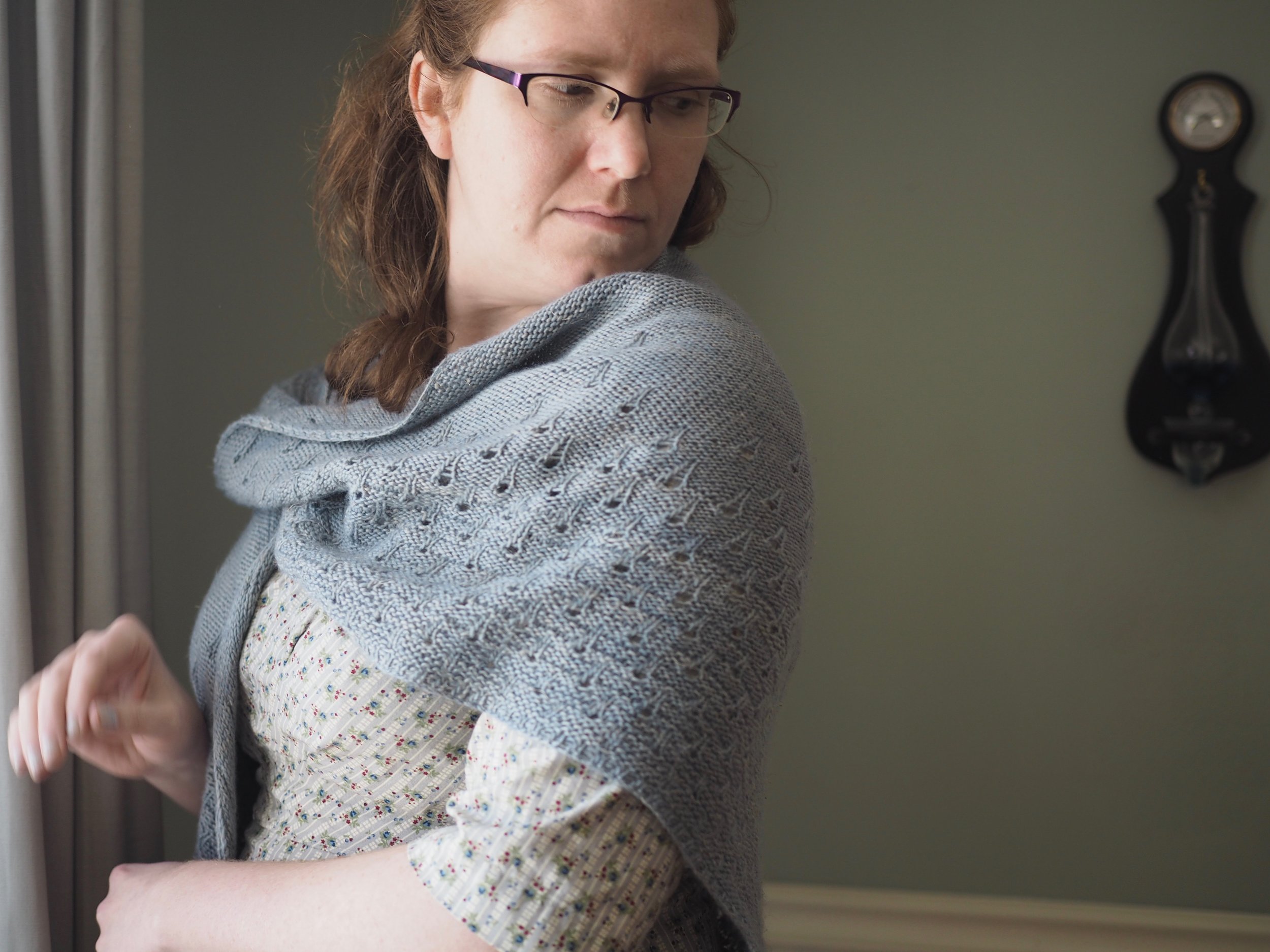
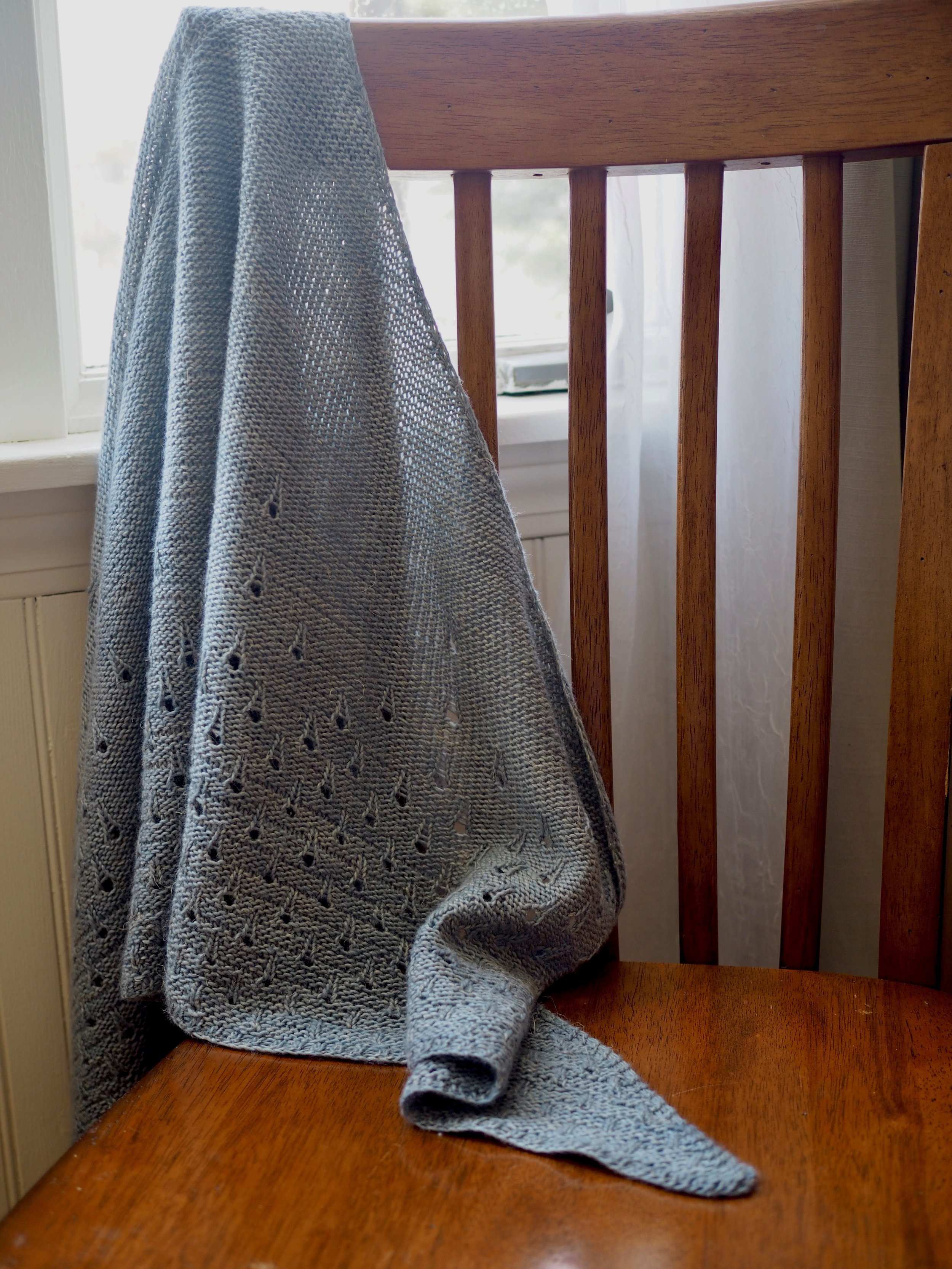
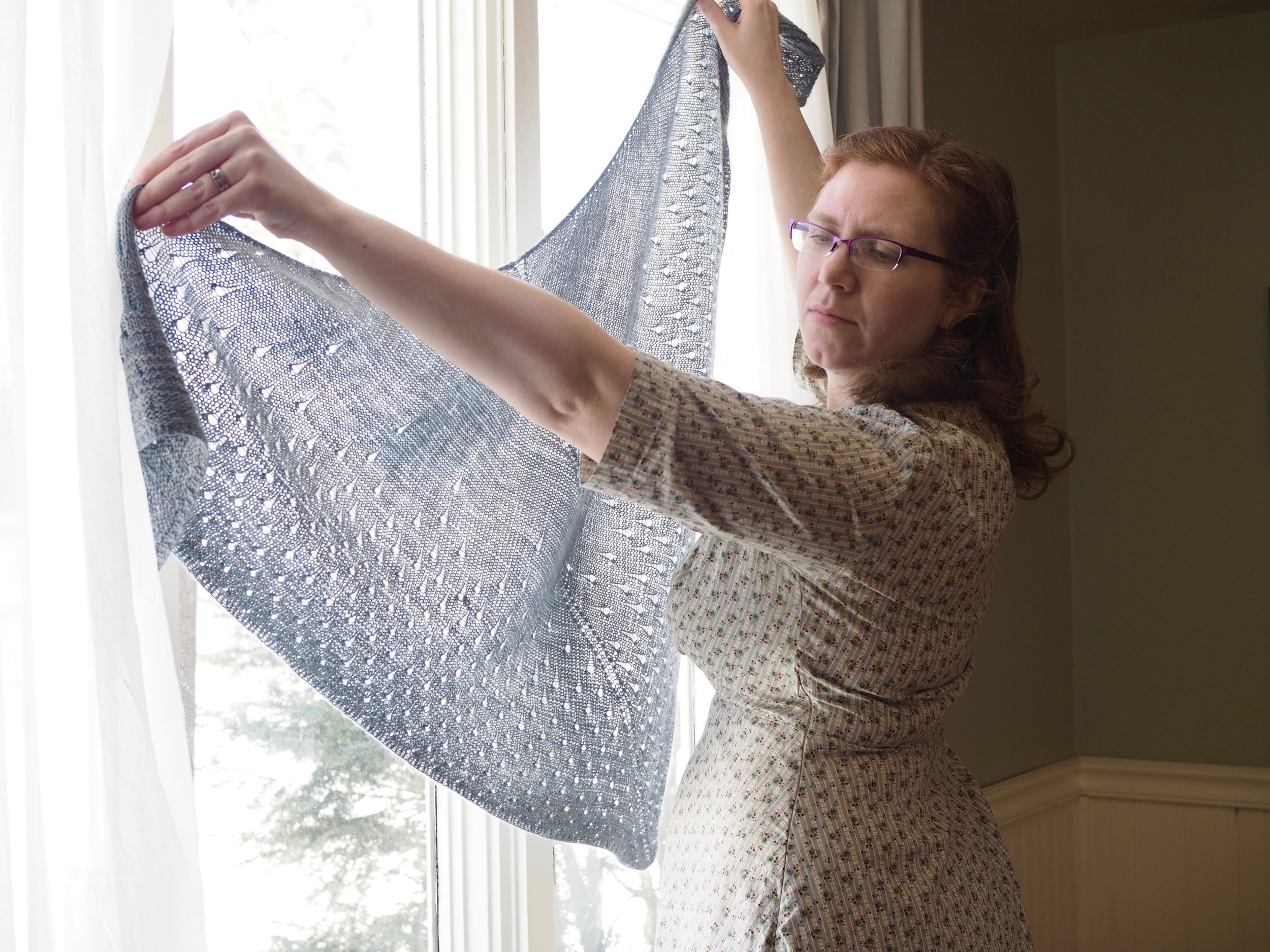
Just south of the Texan fields where the goats and sheep that supply Piper’s fibers graze, once flourished several rich Mesoamerican cultures. One of the best-known imprints these civilizations left behind were the stairstep temples made famous by the Mayans and Aztecs. A distinctive shape that lends itself well to knitted shawl construction.

The shawl is worked from the tip up, with a 5 stitch-wide garter stitch border. Increases are done via yarnovers at the start and end of each RS lace row, as well as with backward loop cast on sts in the garter stitch between lace sections.

Skills required : knitted cast on, backward loop cast on, increasing, decreasing, binding off.

Charts and line-by-line instructions included.

  • 52 “ wingspan, 25” depth
  • 610 yds of Fingering weight yarn, sample shown in Quince & Co. Piper in Avocet 610
  • 32-inch circular needle, US 6 - 4.0 mm
  • 18 sts and 7 rows= 4 inches in chevron lace, after blocking

Learn more about Maian in the Chronicles

View it on Ravelry

Photos © Emma Sampson

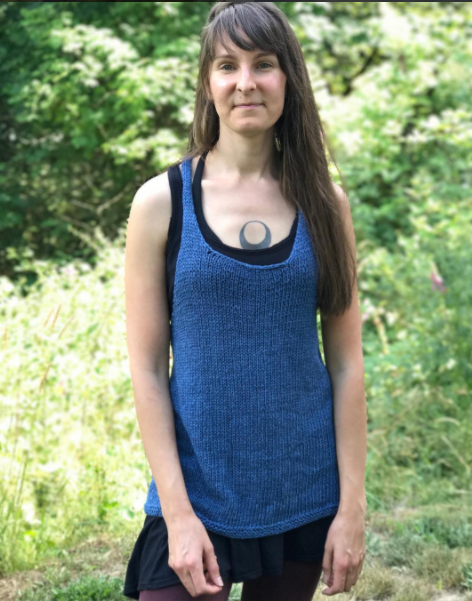
Ripley - PDF Pattern
$6.50

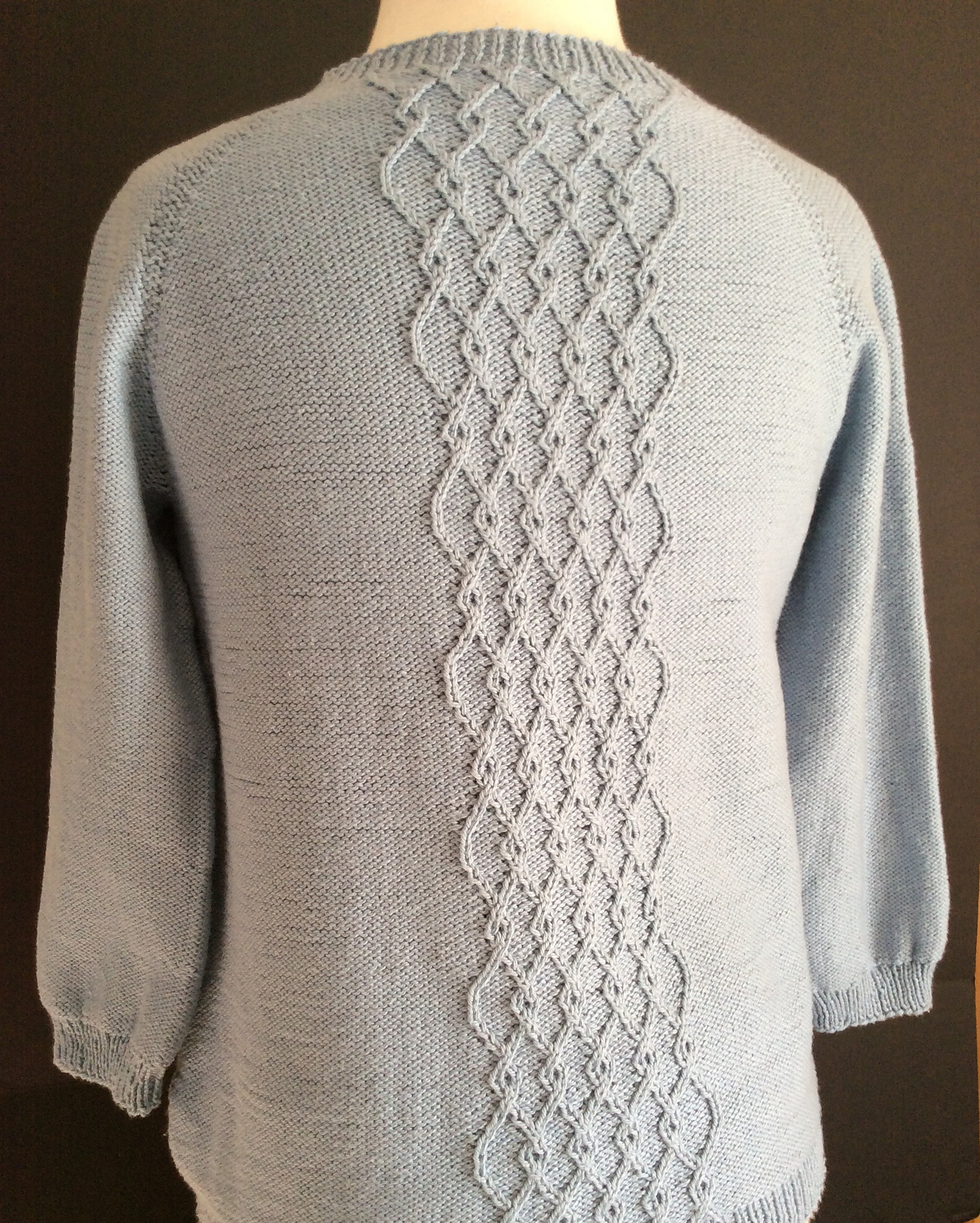
Bare those sun-worshipping shoulders in Ripley, designed by Leah B. Thibault. This racer-back tank is knitted in the round from the bottom up in Kestrel linen, shaped with side and back darts, and embellished with a beautiful vine lace detail at the back. For those seeking a true summer knit, this beauty is for you.

FINISHED MEASUREMENTS:
30 (32, 34, 37¼, 40¼, 42¼, 45½, 47½)" [76 (81.5, 86.5, 94.5, 102, 107.5, 115.5, 120.5) cm] bust circumference; shown in size 32" [81.5 cm] with 2" [5 cm] negative ease

YARN:
kestrel / cove 503 / 5 (5, 5, 6, 6, 7, 7, 8) skeins

NEEDLES:
32" circular in size US 10 [6 mm] / one spare circular in size US 10 [6 mm]

GAUGE:
15½ sts and 22 rnds = 4" [10 cm] in stockinette stitch, after blocking

SKILLS REQUIRED:
Knitted cast on, wrap-and-turn short rows, three-needle bind off (links provided). Chart and line-by-line instructions included.
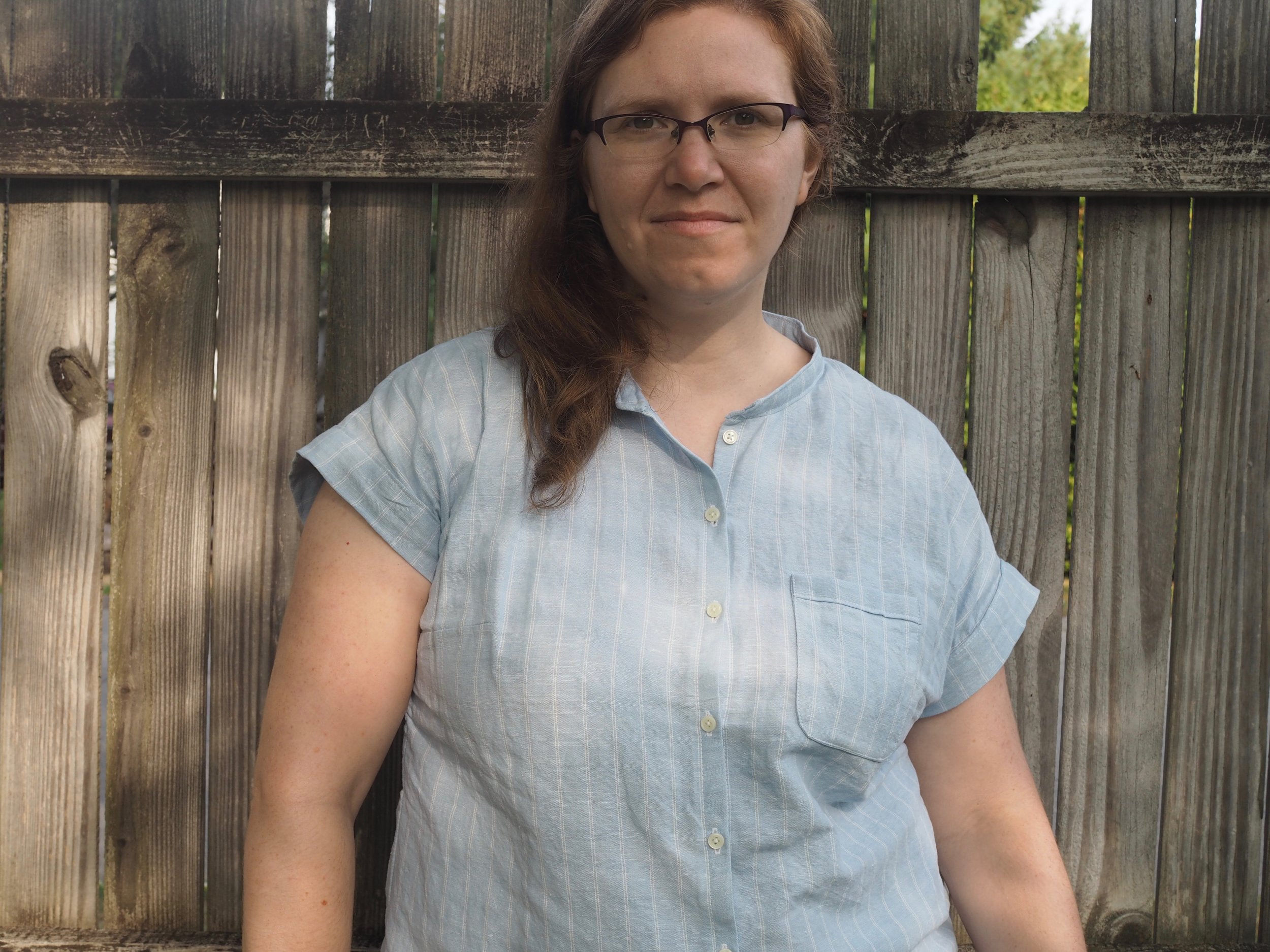
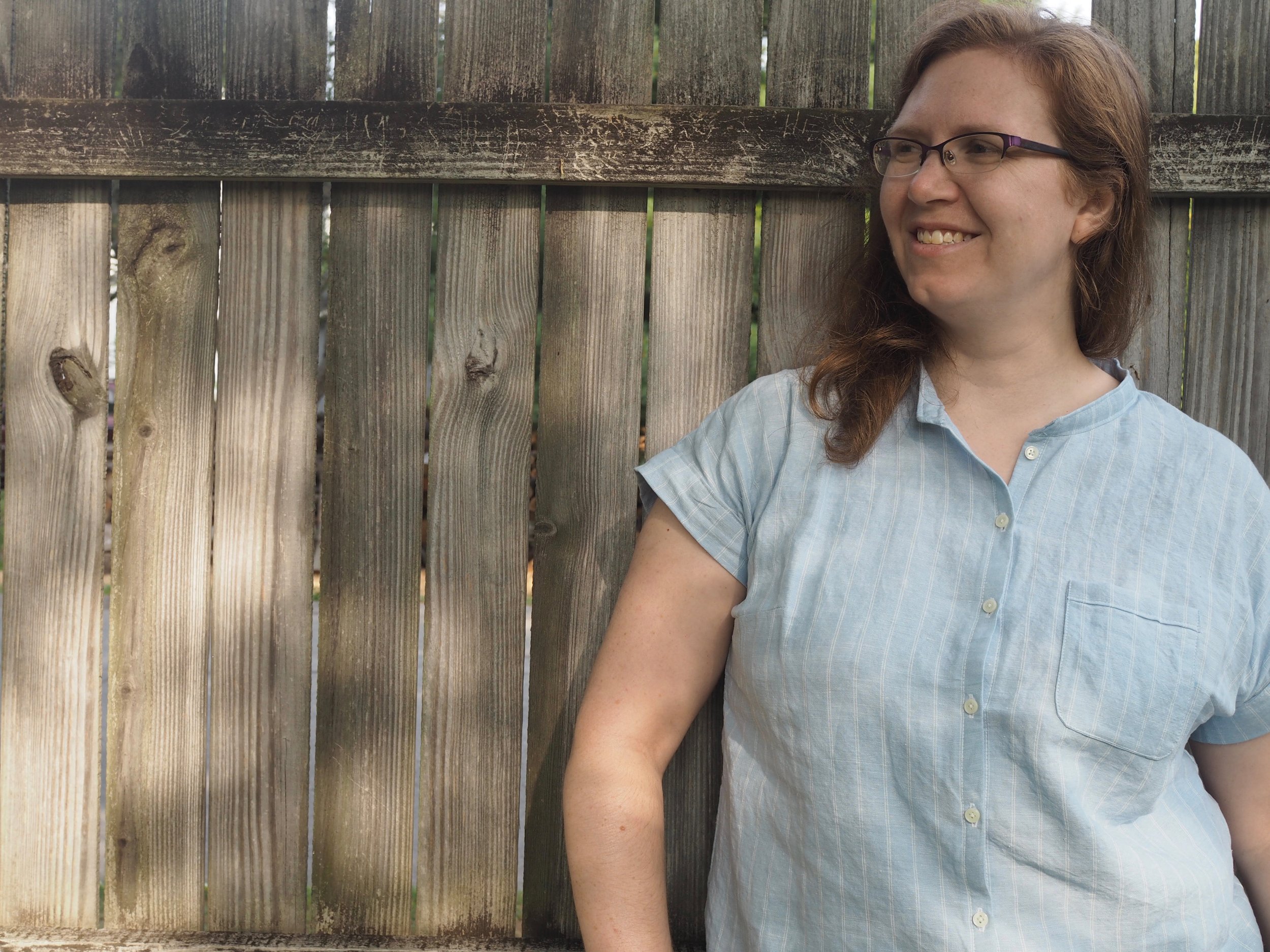
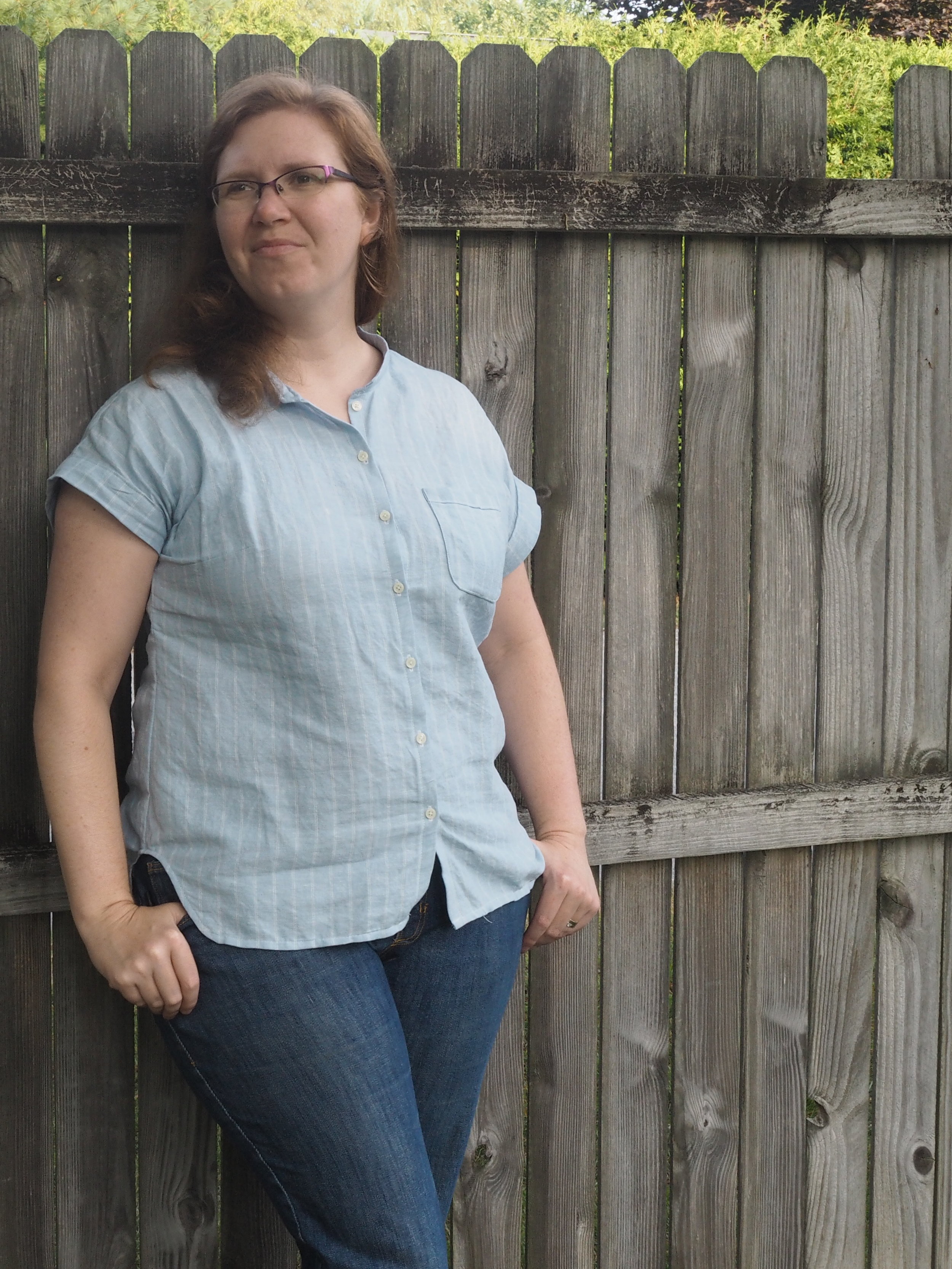
Summer of Basics: Mélilot Shirt

Karen Templer of Fringe Association is hosting a make-along called The Summer of Basics. The idea behind it being to make 3 garments (knitted or sewn) over three months that would be workhorse garments for the maker.

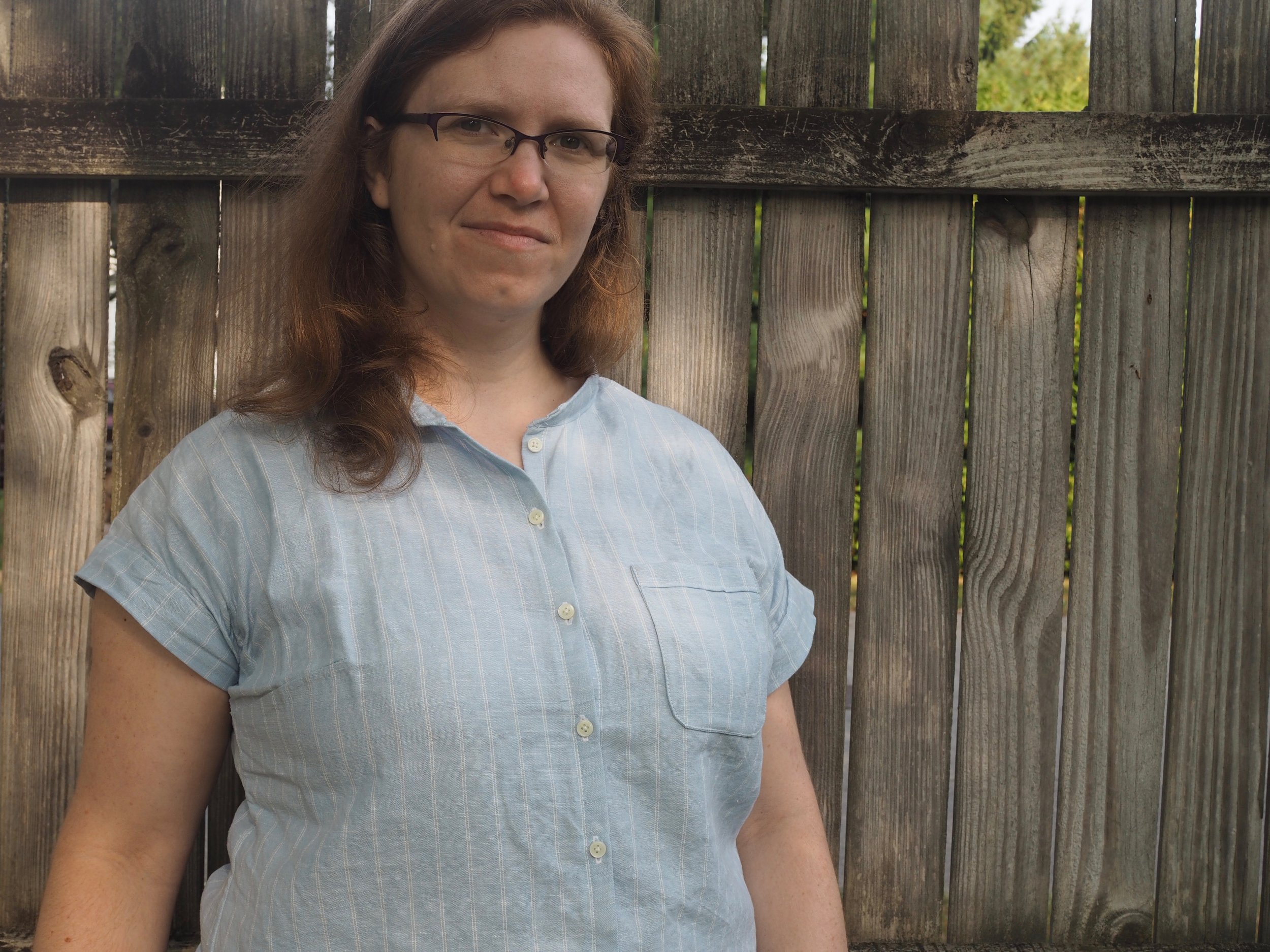
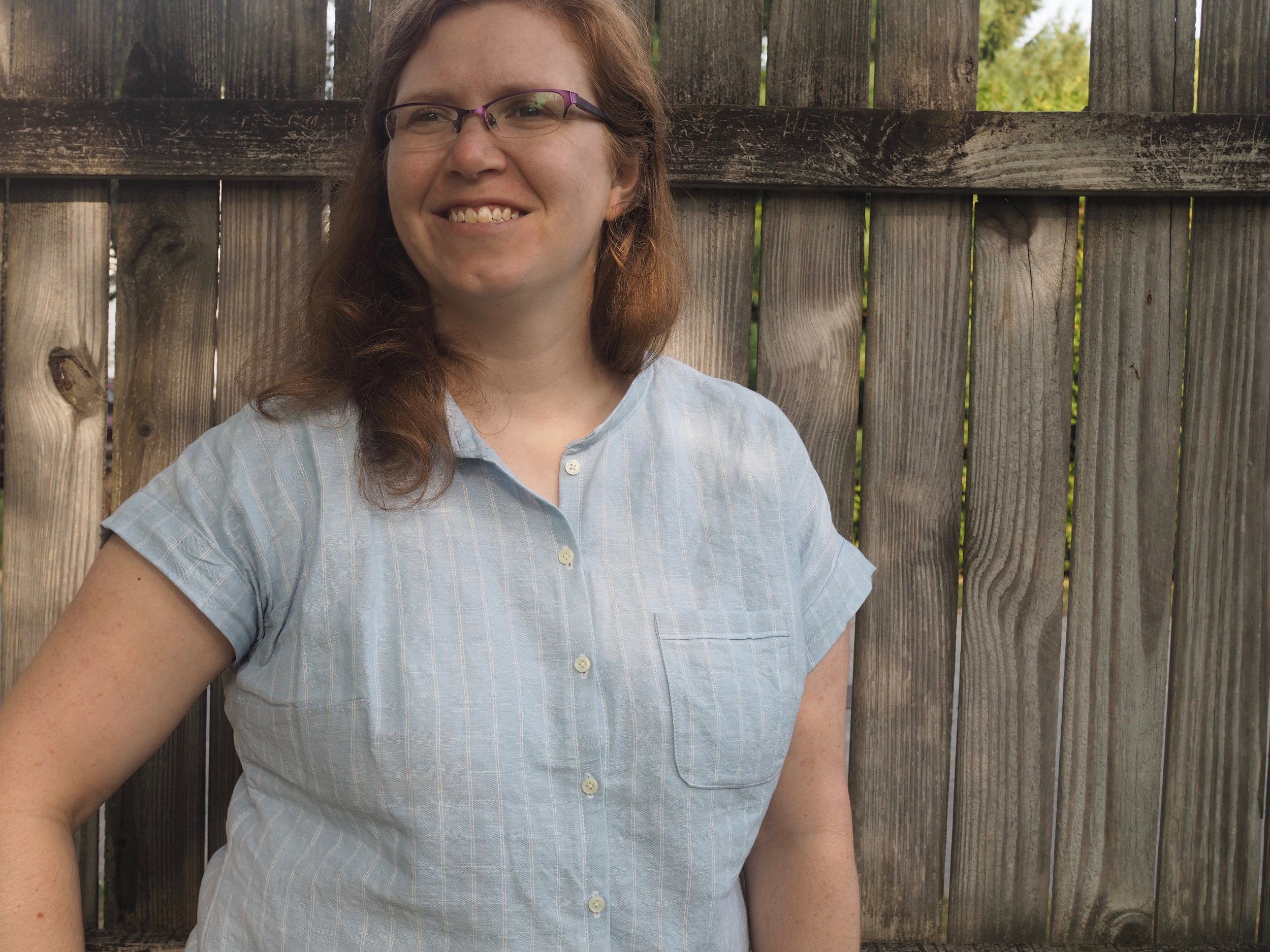
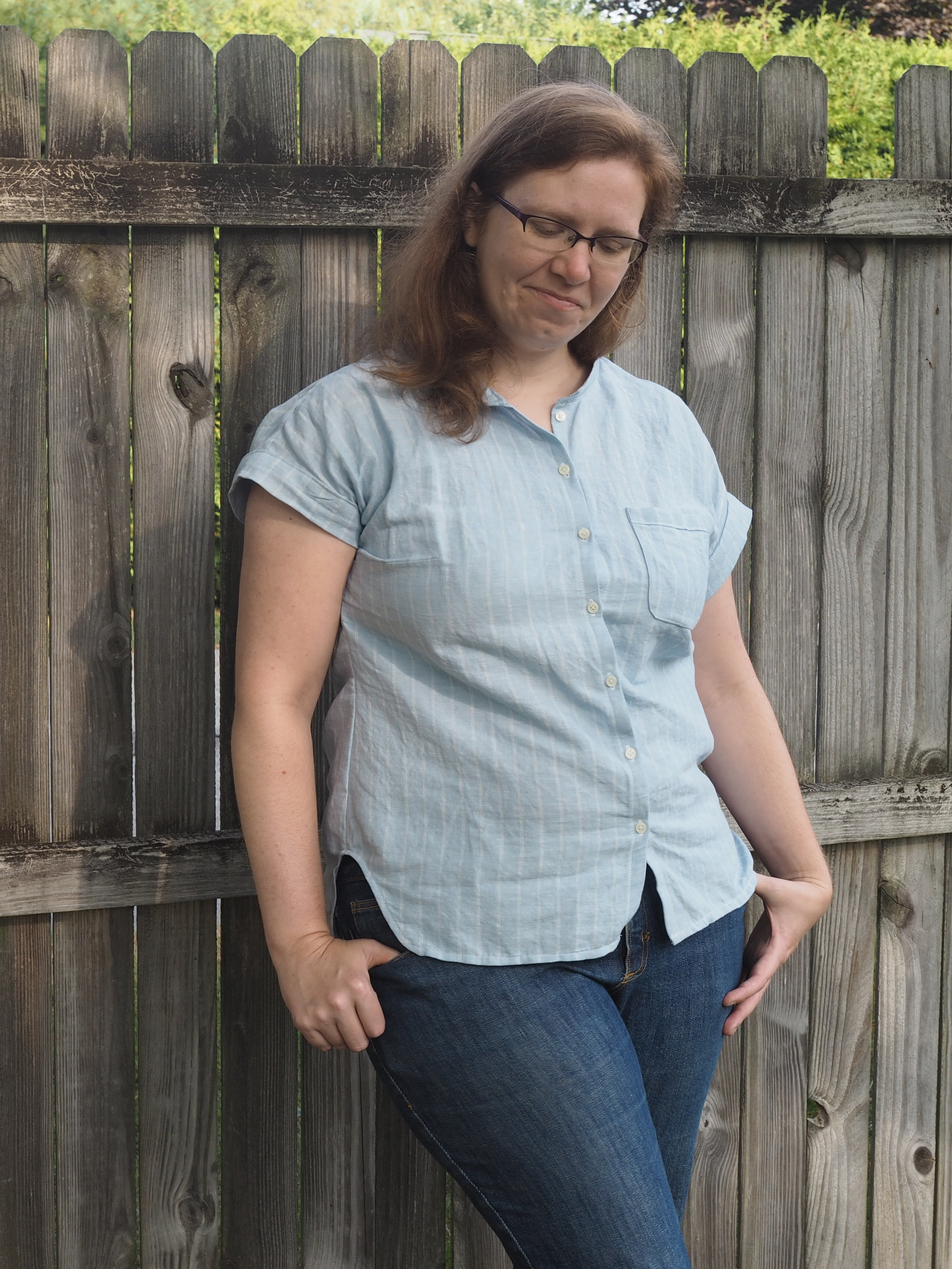
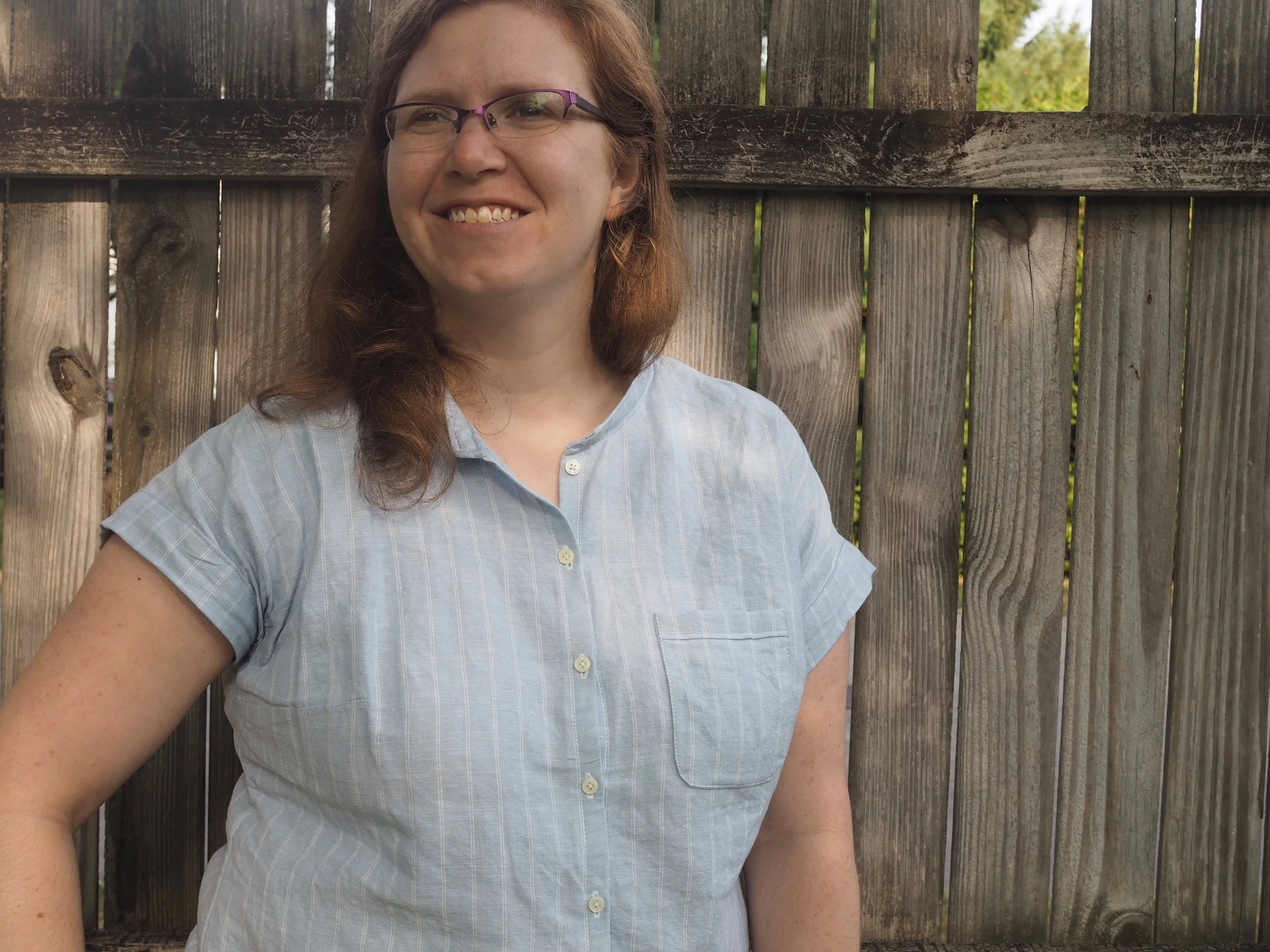
For my second basic - I've gone back to an previousy made pattern - Deer and Doe's Mélilot Shirt.  I made another version last summer (which apparently never made it on the blog), and I had a list of modifications I knew I wanted to make this go around.

I flattened out the shoulder line, raising the outer edge by an inch to give myself more room in the sleeves and widened the body by 1/2 inch on each side seam, by shifting the pattern over when I cut it. I then adjusted the length of the sleeve cuffs and collar stand to match the additional width. The new fit works great and I used my Curved Narrow Hem Tutorial for that very curvy hem. 

The fabric is a linen blend from JoAnn's, which makes me feel a little bit like a member of the Beach boys in their 1960s heyday, perfectly summery and not a bad thing in my book! :) 

I've already sewn up my final basic, but I need to grab some photos! 


My Body Model - Designing on Real Bodies

mybodymodelrenocardi
Renovation Cardigan
Reno Swatch
Prairie Wife Sketch
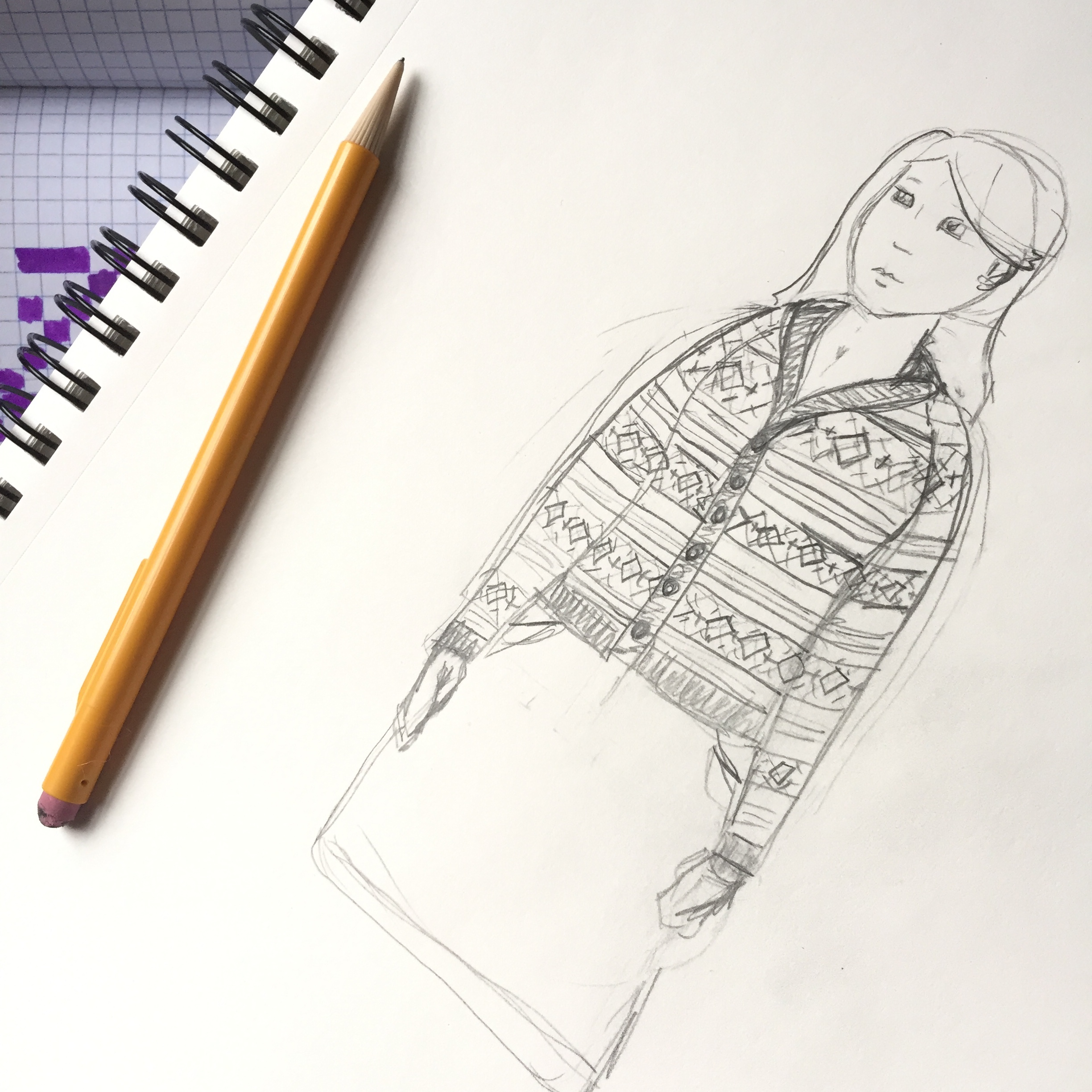
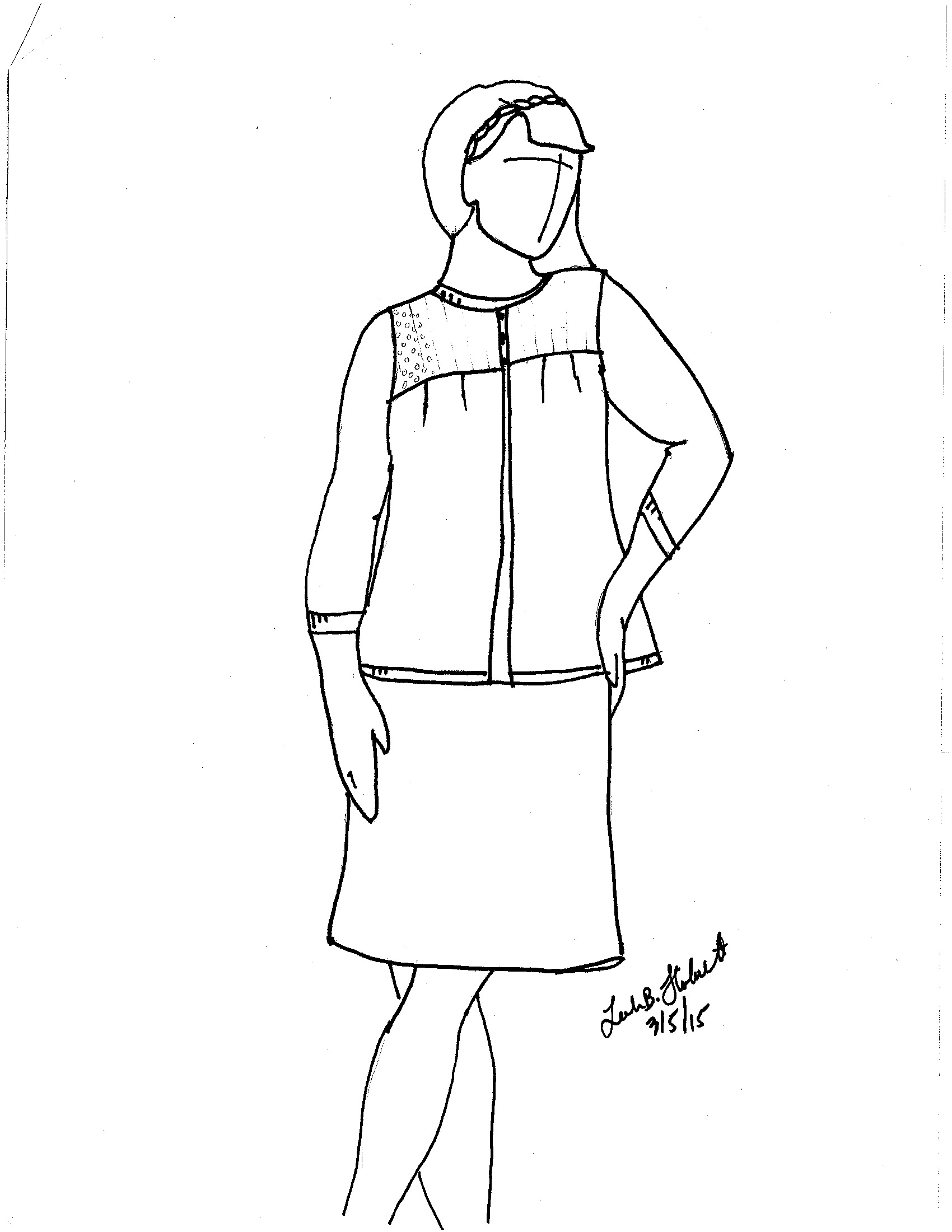
Atlee Original Sketch
Lady Heartrose

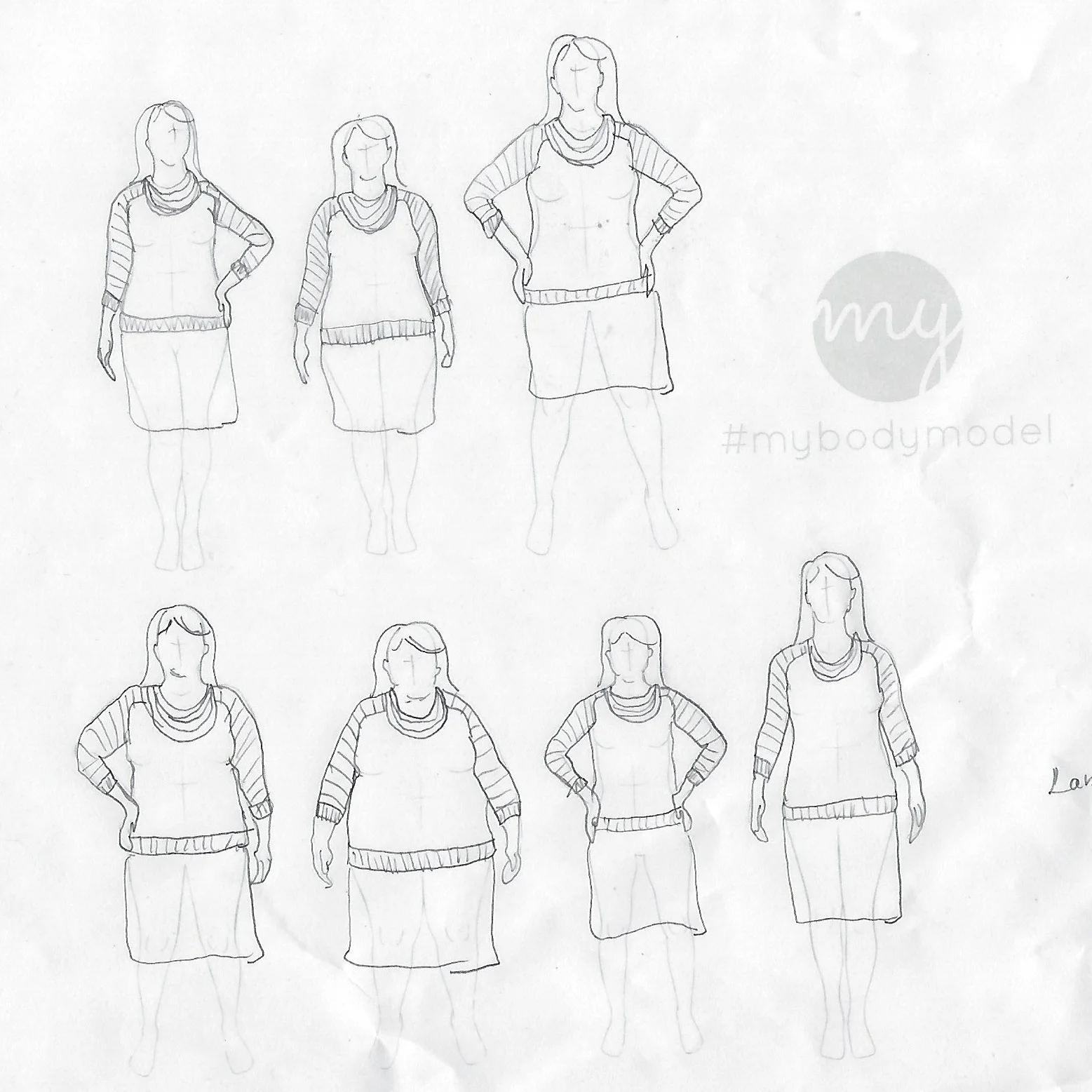
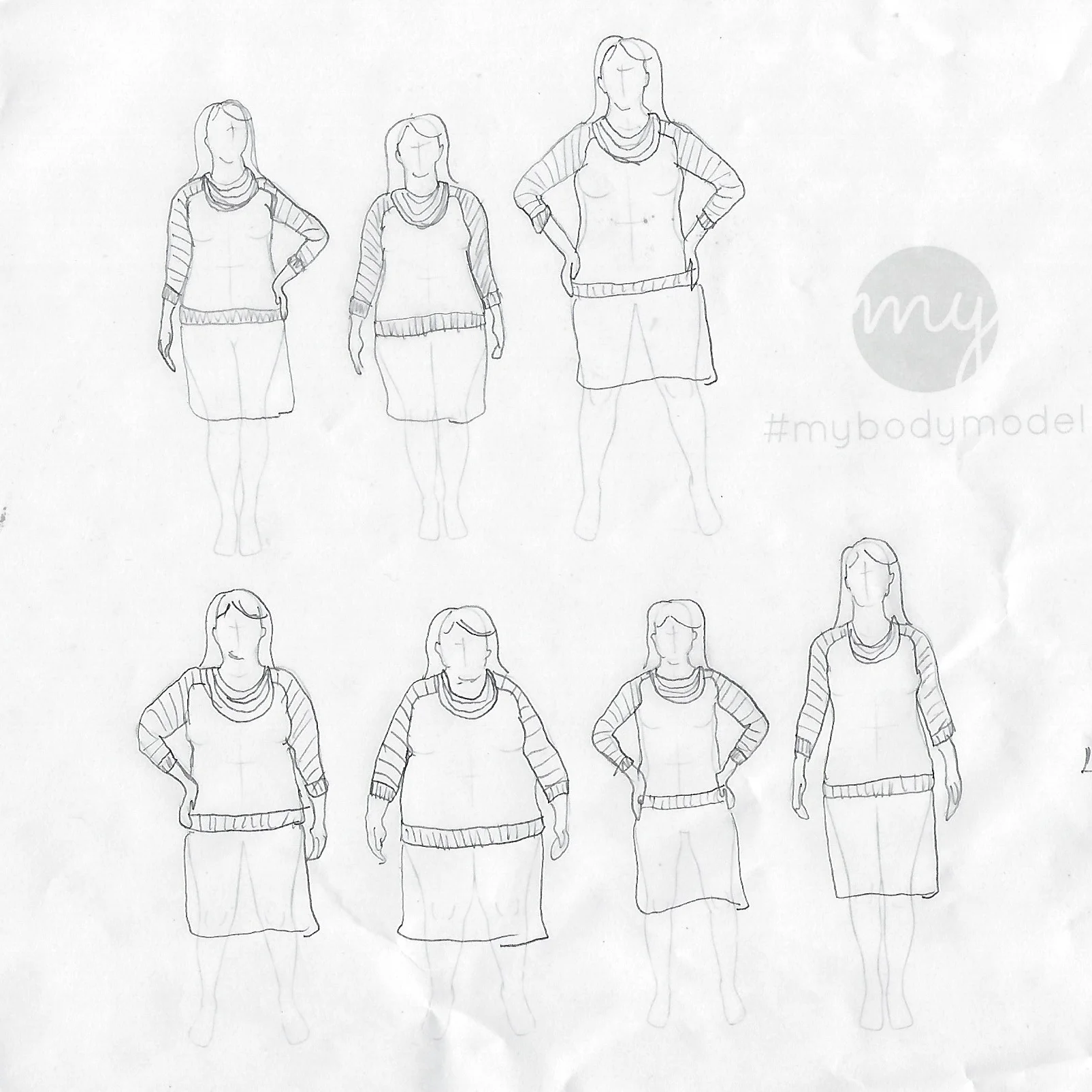
If you follow me on Instagram, you may have seen me mention mybodymodel a handful of times.  MyBodyModel is the brainchild of my friend Erica, and is a web-based tool for building sketching templates, also known as croquis, to your exact measurements.

I can't tell you how excited I am by this project. As a designer, I use croquis all the time in sketching out my design ideas. It sames me time from having to redraw the figure and allows me to focus on the clothing design. For quite some time, I've been using the same croquis, seen above in the sketches for Prairie Wife, Atlee and Lady Heartrose. I found it by doing a Google image search for "plus size croquis."

If you click on that Google search, you'll find that the fashion sketch definition of "plus-size" feels not quite right. The croquis I've been using seems much more in line with the 34-inch bust standard most of my samples have to been knit in, than anything resembling plus-size.

So while my standard croquis gets the job done for basic communication purposes, it falls short in several ways.

First, it's not a great tool for scaling designs. When I grade, I work off a spreadsheet and make some general assumptions about how to grade different design elements - for example, is the button band the same width for all sizes, or would it look better if it's wider on the larger sizes? Sketching on different body types helps me make that decision in a more informed way. 

Second, I often see comments when new designs come out along the lines of "that's nice, but not for my body." Unlike sewing, where additional samples can be made in the span of hours, new knit samples usually take weeks. Which means having samples photographed in various sizes is often not possible, so makers may have to wait months to see someone close to their body type post a finished object photo to get a sense of how a particular design would work for them.   MyBodyModel helps with both of those shortcomings.

MyBodyModel is currently in the midst of a Kickstarter fundraiser, and I've backed at the designer level to get access to 3 custom croquis. For me, I would use the following measurements for my croquis:

  1. The standard set of measurements I use for my 34"  sample
  2. My own measurements as a "middle of the range" example
  3. The largest set of measurements from my grading spreadsheet

By doing this, I would have a range of body types to sketch on and design for. 

Even if you're not a designer, having a sketching template of your own measurements would be highly valuable. You could plan adaptations like sleeve or skirt length, and "try on" a number of different styles without actually having to commit to making items.

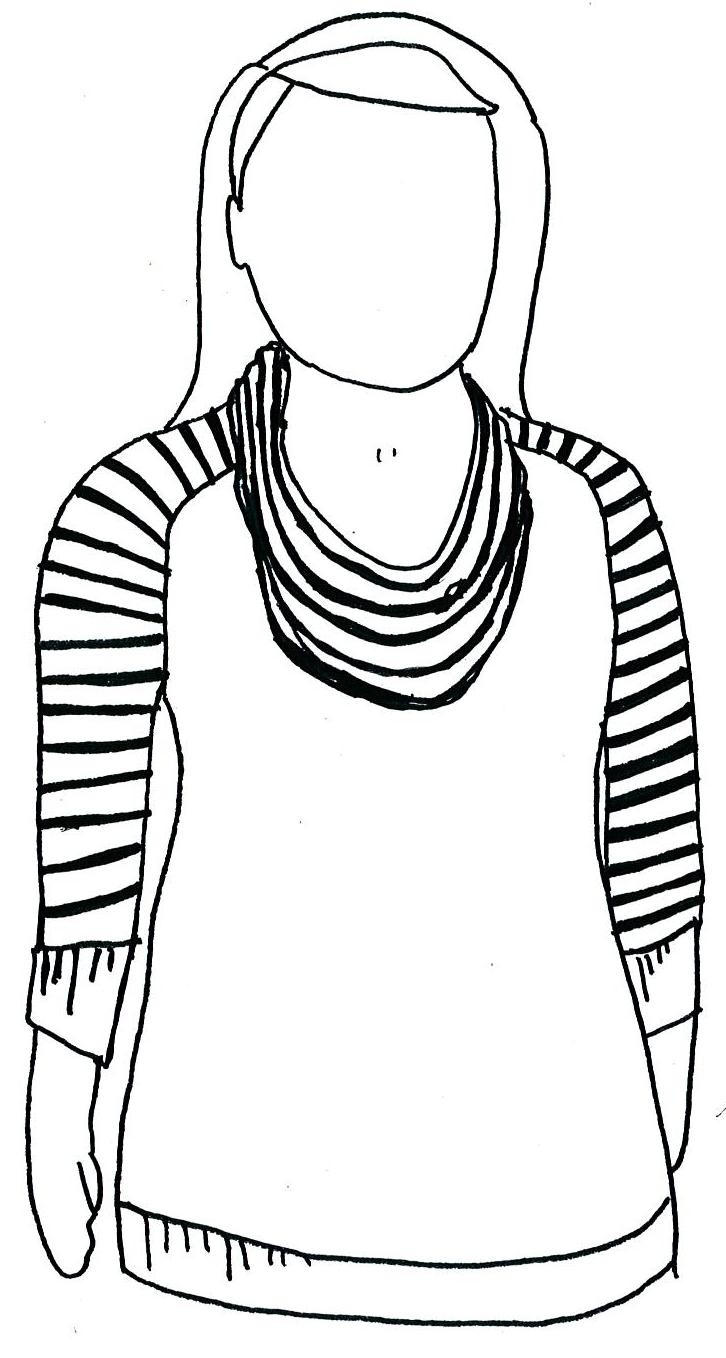
As some examples. I've used MyBodyModel's sample sheet of croquis, developed from real testers measurements to sketch out two of my designs - the upcoming Renovation Cardigan (above) and the Lamina Pullover (below).

If MyBodyModel successfully funds its Kickstarter, I'll be testing the Beta phase of the software and I can't wait to give it a try. If having more realistic sketching figures seems like a good idea to you, I  highly encourage you to go chip-in on the Kickstarter, which runs until August 24th. 

Lamina by Leah B. Thibault
Mybodymodellamina

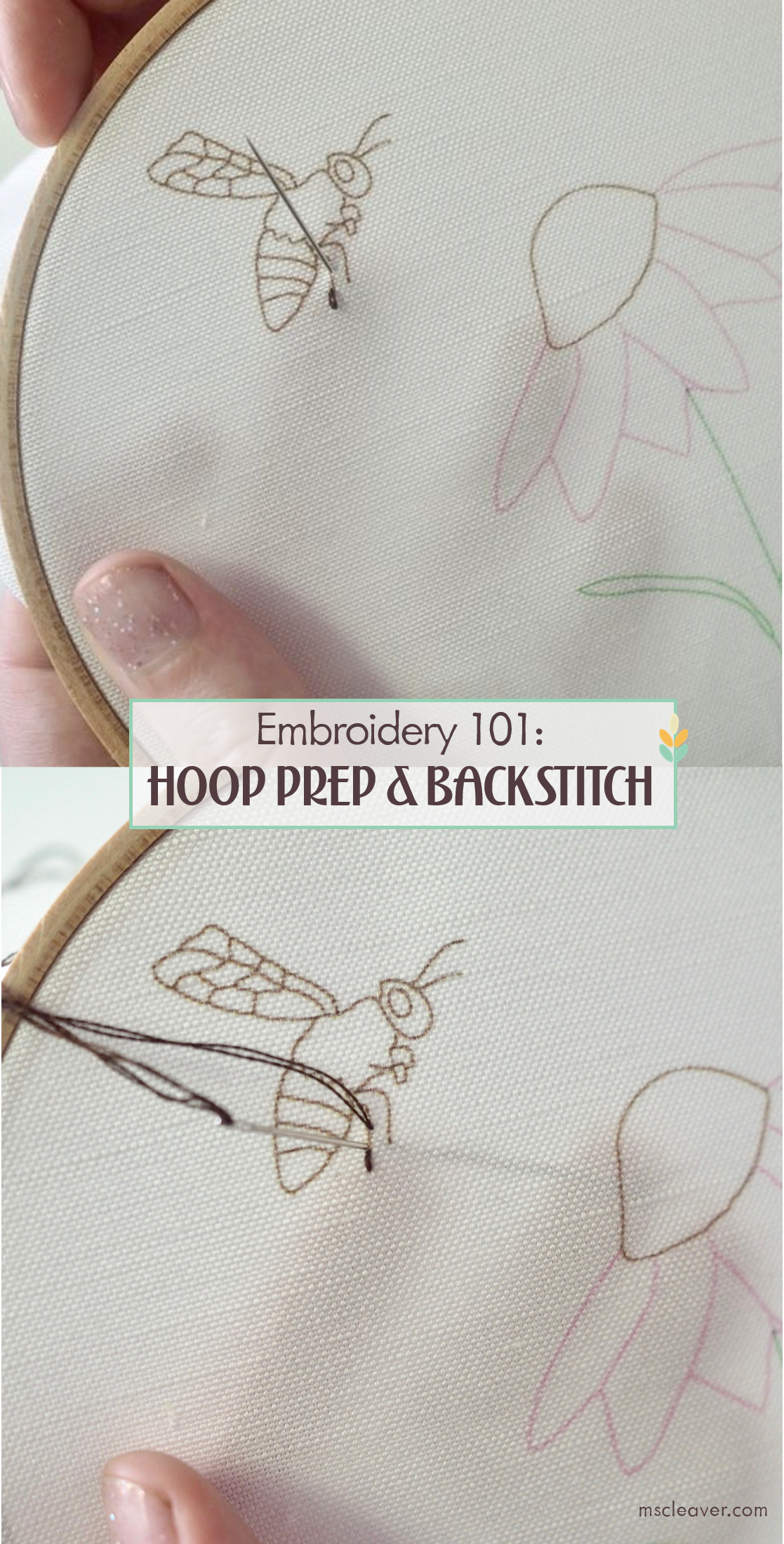
Embroidery 101: Prepping the Hoop, Back Stitch and Fixing Mistakes

Embroidery 101 Backstitch.png

You've got your design on your fabric (either by transfer, drawing or pre-printed designs) and gathered your supplies. Now what? 

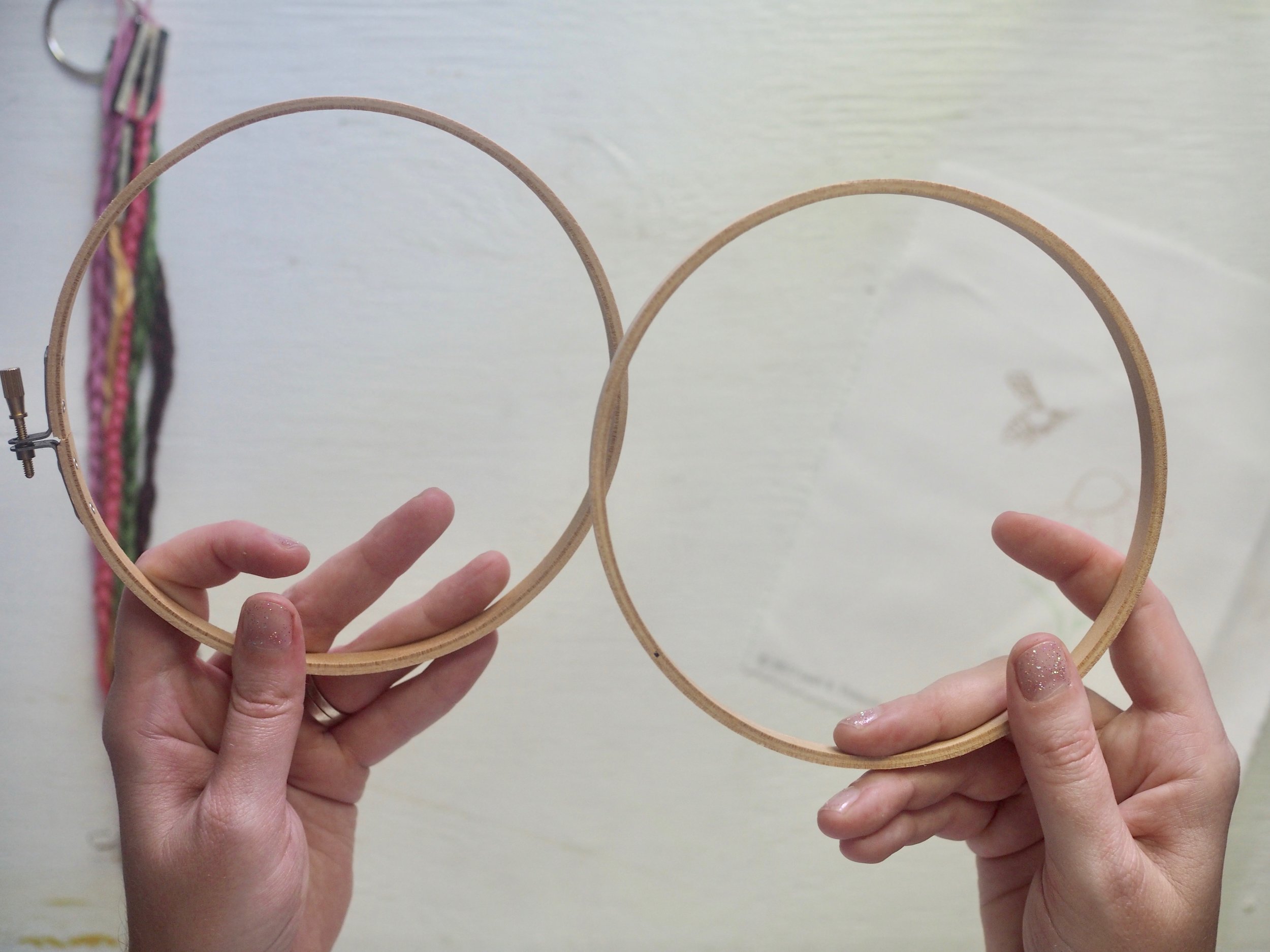
First, you've got to get your fabric in your hoop. Embroidery hoops come in two pieces, the outer "open" hoop with a screw closure and the inner closed hoop. Hoops are most often found in wood and plastic. I prefer wooden hoops because of the warmer feel and they make great inexpensive frames, just make sure to get one that is reasonably thick. When possible, I like to fit my whole design in the hoop without having to keep moving it across the fabric, so most of my designs will fit a 6" hoop, which I find the most comfortable to hold. Hoops can also be found in 4", 7", 8" diameters or there are straight edged stretchers for larger projects.  If you're just starting out, a handful of 6-inchers will get you far.

Prepping the Hoop

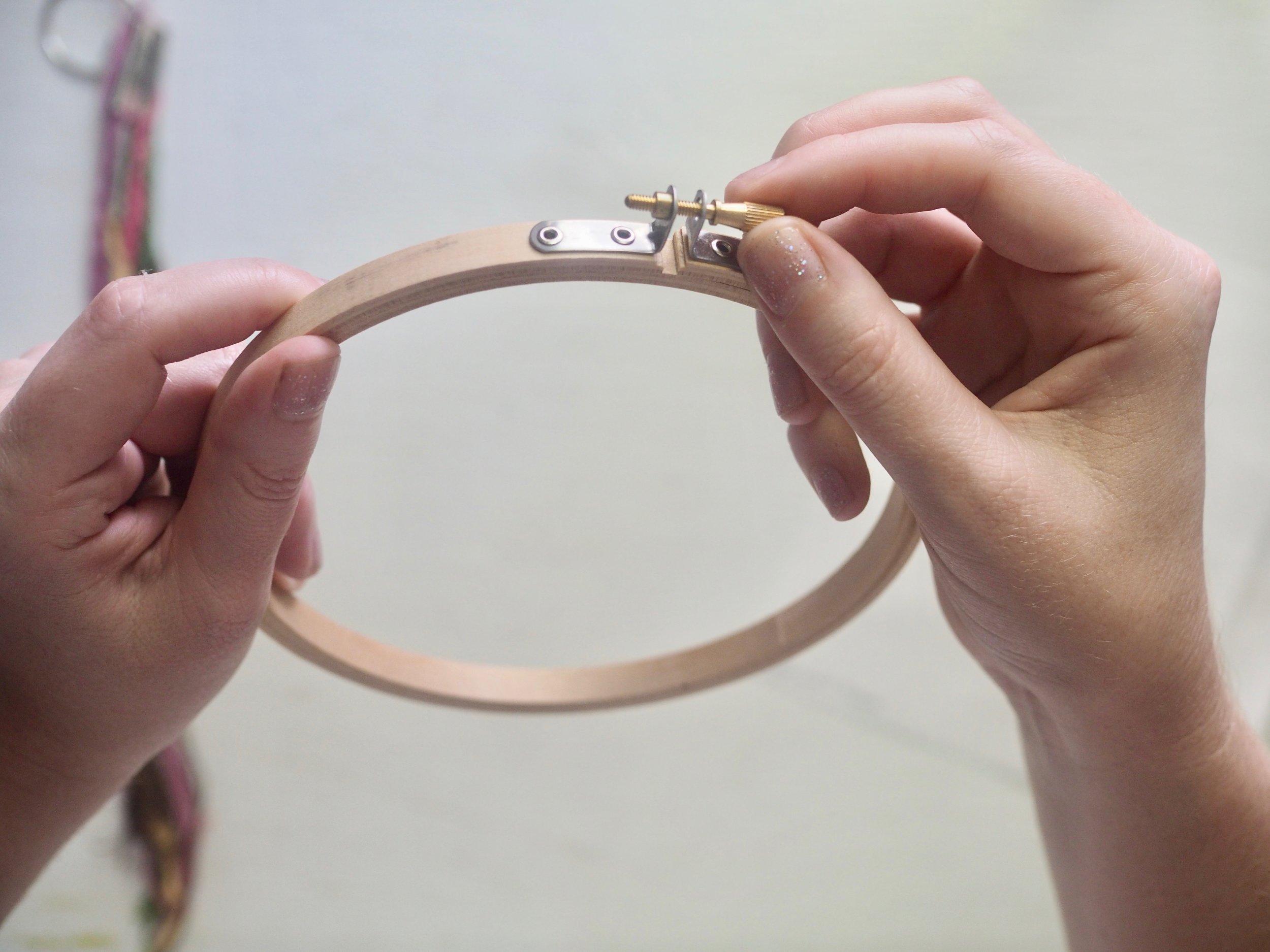
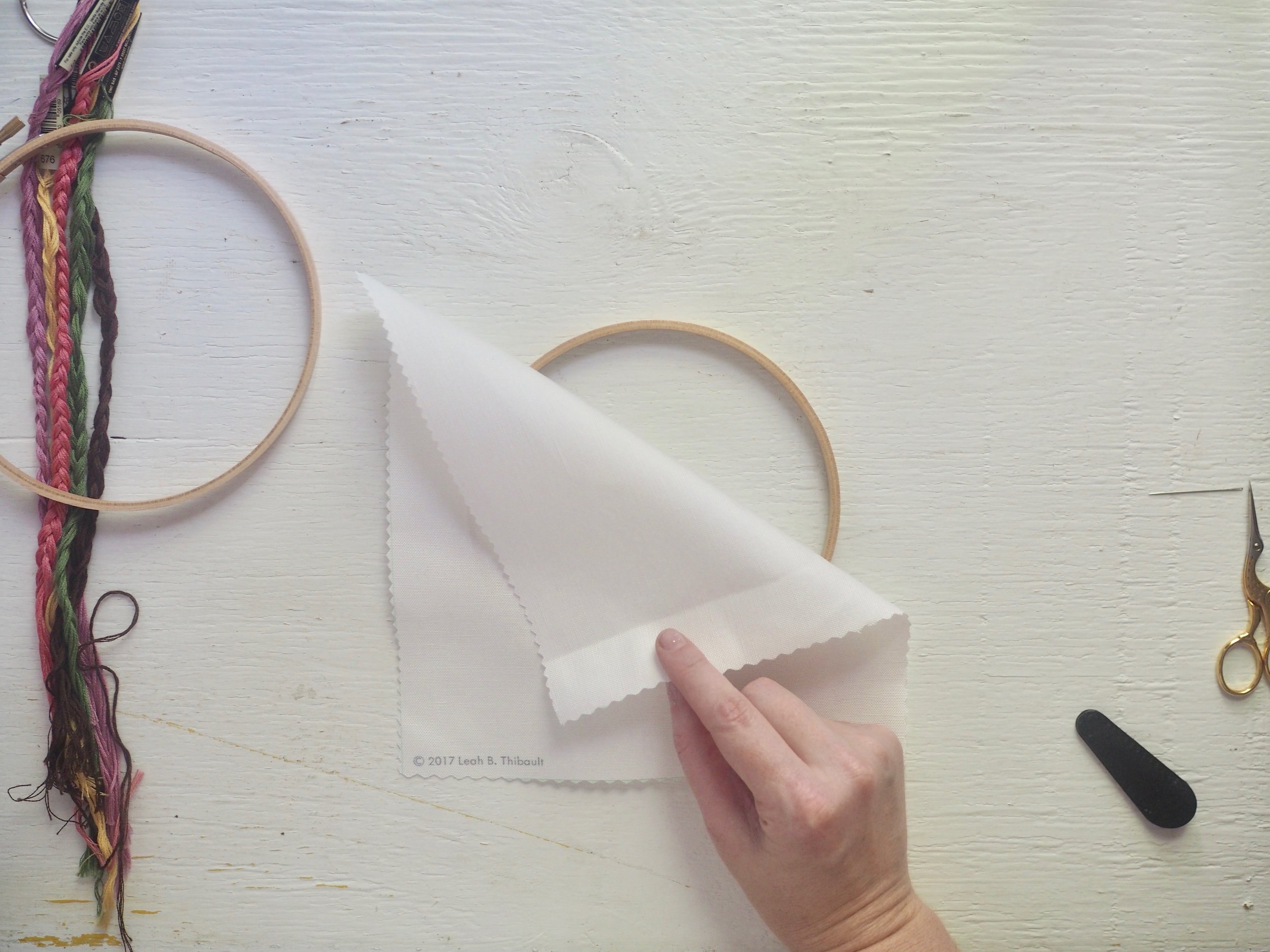
I generally prefer to put the inner hoop on the back, which I'll show here, but others prefer to do it with the inner hoop on top, try both and see what you prefer! First, loosen the nut at the top to allow the inner hoop to drop out easily.

Place your fabric, design up, on top of the smaller inner hoop. If the whole design fits in your hoop, center it. For larger designs that don't fit the hoop, center the part you're planning to work on first.

Testing the Hoop Tension

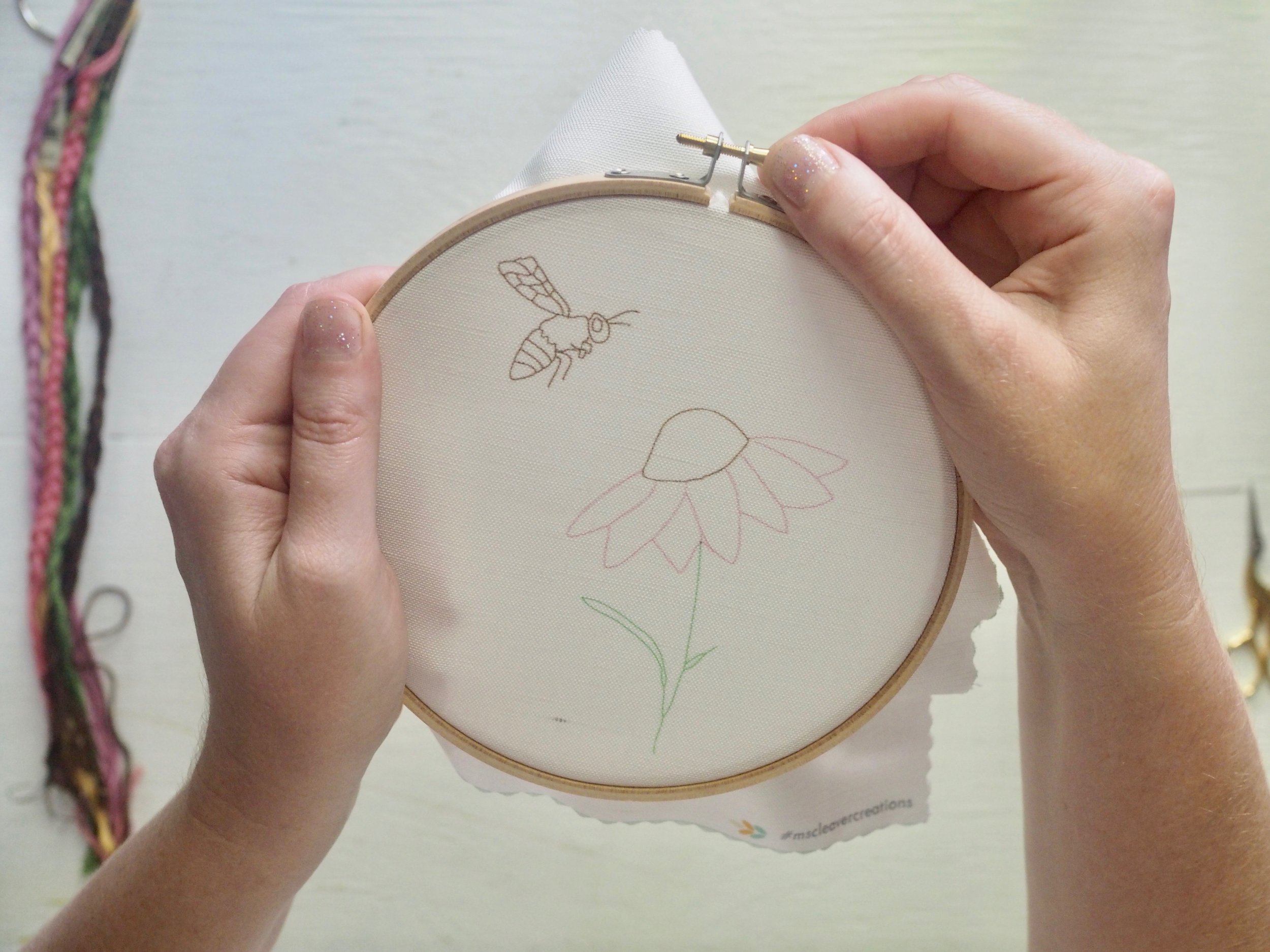
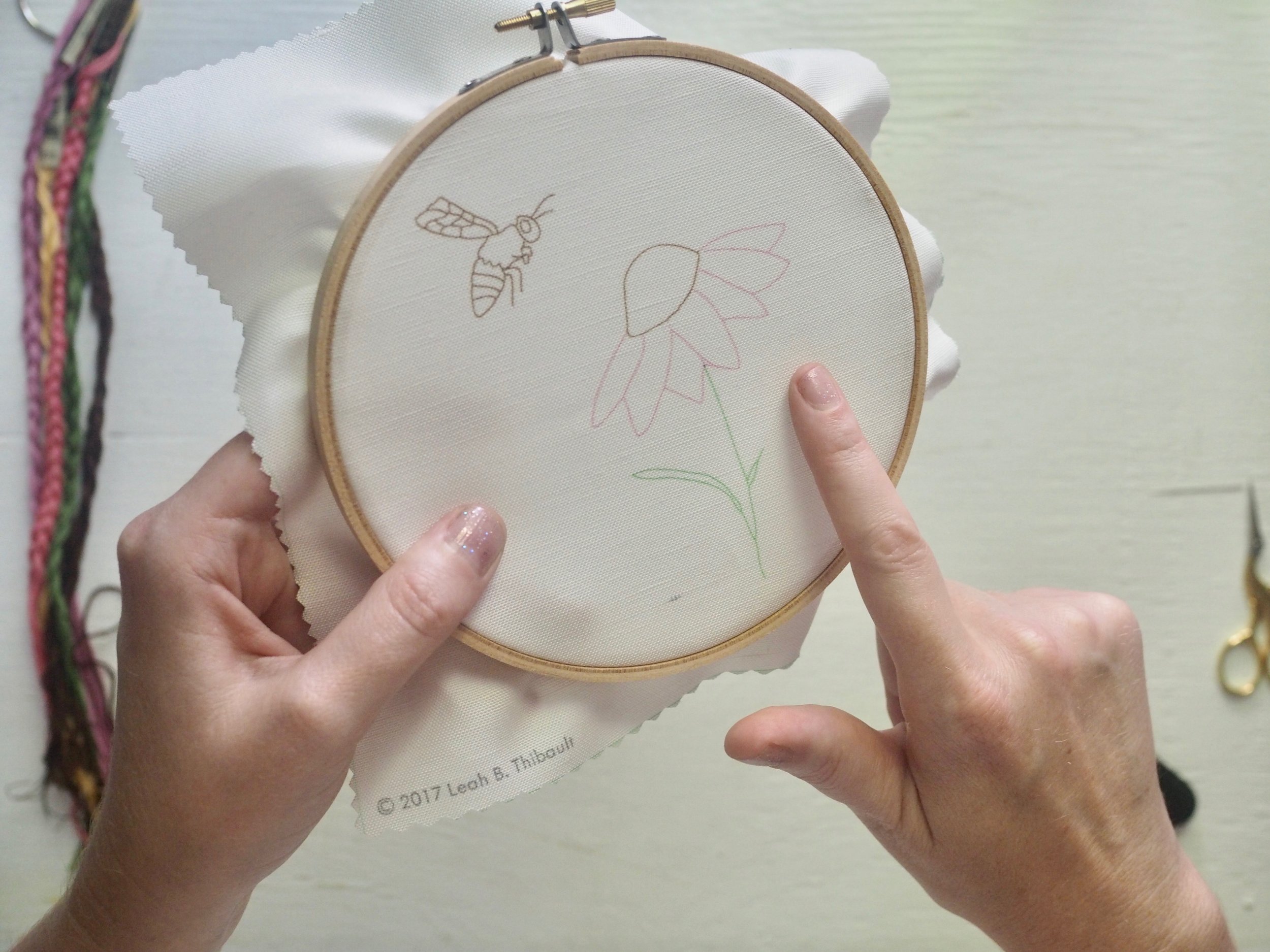
Place the larger outer hoop on top, trapping the fabric between the inner and outer hoops. I usually put the screw at the top of the hoop, but place it wherever it will be in your way the least. Pull the fabric tightly around the inner hoop, making sure the design looks even and tighten the screw until the fabric is well-tensioned between the two parts of the hoop. It should have only a slight amount of give and will feel like a drum head when tapped. If it's too tight, you're needle will squeak as you stitch. Too loose and you risk distorting the design. 

Separating Plys

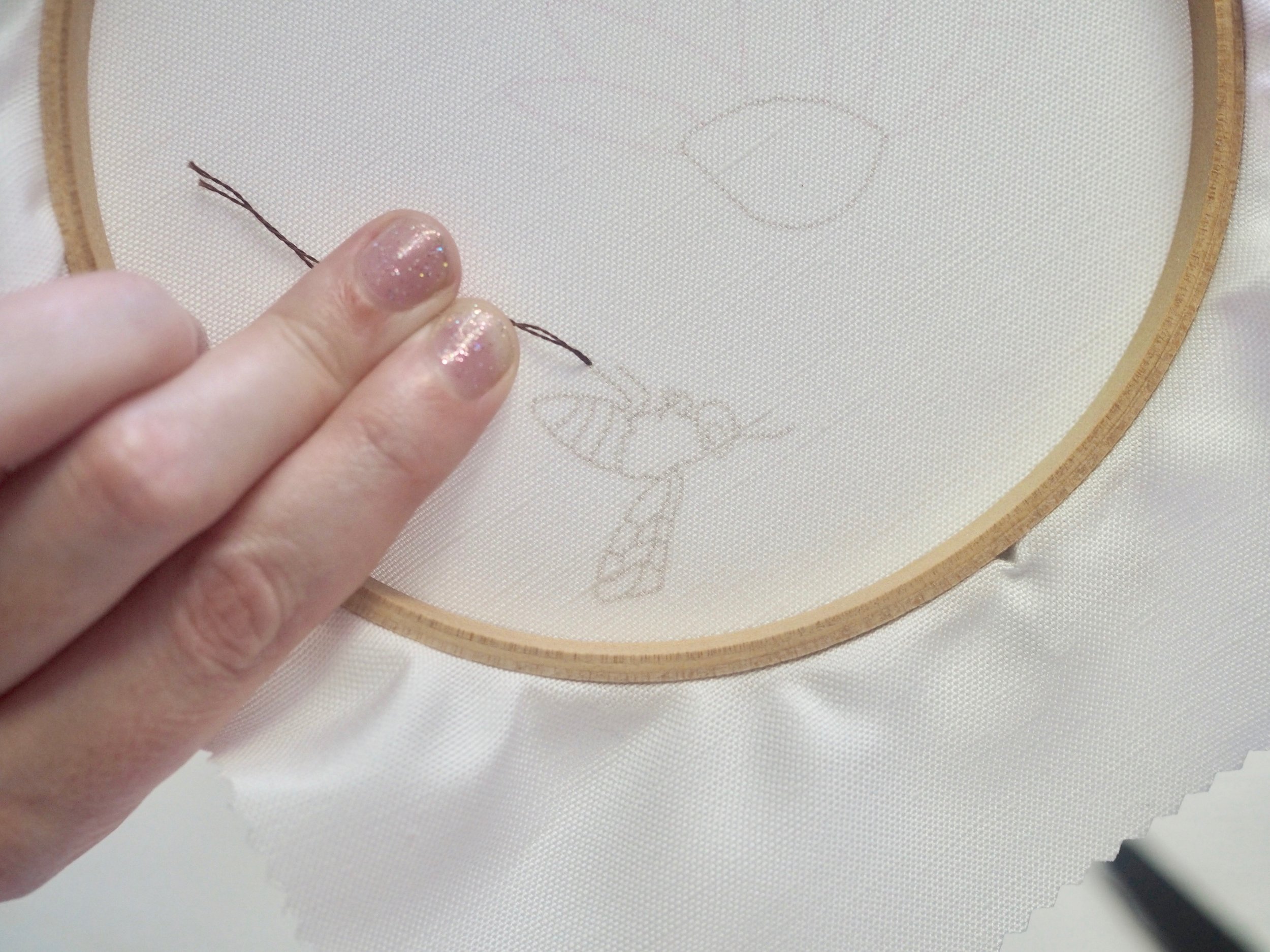
Pick the thread color you wish to work with first and cut a length about 1 yard (36 inches) long, or the distance between your fingers and the center of your chest. If you've used my thread prep tutorial, your thread will already be the perfect length. For this tutorial we're using 6-strand embroidery floss (DMC is the most common brand). If you're using Perle cotton or another tightly twisted thread, skip this step. 

6-strand floss is so-called because it's made of six individual plys that are very loosely twisted together. Depending on the thickness of line you want, you can stitch with up to all six plys for a thick line, to one ply for a very fine line. For most standard stitching, I use 2-3 plys, except for satin stitch (we'll cover it later), which I always work with 1 ply. 

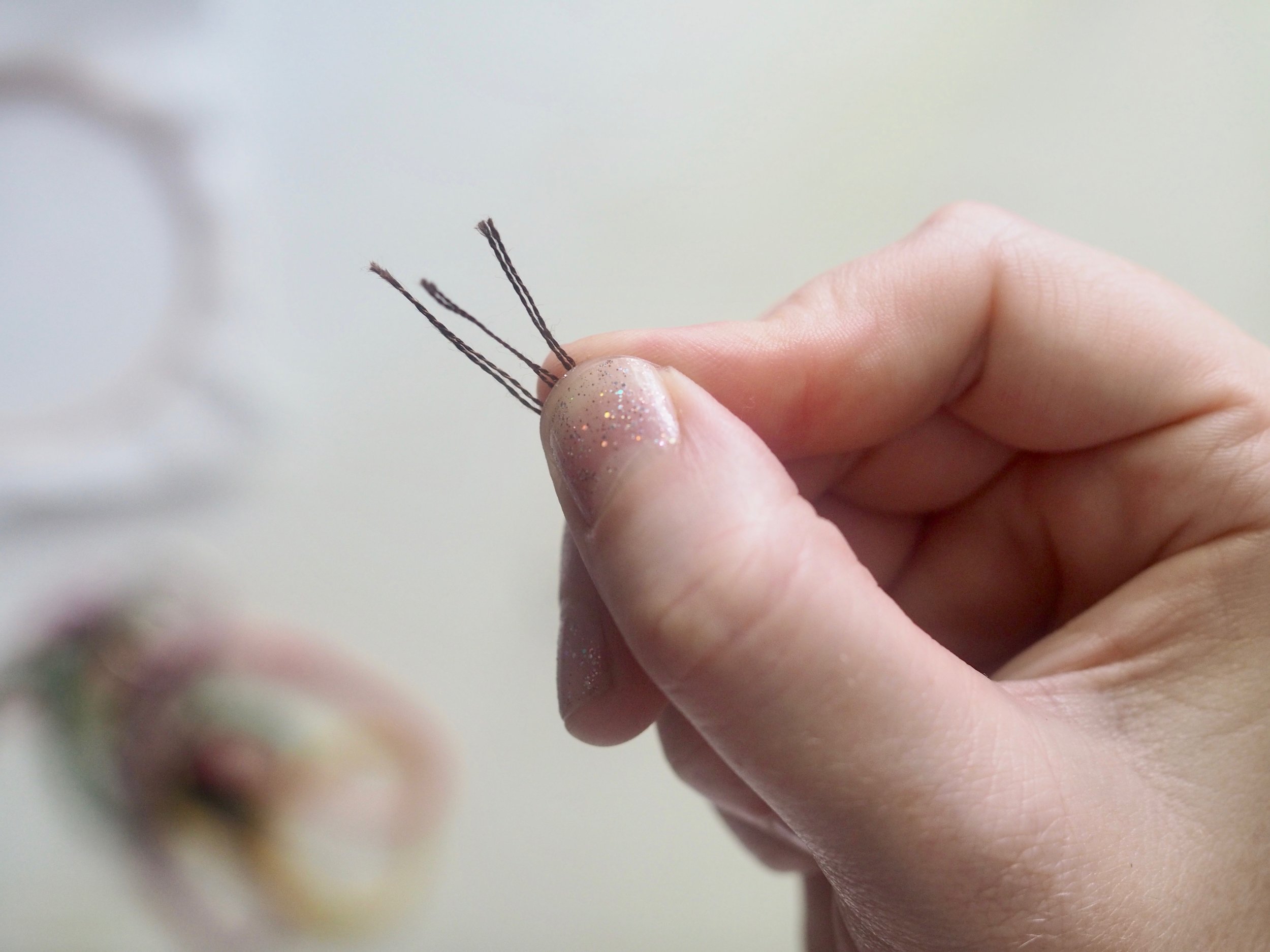
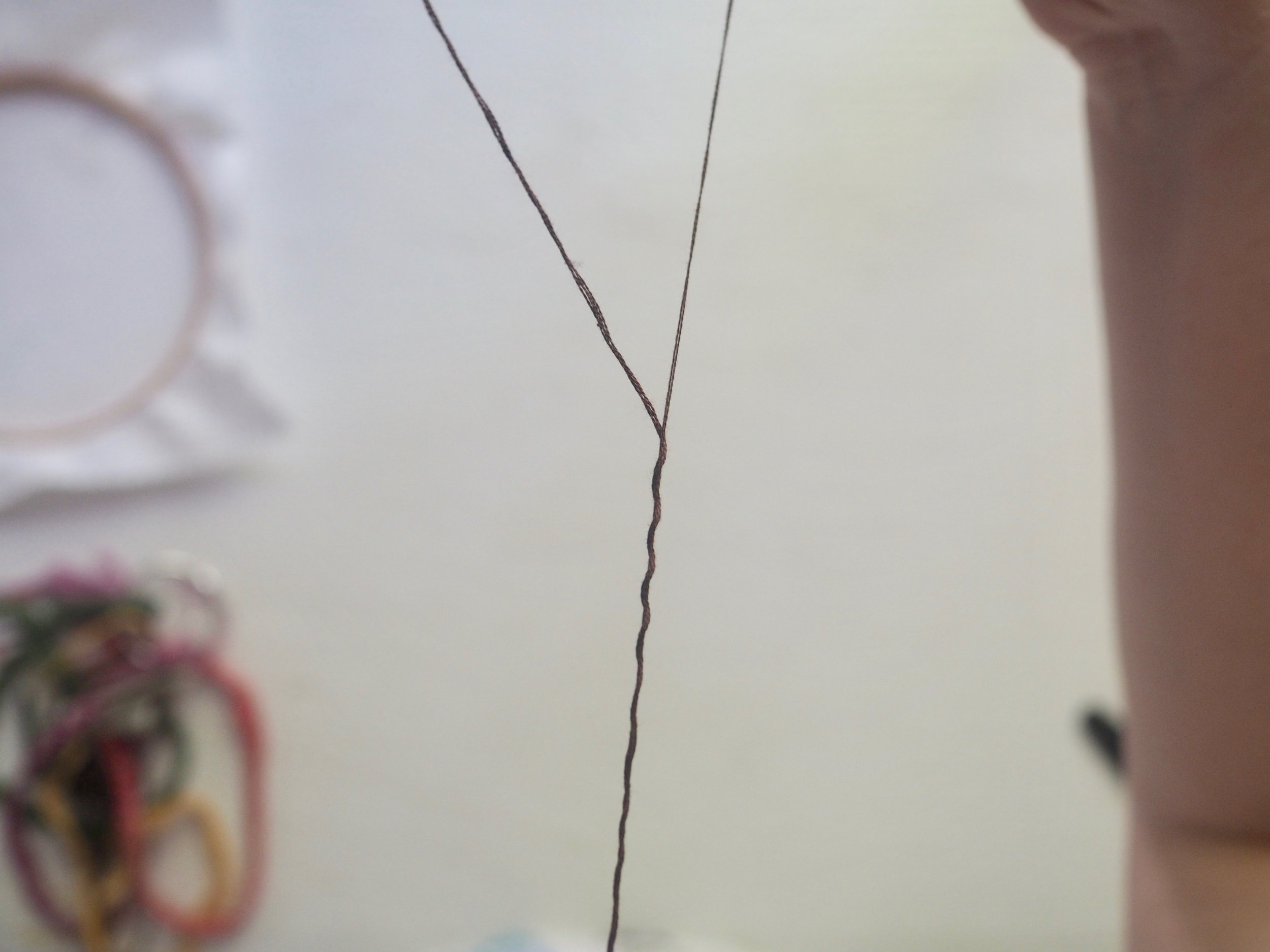
Here, we'll use 2 plys. To separate plys, take the number of plys (2) you wish to use in your dominant hand, with the remaining plys (4) in your non-dominant hand. Pull your hands apart and the floss will begin to form a "Y" shape. It can be helpful to hold the loose end between your teeth to keep the floss from tangling as it separates. 

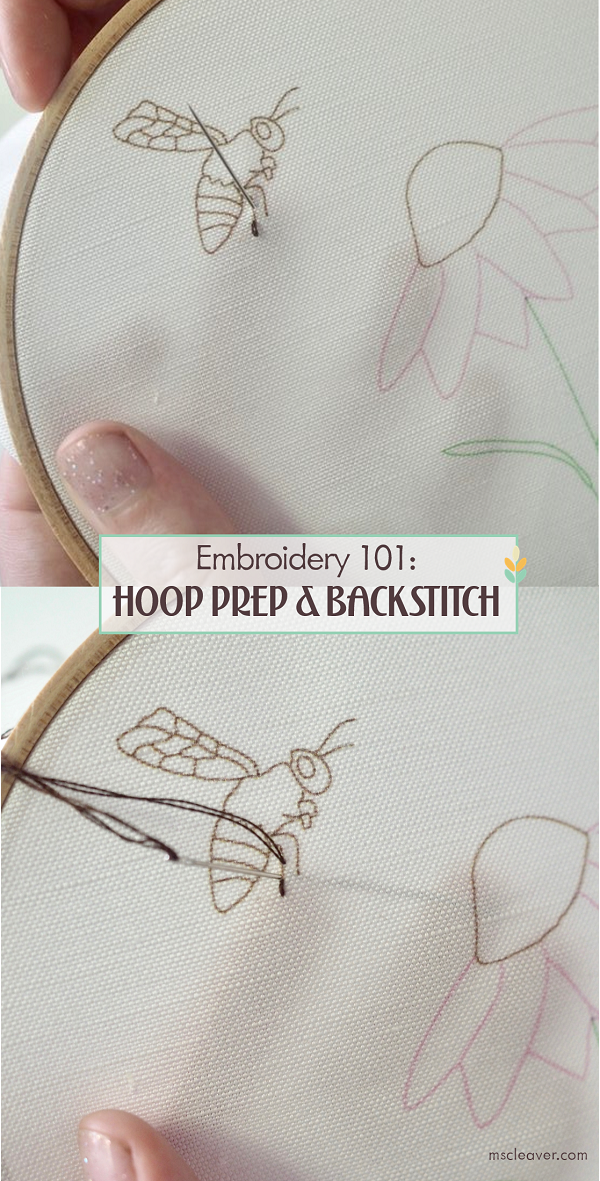
Back Stitch

Back stitch will get you incredibly far in the world of embroidery. You could do an entire project with the one stitch. It's great for straight lines, text and turning corners.

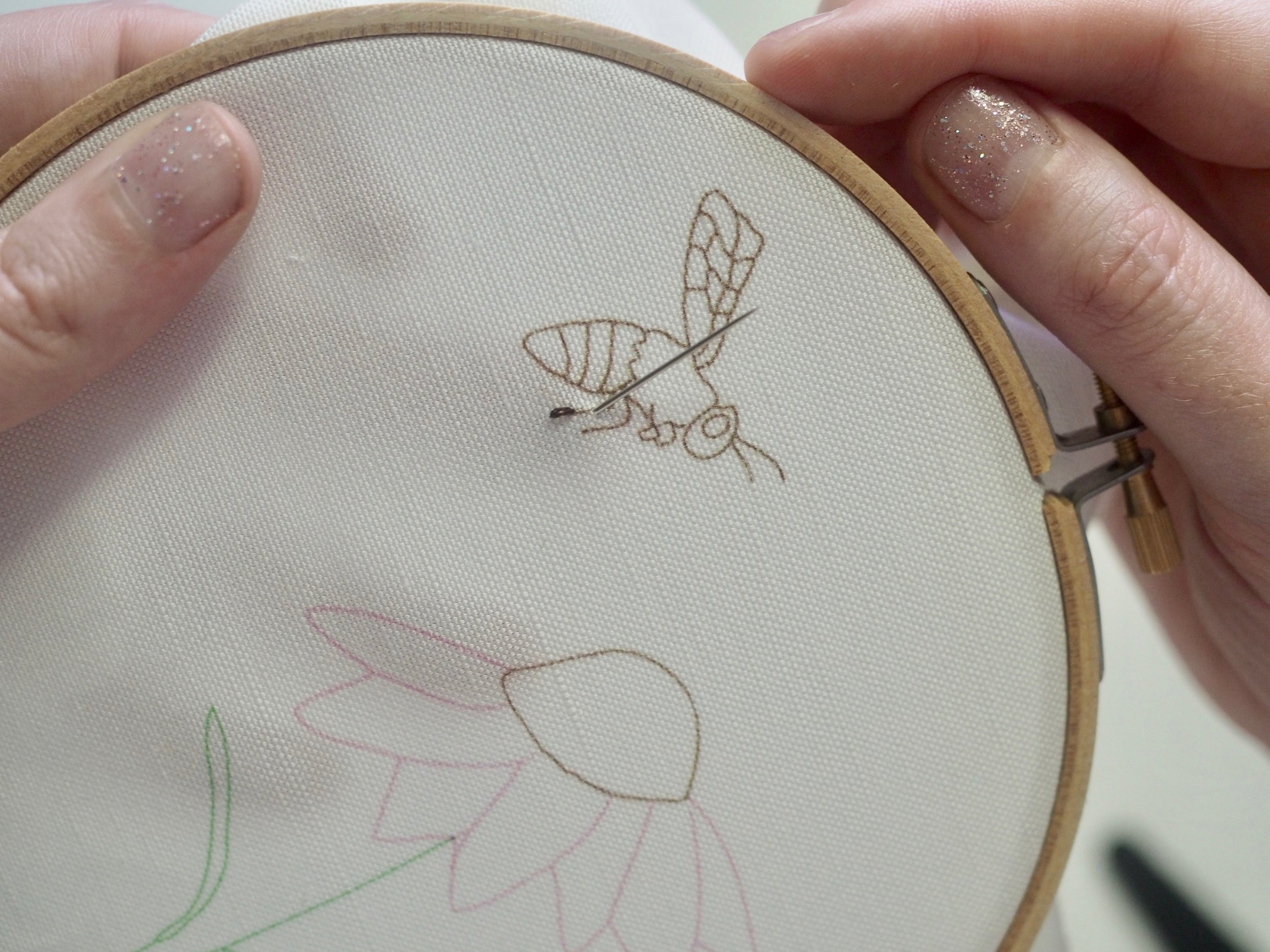
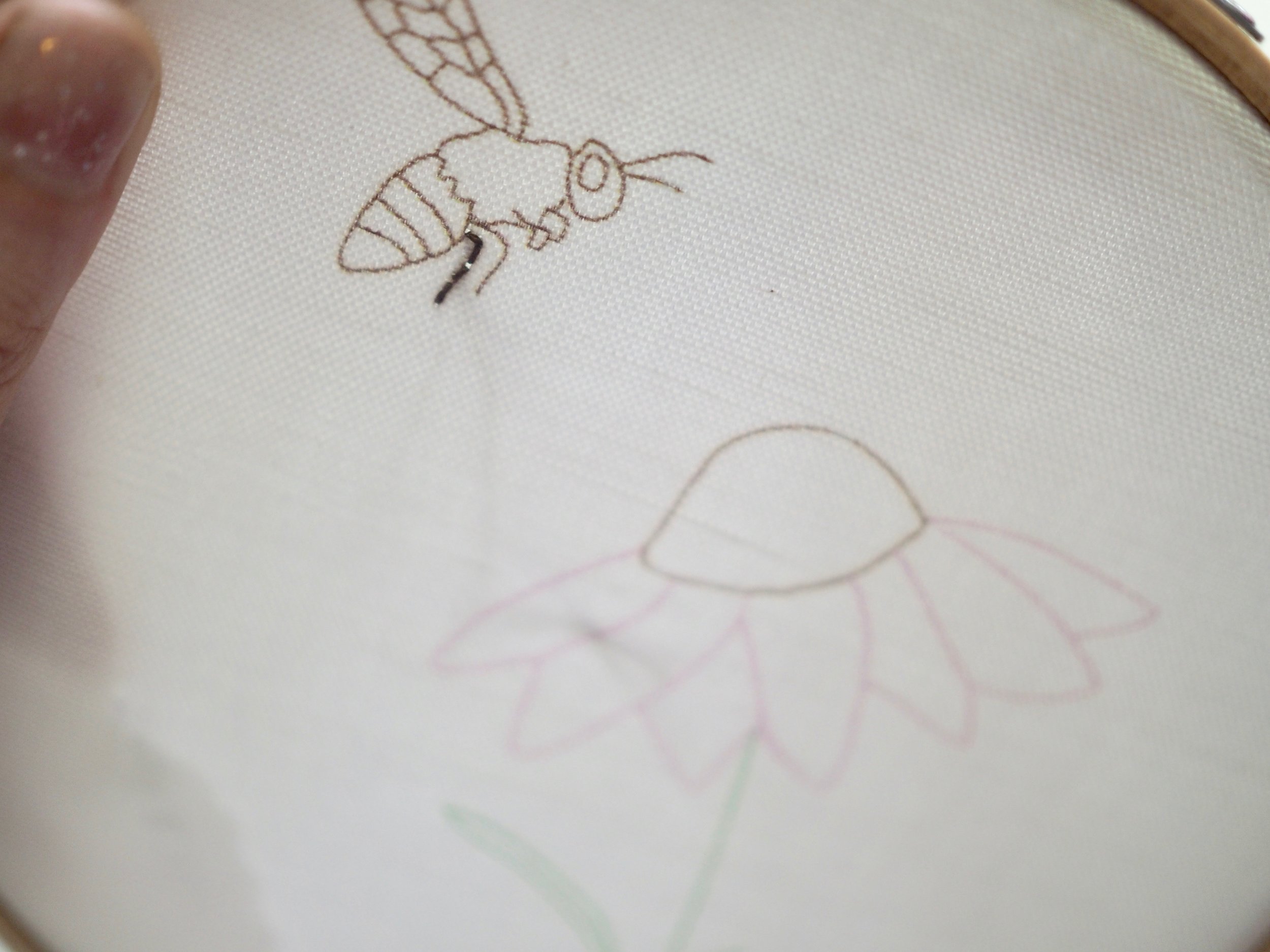
As it's name implies, back stitch works backward - you put the needle up through the fabric a stitch length away from your previous stitch and the the needled is insert back down by the end of the previous stitch.

Because of this backward nature, it's great to start any stitching line with as it holds the floss in place after a few stitches with no need for knots, simply hold the thread tail with your hoop hand until established. 

Back Stitch:
1. Make a stitch of desired length.
2. Along the design line, bring up the needle the length of one stitch away from previous stitch.
3. Bring needle backward and push down at the end of the previous stitch.
Repeat steps 2-3.

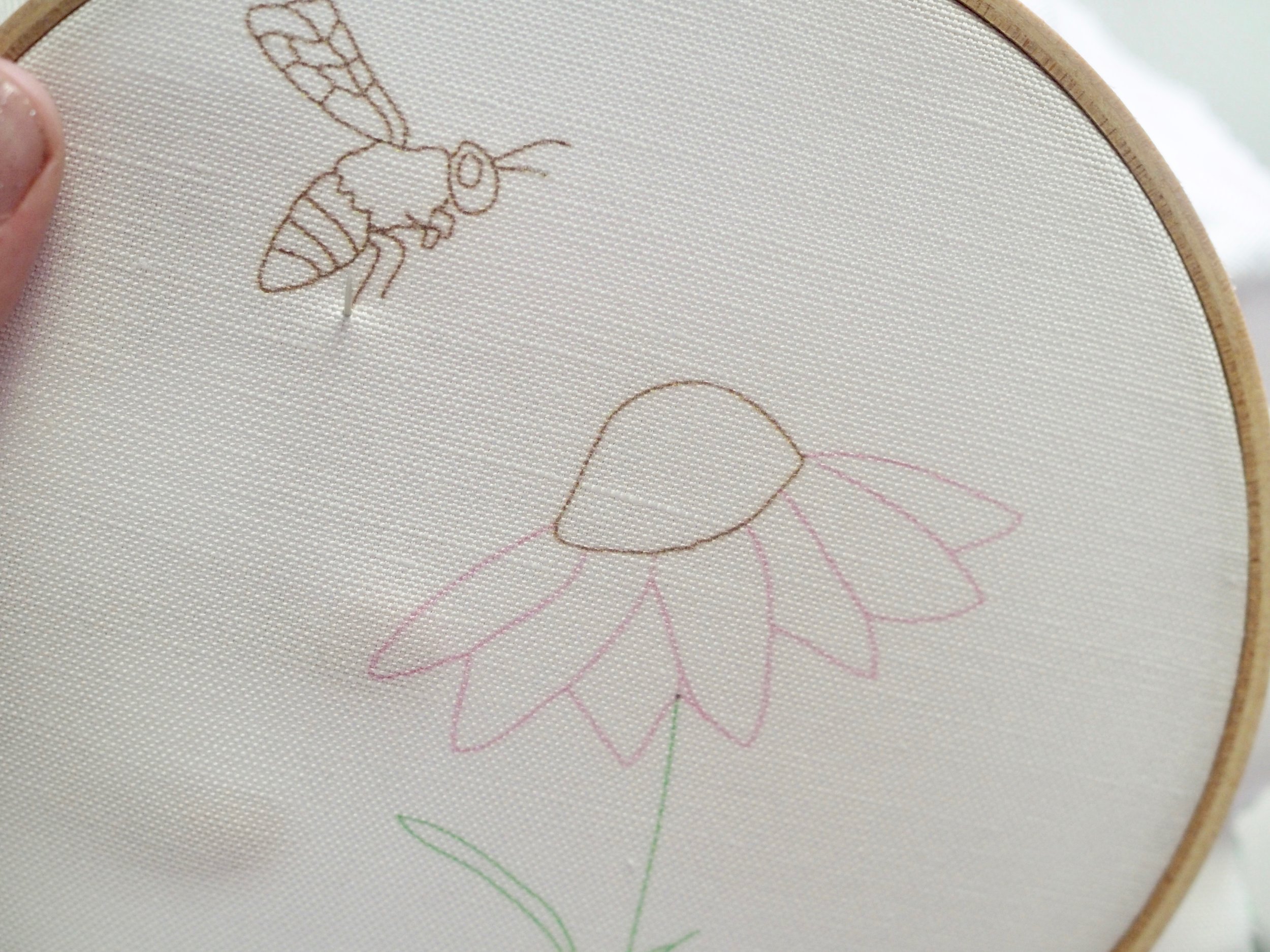
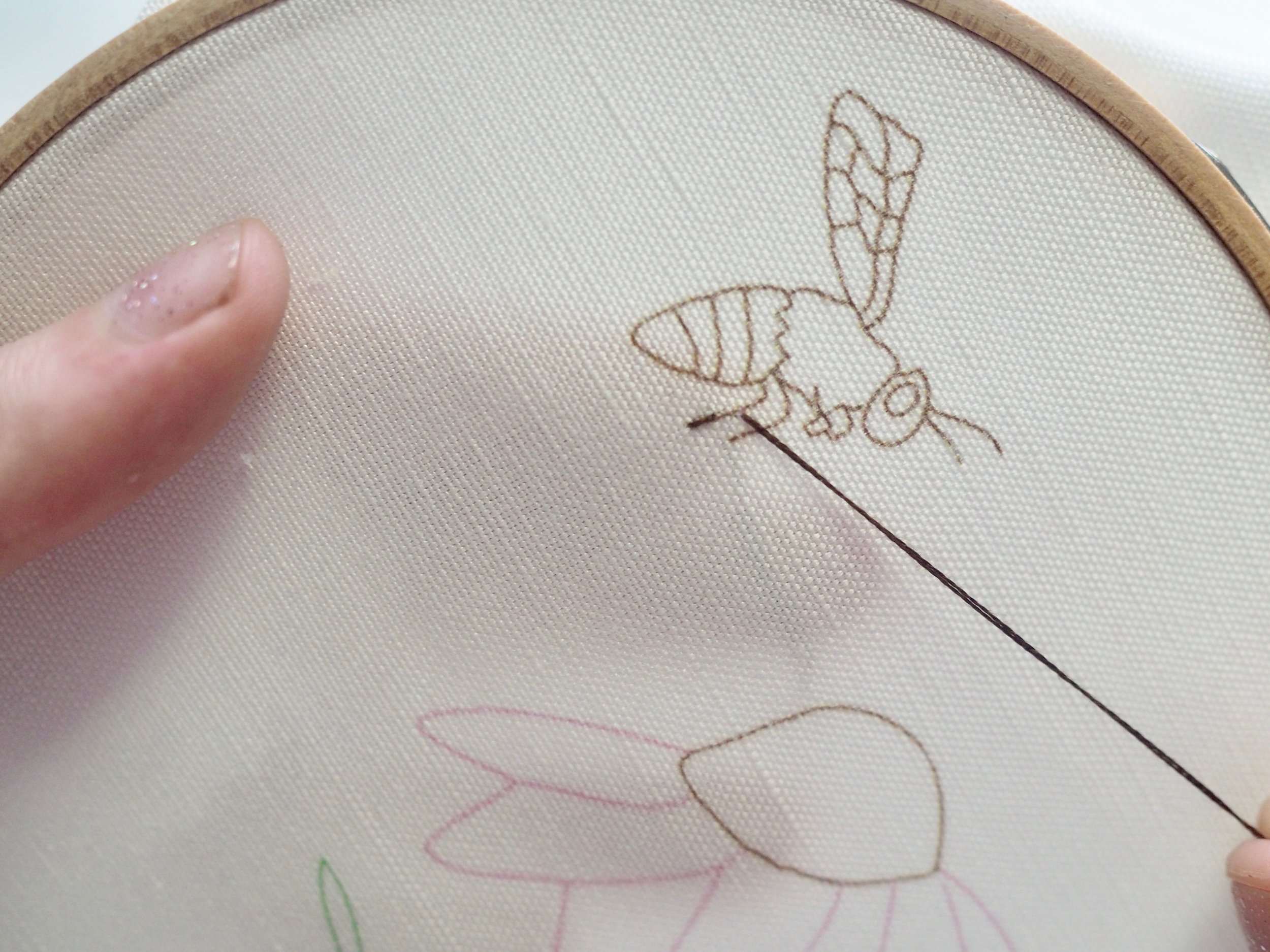
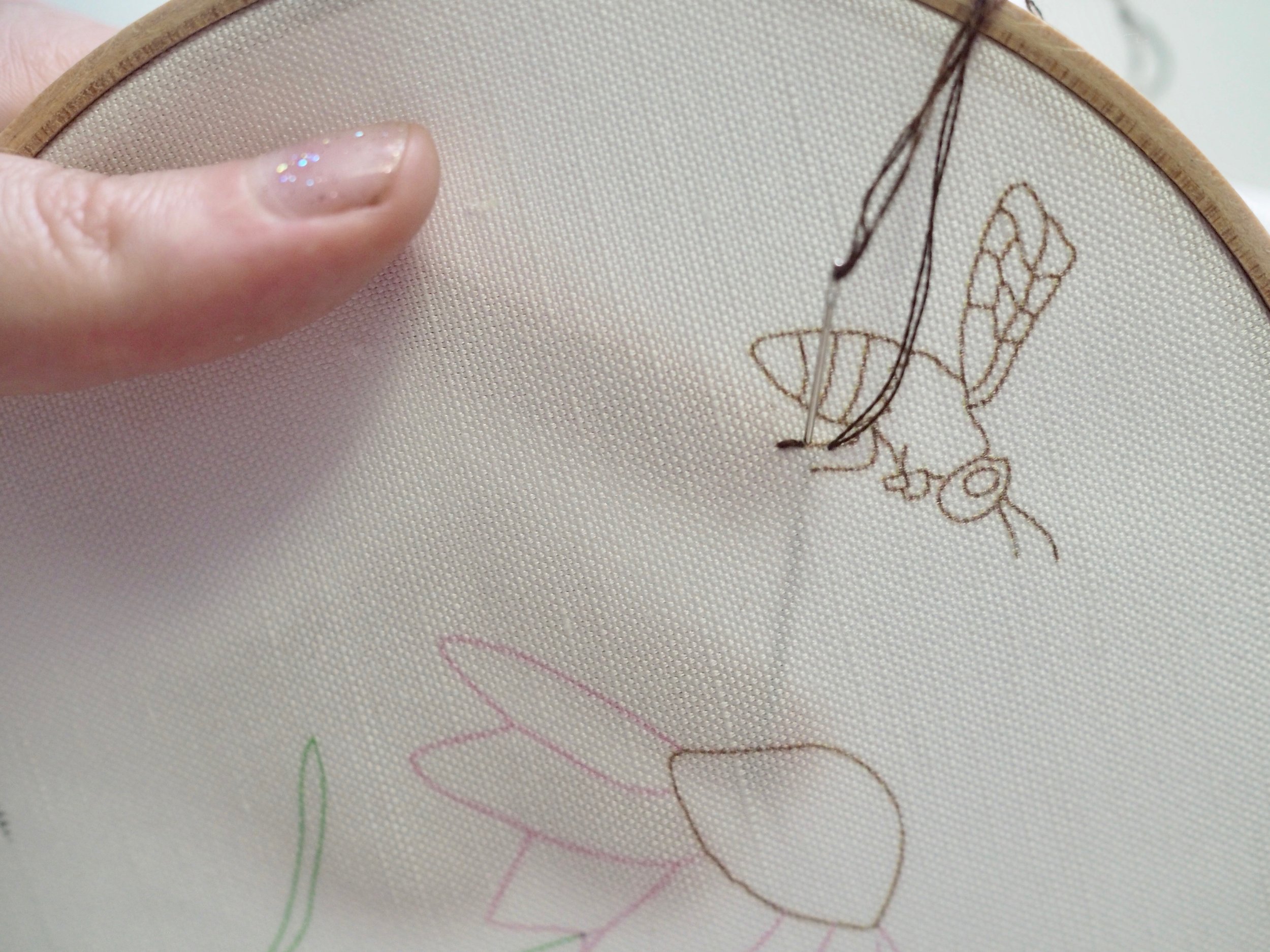
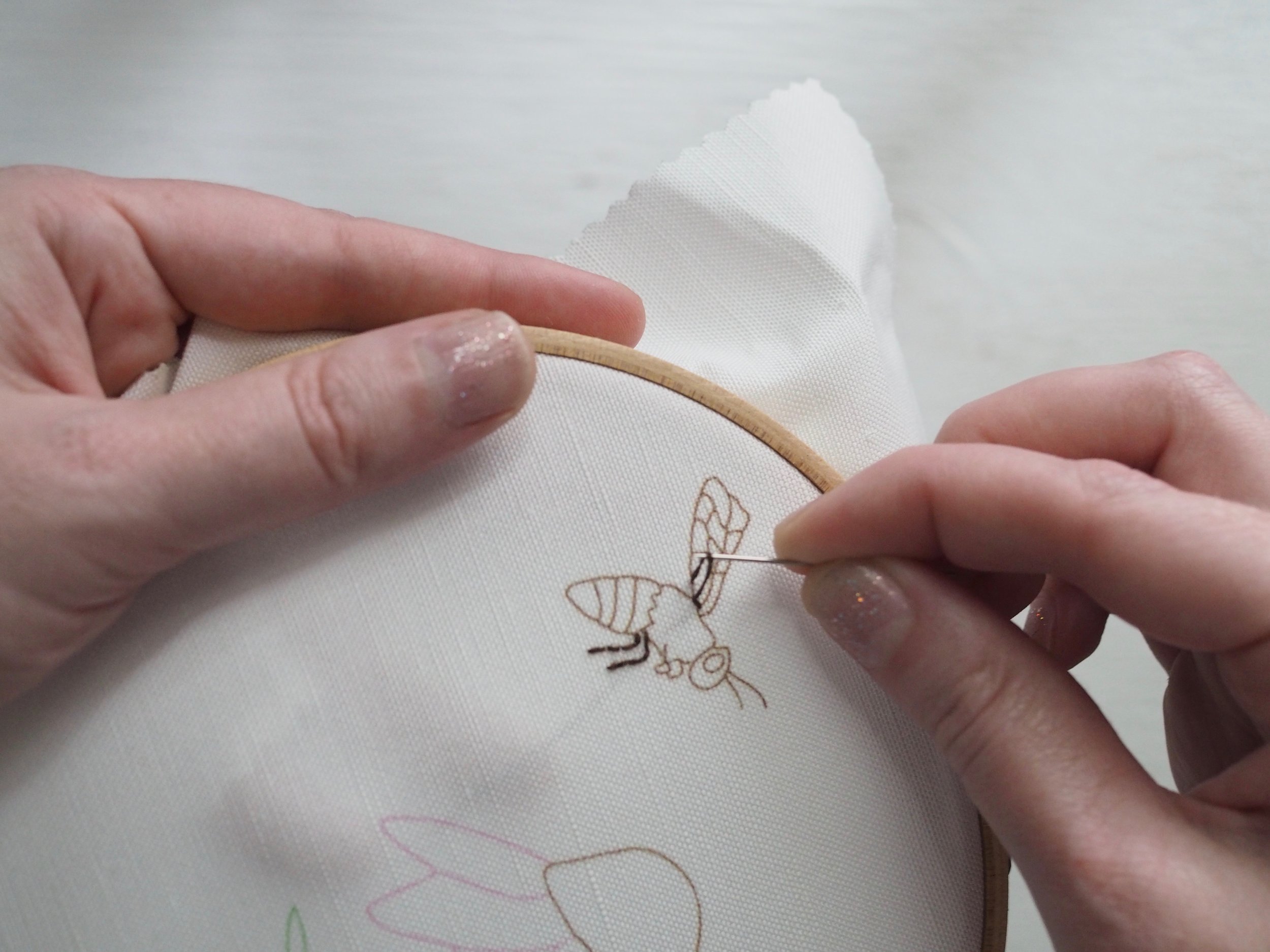
The bee leg shown here is made of four back stitches. A good stitch length will vary by the design, for example, tight curves will require shorter stitches. I generally work most stitches 1/8" to 1/4" long. Try to keep your stitches even (this will get easier with time), but don't worry too much about perfection, you're going for an overall effect and no one is going to look at individual stitches.

Embroidery 101 Tutorial

Fixing Mistakes

If you DO wish to pull out a stitch (or two), simply remove the needle from the thread, use the needle to pick out any wayward stitches, re-thread and carry on. If it's all knotted up, use fine-tipped scissors (like the iconic stork embroidery snips) to cut out the offending stitches and re-stitch. Any offending needle holes can usually be steamed out with an iron. 

I'll go into detail on other outlining stitches in the next post, but until then you can Click here for a downloadable PDF of basic stitches

Coneflower - Complete Kit
from $9.00

A nature inspired design for spring, this kit serves as a good opportunity to practice shading

—-

With the design pre-printed on a beautiful linen-blend fabric, stitching a heirloom quality piece of embroidery is almost as simple as coloring!

Embroidery kits make great gifts (including for yourself!) and are a wonderfully meditative activity that comes with a beautiful product at the end.

Hang your finished piece right in the hoop (I’ll show you how!), frame it, or sew it into a cushion, bag or quilt.

New to embroidery? Each kit comes with a 2-page color guide to basic stitches or check out the tutorial library for tips and step-by-step instructions.

——

COMPLETE EMBROIDERY KIT

Contains everything you need to stitch a beautiful wall-hanging.

  • High-quality Linen/Cotton Fabric pre-printed with design

  •  6” wooden hoop

  • 5 skeins of DMC Embroidery Floss

  • Embroidery needle

  • Guide to basic embroidery stitches (additional tutorials available at MsCleaver.com)

  • Complete kit packaged in a sturdy reusable kraft envelope suitable for gifting.

Have more floss than you know what to do with, or want to pick your own colors? Purchase the pre-printed panel only in the drop-down menu above. Also available as a PDF Pattern. 


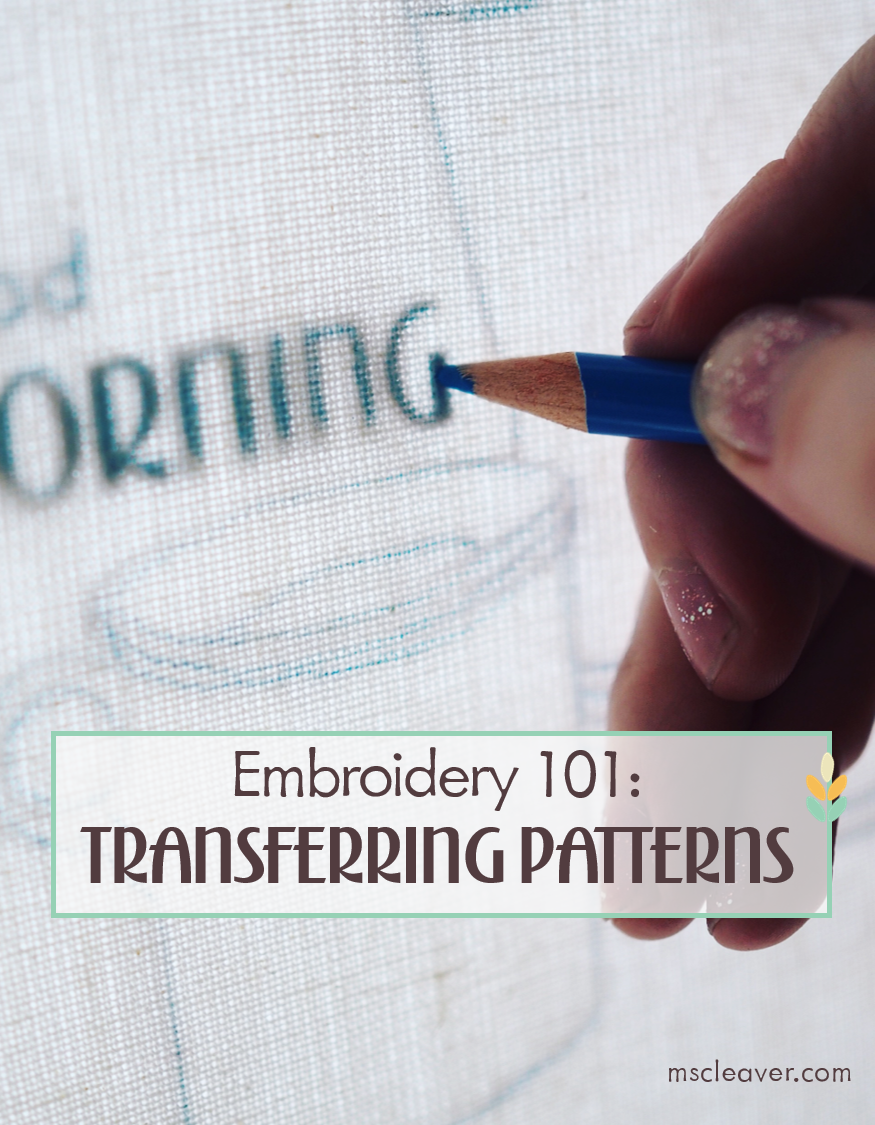
Embroidery 101: Transferring a Design to Fabric

Embroidery 101 Transferring Patterns.png

While you can certainly improvise embroidery (and I suggest you do at some point!), to learn, I recommend working an established design. You can do this in three primary ways: draw, trace or transfer or you can purchase a pre-printed design, which are becoming more and more widely available. 

embroidery transfer tools

Draw

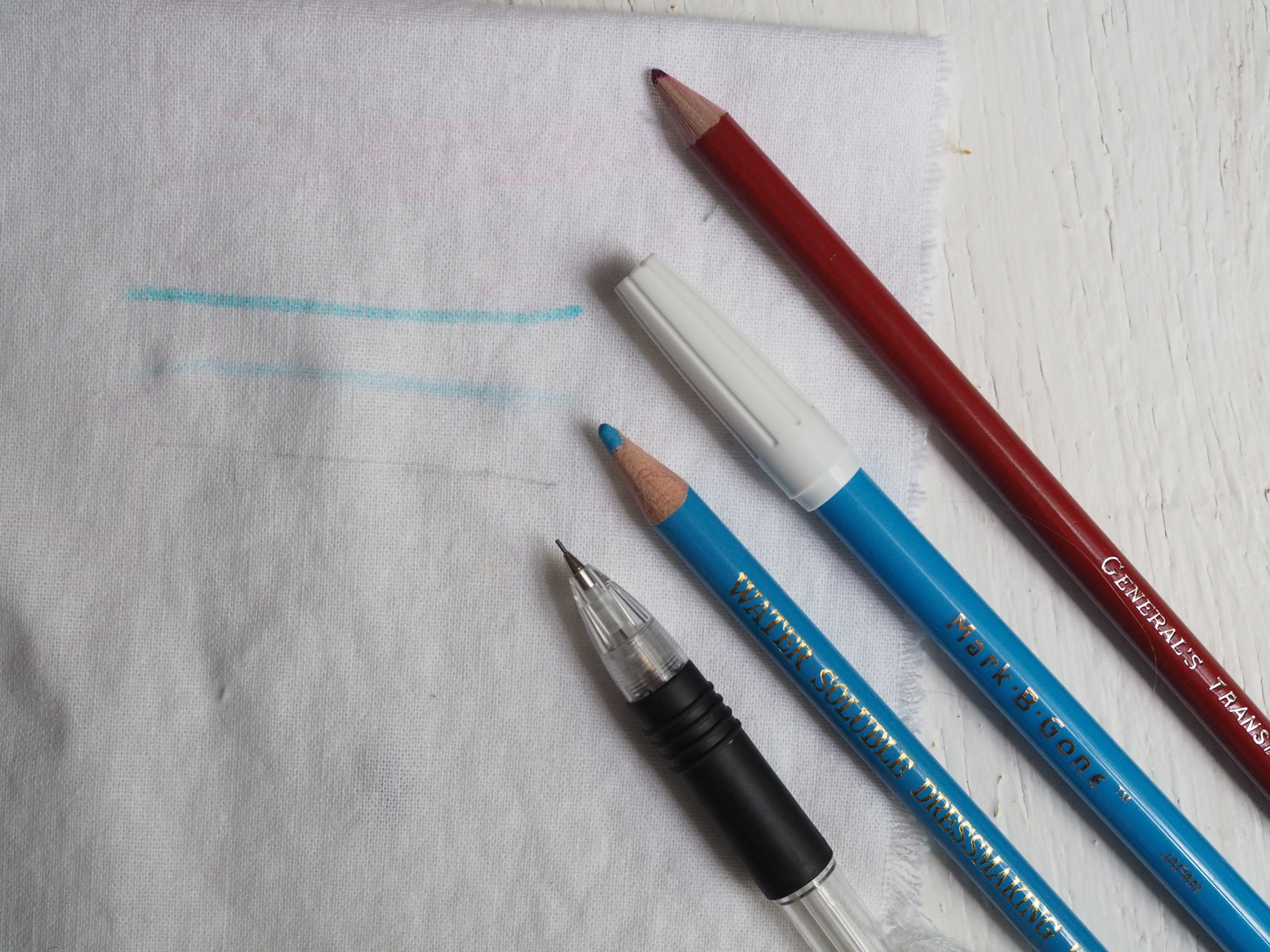
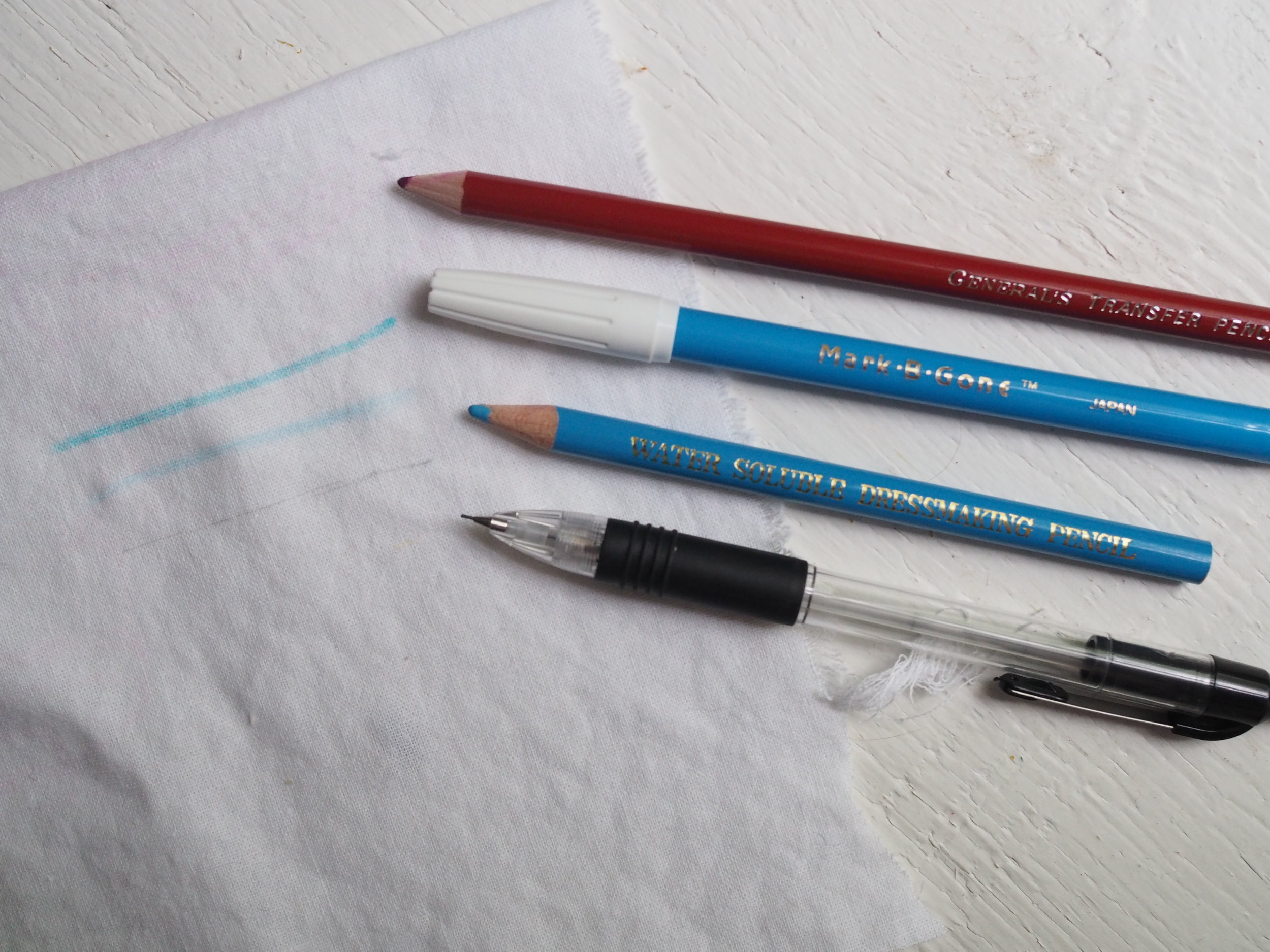
Draw is exactly what it implies. You draw the design you wish to embroider directly on your fabric. The pro is that you can make the design anything you want, but it can be harder to adjust once you've drawn it without starting from scratch. You can draw on your fabric with a number of tools, (from bottom to top in above photo)

  • A regular pencil (a thin mechanical pencil gives a delicate line). You might be able to erase it, but it is pretty much permanent.
  • A water soluable dressmaker's pencil - you can sharpen to a fine line and erase with water if needed.
  • A water soluable dressmaker's pen - this is a darker line and can be washed out, but is generally thicker.
  • The top tool is a iron-on transfer pencil, which we'll discuss later.

If you're working on a dark fabric, look for white dressmaker's pencils and pens. 

Trace

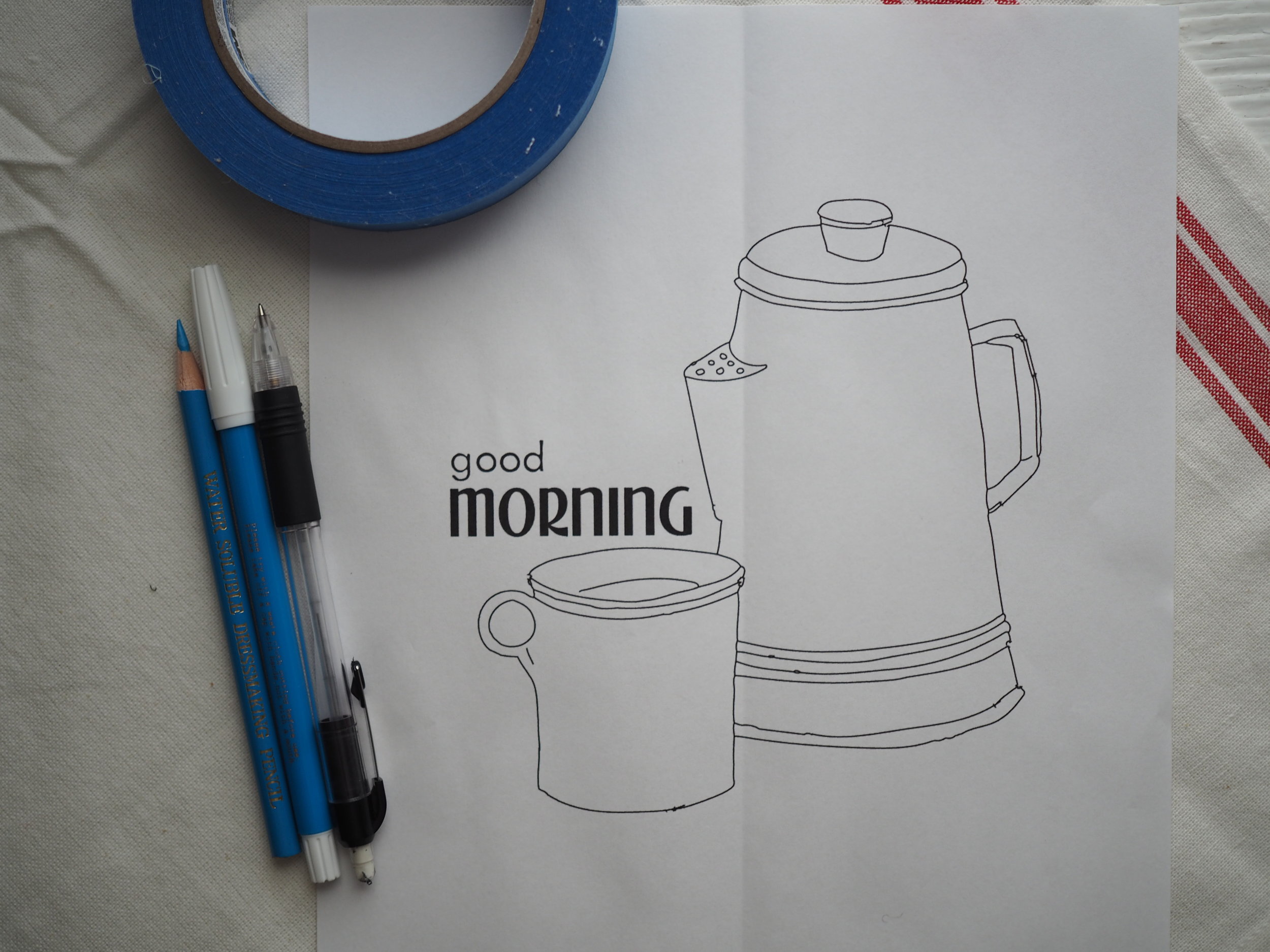
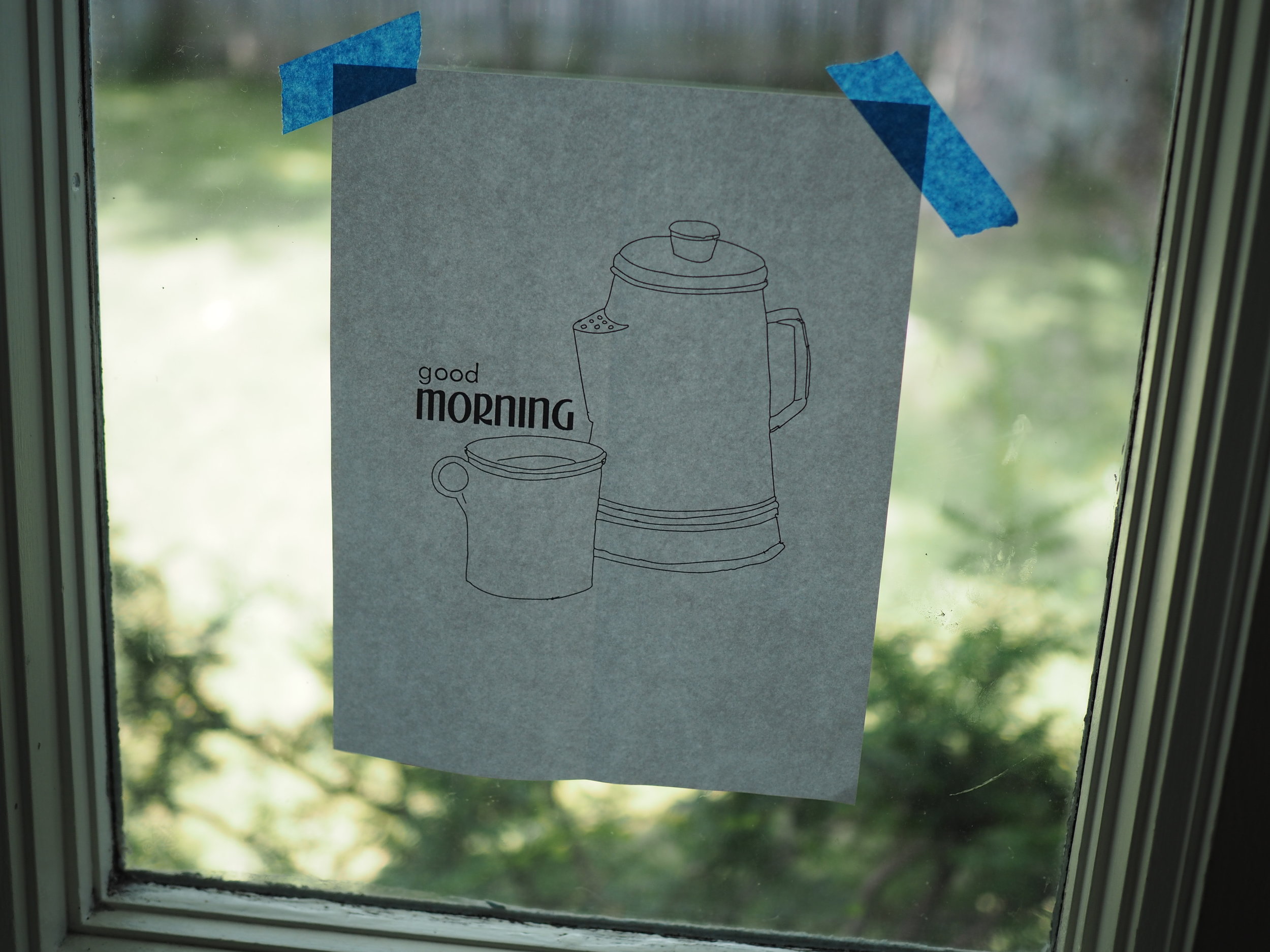
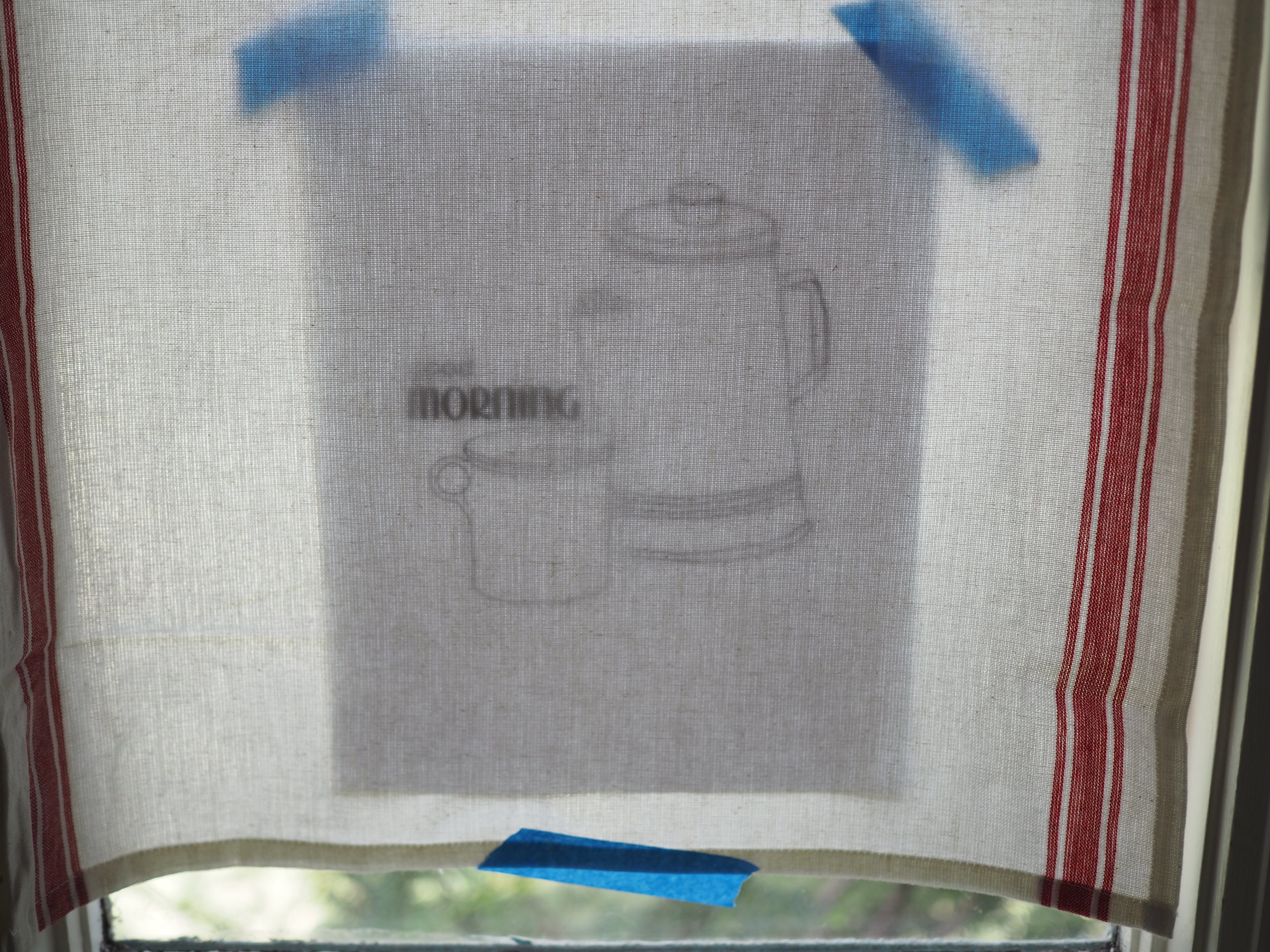
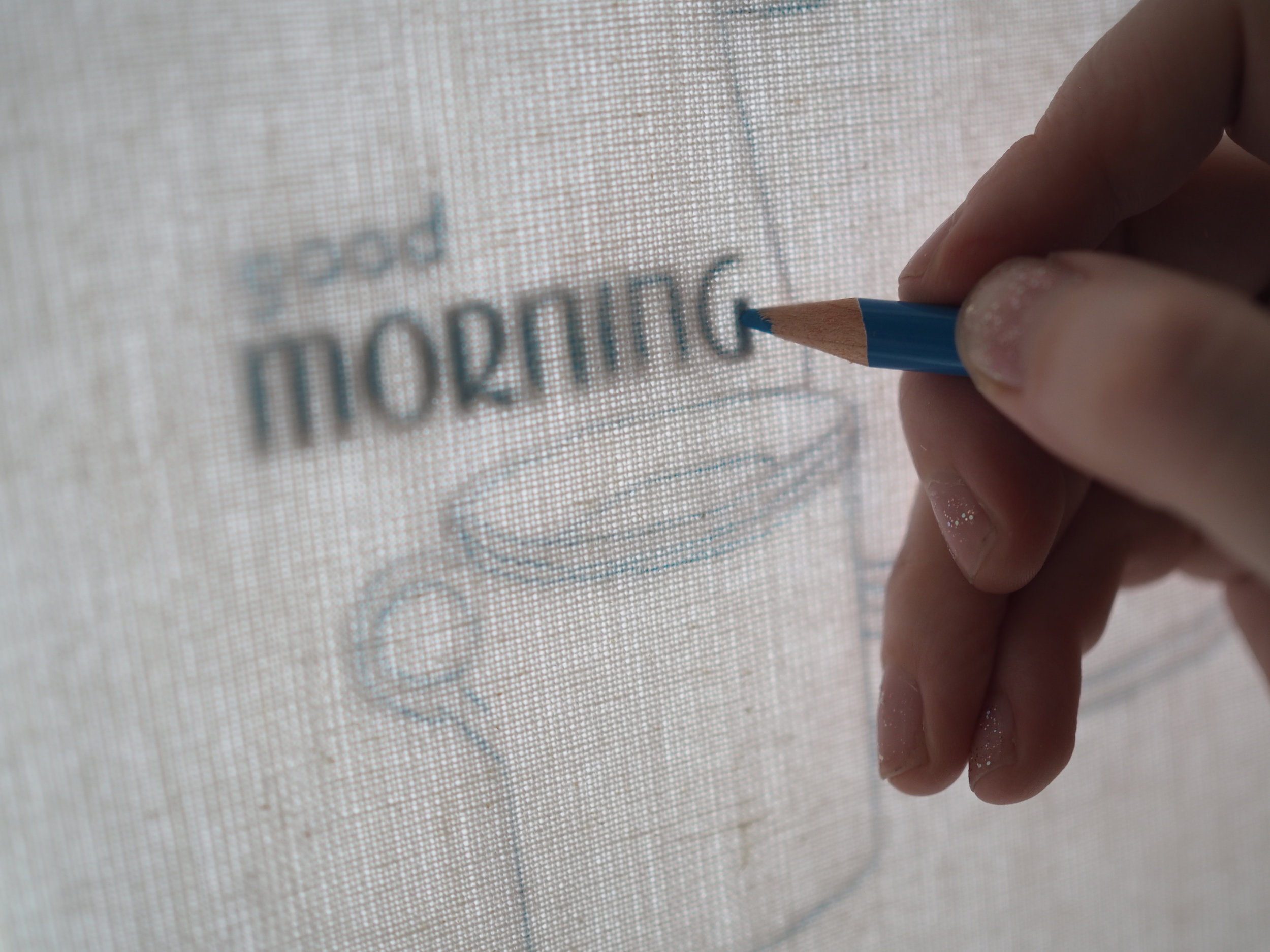
Tracing is my favorite transfer method. You can tweak the design on paper as much as you want beforehand and then when you're happy with the design and scale of your image, you then transfer to the final fabric. To trace, you'll need any one of the tools listed above, plus some painters tape and a bright window (or a lightbox).

Take your final design and tape it up against your window. Tape the fabric over the image, so it is placed where you want. Tape the fabric securely so it doesn't shift as you trace. If it's sufficiently sunny (or you're using a lightbox) you should be able to see the image to trace easily. Using your tool of choice (my preference is the water soluable pencil or pen) trace the entire image, coloring in lines thicker or thinner as the design dictates. 

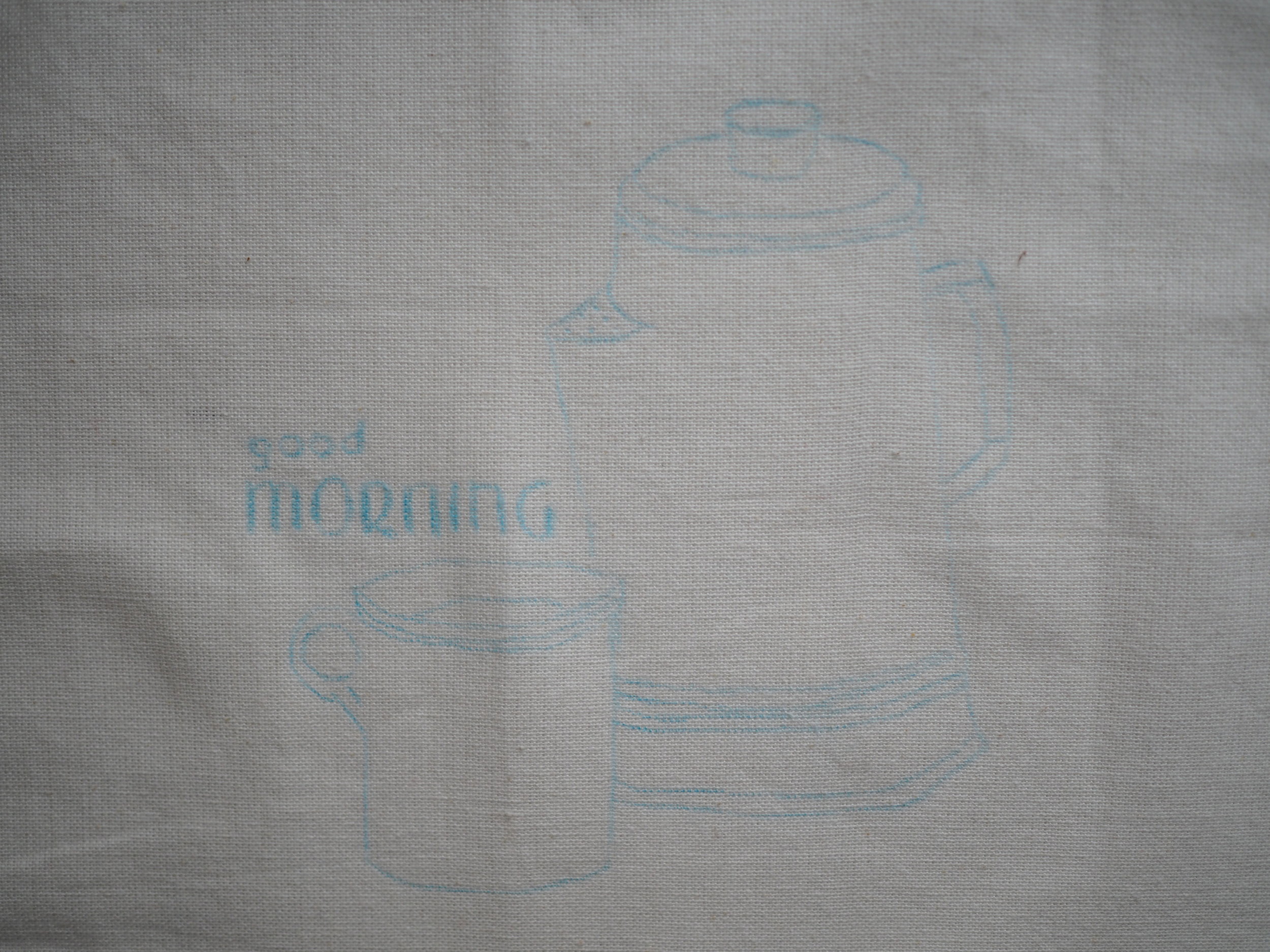
When you remove the fabric (last image) you should have a light copy of the design to stitch over. 

Iron-on Transfer

I don't really recommend this method, since the marks the transfer pencils make are permanent and, honestly, really hard to see, but it's an available method, so I thought I'd share. 

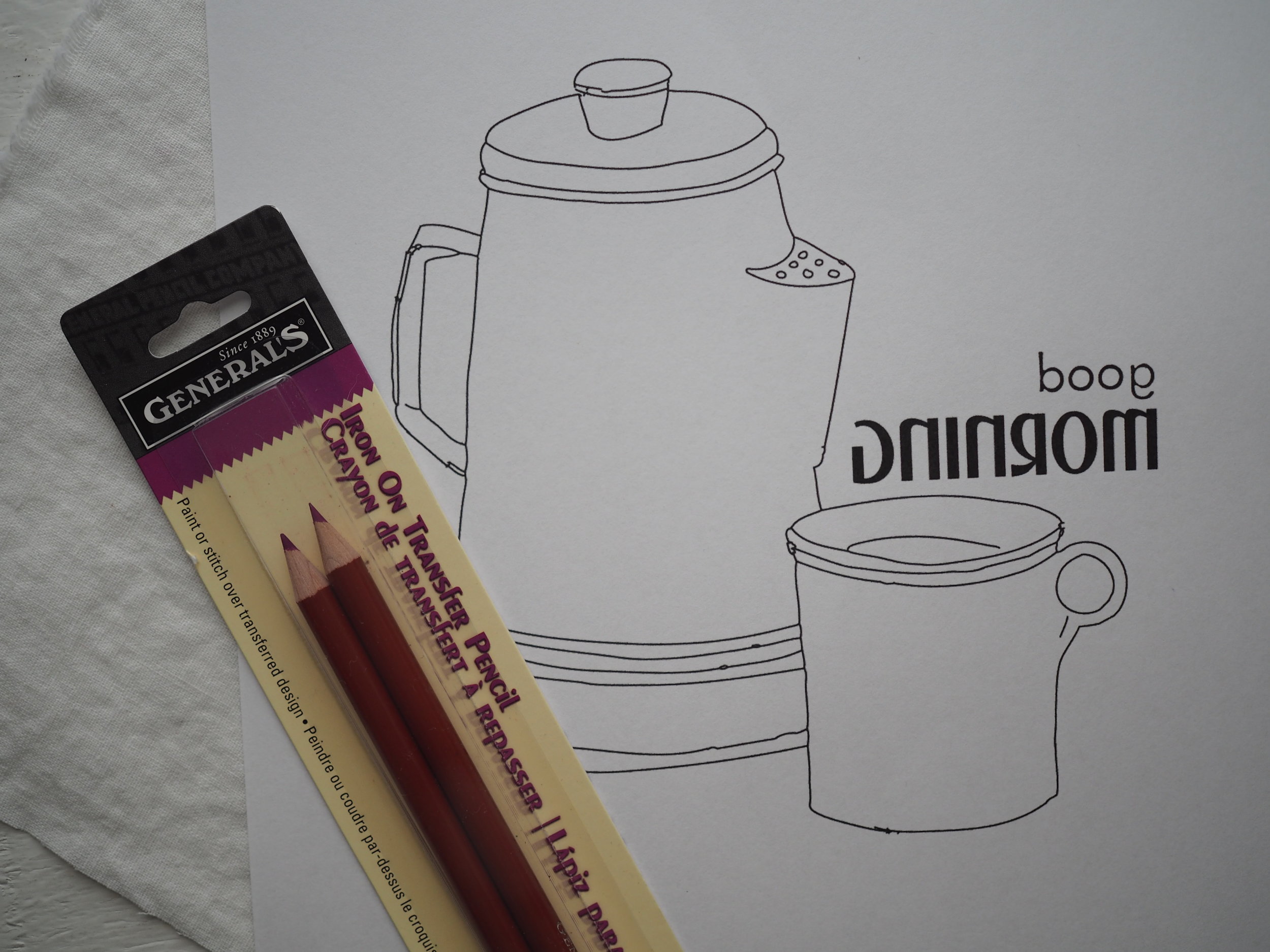
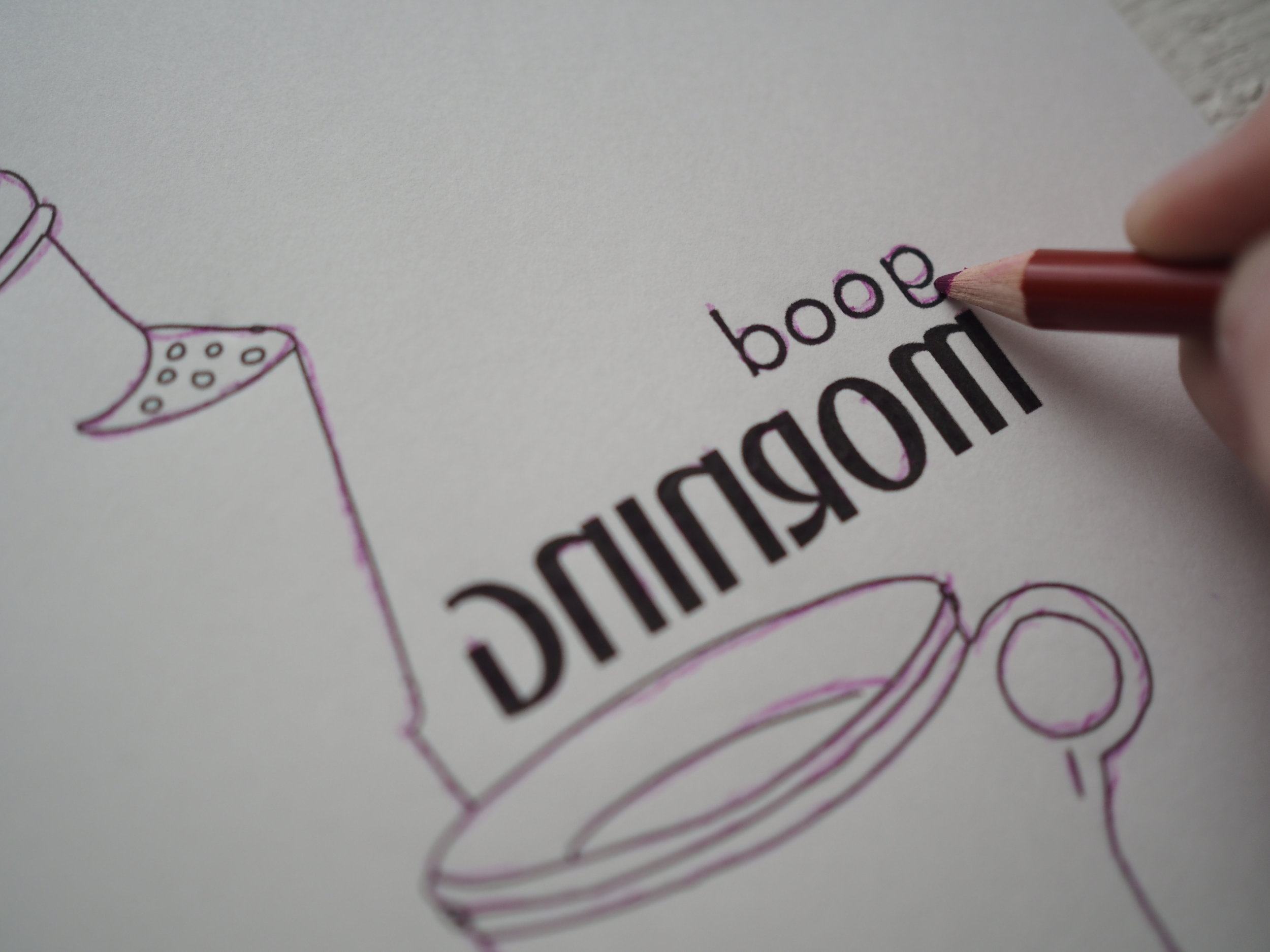
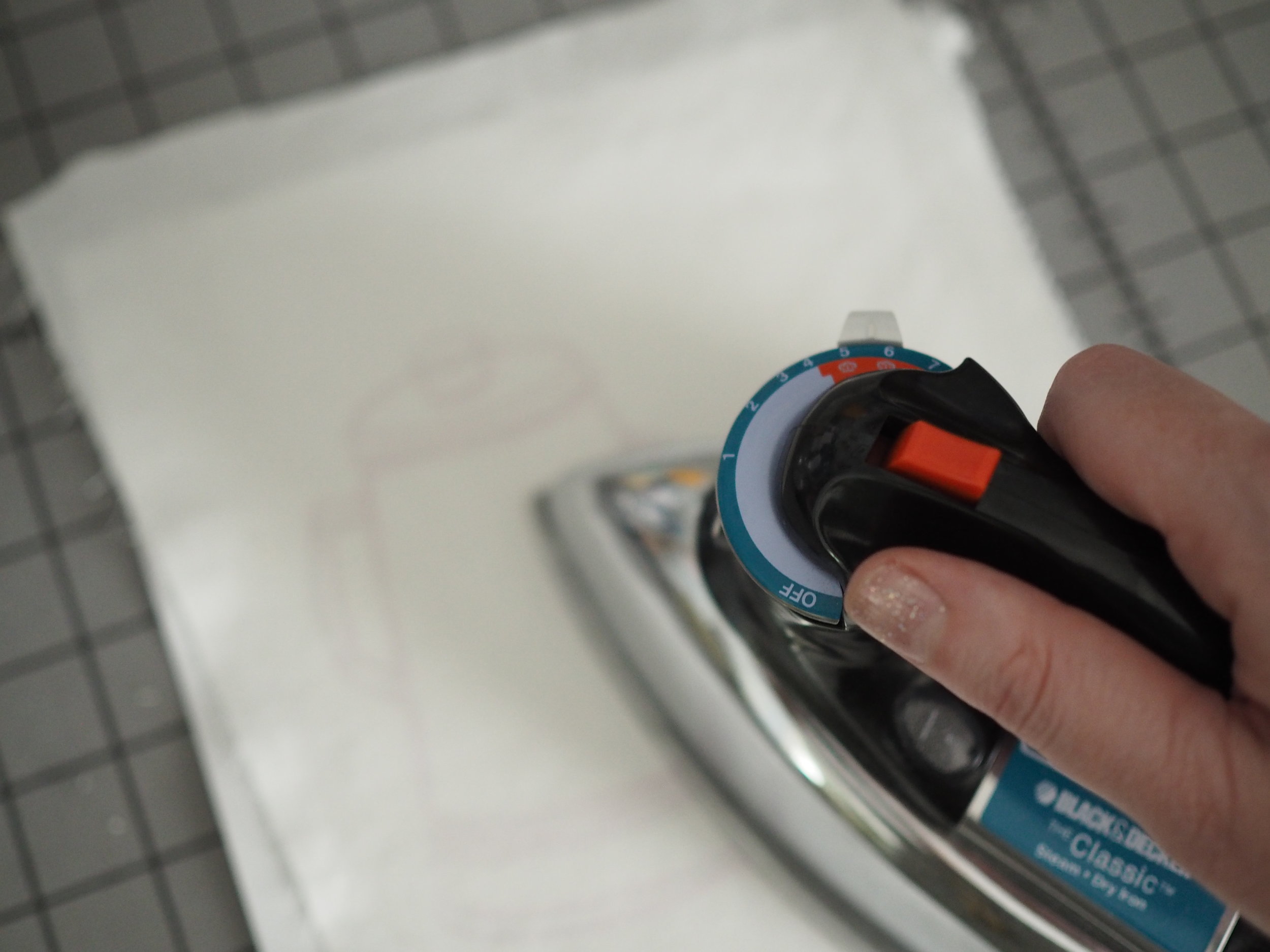
To do a iron-on transfer, you'll need to print or copy your final image as a mirror of what you want the finished design to look like. That is, any text should be backwards, etc. Using a iron-on transfer pencil, darkly trace your design on the paper. Then using an iron set on medium heat, press the image, traced side down, on the fabric. It will leave a faint pink mark. (Last image - can you see it? Squint really hard.)

Once you've got the image on your fabric, we'll get it in a hoop and start stitching!!

Click here for a downloadable PDF of basic stitches


Your Questions - Part I

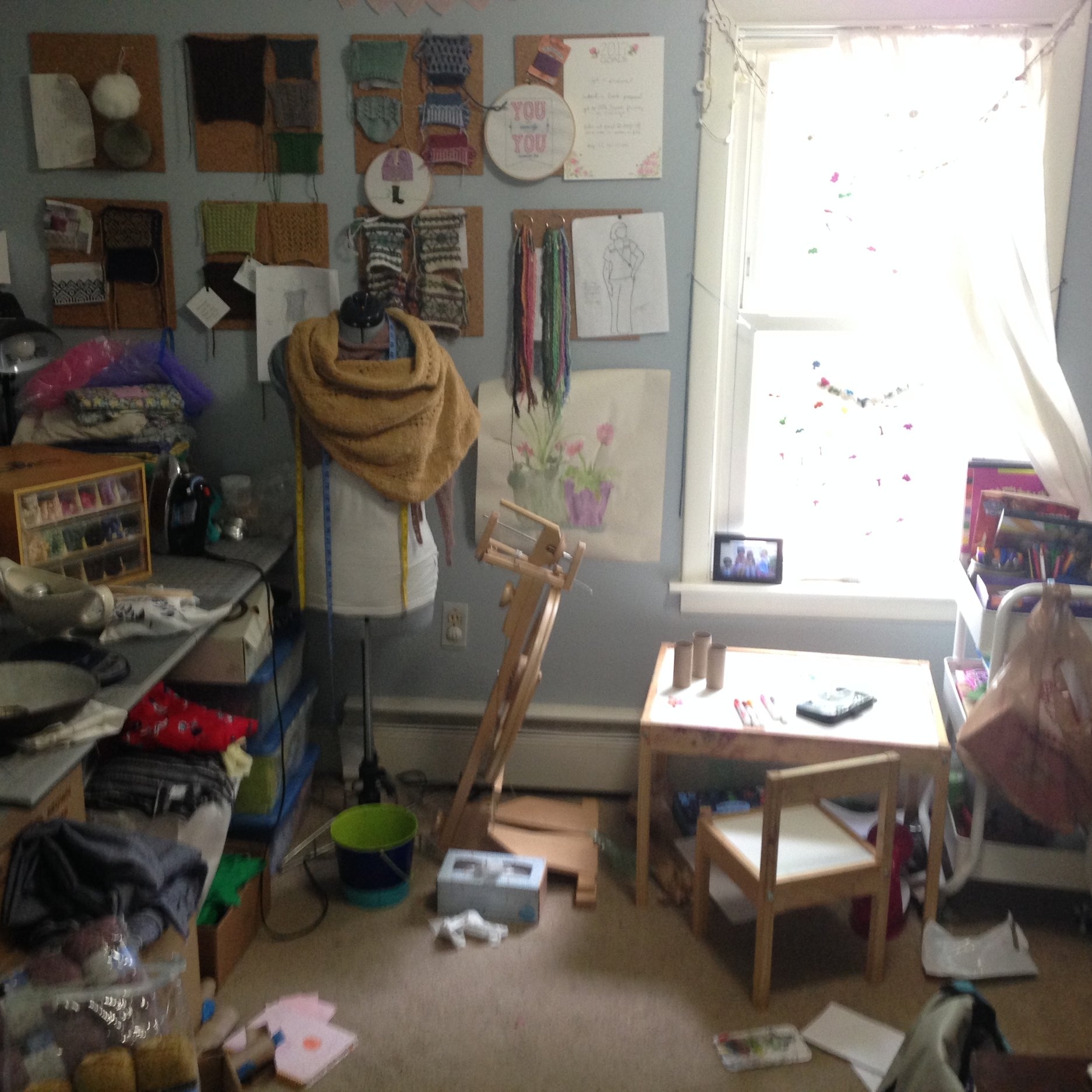
My Studio

I recently ran a little giveaway on Instagram and one of the contest requirements was to either 1) suggest a tutorial or 2) ask me a question. Yes, I shamelessly pump my followers for blog content ideas! For tutorials, a beginner's guide to embroidery was the overwhelming ask and is currently in the works, but in the interim, I thought I'd answer the non-tutorial related questions. 

Here's a question for you:  how do you balance your work as a maker with your domestic and family life? You seem to have a great time doing both! - Carneykar

Balance.  That's the eternal question, isn't it? Ask any tightrope walker and they'd tell you that balance isn't a one-time trick and you've got it all figured out; instead it takes focus, constant adjusting and having a big stick to help even you out doesn't hurt. At least, that's what I'd guess they say, I don't know any tightrope walkers. 

In terms of mindset, making is a priority for me. You first make time in your life for what you need, (i.e. go to work to make money to feed your family and pay your mortgage, clean laundry, etc.) and then you prioritize (I hope) what you love, and I love both my family and making things.  

Making is as habitual for me as brushing my teeth, so I always have a variety of projects or ideas in the works and I give myself tools to work on them whenever an opportunity arises. Most of my sample knitting is done either on my carpool days or while I'm watching tv at the end of the day. I  always carry a knitting or embroidery project in my bag so I can stitch during lunch breaks or while waiting for appointments. I keep paper around to draw out new ideas and a notebook in my nightstand to jot down story ideas. I'm almost always doing something, but the majority of the time, making is how want to spend my "me time," even if it's for work purposes.

My daughter's playroom and my studio share a space - so we can "play" together. I've learned what I can and can't do with my daughter around: gardening or baking together - a hearty yes; tracing sewing patterns while she's coloring - yes;  cutting out fabric - no way. I've also learned to do everything in bits and pieces. When I really need to focus or do computer work, I work during naptime and I'm usually the last one in the house awake by a long shot. 

As much as I (mostly) enjoy all the aspects of my handmade business and want to grow it, I try to be forgiving of myself when I choose not to work.  I stayed up late last night weaving in ends and blocking a sample that is due shortly. I've got three more projects with deadlines in the queue, but if my daughter asks me to nap with her on the weekend, I probably will, because I know those chances to snuggle and plan her epic "Happy Heart Day" party before we fall asleep are short-lived.

I would also be remiss if I didn't give HUGE credit to Mr. Cleaver. He does 90% of the cooking and laundry in our household and the majority of things like grocery shopping as well. This means when I get home from work, I get to spend time with my daughter instead of rushing to make dinner and I can clean up the dishes in stages across the evening. I work from home one day a week now, which means I can help out more on the laundry/dinner/shopping front and try out fancy new recipes - which again I do in pieces. For example I made some spaetzle with pesto the other day - I made the pesto first thing in the morning before my workday started; mixed the dry ingredients and set out the pots I needed at my lunch break; and then dove into making it while Little Miss Cleaver watched My Little Pony after pickup from preschool. 

I'm certainly not prefect. Somedays I'm not as present with my family as I want to be. I'm terrible at actually taking a break. I wouldn't recommend eating off my floors.  It often feels like it takes me twice as long to get something done as I'd like it to. But I've also become more aware that life has a rhythm and an ebb and flow. So I keep my eyes on the wire, adjust as necessarily, and allow myself to be supported by those who help bring balance to my life. 

Beach Beauties in Progress

 I would like to know what is the inspiration for your designs? - cclynn14

A writer friend of mine introduced me to the phrase "plot bunnies" - the definition being that once you get one idea, it seems to multiply like rabbits until you have more ideas than time. I'd say the same is true for both my knitting and embroidery design.

Inspiration is everywhere, you just have to open and patient. I'm constantly seeing something that triggers an idea for a new design and that trigger can vary widely - I've designed four shawls based on bird-titled songs from my favorite bands, I've got a colorwork sweater in the works that came from a peeling wall paper image I saw in a friend's Instagram post about their home renovation.

Of course, if I didn't tell you that, you probably wouldn't see the connection, even if I placed them side by side. I find inspiration almost works like a dream - it takes familiar things, takes and element or two of familiarity - a mood or a color -  and shifts it into something different. With that wallpaper sweater, there's a muted color palate similar to the original and both have patterns with a circular quality, but that's about it. The songbird shawls set out to capture a mood (Leading Bird), a rather literal translation of the lyrics (Paper Bird and Tributary, aka "Cage the Songbird"), or the layout of the performers on stage (yet to be released Darlingside-inspired shawl).  

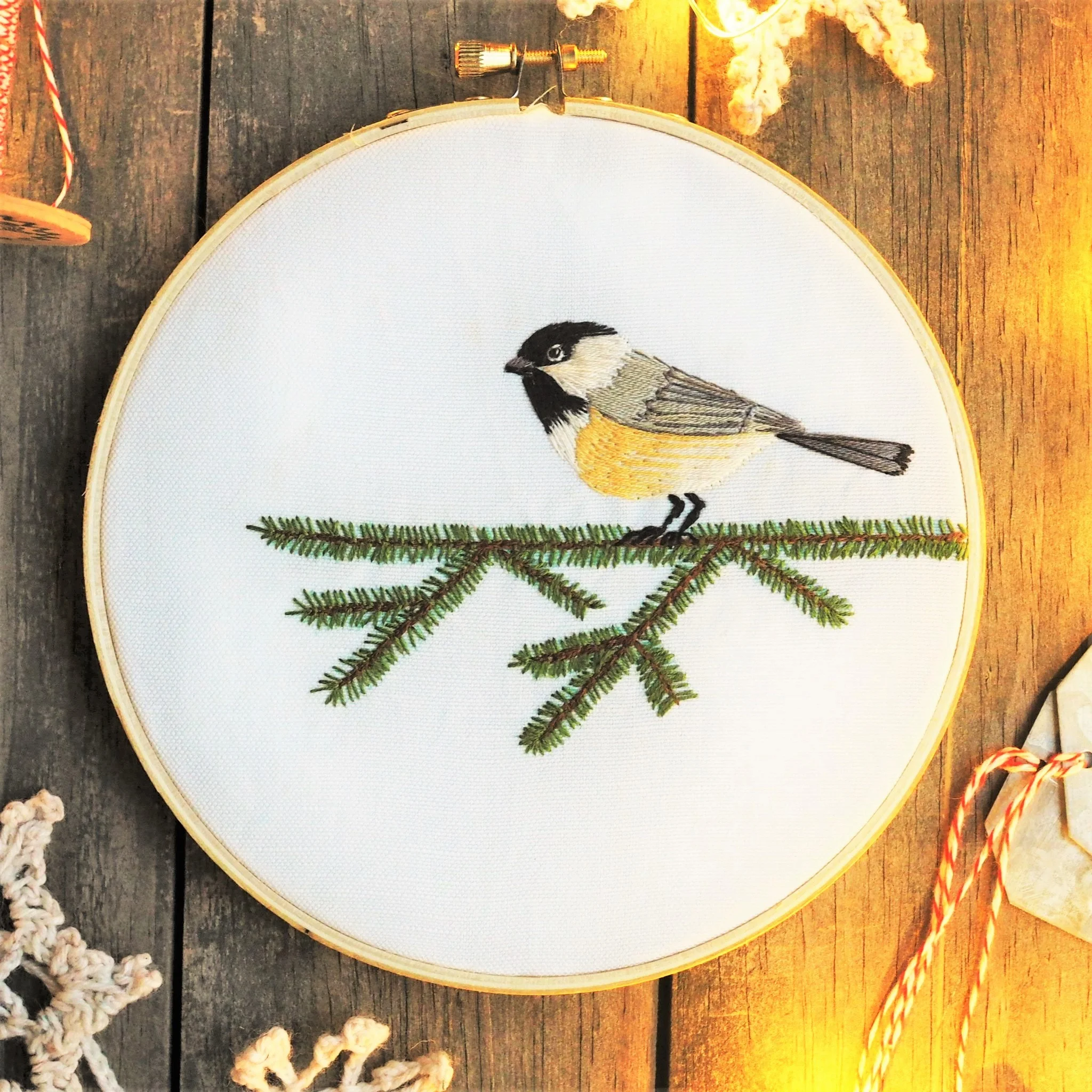
My embroidery designs are much more illustrative, and more literal in translation from concept to final design.  Often when I introduce someone to embroidery, I'll teach them by drawing a daisy on the fabric for them to trace- the Coneflower design took that idea and made it a bit more formal. (That pattern is also a secret sampler, which you'll see in the Embroidery 101 series coming up). With my embroidery designs, I'm often illustrating my dream life - something slightly agrarian and rooted in a sense of place, with a timeless quality. When I wanted to come up with a summer-themed hoop, I started thinking about all the things that would be a dream summer to me - inner tubing on a lazy river, rope swings, leaping off a dock into a lake, sun hats on the beach. Of all those ideas, the sun hats won out (see design in progress above), but it doesn't mean I won't revisit the other ones next year.  

One thing I've had to adjust to in designing is the forward-looking nature of it - as soon as I hit my current deadlines, I'm going to be working heavily on Christmas/Winter designs, in August.  Magazine work generally works on a 6-9 month lead time, so I'm designing summer sweaters in January and am knee deep in wool in July.  In those cases, mood boards from the call for submission are a great help, or I'll use Pinterest to make my own.  I'll often collect images for years before they coalesce into something - I'd been collecting images of strong rural women in early 20th paintings and photographs for sometime before it was translated into the Prairie Wife Cardigan and I'm far from done playing with that concept.  I still have a treasure trove of inspiration I've yet to translate yet - art from Andrew Wyeth and Barbara Cooney, Anne of Green Gables and my love of 1950s sci-fi - all hundreds of design bunnies, just waiting to be born. 

Something else you'd like to know? Ask in the comments below and I'll include it Part II.


Summer of Basics: Moss Skirt

Karen Templer of Fringe Association is hosting a make-along called The Summer of Basics. The idea behind it being to make 3 garments (knitted or sewn) over three months that would be workhorse garments for the maker.

I often waffle about joining in on make-alongs, I like the sense of community they bring, but because so much of my making is already dictated by deadlines I generally don't want to add non-necessary deadlines to my life.

However,  in this case, the time frame is generous, and as previously discussed, I'm in serious need of some workhorse garments to fill some sizable gaps in my wardrobe right now. So I'm in.

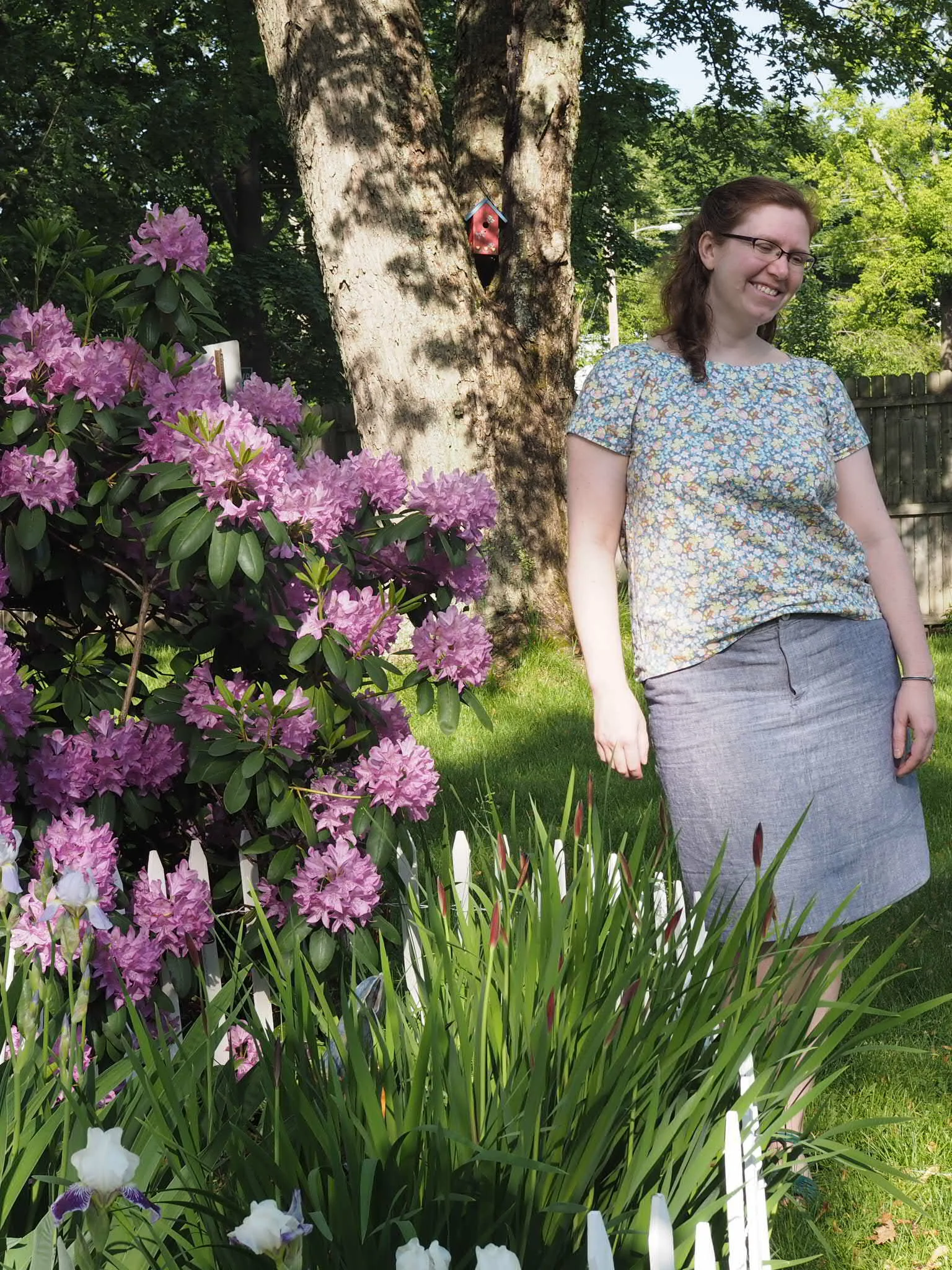
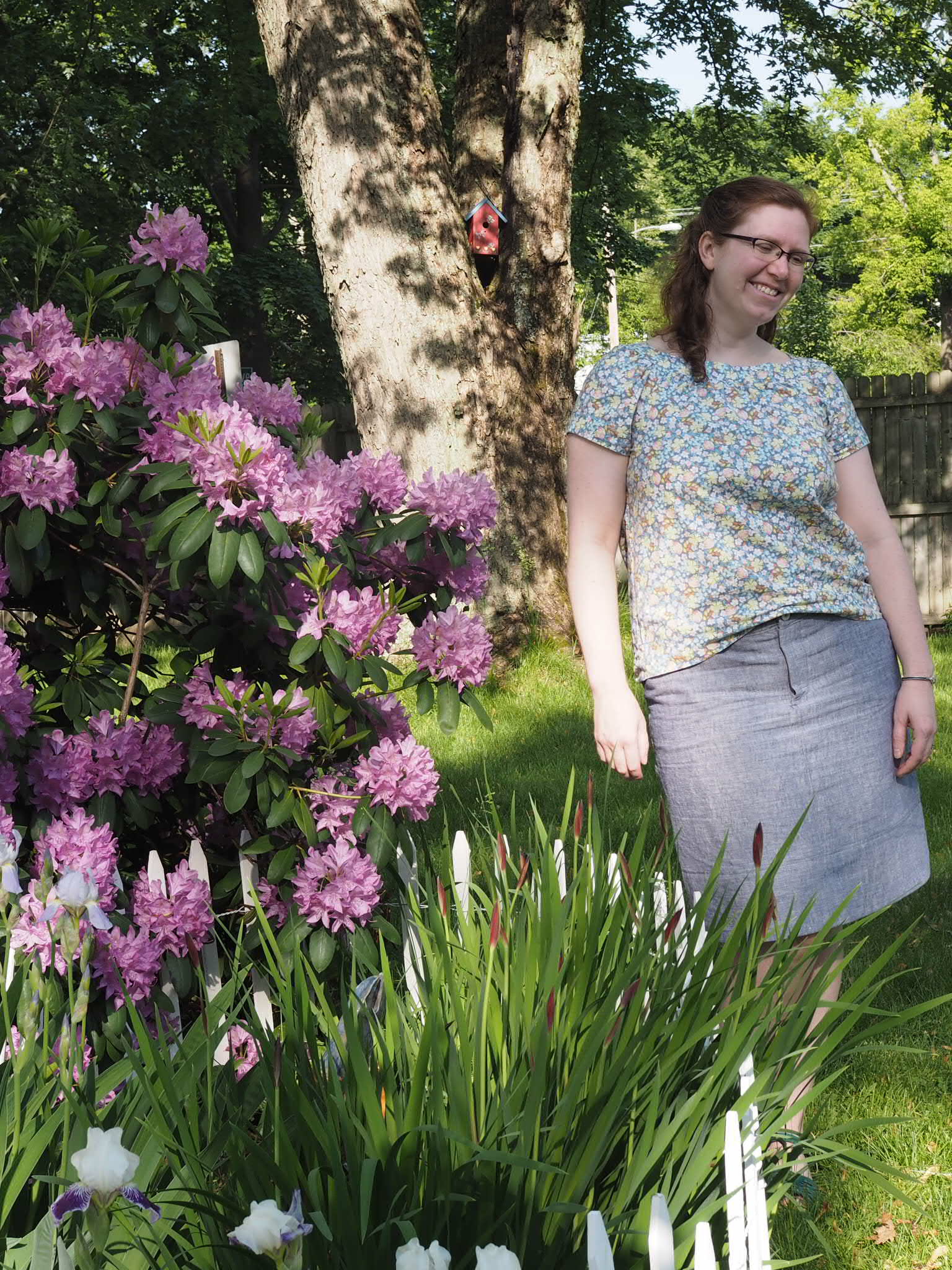
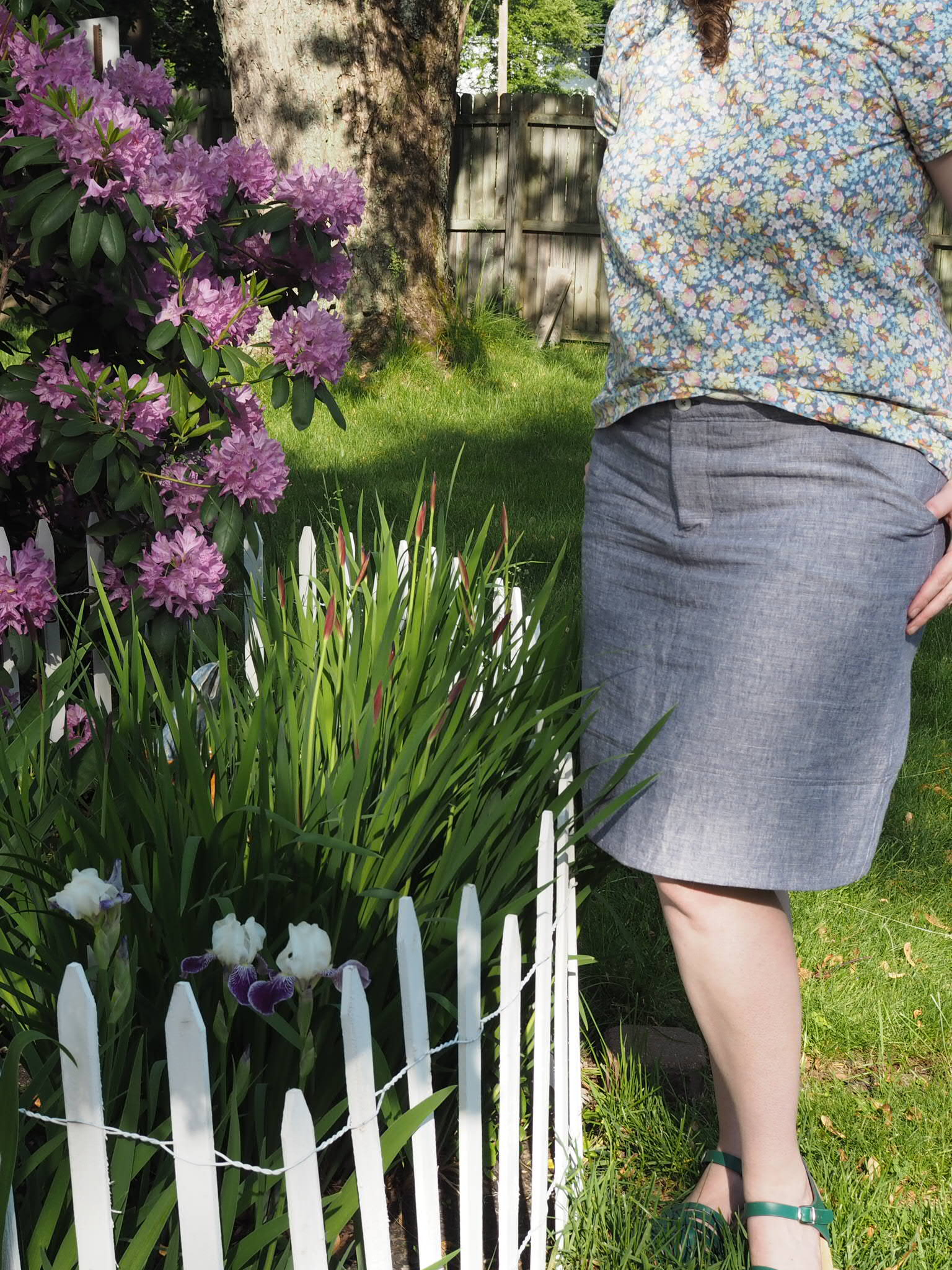
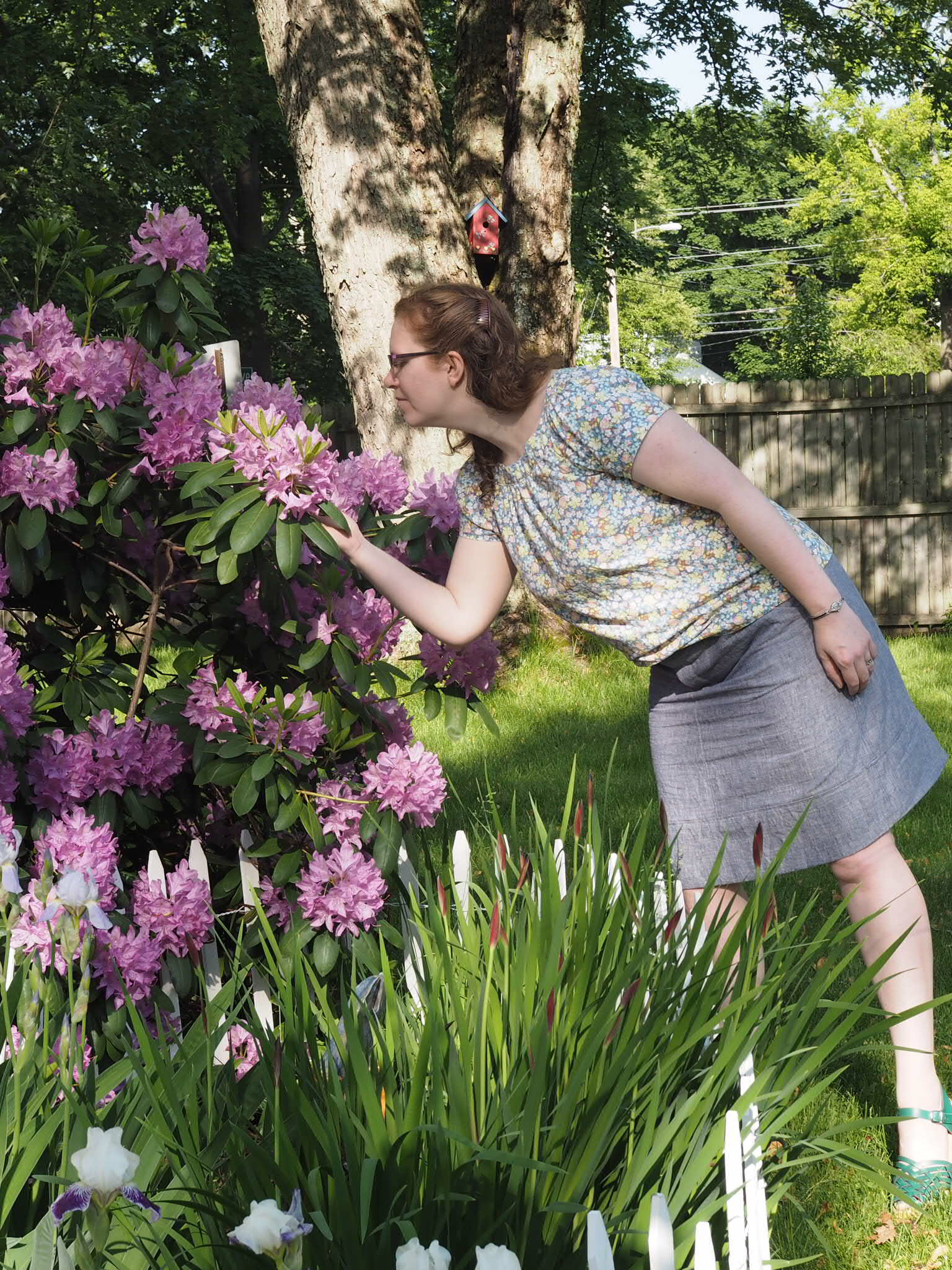
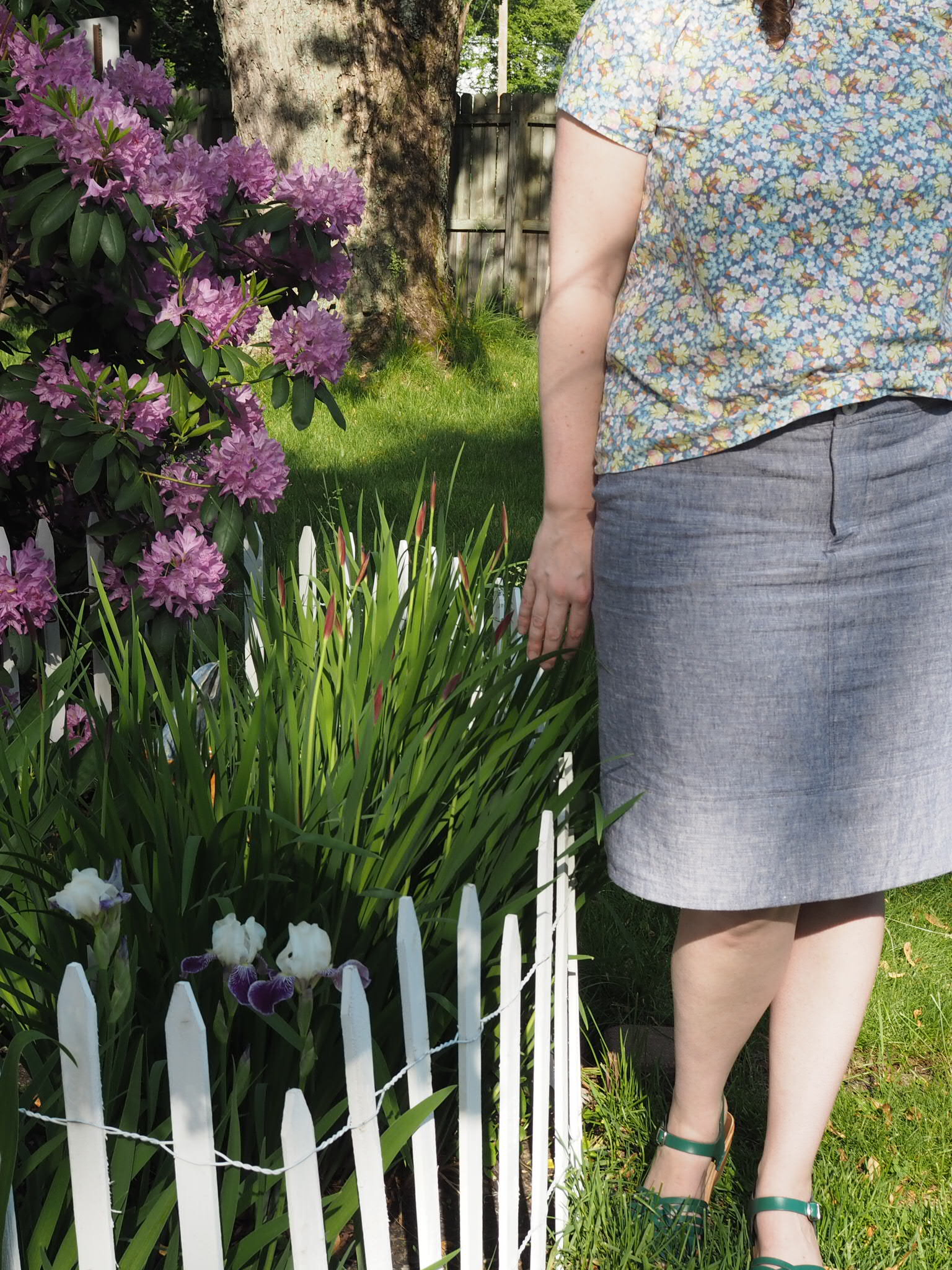
For my first basic, I chose Grainline Studios Moss Skirt. Normally, my style is less austere and modern than the overall Grainline aesthetic, but I find them so thoughtfully designed, that I've made quite a number of her patterns. I've been wanting a simple skirt with a fly closure to replace my beloved 15-year old denim skirt, and Moss fit the bill. I'm not a mini fan, so I opted for View B with the hem band and added an extra inch to the length of the main skirt portion. Other than that I stuck to the directions, and was surprised to find that I've apparently sew enough flies that I'm no longer scared of them. The fabric is a nice chambray I got on the cheap from Marden's (a surplus store) and I did faux flat-felled seams for a jeans-inspired look. Even with interfacing, the chambray stretches a bit more than I expected, so I may take in the waist band a bit after it's next washing. 

I've already worn it twice in the week since I made it, and knowing how much use my old denim skirt got, I know this will be a definite workhorse. 

The top is a Fancy Tiger Sailor Top made in some quilting cotton, that incidentally I also used in the pocket linings of the skirt. I made it before the make along kick off, so it's not part of my official Summer of Basics makes, but I'm pretty sure I'll be making another soon (my third), so I'll save my comments on the pattern for then. 

All in all, as outfit that is comfortable, easy to wear and feels so very me. A win-win!


Summer Rain Shawl in Taproot Magazine

As a child, I dreamed of summer storms.

Growing up in northern California, my summers consisted of soaking my swimsuit in the sprinkler and rushing to the driveway to leave an ephemeral body print on the concrete; of running barefoot across the hot asphalt to my friend’s house and trying not to burn my feet; of the dark towels my mother put over the windows in the daytime to keep out the heat.

I wanted my summers to be cooler, wetter. I longed for days that passed like a Country Time Lemonade commercial: afternoons spent floating in an old tire inner tube down a lazy river, swinging from a rope into the old swimmin’ hole, taking laps to the dock in the middle of the lake, numerous bodies of water inexplicably available to the same child in a 30-second spot.

I thought a summer storm would be the perfect antidote to the dry California heat, a backyard sprinkler writ large. I imagined I’d see the clouds building up, pull on my one-piece and hurry outside to dance in the warm droplets falling gently from the sky. Summer perfection wrapped up in a single moment.

Later, in my twenties, when I lived in Chicago, I learned that the reality of summer storms could be a very different thing. Chicago summers were hot and sticky. I slept on a futon mattress on the floor of a studio apartment in Hyde Park, a fan positioned on either side of my bed, hoping for a respite from the heat. The storms I wished for a child would come frequently, but no gentle sprinkle, these; instead, soaking torrents of water, best avoided, but quickly gone.

My second summer in Chicago, my husband and I had relocated to the north side of the city. I’d walk the blocks of my neighborhood on summer nights, the sticky nights made more bearable by the cool lakeside breeze. Our apartment was just blocks from Lake Michigan, and though we visited the shores often, I only swam in its waters twice. My first swim in that wide body of water was on a hot day, the water sufficiently warm, and the feel of lake-bottom plants and tiny fish against my legs a constant reminder that this was no tile-lined pool.

My second swim was on an equally hot day, but the water shocked me with it chill. I paid no attention to the flora and fauna as the icy water stung like daggers and made my toes go numb. I wrapped myself in a towel and we rushed home to change. By the time we reached the apartment, a tornado warning had come in and we watched as the clouds folded in on top of themselves, faster and faster, building up into a dense grey wall on the horizon. My hair still damp from the lake, we sat in the windowless lobby of our building and waited the storm out – the menacing clouds giving us thunder and hail and rain.

As a child, it seemed silly that summer only truly started June 21st. School had been released weeks before and the season of short-sleeves and flip-flops had been in swing well before that. In Chicago, the march of time was marked by the swing from biting cold winds to sweltering humidity. Even so, I didn’t really understand the seasons until I moved to Maine.

Not spring, summer, winter, fall. We had all of those, even in California.

But the 16-day window of Lupine Season, when the highways burst forth in spires of purple and blue and pink, or the two weeks when the strawberries are available for picking, its arrival watched for and counted in pint baskets at the farmer’s market. There is the weekend in July when the window air-conditioning units go in and month-long debate in September on when to take them out. Each week in June, July, and August seeming to be a short-lived season of its own.

Perhaps it is because I no longer live in a land of continuous produce, or because I am a gardener now, that so much of the summer is measured in food – not the dwindling canisters of powdered lemonade of my childhood or the cheap takeout of my twenties, but rather, in limited runs of fiddleheads and sugar-snap peas, of strawberries, then raspberries, then blueberries, to finally end in the bags of apples that are picked in that time between the seasons that can be alternately cold or sweltering hot.

The brevity of these seasons brings a different rhythm to my Maine summers, a sense of urgency and a need to take advantage of everything at its peak that I had never felt before. In this environment, the dozen or so summer storms take on a different role, offering a break from activity. They are not an invitation to play, nor to hide, but to simply be.

In the winter, the Nor’easter asks us to stay inside and enjoy the quiet; in the summer, the rains do the same. The storms are a chance to lay in bed and hear the raindrops ping against the top of that window air-conditioning unit, drumming out a steady tattoo that seems to say “Be still, be still, be still.”

As child, summer storms were illusive, illusionary things; in Chicago, they were wild and sometimes terrifying. Now, as an adult, they are a respite. After a stretch of hot sunny days, the plants in my garden welcome the rain. I follow their lead, raise my face to the heavens, and drink it in.

.............................

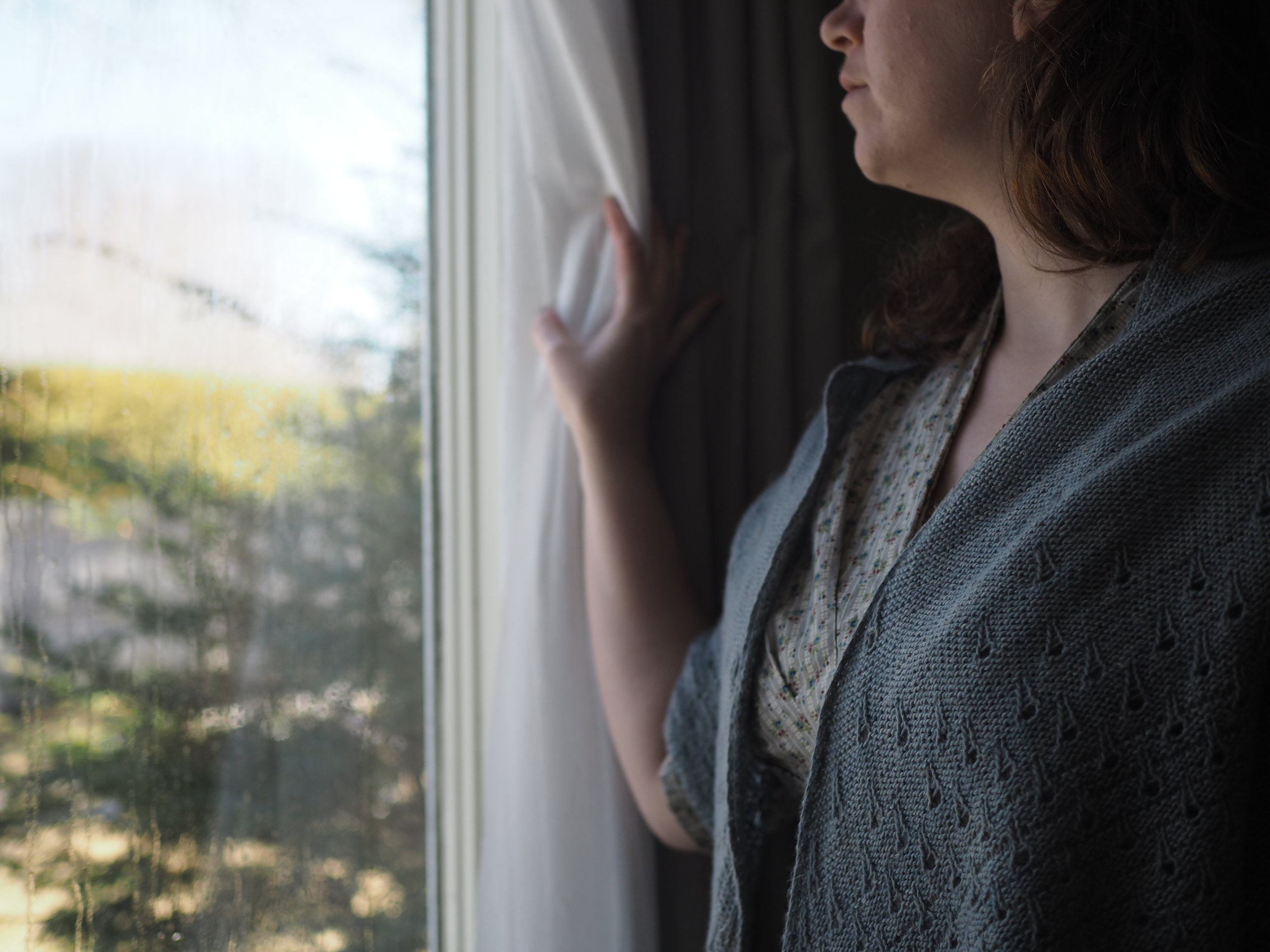
The Summer Rain shawl, inspired by my longing for those summer storms and the peace they now bring can be found in the latest issue of Taproot Magazine: GROW. They also carry kits for the pattern, which uses 2 skeins of Milo by Manos Del Uruguay, a gorgeous merino & linen blend with amazing drape that is truly one of my favorite yarns on the market right now. The issue is available on newstands and online now and you can queue up the project on Ravelry


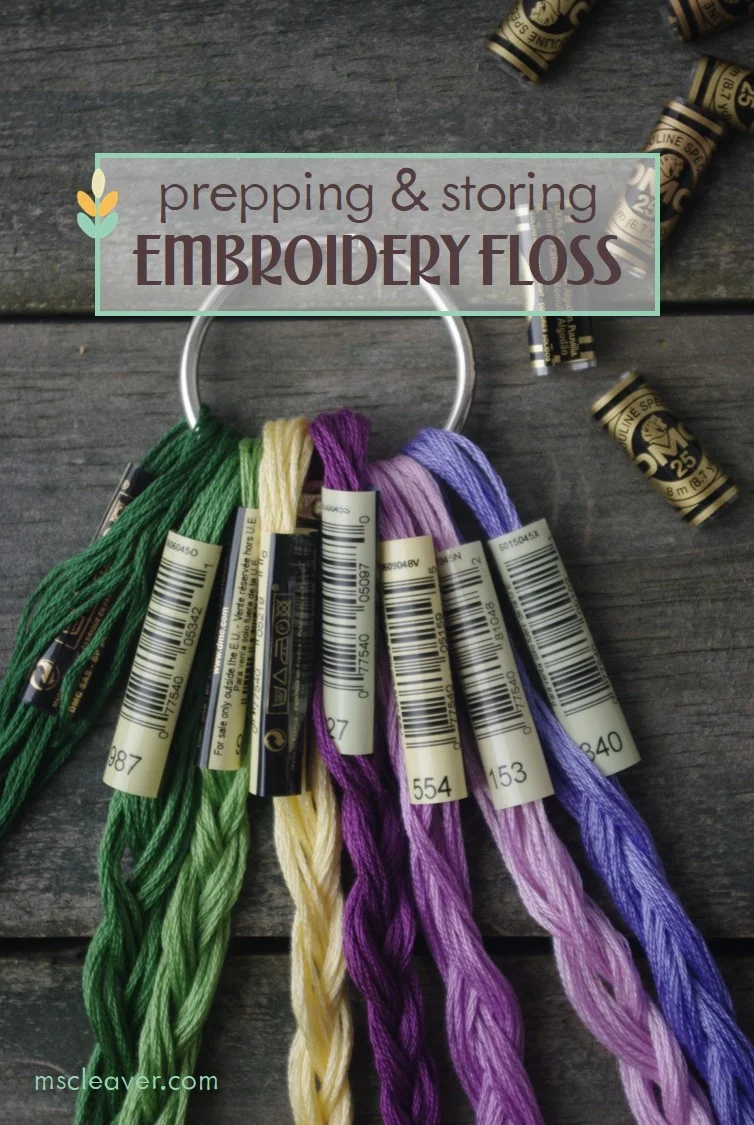
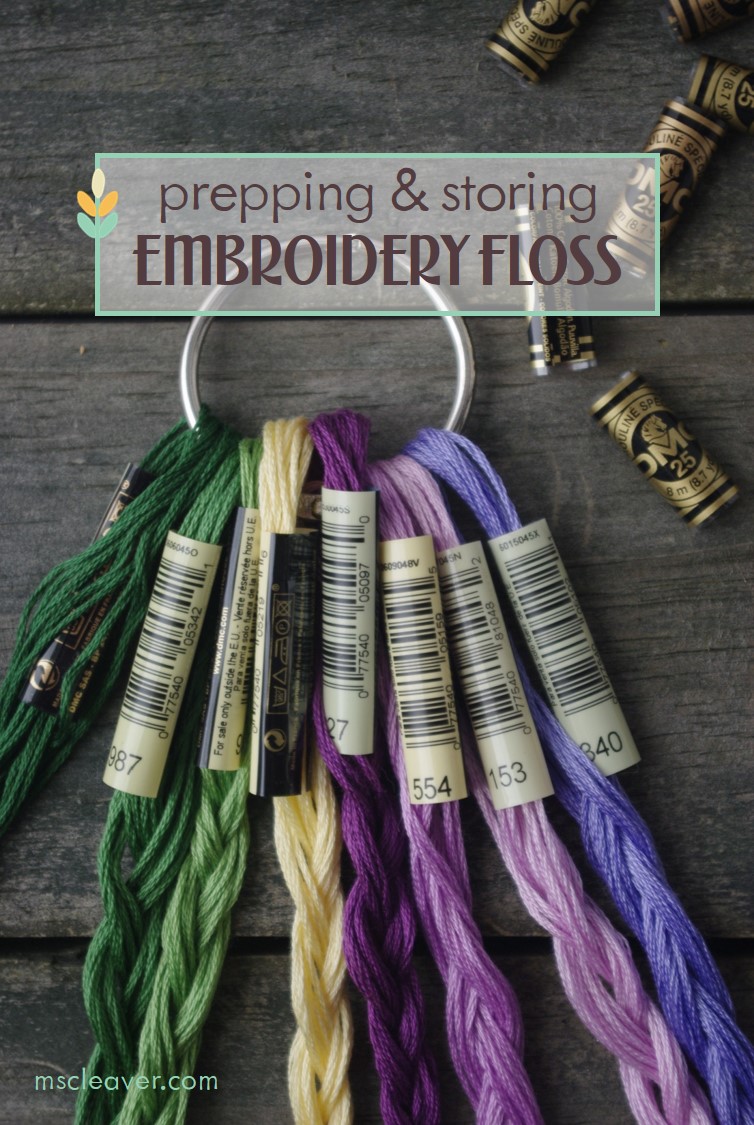
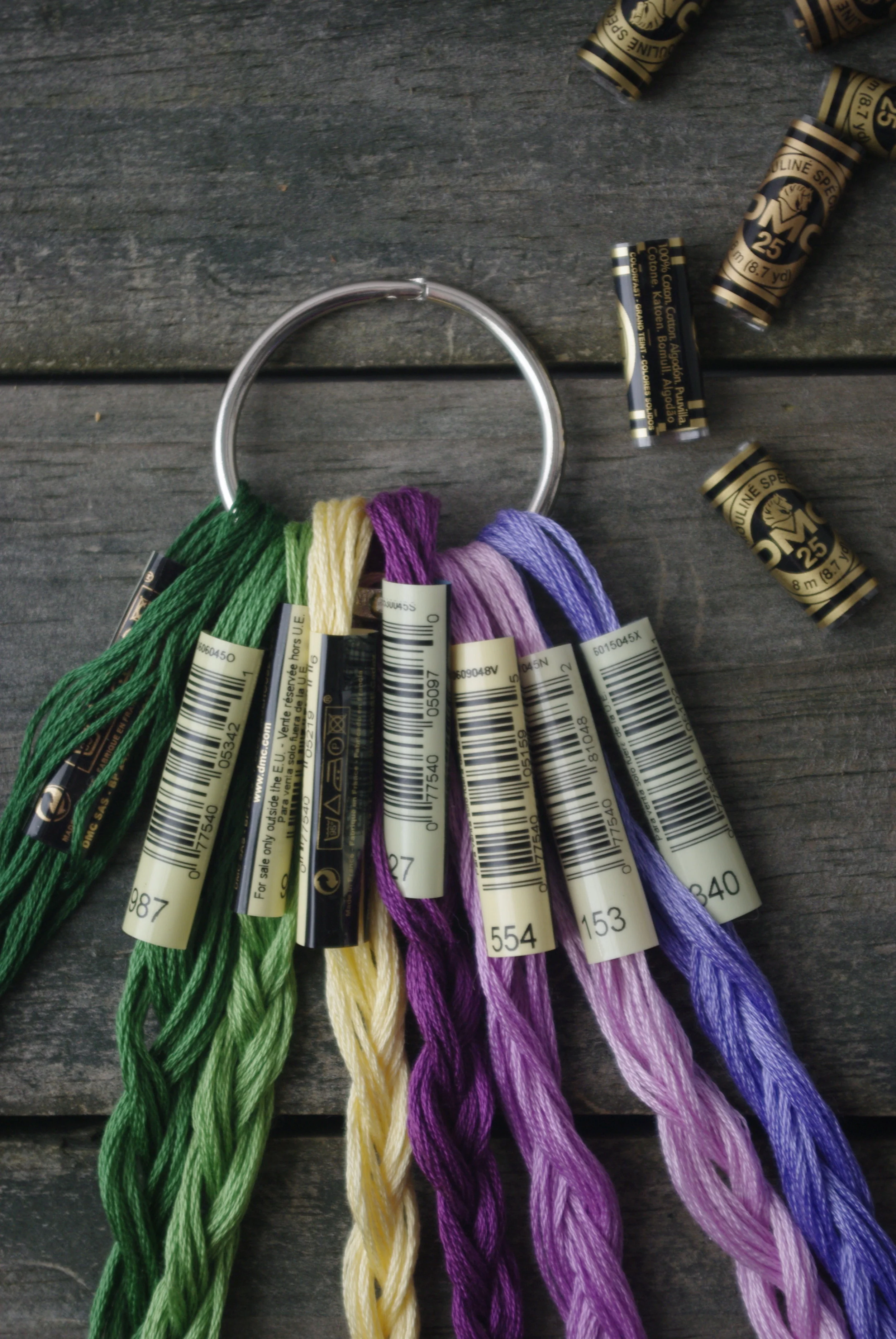
Prepping and Storing Your Embroidery Floss - a tutorial

storing embroidery floss.jpg

Embroidery floss is one of those supplies that seems to sneak up on you. I did for me. I'd buy a couple of skeins for a project here, then a half-dozen for another project there. I'll tell myself that I'd wind them onto the little cardboard bobbins, and organize them into binders or boxes, but more often than not I'd pull them from directly from the skeins until I wound up with a tangled mess.

In truth, even when I did bother with the bobbins, I never really cared for them. The floss would get kinked on the card, I'd have to do a bunch of unwinding and re-winding ever time I'd need a new length of floss, and they never stayed put in their binder pages. It was more trouble than it was worth.

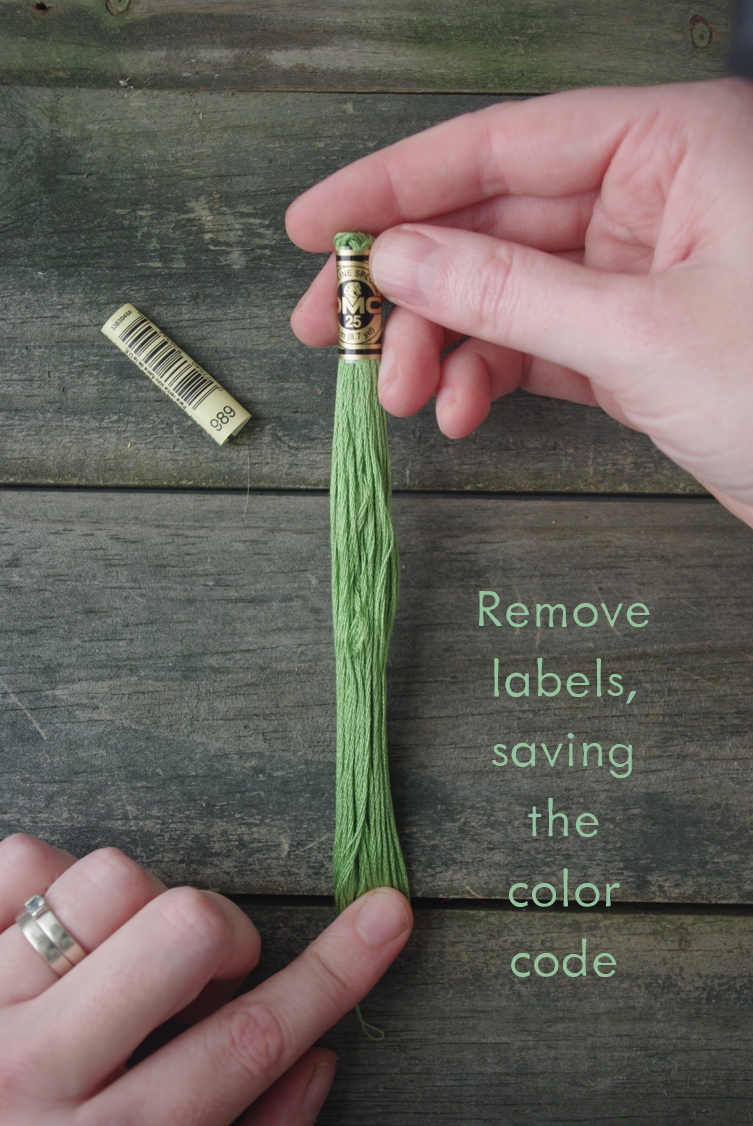
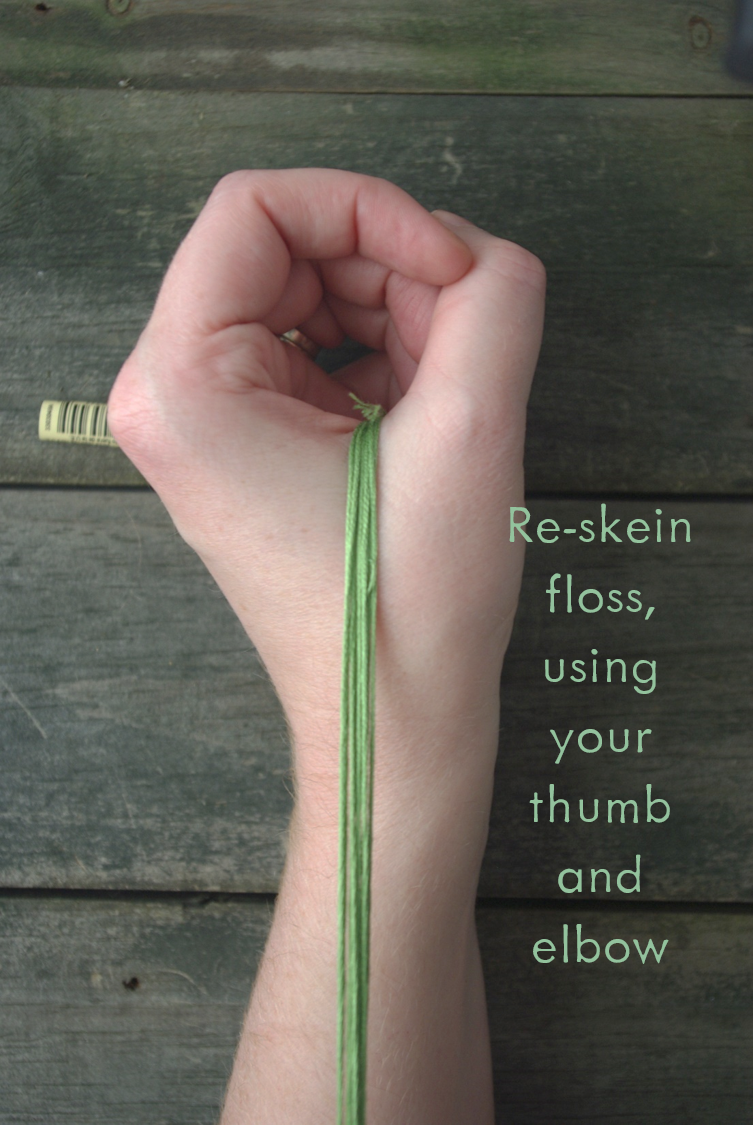
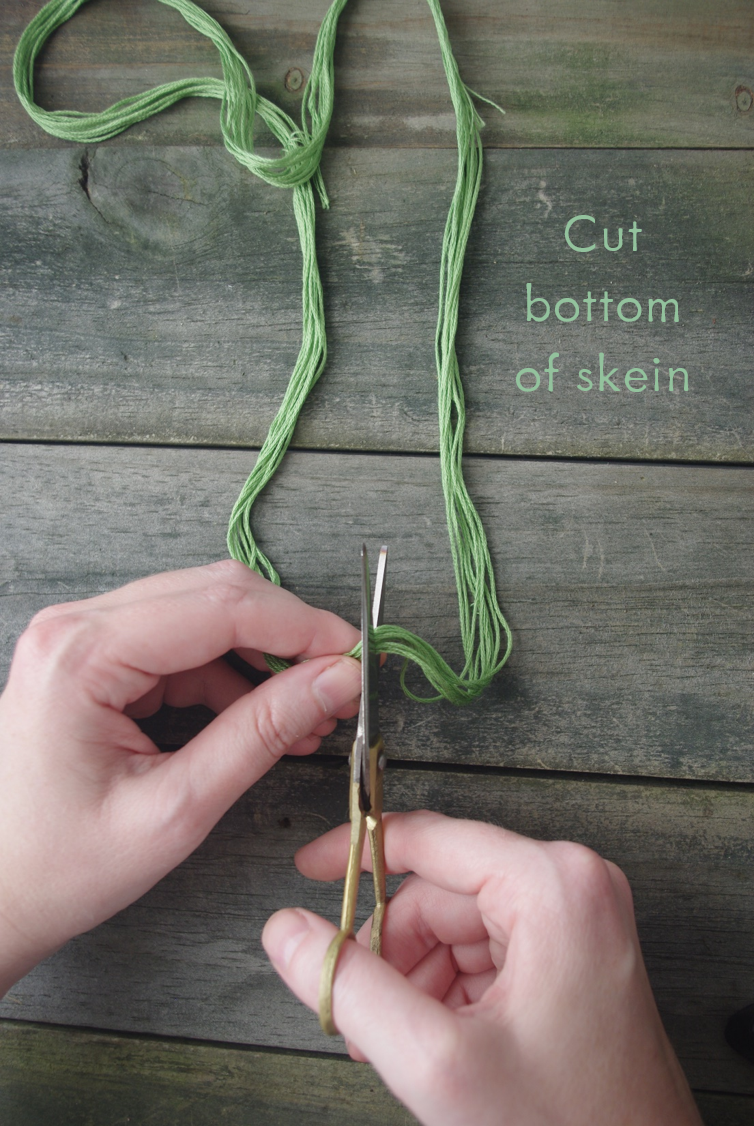
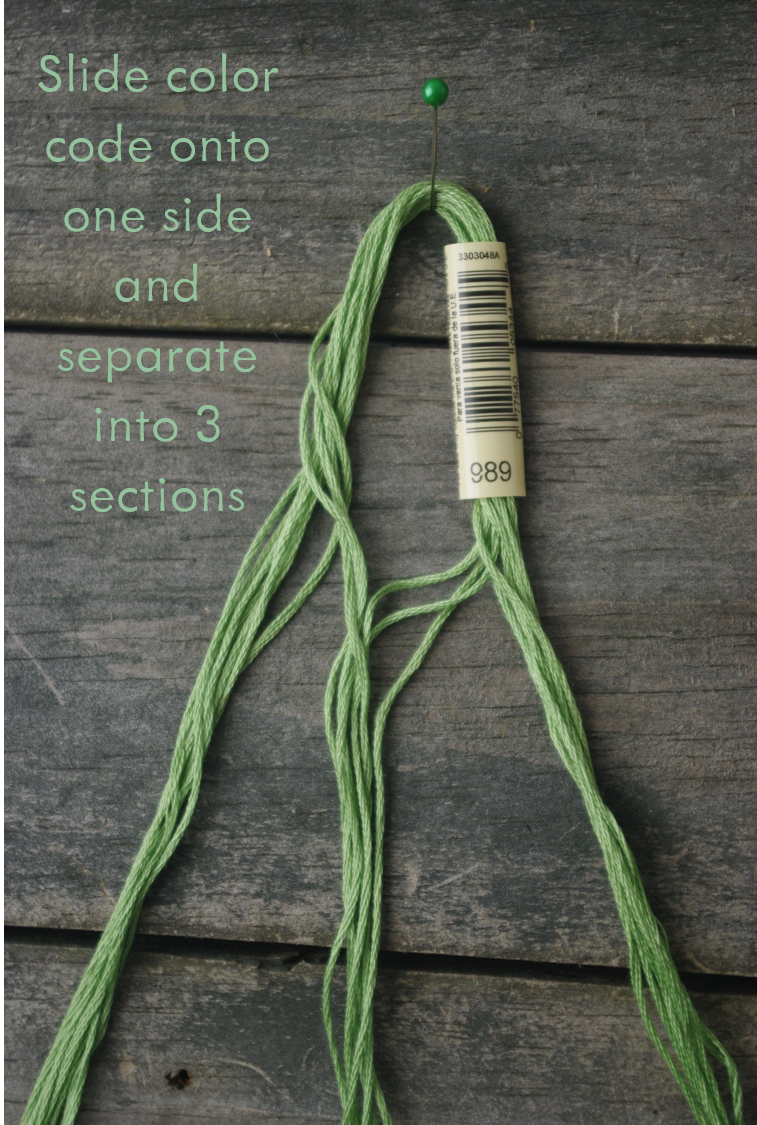
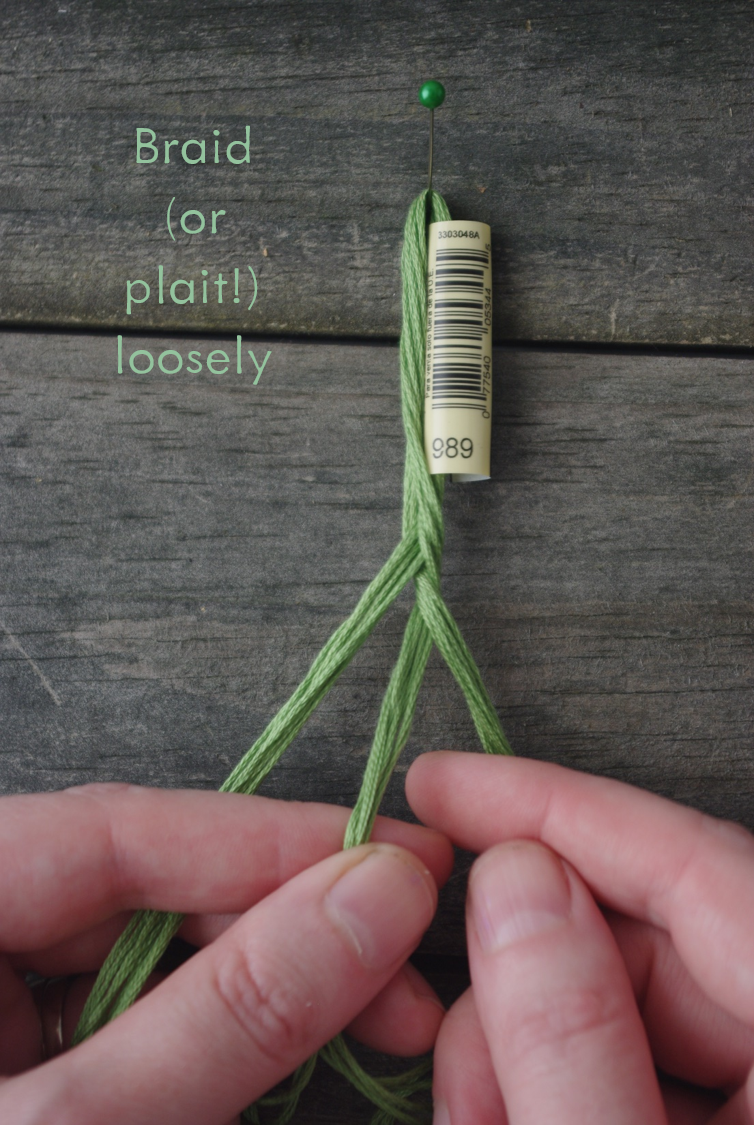
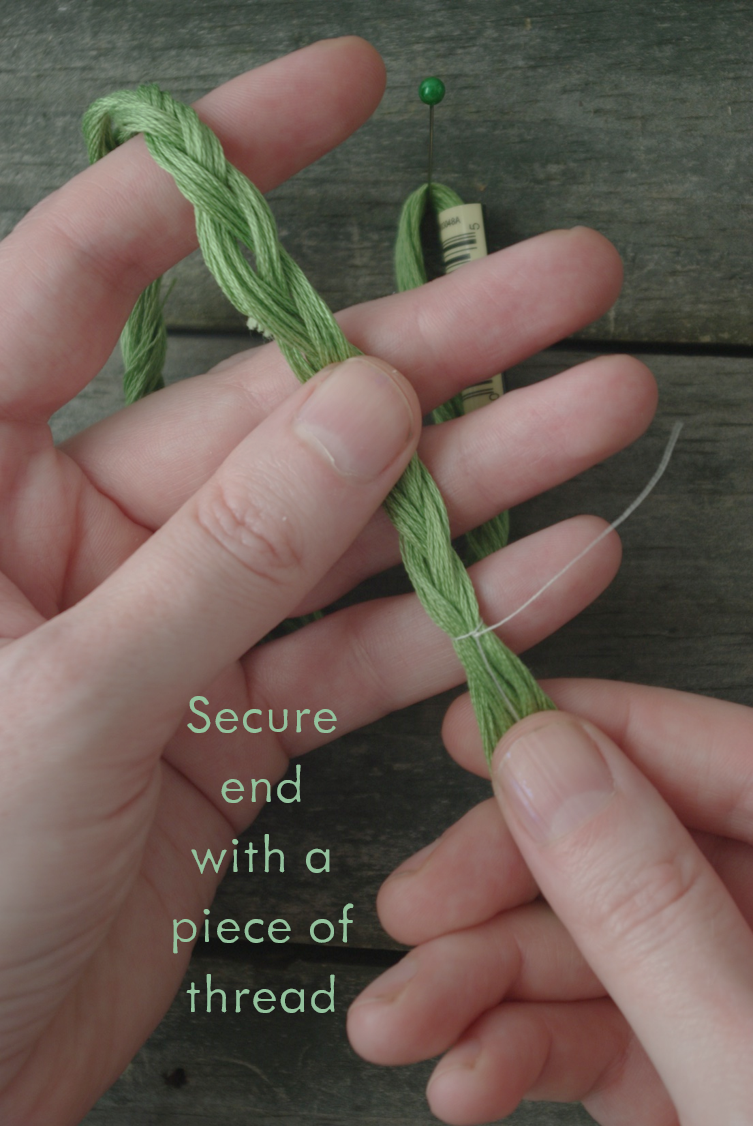
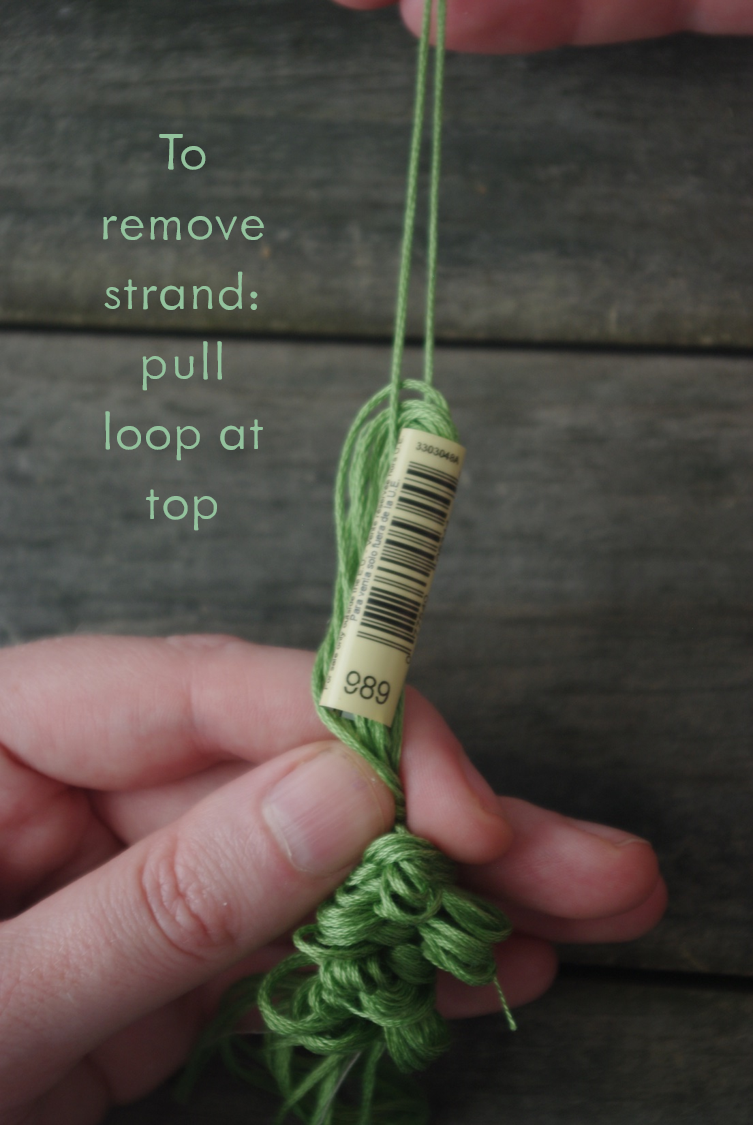
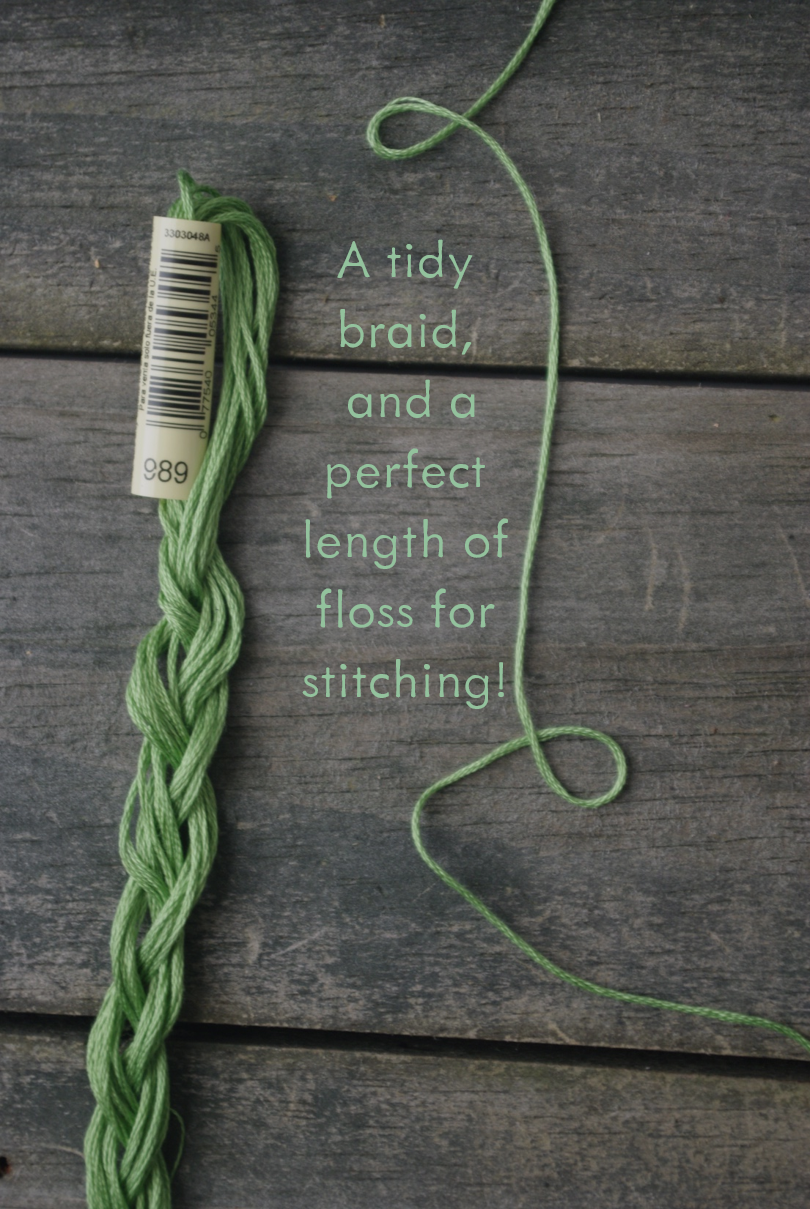
Then an acquaintance introduced me to floss braids and it was a gamer changer for me. No special equipment needed, quick and easy to do, and honestly, kind of pretty. And by using the existing label,  I didn't have to rewrite the color code on anything, and spare lengths could be looped back through the label..But the best part was that the thread was already cut into perfect lengths for stitching. 

Like I said, game changer. 

Embroidery Floss Tutorial by Ms. Cleaver

EMBROIDERY KITS & PATTERNS

FO Roundup

One of the most fun parts of being a designer is seeing how others interpret your designs. Here are a few of my favorite finished objects (FOs) of late (click on any photo to visit the knitter's Ravelry page):

Tributary, knit by Caitlin (schmidr)

Tributary, knit by Caitlin (schmidr)

Ripley, knit by Kim (willknit4borscht)

Ripley, knit by Kim (willknit4borscht)

Caiterly, knit by Jenny (Jenny A Kortfelt)

Caiterly, knit by Jenny (Jenny A Kortfelt)

Cresting Waves, knit by Jenny (jennyinmaine)

Cresting Waves, knit by Jenny (jennyinmaine)

Zoetrope, knit by Stacy (shutterhoney)

Zoetrope, knit by Stacy (shutterhoney)

Bradac, knit by laraghdaniel

Bradac, knit by laraghdaniel

I love the colors each of these knitters have chosen to make the pattern their own and I'm in love with the face on that bear!!

Want to share your knits with me? Tag me @mscleaver on Instagram, or if it's on Ravelry, I'll see it. :) 


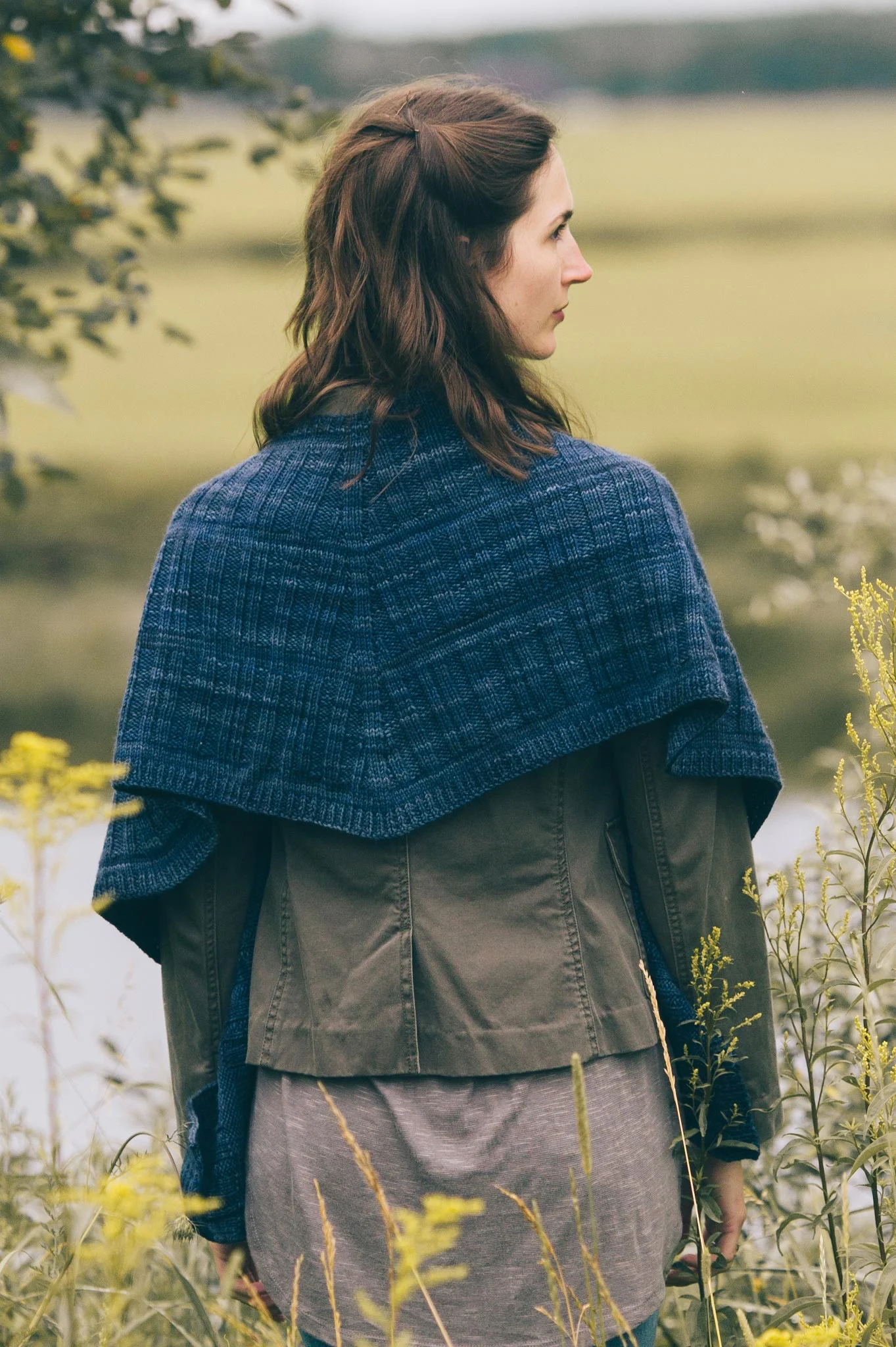
Tributary - PDF Pattern
$6.50

Leah B. Thibault’s triangular shawl is pretty in Piper, using double yarn-overs to create light-as-air lace motifs that travel in vertical lines from stockinette stitch beginnings to the delicate plumes in its border.

60" [152.5 cm] wingspan and 26" [66 cm] deep at center

Yarn: 2 skeins of Piper by Quince & Co in Lone Oak (50% Texas super kid mohair, 50% Texas superfine merino, 305yd [279m] / 50g) 

Needles: 32” circ in size US 5 / 3.75 mm 

Gauge: 22 sts and 38 rows = 4”/10 cm in St st 

Learn more about Tributary in the Chronicles

View it on Ravelry

Photos © Quince & Co.

Zoetrope – PDF Pattern
$6.00

A two-tone colorwork hat, inspired by the work of 19th century photographer Eadweard J. Muybridge whose work in photographing locomotion laid the groundwork for the first motion pictures. Knit from the bottom up, the hat decreases to a flat top after the colorwork panel is complete and is topped off  with an optional braided tassel.

  • 17.5, 20.5, 23.5 inch/ 45, 52, 60 cm circumference
  • 250-362 yds of Sport weight yarn, sample shown in Quince & Co. Chickadee
  • 16-inch circular needle, US 3 - 3.25mm
  • 30 stitches and 36 rows in stockinette stitch

Learn more about Zoetrope in the Chronicles

View it on Ravelry

Photos © Leah B. Thibault

Ripley - PDF Pattern
$6.50

Bare those sun-worshipping shoulders in Ripley, designed by Leah B. Thibault. This racer-back tank is knitted in the round from the bottom up in Kestrel linen, shaped with side and back darts, and embellished with a beautiful vine lace detail at the back. For those seeking a true summer knit, this beauty is for you.

FINISHED MEASUREMENTS:
30 (32, 34, 37¼, 40¼, 42¼, 45½, 47½)" [76 (81.5, 86.5, 94.5, 102, 107.5, 115.5, 120.5) cm] bust circumference; shown in size 32" [81.5 cm] with 2" [5 cm] negative ease

YARN:
kestrel / cove 503 / 5 (5, 5, 6, 6, 7, 7, 8) skeins

NEEDLES:
32" circular in size US 10 [6 mm] / one spare circular in size US 10 [6 mm]

GAUGE:
15½ sts and 22 rnds = 4" [10 cm] in stockinette stitch, after blocking

SKILLS REQUIRED:
Knitted cast on, wrap-and-turn short rows, three-needle bind off (links provided). Chart and line-by-line instructions included.
Bradac - PDF Pattern
$6.00

Knit seamlessly in the round from nose to tail, Bradac is a quick knit that makes a great cuddly companion or holiday decoration. Most details, like the ears, are worked in short rows, while the legs are knit with scrap yarn and then picked up and worked in a similar fashion to an afterthought thumb or heel. The bear is stuffed as you go and measures approximately 12 inches from nose to tail and takes 200 yards of worsted weight yarn, plus some additional contrast yarn for the face and scarf.
  • One Size
  • 180-200 yds of Worsted weight yarn, sample shown in Lamb's Pride Superwash Worsted
  • Set of dpns, US 4 -3.5 mm
  • 12 stitches and 16 rows = 2 inches in stockinette stitch

Learn more about Bradac in the Chronicles

View it on Ravelry

Photos © Leah B. Thibault

Caiterly - PDF Pattern
$6.50

Sweetly feminine with all the right details, Caiterly is adorned with delicate cables against reverse stockinette. Leah B. Thibault's bottom-up raglan cardigan is worked in Cleaner Cotton™ Willet resulting in a medium-weight sweater to go with any and every last thing in your closet, from borrowed boyfriend jeans to sundresses.

Shown in size 33” / 84 cm with 1” / 2.5 cm negative ease

Bust Circumference: 31¼ (33, 34¾, 38, 40¾, 42½, 45, 46¾)" [79.5 (84, 88.5, 96.5, 103.5, 108, 114.5, 118.5) cm]
Yarn:8 (8, 9, 10, 10, 11, 12, 12) skeins of Willet by Quince & Co in Sail (701)(100% cleaner cotton; 160yd [146m]/50g)
Needles:32" circular in sizes US 4 and 5 [3.5 and 3.75 mm] / set dpns in sizes US 4 and US 5 [3.5 and 3.75 mm]

Gauge: 26 sts and 35 rows = 4”/10 cm in reverse St st on larger needles

Learn more about Caiterly in the Chronicles

View it on Ravelry

Photos © Pam Allen